



The Man Died (2024) by Awam Amkpa

NG | 2024 | 105 min | Political Prison Drama / Historical Drama
When Imprisoning a Writer Cannot Imprison His Voice
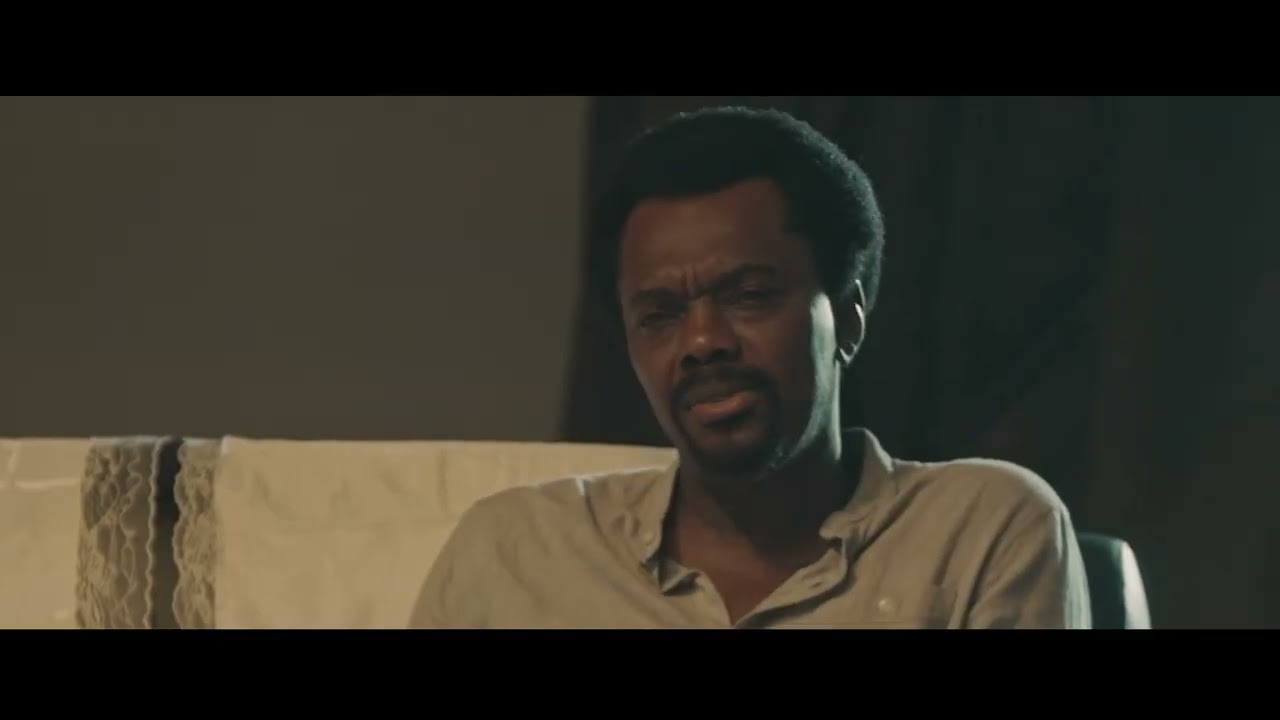
Set against the Nigerian Civil War, The Man Died dramatizes the imprisonment of writer and activist Wole Soyinka after his attempt to mediate between the Federal Government and Biafran leadership was interpreted as political betrayal. Detained without trial, he faces solitary confinement, deprivation and psychological pressure designed to silence him.
Rather than treating imprisonment only as physical captivity, the film focuses on the struggle to preserve thought, memory and expression. Soyinka secretly records his experiences on scraps of paper, transforming writing itself into resistance.
➡️ Movie Insight: The regime can control Soyinka's physical movement but struggles to control his mind. Writing becomes a way of preserving identity under enforced silence. The prison therefore becomes a battle over who controls his voice.
Why This Movie Matters Right Now: The Right to Speak Can Become the First Freedom Power Tries to Remove
Although the story comes from Nigeria's civil-war era, the film is built around a broader question about what happens when political authority treats criticism, mediation or dissent as threats. Its historical focus is specifically Soyinka's imprisonment without trial and the pressure placed on him by the military regime; the film should therefore be understood first within that Nigerian historical context rather than as a claim about any current government.
That focus gives the story continuing relevance as a historical examination of freedom of expression, detention without trial and the role of writers under repression. The central conflict is not simply whether Soyinka survives imprisonment, but whether coercion can make him surrender the intellectual independence that made him politically dangerous.
➡️ Why It Matters: Political imprisonment turns freedom from an abstract principle into an immediate human experience. The film shows how control over speech can become control over the individual. Soyinka's resistance makes expression inseparable from personal freedom.
Should You Watch It?: A Political Biography Built Around Confinement, Memory and Resistance
This is not a conventional cradle-to-career biography of Wole Soyinka. The prison experience provides its dramatic center, while flashbacks to his relationships, writing and political encounters expand the story into the historical circumstances surrounding his detention.
The result is deliberately serious and historically dense. Some critics have found that the amount of political explanation occasionally competes with the intimate drama, while others have highlighted the film's ability to translate Soyinka's intellectual and emotional experience into cinema.
➡️ Viewing Recommendation: Expect historical and psychological drama rather than a conventional prison thriller. The tension comes from watching ideas confront institutional power. Its strongest moments make political history feel personal through one man's experience of enforced silence.
Why Everyone Is Talking About It: A Landmark Nigerian Literary Adaptation Builds International Recognition
The Man Died began its festival trajectory in 2024 and subsequently travelled internationally, including the New York African Film Festival and a 2025 European premiere at Berlin's Haus der Kulturen der Welt. Its recognition expanded significantly through awards: Bode Asiyanbi won Best Screenplay at both AFRIFF and the Carthage Film Festival, while the film also received the Audience Choice Award at the Eastern Nigeria International Film Festival.
In 2025, Awam Amkpa won Best Director at the Africa Magic Viewers' Choice Awards. That trajectory matters because the film translates the prison writing of one of Nigeria's most internationally significant literary figures into a Nigerian-produced historical feature rather than separating national literary history from contemporary African cinema.
➡️ Viral Potential: The film connects Wole Soyinka's literary legacy with a contemporary African screen adaptation. Its awards trajectory gives the project visibility beyond audiences already familiar with the memoir. The combination of history, political resistance and literary heritage gives it strong cultural-discussion potential.
Why The Man Died Stands Out: The Political Hero's Main Weapon Is His Ability to Keep Thinking
Political-prison dramas can build toward physical escape, courtroom victory or revolutionary action. The Man Died operates differently because much of Soyinka's struggle occurs internally: he must preserve sanity, memory, intellectual independence and the ability to write while isolated from the world.
Amkpa also avoids reducing Soyinka to an untouchable national monument. The adaptation draws on the prison notes while incorporating other memories and writings, using flashbacks and relationships to create a more subjective portrait of the man behind the later Nobel laureate.
➡️ Cinema Insight: The film makes intellectual survival as important as physical survival. Soyinka's refusal to surrender his thoughts becomes the central dramatic action. Political resistance is therefore presented not only as public protest but as the preservation of an independent mind.
Movie Trend: Political Prison Drama — When a Government Imprisons a Writer to Silence His Voice
Political prison dramas examine the extreme point at which disagreement with authority stops being treated as speech and starts being treated as a threat. Their central characters are often physically powerless but retain another form of agency through ideas, memory, testimony or communication.
The Man Died makes writing that agency. Soyinka's confinement attempts to disconnect him from society, while his clandestine words create a route back into it.
Trend Formula:writer challenges political power → mediation is interpreted as disloyalty → state identifies writer as threat → imprisonment removes physical freedom → isolation attempts to break resistance → memory preserves identity → writing preserves voice → words escape confinement → silencing creates testimony
➡️ Movie Trend: Political imprisonment makes the conflict between individual conscience and institutional authority physically visible. The prisoner loses control over almost everything except the decision to surrender internally. The Man Died makes writing the mechanism through which that final territory is defended.
Broad Trend: Freedom — When Protecting the Right to Speak Becomes an Act of Resistance
Freedom here is not primarily about lifestyle choice or personal convenience. It means retaining the ability to think, speak and express disagreement when institutional power attempts to impose silence. Soyinka's experience turns freedom of expression into something tangible because imprisonment demonstrates what happens when that freedom is physically removed.
Broad Trend Formula:independent thought → expression → challenge to authority → attempted silencing → resistance → preservation of voice → freedom
➡️ Broad Trend: Freedom becomes most visible when someone tries to remove it. Expression allows individuals to preserve agency even when physical autonomy disappears. The Man Died connects the freedom to speak with the freedom to remain intellectually independent.
Why These Political Prison Dramas Are Popular: Confinement Makes the Cost of Conviction Visible
Political prison stories turn large historical conflicts into intimate human experiences. Instead of approaching repression only through governments, wars and institutions, audiences experience it through hunger, isolation, fear, memory and the psychological pressure placed on one person.
➡️ Audience Motivation: Political prison drama transforms history into an individual moral struggle. Confinement creates immediate tension between survival and conviction. The emotional reward comes from seeing whether identity can survive when external freedom disappears.
Viewer Profile: Freedom Witnesses - Arthouse Audiences Drawn to Political Resistance, Human Rights and Historical Truth
Freedom Witnesses gravitate toward cinema that reconstructs history through individuals caught inside political systems. They value films that connect biography with wider questions about power, expression, justice and collective memory.
The Man Died particularly fits viewers of African historical cinema, literary adaptations, political biography and festival-oriented films that use individual experience to illuminate national history.
Audience Dimension | Profile |
Core Audience | Political drama, African cinema and historical-biography audiences |
Age Group | Adult audiences interested in history, literature and political cinema |
Lifestyle | Culturally engaged viewers interested in literature, history and public affairs |
Cinema Taste | Historical drama, political biography, prison drama and African arthouse cinema |
Streaming Behavior | Festival discovery, curated African cinema and prestige streaming |
Discovery Mindset | Historical figures, literary adaptations, awards, festivals and socially engaged filmmaking |
➡️ Audience Insight: Freedom Witnesses want history to be experienced through people rather than reduced to chronology. They are drawn to characters whose personal choices expose larger structures of power. Soyinka's imprisonment makes an enormous political crisis legible through one confined human being.
What This Movie Means for the Industry: African Literary History Can Become Contemporary Screen History
The production demonstrates the opportunity in adapting major African literary works through African filmmaking ecosystems. An African Studies Review assessment describes the film as a notable example of Nigerian literature and history being brought together on screen, while the international festival trajectory shows how culturally specific historical material can travel without abandoning its national context.
Its awards also suggest that adaptation craft itself can become part of that international positioning. Recognition for Asiyanbi's screenplay at AFRIFF and Carthage, followed by Amkpa's AMVCA directing win, places both writing and direction at the center of the film's reception.
➡️ Industry Insight: Major African literary works offer cinema both cultural heritage and strong dramatic material. Local historical specificity does not prevent international festival circulation. The Man Died shows how adaptation can connect literature, national memory and contemporary African filmmaking.
Creative Analysis: Confinement Turns Memory and Writing Into Cinematic Resistance
Amkpa faces an unusual adaptation challenge because Soyinka's source material emerges from interior experience, political reflection and imprisonment rather than conventional external action. The film responds by combining confinement with flashbacks, memories and glimpses of relationships outside prison.
That structure allows the prison to become more than a location. It becomes the point from which Soyinka reconstructs both himself and the political world that placed him there.
Storytelling: A Prison Cell Opens Into a Nation's Political Memory
Rather than following Soyinka's incarceration as uninterrupted chronology, the screenplay moves between imprisonment and memories of the people, relationships and political tensions surrounding him. That creates a personal history running alongside the history of Nigeria's civil conflict.
The technique also protects the adaptation from becoming spatially static. Physical confinement produces narrative movement because memory continues travelling where Soyinka cannot.
Direction: Awam Amkpa Makes Thought Part of the Action
Amkpa's central challenge is cinematic: how can a film make intellectual resistance dramatic when its protagonist spends extended periods isolated from other people?
His answer emphasizes memory, writing, sound and psychological endurance. Amkpa has discussed the importance of prison sound — including screams and violence beyond Soyinka's cell — as part of conveying incarceration even when violence is not directly shown.
Performances: Wale Ojo Makes Political Conviction Physically Vulnerable
Wale Ojo plays Wole Soyinka, while Sam Dede's interrogator provides a direct embodiment of institutional pressure. The supplied IMDb material also confirms Ojo as Soyinka and places Sam Dede among the principal cast.
The dramatic tension depends on keeping Soyinka intellectually formidable while showing the physical and psychological vulnerability created by imprisonment. That prevents resistance from becoming effortless heroism.
Visual Style: Concrete, Rust and Darkness Turn Political Power Into an Environment
Cinematographer Agbo Kelly uses a restrained prison palette that has been described through concrete, rust and muted tones, visually separating confinement from the vitality of Soyinka's intellectual and remembered life. A filmmaker interview similarly describes the photography through amber, pewter and rust-like tones.
The result supports the central conflict visually: the state controls the material environment around Soyinka, while memory and thought prevent that environment from becoming his entire reality.
Themes: Freedom, Voice, Conscience, Isolation and the Responsibility to Resist
The film's political themes are anchored in Soyinka's experience rather than presented as an abstract ideological argument. His detention raises questions about the treatment of dissent, while his writing asks what responsibility intellectuals have when confronted with violence and political repression.
The historical context is specifically Nigeria's civil-war period and Soyinka's attempt to mediate between opposing sides. That specificity is essential: the broader themes emerge from a particular historical experience rather than replacing it.
What Makes It Different: Writing Becomes the Prison Escape
Soyinka does not need to physically escape for the prison's attempt at total control to fail. His words can leave even when he cannot.
That creates the film's most powerful structural idea: the institution controls the writer's body while the writer attempts to preserve something that confinement cannot completely contain.
➡️ Creative Insight: The film makes thought, memory and writing dramatic actions. Physical confinement creates the conditions under which intellectual freedom becomes most visible. Soyinka's words ultimately occupy spaces his imprisoned body cannot reach.
If You Liked The Man Died (2024): African Stories Where Individual Resistance Confronts Larger Systems
Freedom Way (2025) by Afolabi Olalekan: When Government Policy Enters Everyday Life
Set in contemporary Nigeria, Freedom Way follows interconnected characters affected by restrictive government policies, police harassment and institutional pressures, moving political conflict into livelihoods and everyday survival.
➡️ Why It Connects: Both films examine individuals encountering institutional power in Nigeria. The Man Died approaches that conflict through historical imprisonment, while Freedom Way spreads it across contemporary lives. Together they show how political structures become personal experiences.
➡️ Where to Watch: US
The Legend of the Vagabond Queen of Lagos (2024) by the Agbajowo Collective: When Survival Becomes Resistance
A mother living in a Lagos waterfront community discovers corrupt money as residents face displacement, pushing an individual survival story toward a wider struggle over community, political power and the right to remain.
➡️ Why It Connects: Both movies turn institutional conflict into personal stakes. Their protagonists confront systems considerably more powerful than themselves. Resistance emerges because remaining passive would mean surrendering something fundamental.
Dahomey (2024) by Mati Diop: When Cultural Memory Returns Home
Mati Diop's documentary follows the return of 26 royal treasures from France to Benin, connecting restitution with cultural memory, colonial history and questions about how younger generations reclaim their heritage.
➡️ Why It Connects: Both films ask who controls historical memory and how that memory survives. One begins with an imprisoned writer and the other with displaced cultural objects. Each treats preserving and recovering history as an active cultural process.
➡️ If You Liked Insight: These films approach power through different forms of memory and resistance. Individual lives and cultural histories become ways of examining the institutions that shape them. Their strongest connection is the belief that history remains active when people continue questioning who gets to tell it.
Final Verdict: Imprisonment Becomes the Place Where Soyinka Refuses to Disappear
The Man Died works most powerfully when its large historical context contracts around the experience of one incarcerated person. The coups, civil war and political divisions matter, but imprisonment gives those forces a human scale: a writer sits inside a cell because his actions and words have made him politically suspect.
Its adaptation of Soyinka's prison writing consequently becomes a story about preserving agency when conventional forms of agency have been removed. The body is confined; memory, thought and writing continue moving.
➡️ Final Verdict: The prison gives political repression a physical form. Soyinka's resistance gives intellectual freedom an equally tangible one. The film's central dramatic tension comes from discovering which form of power can endure longer.
Quick Facts: A Prison Memoir Becomes a Drama About the Survival of Voice
Director | Awam Amkpa |
Screenplay / Writer | Bode Asiyanbi |
Source Material | The Man Died: Prison Notes of Wole Soyinka by Wole Soyinka |
Lead Cast | Wale Ojo as Wole Soyinka |
Key Cast | Sam Dede, Norbert Young, Segilola Ogidan, Abraham Amkpa, Ropo Ewenla |
Country | Nigeria |
Year | 2024 |
Runtime | 105 min |
Genre | Political Prison Drama / Historical Drama |
Languages | English / Yoruba |
Cinematography | Agbo Kelly |
Editing | Wisdom Chukwuma |
Music | Not verified |
Production Design | Theo Lawson |
Production | Zuri24 Media |
Producer | Femi Odugbemi |
Festival Profile | AFRIFF 2024; New York African Film Festival 2025; European premiere at HKW Berlin 2025; additional international festival circulation |
Awards & Recognition | Best Director — AMVCA 2025; Best Screenplay — Carthage 2024; Best Screenplay — AFRIFF 2024; Audience Choice — ENIFF 2024 |
Movie Trend | Political Prison Drama — When a Government Imprisons a Writer to Silence His Voice |
Broad Trend | Freedom — When Protecting the Right to Speak Becomes an Act of Resistance |
Central Character | Wole Soyinka |
Core Conflict | A writer imprisoned without trial must preserve his sanity, convictions and voice while a military regime attempts to silence him |
Creative Hook | Writing becomes resistance inside solitary confinement |
Core Themes | Freedom, expression, political repression, conscience, resistance, memory and intellectual survival |
Why Watch | A Nigerian literary adaptation that turns Soyinka's prison experience into a personal confrontation between voice and state power |
The supplied IMDb material confirms the Nigerian production, Lagos filming, Zuri24 Media production credit and 105-minute runtime. IMDbPro lists Agbo Kelly as cinematographer, Wisdom Chukwuma as editor and Theo Lawson as production designer.
Final Insights: Political Prison Cinema Turns Freedom Into Something Audiences Can See Being Taken Away
Political prison dramas endure because confinement gives abstract concepts such as liberty, censorship and institutional power a physical form. A locked door, controlled communication and enforced isolation make the removal of freedom immediately comprehensible, while resistance reveals that authority over someone's body does not automatically create authority over thought.
For African cinema, stories such as The Man Died also demonstrate how literary history can become screen memory. Adapting major African texts allows filmmakers to revisit national history from perspectives already embedded within the continent's own intellectual traditions rather than relying exclusively on outside historical frameworks.
➡️ Final Insight: Freedom becomes dramatically powerful when cinema shows the process of losing it. Political prison stories reveal that voice can remain a form of agency even after physical autonomy disappears. The Man Died turns the survival of expression into the survival of the individual.
Comments