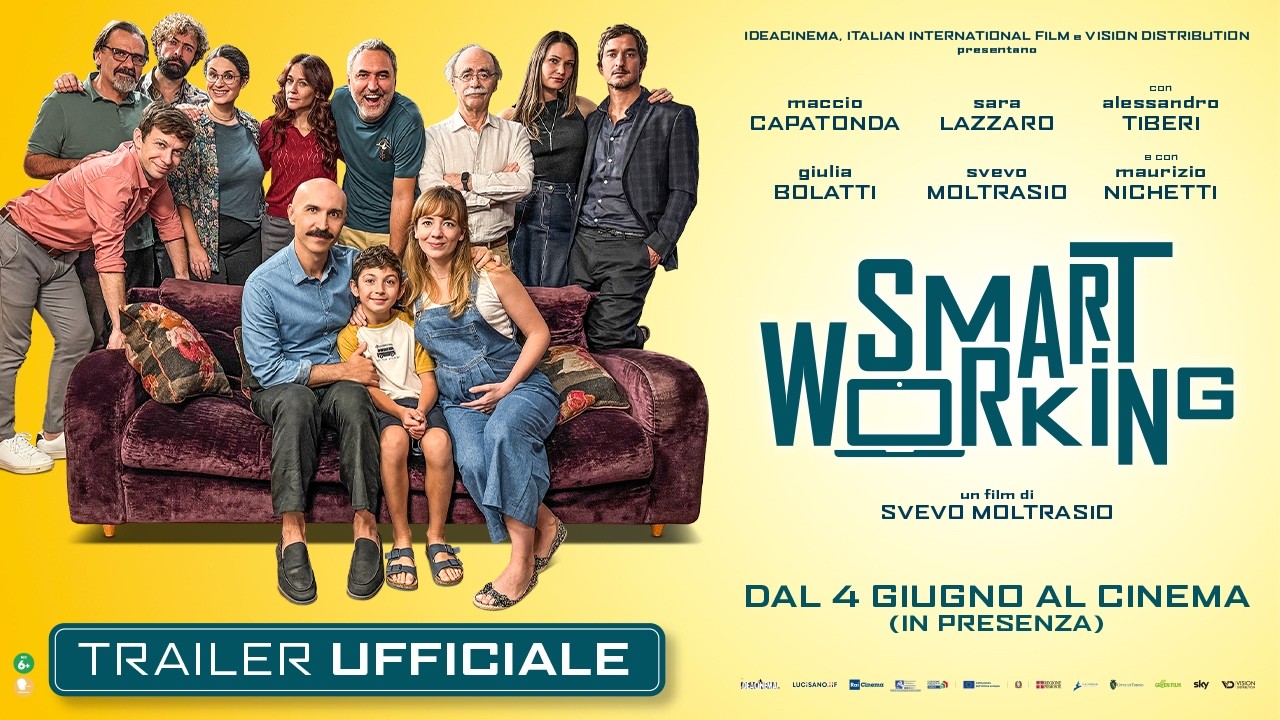




Smart Working (2026) by Svevo Moltrasio

IT | 2026 | 85 min | Workplace Comedy
➡️ Where to Watch: IT
When Working From Home Becomes the Life Worth Fighting to Keep
Giuliano has found something increasingly valuable: a job that fits around his life rather than forcing life to fit around his job. Remote work means less stress, more family time and space to plan a bigger home with Laura, an aspiring writer expecting their second child. Then his colleagues' poor productivity threatens to send everyone back to the office.
His solution creates the movie's comic reversal. Giuliano tries to help his colleagues become better remote workers, only for them to move into his apartment one by one — until the home he wanted to protect from office life effectively becomes the office.
➡️ Movie Insight: Giuliano fights to keep work out of the office and accidentally brings the entire office home. Remote work initially gives him control over his life. Protecting that freedom ultimately destroys the boundary that made it valuable.
Why This Movie Matters Right Now: Remote Work Has Become Part of How People Build Their Lives
Smart Working treats remote work less as a temporary employment arrangement than as infrastructure around which people organize family, housing and personal ambitions. Giuliano's flexibility matters because Laura is pregnant, they already have a child and the family is looking for a larger home; returning to the office therefore threatens more than his preferred workplace.
The movie also refuses an easy remote-versus-office argument. Some colleagues struggle with productivity and isolation, while Giuliano thrives away from the office. The satire instead asks what happens when companies impose one working model on people whose lives and personalities require different things.
➡️ Why It Matters: Flexible work has become connected to family life, housing choices and personal autonomy. Losing it can therefore feel like losing more than a workplace benefit. The comedy captures the contradiction of wanting freedom from the office while still needing human connection.
Should You Watch It?: A Small Workplace Comedy That Turns a Home Into an Office Nightmare
The premise develops from recognizable workplace frustration into increasingly surreal domestic farce. Giuliano begins by helping one colleague become more productive, but his apartment gradually fills with co-workers until private life and professional life become physically indistinguishable.
It is more character-driven than a rapid-fire gag comedy. Reviews particularly noted Maccio Capatonda's unusually restrained performance and Maurizio Nichetti's comic presence, while responses were more divided over the film's pacing and how successfully its social satire develops.
➡️ Viewing Recommendation: Expect contemporary workplace satire rather than conventional office comedy. Its strongest joke is structural: the freedom of working from home slowly allows work to consume the home. The everyday familiarity of that contradiction gives the absurdity its appeal.
Why Everyone Is Talking About It: Italian Comedy Turns the Post-Office Workplace Into Domestic Farce
The movie brings an unusually current workplace subject into mainstream Italian comedy. Moltrasio's second feature pairs Maccio Capatonda with Sara Lazzaro, Alessandro Tiberi and Maurizio Nichetti, while moving the director from the independent production model of Gli ospiti toward a larger industry-backed release.
The promotional trailer also found substantial online reach, registering more than three million YouTube views in the search snapshot. The film opened theatrically in Italy on June 4, 2026, through Vision Distribution.
➡️ Viral Potential: Remote work gives the movie an immediately recognizable contemporary hook. The image of an entire office gradually occupying one employee's home turns a familiar frustration into an easily communicated comic premise. Its relevance extends beyond Italy because the work-life tension is internationally recognizable.
Why Smart Working Stands Out: The Home Office Becomes the Office It Was Supposed to Replace
Most workplace comedies trap characters inside dysfunctional offices. Smart Working removes the office — and then reconstructs it inside Giuliano's apartment.
That reversal is the movie's strongest device. Giuliano wants colleagues to become productive enough to preserve everyone's independence, yet improving their remote work requires bringing them together. The more successful his intervention becomes, the less private his supposedly flexible life becomes.
➡️ Cinema Insight: The movie does not simply relocate office comedy into a home. It makes that relocation the joke itself. Giuliano preserves remote work only by recreating everything he wanted remote work to help him escape.
Movie Trend: Workplace Comedy — When Remote Work Becomes the Life Employees Will Do Anything to Protect
A newer workplace comedy can begin from the assumption that the office is no longer necessarily the center of working life. The conflict instead emerges when employees who have reorganized their lives around flexibility face the possibility that autonomy can be withdrawn.
Smart Working pushes that tension into farce. Giuliano's attempt to preserve flexibility requires increasingly extreme intervention in his colleagues' lives until individual remote work mutates into an improvised communal workplace.
Trend Formula:remote work creates freedom → personal life reorganizes around flexibility → colleagues struggle with productivity → management threatens return-to-office → employee intervenes → colleagues gather at his home → home becomes workplace → professional and private boundaries collapse → flexibility creates a new form of chaos
➡️ Movie Trend: Remote work changes workplace comedy by moving professional conflict into private space. The new threat is not escaping the office but being forced back into it. Smart Working turns that anxiety inside out by showing work invading the home instead.
Broad Trend: Freedom — When Flexible Work Gives People Greater Control Over How Work Fits Into Life
Remote work represents something larger than convenience. For Giuliano, it creates control over time, family presence and personal autonomy, turning flexibility into a form of everyday freedom. That is why the possibility of returning to the office feels like losing more than a workplace benefit: it threatens a lifestyle already built around greater control over when and where work happens.
Broad Trend Formula:convenience → flexibility → control over time → work-life autonomy → freedom
➡️ Broad Trend: Convenience makes flexible work possible, but freedom is the deeper consumer benefit. People increasingly value work arrangements that adapt to their lives rather than requiring their lives to adapt completely around work. Smart Working turns the fear of losing that autonomy into comedy.
Why These Workplace Comedies Are Popular: Work Has Become Personal in a Completely New Way
Modern workplace stories connect because employment increasingly shapes questions extending far beyond salary: where people live, how much time they spend with children, how couples divide responsibilities and how much autonomy exists in everyday life. Comedy turns those negotiations into recognizable exaggeration without removing the frustrations underneath them.
➡️ Audience Motivation: Workplace comedy transforms everyday professional irritation into collective recognition. Remote work adds the fantasy of autonomy and the fear of losing it. Audiences can laugh at Giuliano's impossible situation because the struggle to keep work from consuming life is immediately familiar.
Viewer Profile: Hybrid Lifers - Comedy Audiences Drawn to Remote Work, Family Chaos and Modern Office Culture
Hybrid Lifers recognize work as something negotiated alongside relationships, children, housing and personal ambitions rather than as an isolated part of adulthood. They are likely to connect with contemporary comedy that converts recognizable everyday pressures into escalating absurdity.
The movie also suits viewers of Italian ensemble comedy who prefer social observation and character collision over purely gag-driven humor.
Audience Dimension | Profile |
Core Audience | Contemporary Italian comedy and workplace-comedy viewers |
Age Group | Adult working audiences, particularly viewers familiar with remote or hybrid work |
Lifestyle | Professionals balancing work, relationships, family and personal time |
Cinema Taste | Workplace satire, ensemble comedy, domestic farce and contemporary Italian comedy |
Streaming Behavior | Mainstream Italian films, comedy discovery and accessible contemporary releases |
Discovery Mindset | Recognizable social situations, popular comic performers and relatable modern-life premises |
➡️ Audience Insight: Hybrid Lifers recognize that flexibility has become part of everyday quality of life. They also understand how easily professional demands can colonize supposedly private time. The movie exaggerates that tension until work literally occupies the family home.
What This Movie Means for the Industry: Workplace Comedy Is Moving Beyond the Office
The film demonstrates how post-pandemic working patterns can generate new comic structures rather than simply provide topical dialogue. Once work becomes geographically flexible, stories can explore new conflicts around productivity, isolation, surveillance, domestic space, family responsibilities and the disappearance of boundaries.
Its production trajectory is also notable. Moltrasio moved from the independently made Gli ospiti into a production involving Ideacinema, Italian International Film - Gruppo Lucisano and Rai Cinema, with Vision Distribution handling Italy.
➡️ Industry Insight: Changing work culture gives comedy a new collection of recognizable conflicts. The workplace no longer needs to be a physical office for colleagues and corporate expectations to dominate someone's life. Contemporary comedy can follow work wherever audiences now experience it — including directly into the home.
Creative Analysis: The Dream of Working From Home Becomes a Surreal Domestic Invasion
Moltrasio builds the film around spatial escalation. What begins with one man's comfortable remote routine gradually turns his apartment into an increasingly crowded communal workplace, allowing the physical transformation of the home to visualize the disappearance of work-life boundaries.
The comedy also mixes recognizable social behavior with surreal escalation. That allows the film to observe remote work seriously enough to remain contemporary while exaggerating its contradictions into farce.
Storytelling: Every Attempt to Save Remote Work Makes Remote Work Less Desirable
The central comic mechanism is self-defeating. Giuliano helps colleagues because their poor performance threatens his freedom, but every colleague he assists occupies more of the private life he is trying to protect.
The story therefore produces an effective contradiction: the better Giuliano becomes at saving smart working, the less "smart" his own working life becomes.
Direction: Svevo Moltrasio Turns Workplace Anxiety Into a Domestic Pressure Cooker
Moltrasio uses Giuliano as the comparatively restrained center while increasingly disruptive personalities accumulate around him. The director also appears as Stefano, one of the colleagues whose presence begins destabilizing Giuliano's carefully organized routine.
The resulting comedy works through accumulation rather than one enormous disruption. Each additional person makes the apartment less private until Giuliano's supposed sanctuary becomes a workplace community he never intended to create.
Performances: Maccio Capatonda Makes Restraint Part of the Joke
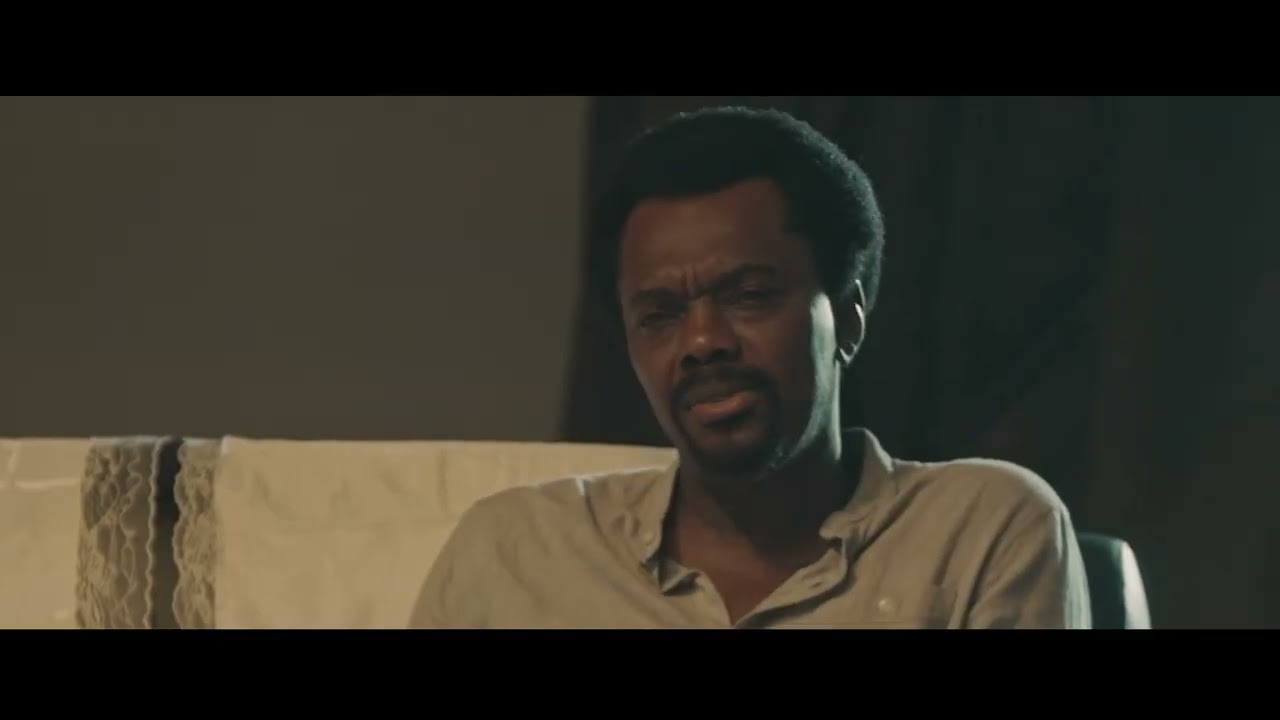
Capatonda plays Giuliano more quietly than his familiar exaggerated comic persona, making him the increasingly overwhelmed straight man surrounded by escalating chaos. Contemporary reviews specifically highlighted the performance as unusually restrained.
Sara Lazzaro plays Laura, Alessandro Tiberi plays Federico, Maurizio Nichetti plays Gianni and Moltrasio plays Stefano. The supplied IMDb material confirms those principal roles.
Visual Style: Domestic Space Shrinks as Work Expands
The apartment provides the film's most important visual idea. A space initially associated with Giuliano's freedom, family and privacy becomes progressively populated by colleagues, equipment and workplace routines.
Reviews note Moltrasio's preference for continuity within scenes over conventional shot/reverse-shot patterns, helping the growing group occupy shared physical space rather than fragmenting conversations into isolated close-ups. Cinematography is by Agostino Vertucci and production design by Barbara Sgambellone.
Themes: Flexibility, Productivity, Family, Isolation and the Disappearance of Boundaries
The film refuses to present remote work as purely liberating. Giuliano gains time and autonomy, while other employees become less productive or miss the social structure of the workplace.
That contradiction produces the broader theme: neither home nor office automatically creates a healthy working life. Flexibility matters, but so do boundaries, social connection and the ability to prevent employment from occupying every available space.
What Makes It Different: Saving Work From Home Requires Bringing Everyone Home
This is the film's cleanest comic paradox.
Giuliano could lose remote work because his colleagues cannot make it work independently. He therefore recreates collective office life inside his apartment so that everyone can continue claiming to work remotely.
➡️ Creative Insight: The film turns a workplace policy debate into physical comedy. Giuliano's apartment becomes a visual measure of how much work has invaded private life. Its smartest contradiction is that preserving flexibility ultimately requires surrendering privacy.
If You Liked Smart Working (2026): When Everyday Adult Life Turns Into Workplace Chaos
Un mondo a parte (2024) by Riccardo Milani: When Work Forces Someone to Rethink What a Better Life Actually Means
A teacher leaves Rome for a tiny mountain community, where professional responsibility gradually becomes inseparable from the future of the place around him. Like Smart Working, the comedy uses employment to examine what people really mean when they say they want a better quality of life.
➡️ Why It Connects: Both films connect work decisions to the structure of everyday life. Comedy emerges from people adapting professional expectations to environments that refuse to cooperate. Beneath the humor sits a broader question about what work should contribute to a good life.
50 km all'ora (2024) by Fabio De Luigi: When Adult Responsibilities Collide With the Lives People Thought They Would Have
Two estranged brothers reconnect on an unlikely journey after their father's death, turning middle-aged frustration into an accessible Italian comedy about relationships and missed possibilities.
➡️ Why It Connects: Both movies find comedy in adults whose carefully managed lives stop behaving according to plan. Everyday responsibilities collide with relationships and personal ambitions. Humor becomes a way of examining whether efficiency has actually made adulthood more satisfying.
Grazie ragazzi (2023) by Riccardo Milani: When an Unpromising Job Creates an Unexpected Community
An unemployed actor accepts a theatre-teaching job in prison and discovers that a professional compromise can create genuine human connection.
➡️ Why It Connects: Both films begin with work and gradually become stories about community. Professional arrangements create relationships their protagonists never expected to need. The workplace becomes meaningful because of the people who disrupt it.
➡️ If You Liked Insight: These Italian comedies use work as an entry point into larger questions about how adults organize their lives. Professional problems become inseparable from family, friendship and personal fulfillment. The comedy works because employment is never only about employment.
Final Verdict: The Freedom of Working From Home Disappears When the Office Moves In
Smart Working finds its strongest idea in a contradiction that is both absurd and recognizable: Giuliano loves remote work because it protects his private life, then destroys his privacy trying to preserve remote work. The escalating invasion of his apartment gives an abstract debate about workplace flexibility a concrete comic form.
The movie does not need to decide whether home or office is inherently better. Its more useful observation is that flexibility loses its value when people lose control over the boundary between professional and personal life.
➡️ Final Verdict: Giuliano begins with the working arrangement he thinks has solved adult life. Protecting it turns his home into precisely the environment he wanted to escape. The comedy ultimately suggests that flexibility matters most when people retain control over where work ends.
Quick Facts: Remote Work Saves Giuliano's Life Until His Colleagues Move Into It
Director | Svevo Moltrasio |
Screenplay / Writer | Svevo Moltrasio |
Lead Cast | Maccio Capatonda, Sara Lazzaro |
Key Cast | Alessandro Tiberi, Maurizio Nichetti, Svevo Moltrasio, Giulia Bolatti |
Country | Italy |
Year | 2026 |
Runtime | 85 min |
Genre | Workplace Comedy |
Language | Italian |
Cinematography | Agostino Vertucci |
Editing | Svevo Moltrasio |
Music | Fabio D'Onofrio |
Production Design | Barbara Sgambellone |
Production | Ideacinema, Italian International Film - Gruppo Lucisano, Rai Cinema |
Producers | Claudio Saraceni, Federico Saraceni, Jacopo Saraceni |
Distribution | Vision Distribution |
Festival Profile | Milano Film Fest 2026 — Special Event, Out of Competition |
Awards & Recognition | No major awards verified |
Movie Trend | Workplace Comedy — When Remote Work Becomes the Life Employees Will Do Anything to Protect |
Central Characters | Giuliano, Laura |
Core Conflict | Giuliano tries to preserve remote work by improving his colleagues' productivity, only for them to turn his family home into an improvised office |
Creative Hook | An employee trying to save work-from-home accidentally moves the workplace into his home |
Core Themes | Remote work, work-life balance, productivity, family, privacy, isolation, community |
Why Watch | A contemporary Italian comedy that turns the return-to-office debate into escalating domestic farce |
The supplied IMDb material confirms the film's Italian origin, June 4, 2026 release, Italian language, Turin filming and Ideacinema/Italian International Film production credits. The 85-minute runtime is also recorded there. Filmitalia verifies the principal creative credits and producers.
Final Insights: Workplace Comedy Is Following Work Out of the Workplace
The office comedy once depended on trapping incompatible personalities inside the same building. Hybrid and remote work create the opposite comic possibility: colleagues are physically separated, but technology and corporate expectations allow work to follow them into spaces that were previously private.
That shift gives filmmakers new territory around isolation, flexibility, productivity, family and the increasingly uncertain border between working time and personal time. Smart Working finds the perfect absurd image for that transition: the employee who escapes the office only to discover that the office has followed him home.
➡️ Final Insight: The future of workplace comedy does not require a workplace. Work can now invade kitchens, bedrooms, relationships and family routines without anyone entering an office building. Smart Working turns that transformation into a simple contemporary paradox: escaping the office does not necessarily mean escaping work.
Comments