

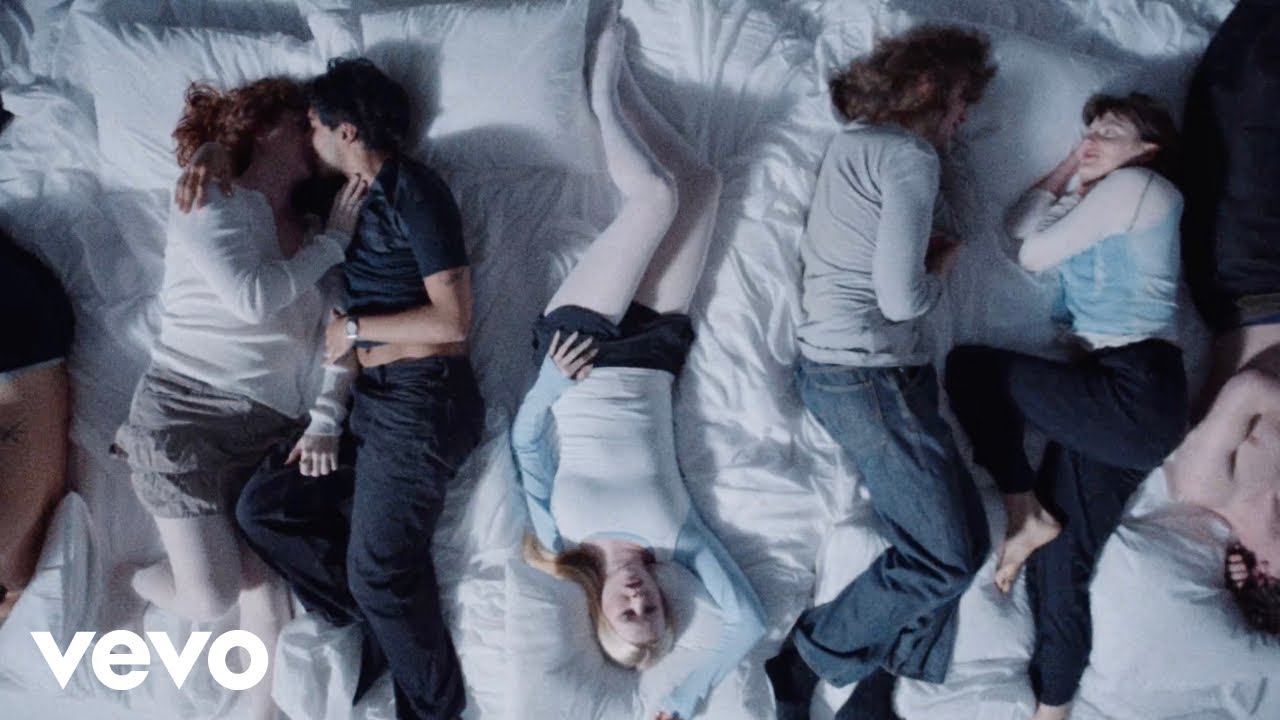


Room Temperature (2025) by Dennis Cooper & Zac Farley
- dailyentertainment95

- Mar 28
- 9 min read
The haunted house as American family portrait — funny, creepy, and possibly great
Every year, a family transforms their home into a haunted house for the neighbourhood. What began as a shared tradition has become the father's all-consuming vision — and as Halloween approaches, the gap between his grand ambitions and the plastic alligators on the lawn reveals everything the family is trying not to say.
Why It Is Trending: Underground Legend Dennis Cooper Delivers His Most Accessible and Unsettling Film
John Waters ranked Room Temperature sixth in his top ten films of 2025, writing: "A purposely tedious and tender poetic head-scratcher of a film — just when you begin hating this film, you'll suddenly realize — huh? I love it. It's weird, creepy, and maybe… just maybe, great." The Waters endorsement is not incidental: it is the film's most precise critical summary and its most powerful marketing asset. Room Temperature is the third feature from the Cooper/Farley collaboration — their first in English, their first shot in the United States — and represents a creative breakthrough that their existing cult following has been waiting for. Frameline and other festival programmers described it as uniquely uncanny and distressing, aided by Cooper and Farley's troupe of non-professional actors who imbue their characters with a mix of drollness and poignance.
Elements Driving the Trend: The film avoids all received notions its premise brings to mind — while it borrows some narrative and visual ideas from horror films, it isn't exactly one. Cooper and Farley's Bressonian approach — non-professional actors, sparse dialogue delivered without affect, images that creep without anything sinister in them — creates a denaturalised domestic reality that accumulates menace slowly and precisely. Puce Mary's score pulses through yellow-lit windows, turning a corner of California desert into an unearthly landscape. The production design by Kristen Dempsey and costumes by Edwin Mohney function as characters in their own right. At 92 minutes, it is formally tight and purposefully paced.
Virality: John Waters' top ten endorsement drove immediate cinephile discovery, with the film generating passionate word-of-mouth across Letterboxd and underground film communities. Cooper's existing literary fanbase — built across decades of transgressive fiction — represents a pre-converted discovery audience.
Critics Reception: Letterboxd consensus called it simultaneously uncanny, hilarious, distressing, and achingly poignant — one of the most original and innovative independent films of the year. Screen Slate praised its ability to suggest the long-term impact of casual cruelty and control without becoming a film explicitly about abuse. Filmmaker Magazine positioned it as genuinely outside both American independent and French cinema conventions.
Awards and Recognitions: No awards confirmed. Premiered at Frameline49 LGBTQ+ Film Festival 2025. French theatrical release November 26, 2025. US festival circuit including Frameline, Los Angeles Festival of Movies, and multiple Q&A touring dates with the directors.
Room Temperature arrives at a cultural moment when the American family drama is simultaneously oversaturated and underexamined — and its outsider gaze at the home haunt as a site of control, desire, and failed ambition gives the genre a freshness that institutional filmmaking cannot manufacture. Cooper and Farley describe home haunts as outsider art that tries so hard and fails so beautifully — and the film extends that same tenderness to the family building it. For the underground film community and the broader cinephile audience that follows John Waters' taste, it is the discovery of the year.
What Movie Trend Is Followed: The American Family Horror That Never Shows the Monster
A growing strand of American independent cinema uses the horror genre's architecture — menace, dread, obsession — without its genre mechanics, finding the genuinely disturbing in the mundane surface of domestic life. Room Temperature is one of its most formally radical and emotionally precise recent examples. Without becoming a movie explicitly about abuse, it suggests the long-term impact of living amidst casual cruelty and a family more concerned with control than love. The haunted house — a space where simulated violence is performed as family ritual — becomes the film's most resonant metaphor: what does it mean when your father's greatest joy is staging scenes of murder and terror in your childhood home?
Trend Drivers: Cooper's Literary Transgression Meets Farley's Visual Precision The film's approach draws on Robert Bresson's influence on Cooper's work — non-professional actors, sparse dialogue rarely delivered with the affect events seem to demand — denaturalising the story and creating a vernacular voice that echoes the teenage interiority of Cooper's novels. The American setting — their first — gives the Cooper/Farley collaboration a cultural specificity that their French productions could not access. The home haunt as subject matter gives the film a genuinely underexplored American folk art form as its backdrop. Cooper and Farley study home haunts as outsider art: installations in dialogue with American horror movie iconography, newly scary due to their placement in everyday neighbourhoods.
What Is Influencing Trend: The post-pandemic reassessment of domestic space — what homes mean, what families perform within them, what is hidden inside the ordinary — has created a receptive audience for films that make the suburban unheimlich without genre mechanics. The success of slow-burn family horror — from Hereditary to The Innocents — has validated dread without spectacle as a mainstream arthouse proposition. Underground literary fiction is increasingly finding its cinematic equivalent in filmmakers who prioritise atmosphere and language over plot.
Macro Trends Influencing: The American Halloween industrial complex — increasingly elaborate home haunts, professional haunted attractions, year-round obsession culture — has become a genuine cultural phenomenon that no major film has yet examined seriously. The Cooper/Farley collaborative model — literary writer plus visual artist — is producing some of the most formally distinctive American independent cinema of the decade. The France/US co-production structure enables formally radical films that neither national industry would fund independently.
Consumer Trends Influencing: The cinephile audience that follows John Waters, Dennis Cooper, and outsider art traditions is highly engaged, vocal, and disproportionately influential in indie film discovery. LGBTQ+ film festival circuits are increasingly championing formally experimental work alongside identity-centred drama, reflecting the actual breadth of queer cultural production. Non-professional cast films — when executed with Cooper/Farley's precision — carry an authenticity that prestige production cannot replicate.
Audience Analysis: Cinephiles, Cooper Devotees, Horror Formalists, and the John Waters Faithful The core audience is 25–50 — culturally literate adults who follow underground literary fiction, experimental film, and the John Waters/Dennis Cooper tradition of American transgression with genuine humour and tenderness. The film's troupe of non-professional actors — musicians, visual artists — imbue their characters with a mix of drollness and poignance that trained actors could not manufacture. The horror genre framework gives it an entry point for genre audiences willing to encounter something genuinely different from what the label promises. Anyone who has felt suffocated by a parent's vision of what family should be will find something devastatingly accurate in the father's plastic alligators and the family's polite endurance of them.
Room Temperature works because it takes its subject completely seriously — the home haunt as art form, the father's obsession as genuine creative vision, the family's tolerance as its own kind of love — and the comedy and the menace emerge naturally from that seriousness, without the film having to reach for either.
Final Verdict: Room Temperature Is a Genuinely Original American Film — Deadpan, Tender, and Quietly Devastating
Dennis Cooper and Zac Farley deliver their most accomplished collaboration — a film that is simultaneously a portrait of American folk art, a family drama about control and love, and a horror film that never shows you what it's actually frightening. The non-professional cast, the Puce Mary score, the desert landscape, and the plastic alligators costing $65 each all contribute to a unified aesthetic that could only exist as the product of two artists who love what they are making without sentimentalising it. It is the kind of film that gets better the more you think about it — and the John Waters endorsement is, for once, the most accurate critical summary available.
Audience Relevance: For Anyone Who Has Ever Watched Someone Build Something That Nobody Else Believed In The father's devotion to his haunted house is the film's emotional centre — simultaneously absurd, touching, and quietly alarming. The family's patience with his vision is the film's most recognisable emotional dynamic.
Cooper describes it as a very tender and emotional film — you feel how much the father wants it to be good, and you feel how not good it is, and how disappointed by it everyone is.
What Is the Message: The Home Is Already Haunted — the Halloween Decor Just Makes It Visible In Cooper and Farley's hands, the home haunt becomes a microcosm of all-American disavowed violence — where father and son perform as murderer and victim, childhood bedrooms streak with blood, and strangers spectate performances of familicide, all taboo gauzed in DIY kitsch.
The film's most unsettling quality is its refusal to alarm — the violence is always mopped up, the family always reconvenes, and the ritual continues. That repetition is the horror.
Relevance to Audience: A Horror Film That Earns Its Dread Through Patience The film's pace is deliberate and precise — accumulating strangeness rather than shock, building a world that feels increasingly unearthly the longer you inhabit it. Audiences who surrender to its rhythm will find it deeply rewarding; those seeking conventional horror mechanics will find it frustrating.
That division is not a failure but a feature — Room Temperature knows exactly who it is for.
Social Relevance: The American Family as Performance Space The haunted house tradition — neighbours invited to watch a family perform violence in their own home — is a genuinely revealing American folk ritual, and Cooper/Farley are the first filmmakers to treat it with the cultural seriousness it deserves. The father's obsession with making his haunt "scary enough" mirrors every parent who has confused their own need for expression with their family's wellbeing.
That mirror is the film's most political gesture, and it is held completely still.
Performance: Non-Professionals Who Feel Like They Were Always There The cast — drawn from musicians and visual artists — conveys the essence of the creative urge to explore a narrative in a way that trained actors rarely achieve. John Williams as the father is the film's most fascinatingly opaque presence — attentive and excited on the surface, with very little to hold onto underneath. Charlie Nelson Jacobs brings quiet teenage endurance to Andre — a character whose patience is its own kind of performance.
Legacy: The Breakthrough That Cooper/Farley Have Been Building Toward Room Temperature will be remembered as the film where Cooper and Farley fully realised the potential of their collaboration — and as a defining entry in the tradition of American underground cinema that runs from John Waters through Todd Haynes and beyond. Its John Waters endorsement is both a legacy placement and a genuine critical verdict.
The film's audience will grow steadily as it travels festival circuits, cinematheques, and the kind of passionate word-of-mouth that only genuinely original work generates.
Success: John Waters Top Ten, Festival Circuit, Cinephile Discovery John Waters ranked it sixth in his top ten films of 2025. Premiered at Frameline49 LGBTQ+ Film Festival 2025. French theatrical release November 26, 2025 via Anna Sanders Films. IMDb user rating of 5.8 from 45 early viewers — a score that reflects the film's deliberately polarising qualities rather than its actual cultural significance.
No awards confirmed. Available on MUBI. US theatrical run ongoing through Q1 2026 with director Q&A appearances.
Insights Room Temperature is the film that proves Dennis Cooper was always a filmmaker — and that the home haunt was always a work of art waiting to be taken seriously. Industry: The Cooper/Farley model — underground literary writer plus visual artist, non-professional cast, France/US co-production — is producing formally distinctive American independent cinema that no studio development process could generate, and the John Waters endorsement confirms its cultural position. Audience: The cinephile audience that follows John Waters, Dennis Cooper, and outsider art traditions is small, passionate, and disproportionately influential — and this film will build a devoted following that outlasts any conventional marketing metric. Social: By treating the home haunt as serious outsider art and the family's participation in it as a genuine emotional drama, the film reveals something true about American domestic culture — the way families perform for each other, for their neighbours, and for a version of themselves that may not exist. Cultural: Room Temperature positions itself in the tradition of American transgression done with genuine tenderness — Cooper and Farley love their subject and their characters without idealising either, which is the hardest and rarest thing any filmmaker can do.
Room Temperature is the kind of film John Waters calls "maybe great" — which means it absolutely is, and most people just haven't figured it out yet.
Summary of Room Temperature: A Halloween Haunted House, a Controlling Father, and the Dread That Lives in the Gaps
Movie themes: Domestic control, creative obsession, the performance of family, and the American folk art of the home haunt. A horror film about the ordinary violence of a parent's vision imposed on those who love him.
Movie director: Underground literary transgression meets visual artist's precision. Dennis Cooper and Zac Farley — third feature together, first in English, first in the US — deliver their most formally accomplished and emotionally resonant collaboration to date.
Top casting: Non-professionals as discovery. John Williams, Charlie Nelson Jacobs, and Chris Olsen — drawn from musicians and visual artists — create a domestic world of uncanny authenticity that trained actors could not replicate.
Awards and recognition: No awards confirmed. John Waters top ten 2025. Premiered Frameline49 LGBTQ+ Film Festival 2025. French theatrical release November 2025. Available on MUBI.
Why to watch: A genuinely original American film — funny, creepy, tender, and quietly devastating — that uses a Halloween haunted house to reveal everything a family cannot say to each other. John Waters called it maybe great. He's right.
Key success factors: The Cooper literary imagination plus Farley's visual discipline plus Puce Mary's score plus non-professional cast authenticity — a combination that creates a tone no industry production could approximate.
Where to watch: US theatrical run ongoing. French release via Anna Sanders Films.
Comments