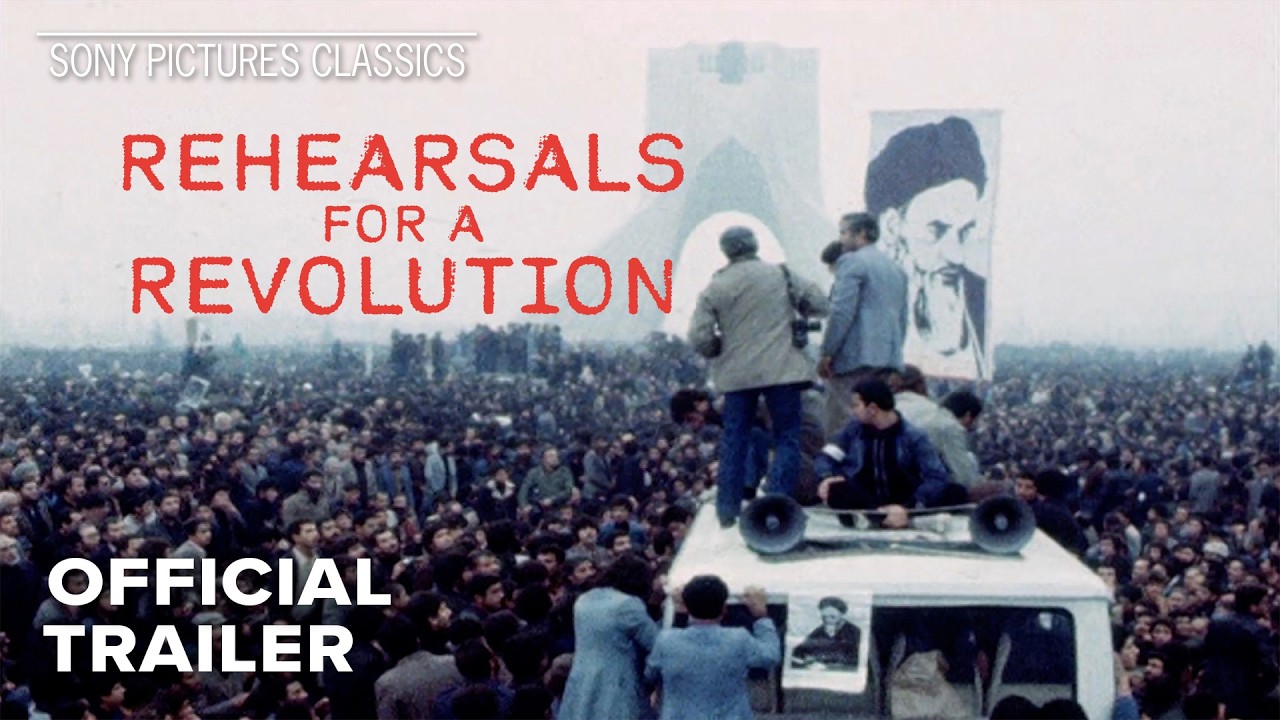


Rehearsals for a Revolution (2026) by Pegah Ahangarani: Searching for Understanding Through Iran’s Past

Trend: Search for Understanding. Topic: Personal Memory and Iran’s Political History. Pegah Ahangarani’s Rehearsals for a Revolution connects her experience of exile with four decades of Iran’s history through personal archives, home videos, protest footage, newspapers and recorded voices. The film illustrates how documentary can offer audiences a route from encountering events to examining their context and lived consequences.
➡️ Trend Insight: The search for understanding gives documentary value when evidence and personal experience help audiences make sense of a complicated past.
Why Everyone Is Talking About It: Political History Becomes a Personal Question
Stories about political upheaval become more engaging when audiences can follow their consequences through an individual life. Exile adds a particular tension: someone is physically separated from a country while remaining connected to its memories, history and unresolved questions. That relationship gives viewers an accessible entry point into events they may otherwise encounter as distant headlines.
Rehearsals for a Revolution brings this approach into a visible cultural conversation. The supplied report identifies its L’Oeil d’Or win at Cannes, screenings at Telluride and Toronto, and selection as the UK’s international-feature Oscar entry. These are concrete signals of industry recognition and opportunities for discovery, rather than proof of a widespread change in viewing behavior.
The broader appeal concerns whose experiences become part of the historical record. Personal footage and recorded voices can introduce perspectives that a brief news account cannot fully accommodate, inviting audiences to examine how public events intersect with private lives.
➡️ Conversation Insight: History becomes more discussable when audiences can connect large political events with a life shaped by them.
Why This Trend Matters Right Now: More Information Does Not Automatically Produce Understanding
Knowing that an event happened is different from understanding its background, consequences and significance. A headline can establish the immediate development; a longer narrative can examine relationships across time and show how events enter everyday life.
Documentary offers one way to organize that complexity. Bringing archives, testimony and historical context together can help viewers identify connections while retaining questions and uncertainty. The value depends on how transparently the film handles its material, including the distinction between a recorded event, a remembered experience and a filmmaker’s interpretation.
Rehearsals for a Revolution provides a concrete example through its reported 40-year scope and combination of private and public records. Its personal perspective offers an interpretive route into history, rather than a complete account of every experience within it.
➡️ Understanding Insight: Context becomes valuable when it helps audiences examine relationships between events without making complexity disappear.
Viral Potential: Personal Archives Give Viewers Discoveries to Discuss
Archival storytelling can inspire sharing through moments that connect a familiar public event with an unexpected personal perspective. A home video, recorded voice or observation about exile may prompt viewers to reconsider what they thought they understood.
Word of mouth can grow when audiences can explain what the film helped them see differently. Recommendations might focus on its use of family material, its historical span or the relationship between belonging and distance. Filmmaker conversations and carefully contextualized clips can give that discussion a clearer starting point.
Awards recognition supplies an additional discovery hook, but the report contains no engagement figures establishing virality. The strongest potential lies in meaningful discussion: viewers sharing questions, interpretations and reasons to watch beyond the film’s awards position.
➡️ Viral Insight: A documentary can travel through word of mouth when viewers can describe the insight or question that stayed with them.
Who Is Driving This Trend: Viewers Seeking Context Behind Political Events
The potential audience includes documentary viewers, people interested in Iran’s history and audiences drawn to personal accounts of exile and belonging.
Audience Dimension | Profile |
Core Audience | Viewers interested in understanding political history through archives and personal storytelling. |
Age / Generation | Not established by the source. |
Sex / Gender | Not established by the source. |
Income | Not established by the source. |
Education | Not established by the source. |
Lifestyle | Potential interest in documentaries, cultural discussion and historical exploration. |
Shopping / Spending Behavior | May choose cinema screenings or later viewing options; purchase behavior is not supplied. |
Category Behavior | Engages with films that connect individual experiences and wider events. |
Discovery Mindset | Can encounter the film through festivals, awards coverage, cultural programming and recommendations. |
Emotional Driver | Understanding: The desire to make events and their consequences more comprehensible. |
➡️ Audience Insight: The film can welcome viewers through personal curiosity while offering historical context that sustains deeper engagement.
Core Motivations: The Search for Truth Leads Audiences Toward Context
The proposed motivational pattern combines a desire to examine evidence with interest in the experiences and historical relationships behind it.
Motivation Name | Description / Implication |
1. Search for Truth | Examine records and perspectives to form a more informed view; explain the origins and limits of the material. |
2. Historical Context | Understand how events relate across decades; provide a coherent framework without implying a single inevitable path. |
3. Access to Lived Experience | Explore consequences through someone connected to the history; preserve the specificity of that perspective. |
4. Reconsidering Assumptions | Encounter material that may complicate an existing view; allow room for questions and reflection. |
5. Understanding Exile | Explore how distance affects memory and belonging; connect personal circumstances with their wider context. |
6. Meaningful Discussion | Share interpretations and ask informed questions; screenings and accompanying conversations can support engagement. |
➡️ Motivation Insight: The search for truth becomes more productive when evidence is accompanied by context and a clear account of perspective.
Why Consumers Are Changing: Viewing Can Become an Act of Inquiry
The audience opportunity concerns how a film is used. Alongside emotional engagement, documentary can become a way to investigate questions, encounter unfamiliar perspectives and deepen knowledge of a subject.
This film does not establish that all viewers are becoming more investigative. It illustrates an offer suited to that purpose: a personal account built from different forms of archival material, connecting an individual’s experience with a longer political history.
The consumer tension can be expressed as: “I want to know what happened—but I also want to understand what it meant for the people living through it.” This editorial interpretation connects Search for Truth as the motivation with Understanding as the deeper drive.
➡️ Consumer Insight: Documentary becomes more meaningful when it helps viewers move from recognizing an event to examining its consequences.
What Connects the Film with the Trend: Private Records Open a Route into Public History
The film’s reported approach creates several opportunities for understanding, each shaped by the nature of the material used.
Element | Audience Interpretation | Importance / Implication |
Personal Archives and Home Videos | Private life provides an entry point into the period. | Makes the narrative specific while reflecting a particular recorded perspective. |
Protest Footage | Public events become visible within the historical account. | Requires context about when, where and how the material was recorded. |
Newspapers | Contemporary reporting becomes part of the archive. | Can show how events were represented at the time. |
Recorded Voices | Testimony and recollection introduce lived perspectives. | Their relationship to documented events should remain clear. |
Forty-Year Scope | Events can be considered within a longer sequence. | Creates room to examine continuity, change and consequences. |
The Filmmaker’s Exile | Distance becomes part of the relationship with the past. | Connects political history with memory, belonging and present circumstances. |
➡️ Documentary Insight: The combination of private and public material can deepen understanding when viewers can recognize what each source contributes.
Marketing Strategy: Make the Film’s Questions and Historical Perspective Accessible
The strategy is to introduce audiences through Ahangarani’s personal story, then provide practical ways to explore the historical context around it.
Area | Strategy | Opportunity |
Product | Accompany selected screenings with a historical timeline, an explanation of the archival approach or a filmmaker conversation. | Help viewers connect the film’s personal narrative with its wider context. |
Pricing | Offer clearly priced screenings and, where partners can support them, student or community tickets. State whether discussions are included. | Make contextual viewing accessible to audiences with different budgets. |
Promotion | Use trailers and interviews to explain the connection between exile, personal records and Iran’s history. Present awards as recognition rather than proof of historical authority. | Give audiences a substantive reason to watch beyond awards interest. |
Distribution | Programme the film through independent cinemas, festivals, universities and cultural institutions, alongside its commercial release. | Reach audiences seeking both documentary viewing and discussion. |
Innovation | Test post-screening discussions and concise companion resources. Ask viewers which questions remain unclear and which material helped their understanding. | Improve contextual programming around the film. |
➡️ Strategic Insight: A search-for-understanding proposition becomes stronger when audiences can access both the film and useful context for discussing it.
Trend Snapshot: Personal History Becomes a Route to Understanding
The film connects the search for truth with the deeper wish to understand how political events shape lives across time.
Trend Dimension | Insight |
Broad Trend – Search for Understanding | Audiences are offered a framework for interpreting complex events through evidence, context and personal experience. |
Industry Trend – Personal-Archive Documentary | Private records and public material connect an individual life with political history. |
Lifestyle Trend – Understanding Through Stories | Viewers can explore complicated subjects through a narrative they can follow and reflect on. |
Strategy – Connect Personal Stories with Historical Context | Introduce the lived experience and explain the wider setting around it. |
Consumer Motivation – Search for Truth | Examine records and perspectives to develop a more informed view. |
Consumer Drive – Understanding | Make events, relationships and consequences more comprehensible. |
Business Opportunity – Discussion-Led Film Discovery | Connect cinema viewing with cultural programming and informed conversation. |
Innovation Outlook – Context-Rich Viewing | Pair documentary with timelines, archive explanations and educational resources. |
➡️ Trend Snapshot Insight: Personal storytelling can make the search for truth more engaging when it helps audiences understand both events and their lived meaning.
Final Thoughts: Understanding Requires Evidence and Perspective
Search for Understanding highlights the value of stories that connect information with context. Rehearsals for a Revolution illustrates this through an account of exile and a homeland’s history assembled from personal and public archives. Its potential contribution lies in giving viewers a perspective they can examine, rather than treating one narrative as the entirety of the past.
Future opportunities will depend on making complex documentary work accessible without simplifying its claims. Filmmakers, distributors and cultural partners can support this through transparent context, thoughtful programming and space for questions. The lasting value is the understanding audiences continue to develop after viewing.
➡️ Final Insight: Search for Understanding → Examination of Evidence → Informed Perspective. Audiences can pursue truth by exploring how records, memories and historical context relate. Documentary becomes more valuable when it leaves viewers better equipped to question, interpret and understand.
Festival Recognition and Release: From International Festivals to Cinemas
Rehearsals for a Revolution won the L’Oeil d’Or documentary award at Cannes and screened at the Telluride Film Festival and Toronto International Film Festival. These are past festival appearances, rather than current viewing opportunities. The film was also selected as the UK’s official entry for the Oscar for Best International Feature Film; this is a submission for consideration, not an Oscar nomination.
The film was released in UK cinemas in September 2026. In the US, Oscar-qualifying engagements in New York and Los Angeles are planned for December 2026, followed by an opening at Film Forum in New York and Landmark’s Nuart Theatre in Los Angeles on January 8, 2027. A wider US theatrical rollout is scheduled over the following weeks, according to the supplied report.
➡️ Distribution Insight: Festival recognition and the UK’s Oscar submission give the film additional discovery opportunities as it moves toward its wider theatrical release.

Comments