
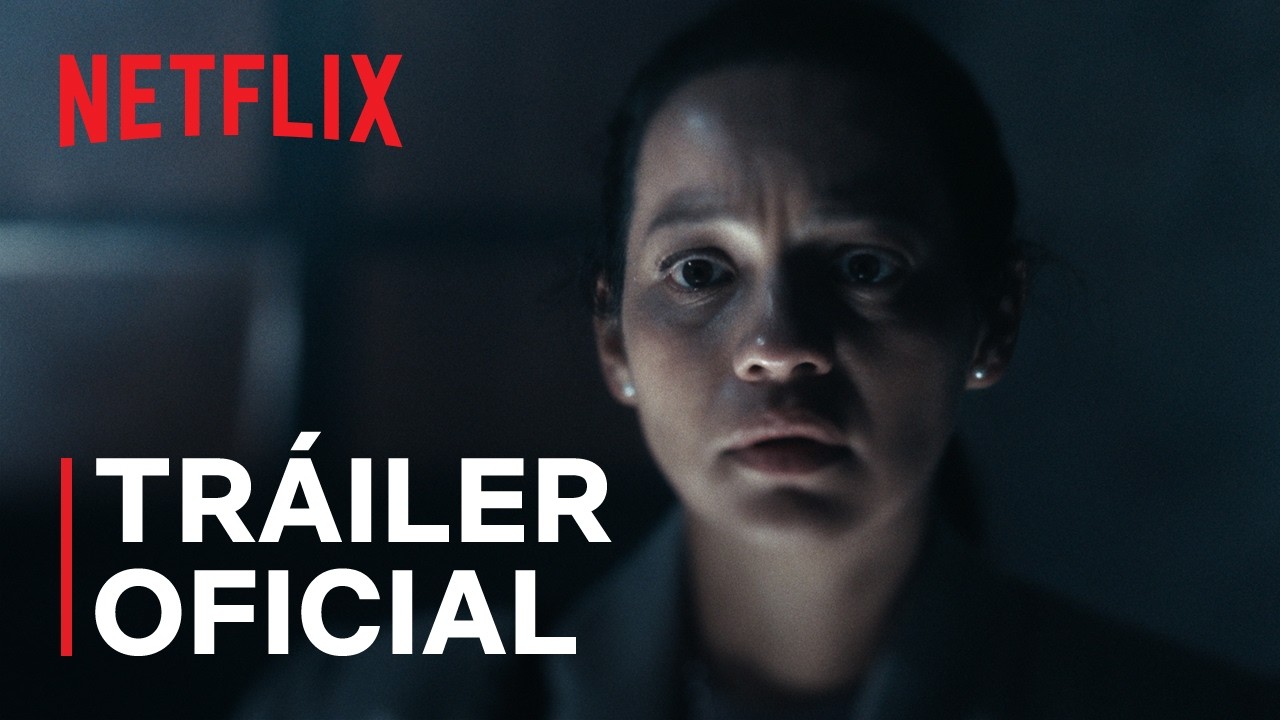




Furious (2026) by Elizabeth Meriwether

United States | 2026 | 8 Episodes | Psychological Crime Thriller
One Agent. One Killer. Justice Blurs.
An FBI agent hunting a female serial killer enters a psychological battle where justice, trauma and revenge become increasingly difficult to separate.
FBI agent Alice Black (Emmy Rossum) is pursuing Catherine (Lola Petticrew), a calculating serial killer whose crimes draw Alice into something considerably more complicated than a conventional investigation. Both women believe they are pursuing justice, and as their lives begin to intersect, the distinction between investigator and killer becomes psychologically unstable. The eight-episode Hulu series premiered July 27, 2026, with three episodes before moving to weekly releases.
Created by Elizabeth Meriwether, Furious is loosely inspired by the 1987 film Black Widow but substantially reworks its premise around contemporary ideas of female violence, trauma and moral ambiguity. Emmy Rossum leads alongside Lola Petticrew, Scoot McNairy, Quincy Tyler Bernstine and Jake Lacy, while Brian Kirk directed the first two episodes.
➡️ Movie Insight: Furious makes its serial-killer hunt more provocative by asking whether understanding a killer's reasons can destabilize the investigator's own definition of justice.
Should You Watch It?: A Serial-Killer Thriller Driven by Psychology Rather Than the Identity of the Killer
Furious immediately removes one of the traditional mysteries of serial-killer television: we know Catherine is the killer. The suspense instead comes from watching Alice identify, pursue and psychologically engage with a woman whose behavior becomes increasingly difficult for her to treat as an abstract criminal case.
That shift gives Emmy Rossum and Lola Petticrew room to construct the series around two competing female perspectives. Alice is a former NYPD homicide detective now working at the lower end of the FBI hierarchy, while Catherine is deliberately presented as controlled, adaptable and skilled at manufacturing intimacy. Their contrasting personalities turn the investigation into a psychological chess match rather than a conventional whodunit.
The series also benefits from being compact. Eight episodes allow the investigation to develop into a larger exploration of trauma and vengeance without requiring the extended commitment of a multi-season procedural. Meriwether and Rossum have described the series as deliberately twist-driven, with the relationship between Alice and Catherine providing its central emotional uncertainty.
➡️ Viewing Takeaway: Watch Furious for the psychological relationship between Alice and Catherine—the pursuit matters, but the real tension comes from discovering how much moral territory the two women might share.
Why Everyone Is Talking About It?: A Familiar Crime Formula Gets Two Unusually Complicated Women
The immediate attraction is Emmy Rossum's return to a major television lead, but Furious has generated attention because it gives the serial-killer thriller an unusual moral configuration. Rather than building another male-killer/female-investigator story, Meriwether places women on both sides of the pursuit and allows neither to fit comfortably into familiar crime archetypes.
The critical response has been particularly strong. Rotten Tomatoes currently records a 100% Tomatometer from 37 reviews, compared with an 88% audience score, indicating unusually positive early critical reception for the series.
Its streaming debut has also generated early audience interest internationally. Shortly after release, JustWatch ranked Furious at No. 1 on its Australian and UK daily streaming charts, suggesting the Hulu Original was finding an audience beyond its U.S. launch.
➡️ Buzz Insight: Furious is attracting attention because it combines the accessibility of a serial-killer thriller with the more morally complicated character writing expected from prestige television.
Why Furious Stands Out: The Killer Is Not the Mystery—Her Idea of Justice Is
Many serial-killer thrillers depend upon concealment. The audience follows investigators through clues until the identity, psychology or methodology of the murderer gradually becomes visible. Furious reverses that relationship by allowing Catherine to exist as a parallel protagonist rather than simply the object of Alice's investigation.
That changes the central question. Catherine's violence remains frightening, but Meriwether is interested in why she constructs it as justice. Alice simultaneously represents institutional justice while carrying experiences that complicate her relationship with the institutions she serves. The closer the women move toward one another, the more uncomfortable that contrast becomes. Disney's own synopsis foregrounds precisely this convergence, describing both women as following their own paths toward justice as right and wrong begin to blur.
The distinction is important because Furious does not simply gender-swap the traditional serial killer. It makes female violence itself part of the psychological argument, examining what happens when trauma, anger and perceived injustice are allowed to coexist with acts that cannot easily be morally defended. Meriwether specifically approached the project as an opportunity to explore female violence without reducing it to familiar stereotypes.
➡️ Standout Insight: Furious stands apart by making the serial killer someone the investigator must psychologically understand, turning empathy itself into one of the thriller's dangers.
Movie Trend: Female-Led Psychological Crime — Women Are Occupying Both Sides of the Moral Conflict
Crime television is increasingly giving women roles that extend beyond victim, endangered witness or morally uncomplicated investigator. Furious pushes that evolution further by placing two complicated women on opposite sides of the law while refusing to make either woman's relationship with justice straightforward.
Catherine represents a particularly important variation on the female serial-killer character. She is not treated simply as a novelty created by reversing the gender of a familiar archetype. Her methods involve manufactured intimacy, while her motivations allow the series to examine female anger and violence within a broader conversation about trauma and vengeance.
Alice creates the complementary perspective. By positioning one woman inside law enforcement and another outside it, Furious can question institutional and personal justice simultaneously. The crime thriller consequently becomes a vehicle for examining who is permitted to exercise violence, who gets called dangerous and who gets to define justice.
➡️ Movie Trend Insight: Furious reflects a move toward female-led crime stories in which women are no longer simply solving or surviving violence—they are becoming the morally complicated figures through whom violence itself is examined.
➡️ Movie Trend: Female-Led Psychological Crime
Who Should Watch It? (Audience Profile): Prestige Crime Viewers Looking for Moral Ambiguity
Audience Profile | Description |
Core Audience | Psychological crime, serial-killer thriller and prestige television viewers |
Secondary Audience | Viewers interested in complex female protagonists, trauma narratives and morally ambiguous dramas |
Age Group | Primarily adult audiences, approximately 25–54 |
Gender | Broad appeal, with particular relevance for audiences interested in female-centered crime storytelling |
Income | Broad middle- and upper-middle-income streaming audience |
Lifestyle | Streaming-first viewers interested in prestige drama, true-crime culture, psychological thrillers and character-driven mysteries |
Viewing Habits | Hulu / Disney+ subscribers, weekly prestige-series viewers and crime-thriller binge audiences |
Furious should resonate most strongly with viewers who want the psychological intensity of a serial-killer story without relying entirely on procedural mechanics. Its attraction comes from character behavior, moral ambiguity and the changing relationship between Alice and Catherine as much as from the investigation itself.
It should also appeal to audiences interested in contemporary female antiheroes. Catherine occupies particularly provocative territory because the series asks viewers to understand her without requiring them to endorse her, while Alice provides an institutional counterpoint that becomes increasingly unstable.
➡️ Audience Insight: Furious is designed for viewers who want crime television to make them question the people they are following rather than simply decide which side they should support.
What This Movie Means for the Industry: Female-Led Crime Is Moving Beyond Victimhood and Conventional Heroism
Furious illustrates a broader development in premium crime television: female-centered stories no longer need to position women primarily as victims or morally uncomplicated investigators. By building an eight-episode thriller around an FBI agent and the female serial killer she pursues, the series allows two women to occupy roles historically dominated by men while making their psychology—not the gender reversal itself—the principal attraction.
The project also demonstrates how established intellectual property can be reworked rather than simply reproduced. Furious is only loosely adapted from Black Widow (1987), retaining the fundamental fascination with a female serial killer while expanding the concept into an eight-hour psychological relationship capable of addressing contemporary questions about trauma, violence and justice.
Its distribution strategy is equally revealing. Hulu launched the series in the United States while Disney+ distributed it internationally on the same July 27 premiere date, giving a Hulu-branded prestige thriller an immediate global footprint rather than treating international distribution as a secondary window.
For studios and streamers, the strategic lesson is that recognizable genres remain valuable precisely because they can accommodate changing cultural perspectives. Audiences do not necessarily need another reinvention of the serial-killer mechanism itself; the opportunity lies in changing whose psychology occupies the center of that mechanism.
➡️ Industry Insight: Furious shows how streamers can refresh established crime formulas through female moral complexity, compact limited-series storytelling and simultaneous international distribution rather than abandoning familiar genres altogether.
Creative Analysis: The Hunt Becomes More Dangerous When Hunter and Killer Begin to Mirror Each Other
Furious builds its identity around a familiar crime-thriller structure—a determined FBI agent pursuing a serial killer—but shifts the dramatic emphasis from capture toward psychological recognition. Alice Black and Catherine begin on opposite sides of the law, yet Elizabeth Meriwether gradually constructs them as women whose experiences of violence, anger and failed justice create uncomfortable points of connection.
That mirroring gives the series its strongest creative mechanism. Catherine is not hidden from the audience, so Furious does not need to spend its eight episodes asking who committed the murders. Instead, it can devote its attention to why Catherine kills, why Alice becomes increasingly consumed by understanding her, and what happens when understanding begins to resemble identification.
The series therefore works simultaneously as a pursuit thriller and a character study. Crime supplies the momentum, but the emotional tension comes from watching the moral distance between Alice and Catherine repeatedly contract.
➡️ Creative Insight: Furious turns the conventional serial-killer chase inward—the closer Alice gets to Catherine, the less certain the psychological boundary between them becomes.
Storytelling: Knowing the Killer Changes the Question From Who to Why
One of the smartest narrative decisions is revealing Catherine as the killer rather than constructing her identity as the season's central mystery. The opening episodes establish parallel trajectories: Alice investigates a suspicious overdose while Catherine prepares her next move, and Alice's fixation intensifies as evidence begins connecting apparently separate events.
That structure allows the audience to move between investigator and killer rather than remaining trapped exclusively inside the investigation. Catherine can consequently develop as a character in her own right, while Alice's pursuit becomes increasingly connected to unresolved elements of her own past. By the middle of the season, the story is no longer simply moving toward an arrest; Alice is attempting to understand the emotional logic behind Catherine's actions.
The weekly structure also supports escalation. The first three episodes arrived together, establishing the characters and central pursuit quickly, before subsequent episodes shifted toward more direct confrontation between Alice and Catherine. The season eventually reaches a situation where Alice has only an hour to convince Catherine to trust her—a striking reversal of the conventional investigator/killer relationship.
➡️ Storytelling Insight: By removing the killer's identity as the central mystery, Furious makes psychological motivation the mystery instead, allowing the relationship between Alice and Catherine to drive the suspense.
Direction: Brian Kirk Makes Psychological Proximity More Important Than Procedural Spectacle
Brian Kirk directs the opening two episodes and helps establish Furious as a psychological thriller rather than a conventional FBI procedural. The investigation provides structure, but the direction consistently keeps attention on behavior, observation and emotional instability rather than allowing forensic mechanics to dominate.
That approach is particularly important to Catherine. A less restrained version of the character could easily become an exaggerated female-serial-killer archetype. Instead, the series initially allows menace to emerge through control, manipulation and the unsettling normality with which Catherine moves between identities and situations.
Alice receives the opposite treatment. Her professional authority provides apparent stability, but the direction gradually reveals how personal the investigation is becoming. The result is a useful visual and emotional inversion: the killer can sometimes appear remarkably controlled while the investigator becomes increasingly unsettled.
➡️ Direction Insight: Furious generates tension by destabilizing its apparent roles—the killer often possesses the composure while the investigator increasingly carries the emotional volatility.
Performances: Emmy Rossum and Lola Petticrew Make Obsession a Two-Woman Relationship
Emmy Rossum gives Alice the intensity required to make obsession believable without immediately transforming the character into another reckless television detective. Alice begins from a recognizable institutional position, but Rossum gradually allows frustration, anger and personal investment to disrupt that professional identity.
Lola Petticrew has the more difficult role because Catherine must remain threatening while also functioning as a genuine dramatic protagonist. Petticrew avoids reducing her to a theatrical psychopath, instead allowing calculation, vulnerability and rage to coexist. That ambiguity is crucial: the series needs viewers to want Catherine stopped while remaining interested in understanding how she constructed her moral worldview.
The supporting ensemble broadens the conflict. Quincy Tyler Bernstine as Nora Washington and Scoot McNairy as Detective Danny Kelly provide perspectives outside the central Alice-Catherine relationship, while Jake Lacy, Rob Yang, Rob Delaney, Campbell Scott and Hope Davis expand the world surrounding the investigation.
But the series ultimately belongs to Rossum and Petticrew. Their characters do not need conventional chemistry because Furious is building a different form of intimacy—the disturbing intimacy created when one person becomes consumed by understanding another.
➡️ Performance Insight: Rossum and Petticrew make Furious compelling by treating pursuit as a relationship, creating tension from the possibility that Alice may emotionally understand Catherine long before she can defeat her.
Cinematography & Visual Style: Two Worlds Gradually Begin to Occupy the Same Frame
Furious uses the visual language of contemporary prestige crime television: controlled compositions, darker interiors, urban locations and environments designed to reinforce the psychological isolation surrounding its characters.
More important than individual stylistic flourishes is the contrast between Alice's investigative world and Catherine's carefully constructed personal world. Alice initially belongs to institutions—offices, investigations, colleagues and procedural spaces—while Catherine moves through environments where identity can be manipulated and intimacy weaponized.
As the investigation develops, those worlds become increasingly difficult to separate. The visual structure consequently supports the central narrative movement: Alice is entering Catherine's psychological territory at the same time that Catherine is becoming more present inside Alice's life.
The series does not require flamboyant imagery because its strongest visual idea is proximity. Faces, reactions and controlled confrontations matter more than spectacle.
➡️ Visual Insight: Furious uses visual proximity to reinforce psychological proximity—the closer Alice physically gets to Catherine's world, the harder it becomes to maintain emotional distance.
Themes & Messages: Justice Becomes Dangerous When It Turns Personal
The central theme of Furious is not murder itself but who gets to define justice when institutions appear incapable of delivering it. Alice operates inside an official system. Catherine has rejected that system and created her own violent alternative. Their actions are fundamentally different, yet both women increasingly confront the same question: what should happen when conventional justice fails?
That question allows the series to examine female anger without automatically converting it into either empowerment or pathology. Catherine's violence cannot simply be celebrated because the consequences are real, but dismissing her entirely as monstrous would remove the uncomfortable social questions that Furious wants the audience to consider.
Trauma is equally important. Both the killer and investigator are shaped by experiences that influence how they interpret violence, responsibility and punishment. The series therefore asks whether trauma explains behavior without necessarily excusing it.
The distinction is crucial. Understanding why someone becomes violent is not the same as declaring that violence morally acceptable. Furious deliberately occupies the unstable territory between those positions.
➡️ Theme Insight: Furious argues that understanding the origins of violence can complicate judgment without erasing responsibility—the most dangerous moral territory exists between empathy and justification.
Female Anger: Violence Is No Longer Reserved for Male Antiheroes
Female anger has become increasingly visible across contemporary film and television, but Furious takes the conversation somewhere darker by allowing that anger to become violent, morally compromised and genuinely threatening.
For decades, prestige television has given male characters enormous freedom to express rage through criminality, revenge and violence while still treating them as psychologically complex protagonists. Female characters have historically received less narrative permission to occupy comparable territory.
Catherine challenges that imbalance, but Furious does not simply transform her into a female version of the familiar charismatic male antihero. Her violence is connected specifically to gender, trauma, power and perceptions of failed justice, while Alice offers a contrasting version of female anger constrained by institutional responsibility.
Placing both women together allows the series to explore two responses to similar frustrations: one remains inside the system while the other decides that the system itself is inadequate.
➡️ Gender Insight: Furious expands the female antihero by allowing women's anger to become as morally dangerous and psychologically complicated as the violence television has long permitted male protagonists to express.
Hunter and Hunted: Empathy Becomes the Most Dangerous Part of the Investigation
The relationship between Alice and Catherine gives Furious its deepest psychological tension because Alice cannot catch Catherine without learning how Catherine thinks.
That is standard investigative logic, but Furious pushes it further. Understanding Catherine requires Alice to enter the emotional territory behind the murders, and the more she understands that worldview, the more difficult it becomes to dismiss every part of Catherine's reasoning.
The danger therefore becomes psychological contamination. Alice does not need to become Catherine for the investigation to change her; she only needs to recognize something familiar within Catherine's anger.
This makes empathy unusually threatening. In most character dramas, empathy produces connection. Here, empathy potentially destabilizes morality.
➡️ Psychological Insight: Furious transforms empathy from an emotional virtue into a source of suspense—Alice's greatest investigative strength may also be what brings her dangerously close to Catherine.
Institutional Justice vs. Personal Revenge: The Series Lives Inside the Space Between Them
Alice and Catherine embody two competing systems of justice.
Alice works within institutions, meaning evidence, procedure and legal accountability theoretically determine consequences. Catherine operates through personal judgment, deciding who deserves punishment and then delivering it herself.
Furious complicates that opposition by asking what happens when the institutional version does not always feel adequate. If systems fail victims, ignore violence or protect people who have caused harm, the emotional attraction of personal revenge becomes easier to understand—even when its consequences remain indefensible.
That is why Catherine cannot simply function as a conventional villain. The series needs her worldview to contain enough recognizable frustration that Alice—and the audience—must engage with it.
But the danger of Catherine's alternative is equally clear: once one individual decides who deserves punishment, justice becomes indistinguishable from personal power.
➡️ Justice Insight: Furious understands why revenge can feel emotionally satisfying while demonstrating why turning private anger into a personal justice system creates another form of violence.
What Makes This Movie Different?: The Serial Killer Is a Parallel Protagonist, Not a Puzzle
Furious enters an extremely crowded genre. FBI profilers, obsessive detectives and brilliant serial killers have powered decades of film and television, making reinvention increasingly difficult.
Its strongest distinction is therefore structural rather than cosmetic. Catherine is not simply the target of Alice's investigation; she occupies her own narrative space. The audience can watch both women move toward each other rather than discovering the killer exclusively through clues left behind.
That choice shifts the suspense away from identification. We are not waiting for a mask to come off. Instead, we are watching two moral systems collide.
The female perspective strengthens that distinction further. Rather than simply replacing the traditional male killer with a woman, Furious constructs both sides of the conflict around different manifestations of female anger, trauma and agency.
The result is closer to a psychological duel than a procedural mystery.
➡️ Difference Insight: Furious refreshes the serial-killer thriller by replacing the mystery of identity with the danger of identification—the question is not who Catherine is, but how much Alice may eventually recognize herself in her.
If You Liked Furious (2026): Psychological Crime Stories Where Women Take Control of the Thriller
Furious belongs to a growing group of thrillers that place women at the center of stories about violence, manipulation, survival and moral ambiguity. These recent films approach similar territory from different directions, from serial-killer reversals to female revenge, coercive control and institutional failures.
Strange Darling (2024) by JT Mollner
Strange Darling is the closest match for viewers attracted to the way Furious destabilizes assumptions about killer, victim and pursuer. A one-night encounter becomes a violent serial-killer story, but Mollner deliberately fragments the narrative into six chapters and rearranges information so that the audience's interpretation of the characters repeatedly changes.
Like Furious, the film understands that a contemporary serial-killer story can create more tension by manipulating perspective rather than simply concealing identity. Willa Fitzgerald's central performance is especially effective because the film continually challenges viewers to reconsider what they think they understand about her character.
➡️ Similarity Insight: Watch Strange Darling for another female-centered serial-killer thriller that turns audience assumptions about victimhood, violence and identity into part of the suspense.
Woman of the Hour (2024) by Anna Kendrick
Anna Kendrick's directorial debut approaches serial-killer cinema from the opposite direction. Based on the extraordinary true story of serial killer Rodney Alcala appearing on The Dating Game, the film shifts attention away from fascination with the murderer and toward the women forced to recognize danger in environments that repeatedly underestimate it.
That makes it particularly relevant to Furious. Both stories examine violence through a female perspective and question the systems surrounding that violence. Woman of the Hour is less interested in turning its killer into a charismatic criminal mastermind than in exposing the social conditions that allow threatening men to appear ordinary, charming and credible.
Kendrick's approach also transforms what could have been another true-crime reconstruction into a broader examination of gender, power, intuition and institutional failure.
➡️ Similarity Insight: Watch Woman of the Hour for another crime thriller that shifts attention away from fascination with the killer and toward women's experience of violence, power and failed protection.
Blink Twice (2024) by Zoë Kravitz
Zoë Kravitz's Blink Twice begins with seduction rather than investigation. Cocktail waitress Frida is invited into the luxurious world of billionaire Slater King, joining him and his friends on a private island before strange gaps in memory reveal something considerably more sinister beneath the apparent fantasy.
Its strongest connection with Furious is its treatment of female anger as a response to manipulation and systemic power. Both stories move beyond positioning women solely as passive victims. Instead, the recognition of violence becomes the catalyst for women taking control of the narrative.
Blink Twice is more overtly stylized and horror-driven than Furious, but the films share an interest in the uncomfortable relationship between trauma and retaliation. The question is no longer merely whether a woman survives violence, but what she is prepared to do once she understands the system enabling it.
➡️ Similarity Insight: Watch Blink Twice for a darker, more stylized exploration of female trauma turning into agency, anger and retaliation.
Drop (2025) by Christopher Landon
Drop takes female-centered psychological suspense into the hyper-connected present. Violet, a widowed mother attempting her first date in years, begins receiving anonymous messages threatening her child's safety and ordering her to kill the man sitting across from her.
Where Furious explores the psychological relationship between investigator and killer across an entire season, Drop compresses a similar question of control, threat and moral choice into a single contained evening. Violet is repeatedly forced into situations where apparently straightforward distinctions between victim, perpetrator and potential killer become dangerously unstable.
The connection is especially strong in the way both stories give their female protagonists impossible moral decisions rather than treating them simply as people awaiting rescue. Violence becomes something the protagonist must actively interpret and respond to.
➡️ Similarity Insight: Watch Drop for another female-led thriller where psychological manipulation forces its protagonist to decide how far she is prepared to go when someone else controls the rules.
Final Verdict: A Female-Led Serial-Killer Thriller That Makes Understanding the Killer Part of the Danger
Furious works best when it stops behaving like a conventional hunt for a serial killer and concentrates on the increasingly complicated psychological relationship between Alice Black and Catherine. Because the audience already understands who Catherine is, the series can devote more of its attention to motivation, trauma, female anger and the uncomfortable possibility that understanding violence can make moral judgment more complicated.
Emmy Rossum gives Alice the intensity necessary to carry that conflict, while Lola Petticrew makes Catherine more than a conventional antagonist. Their performances create the series' strongest dynamic: investigator and killer gradually become psychological counterpoints, with each woman representing a radically different response to violence, institutional failure and the desire for justice.
The series is less distinctive when it falls back on familiar crime-thriller mechanics. FBI investigations, obsessive detectives and charismatic killers are established prestige-TV territory, and not every development escapes those conventions. But the eight-episode structure keeps the narrative concentrated, while Elizabeth Meriwether's emphasis on female violence and moral ambiguity gives the familiar framework a more contemporary identity.
What ultimately makes Furious worth watching is the uncomfortable question underneath the pursuit. Alice needs to understand Catherine in order to stop her, but every step toward understanding also makes Catherine harder to reduce to a simple monster. The investigation becomes dangerous not only because Alice is getting closer to the killer, but because she is getting closer to the logic behind the killings.
➡️ Final Verdict: 4.1/5 — A tense and psychologically engaging female-led crime thriller elevated by Emmy Rossum and Lola Petticrew, with its strongest moments emerging when the hunt for a serial killer becomes an examination of empathy, anger and competing ideas of justice.
Quick Facts: Furious at a Glance
Category | Details |
Genre | Psychological Crime Thriller / Serial-Killer Drama |
Topic | Female violence, justice, revenge, trauma and moral ambiguity |
Format | Television Series |
Creator | Elizabeth Meriwether |
Director — Opening Episodes | Brian Kirk |
Country of Origin | United States |
Language | English |
Episodes | 8 |
Release Year | 2026 |
Premiere | July 27, 2026 |
Principal Cast | Emmy Rossum, Lola Petticrew, Scoot McNairy, Quincy Tyler Bernstine, Jake Lacy |
US Platform | Hulu |
International Platform | Disney+ |
Movie Trend | Female-Led Psychological Crime |
Viewing Recommendation: Who Should Experience Furious?
Highly Recommended For
Viewers interested in psychological crime thrillers, serial-killer dramas, morally complicated female protagonists and prestige television built around character psychology rather than procedural investigation.
It should particularly appeal to audiences who enjoy stories in which the relationship between investigator and criminal becomes as important as solving the crimes themselves, as well as viewers interested in contemporary explorations of female anger, revenge, trauma and institutional justice.
You May Want to Skip It If
Furious may be less satisfying for viewers looking for a traditional whodunit, a heavily procedural FBI drama or a crime series where the distinction between hero and villain remains clear.
Its subject matter also involves murder, violence, trauma and psychologically disturbing behavior, while its deliberate interest in understanding Catherine may frustrate viewers who prefer crime stories that maintain greater emotional distance from their killers.
➡️ Viewing Recommendation: Watch Furious for the psychological duel between Alice and Catherine rather than the mystery of identifying the killer; its strongest tension comes from discovering whether understanding Catherine will help Alice stop her—or fundamentally change how she sees justice.
Final Insight: The Most Dangerous Killer May Be the One You Begin to Understand
Furious reflects a broader evolution in crime storytelling where identifying the criminal is no longer enough. Contemporary psychological thrillers increasingly ask audiences to enter the worldview of morally compromised characters and confront the uncomfortable distance between understanding behavior and excusing it.
By placing two women on opposite sides of that conflict, the series also expands the possibilities of female-led crime television. Alice and Catherine are not reduced to conventional hero and villain archetypes; instead, they become competing responses to trauma, anger and perceived injustice.
That is where Furious finds its strongest idea. Alice's pursuit requires her to move closer to Catherine psychologically, yet the closer she gets, the harder it becomes to preserve the simple moral certainty that normally separates investigator from killer.
➡️ Final Insight: Furious suggests that the most unsettling moment in a hunt for a killer may not be discovering who they are, but discovering that you understand why they became that person.
Comments