





The Fence (2025): A Haunting Drama About Colonial Power, Justice, and the Cost of Silence
- dailyentertainment95

- 2 hours ago
- 7 min read
Claire Denis Returns with a Tense Moral Drama Where One Man's Demand for Justice Changes Everything
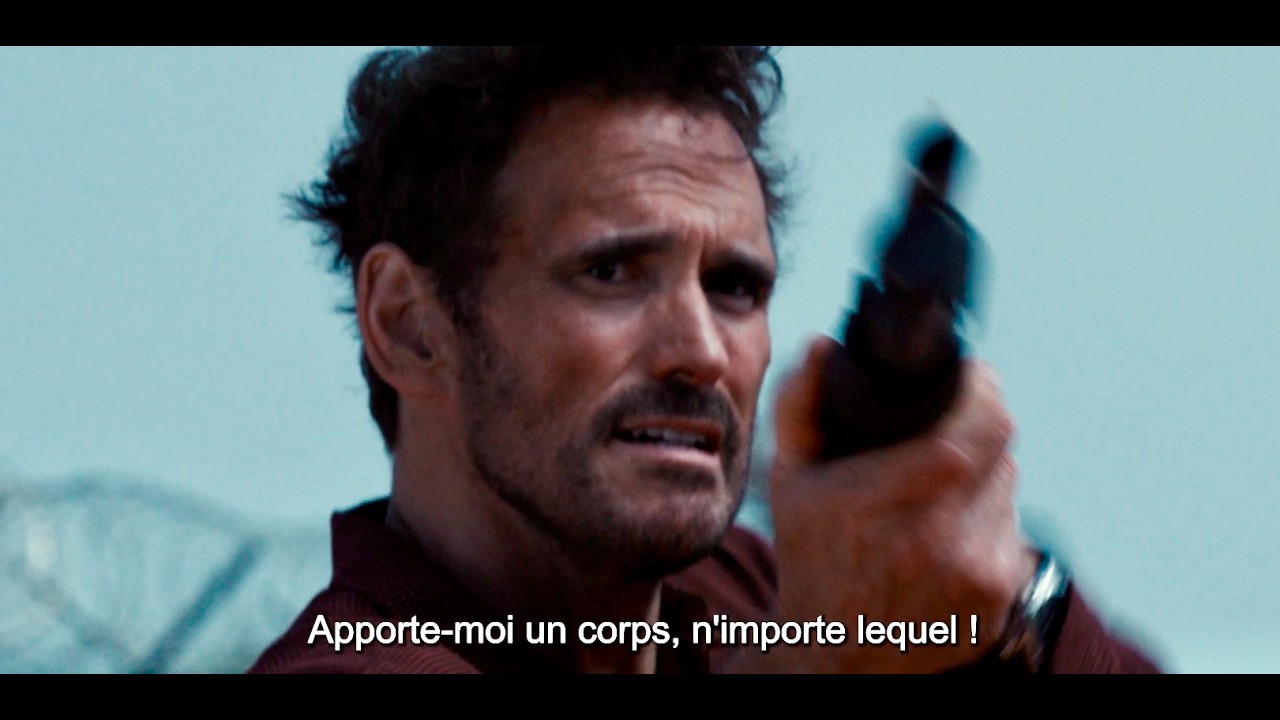
Some films rely on action to create tension. The Fence builds suspense through silence, confrontation, and the unbearable weight of unresolved guilt. Adapted from Bernard-Marie Koltès' acclaimed stage play, the film transforms a seemingly isolated construction site into a powerful examination of colonial power, responsibility, and the human consequences of violence.
Directed by Claire Denis, one of France's most respected contemporary filmmakers, The Fence is an intimate psychological drama that asks difficult questions about justice and accountability. As a mysterious visitor refuses to leave until his brother's body is returned, every conversation exposes deeper moral conflicts, forcing each character to confront truths they would rather ignore.
Quick Facts: A French Psychological Drama About Justice, Colonial Legacy, and Moral Responsibility
Genre: Drama • Topic: Justice, Colonial Legacy, Power, Guilt, Moral Responsibility, Human Dignity • Format: Feature Film • Director: Claire Denis • Writers: Claire Denis, Bernard-Marie Koltès, Suzanne Lindon • Main Cast: Isaach De Bankolé, Matt Dillon, Mia McKenna-Bruce, Tom Blyth, Brian Begnan, Moussa Thiam • Production Companies: Vixens, Curiosa Films, Saint Laurent • Distributor: Not listed • Country: France • Languages: English, Yoruba • Runtime: 109 Minutes • Release Date: August 21, 2026 (United States) • Motion Picture Rating: Not Rated • Awards: 1 nomination • Box Office: Worldwide Gross: $89,198
Where to Watch: https://www.justwatch.com/fr/film/le-cri-des-gardes (France), https://www.justwatch.com/us/movie/the-fence-2025 (US), https://www.justwatch.com/ca/movie/the-fence-2026 (Canada)
What This Story Is Really About: Justice Cannot Exist Without Acknowledging the Past
Although The Fence unfolds as a tense encounter between four people at a remote construction site, its true subject is the refusal to let injustice disappear. Alboury's demand for the return of his brother's body transforms what appears to be a simple dispute into a profound moral confrontation, forcing everyone present to confront questions of guilt, denial, and responsibility.
The physical fence separating the construction compound from the outside world becomes a powerful metaphor throughout the film. It represents the invisible barriers between privilege and marginalization, power and vulnerability, remembrance and forgetting. Rather than focusing on external action, Claire Denis explores the emotional and psychological consequences of violence that continues to shape relationships long after the original crime has occurred.
➡️ Key Takeaway: The Fence argues that justice begins with acknowledging human dignity. By refusing to leave until his brother is recognized, Alboury challenges a system built on silence and forces others to confront the consequences of their actions.
Why This Movie Matters Right Now: Cinema Is Increasingly Reexamining Colonial History Through Personal Stories
Contemporary filmmakers are increasingly moving away from historical epics to explore colonialism through intimate human dramas. Instead of focusing on large political events, these films examine how unequal power structures continue affecting individual lives, relationships, and moral choices in the present.
The Fence reflects this evolving approach by placing a deeply personal conflict at the center of a broader discussion about colonial legacy, justice, and institutional responsibility. Rather than offering easy answers, the film invites audiences to reflect on how historical inequalities continue influencing contemporary society and why acknowledging the past remains essential for genuine reconciliation.
➡️ Key Takeaway: Modern political dramas are becoming more intimate and character-driven, using personal stories to examine complex historical issues with greater emotional depth and contemporary relevance.
Why It Is Trending: Claire Denis Revisits One of Modern Theatre's Most Powerful Moral Confrontations
Much of the anticipation surrounding The Fence comes from Claire Denis, whose films have long explored themes of identity, colonial history, and human relationships with remarkable sensitivity. Her adaptation of Bernard-Marie Koltès' influential stage play introduces the work to a new generation while preserving its powerful exploration of morality, power, and justice.
The film has also attracted attention for its outstanding international cast, led by Isaach De Bankolé and Matt Dillon, and for its atmospheric Senegal setting, which reinforces the story's emotional and political tensions. Together, these elements position The Fence as one of the year's most thought-provoking European dramas.
➡️ Key Takeaway: With Claire Denis' distinctive cinematic style, a celebrated literary source, and timely themes of justice and accountability, The Fence stands out as one of 2025's most intellectually ambitious international dramas.
Movie Trend: Intimate Political Dramas Are Replacing Traditional Historical Epics
Rather than depicting major historical events on a grand scale, many contemporary filmmakers are choosing intimate settings to examine the lasting consequences of colonialism, inequality, and institutional power. These stories rely less on spectacle and more on morally complex characters whose personal conflicts reveal broader political realities. The result is a new generation of dramas where history is experienced through human relationships rather than historical reenactments.
The Fence exemplifies this evolution. Set almost entirely around an isolated construction site, the film transforms a single confrontation into a powerful examination of colonial legacy, justice, and moral accountability. By concentrating on four individuals trapped within a tense emotional landscape, Claire Denis demonstrates how personal stories can illuminate complex historical issues with remarkable emotional force.
➡️ Key Takeaway: Contemporary political dramas increasingly use intimate character studies to explore historical injustice. The Fence proves that a single unresolved conflict can reveal the enduring impact of colonial power and moral responsibility.
Why This Film Is Worth Watching: Claire Denis Creates Powerful Drama Through Silence and Moral Tension
Unlike conventional dramas that depend on constant narrative twists, The Fence derives its power from atmosphere, dialogue, and emotional restraint. Claire Denis carefully builds tension through long conversations, uncomfortable silences, and subtle shifts in power between the characters, allowing every interaction to deepen the film's central moral conflict.
The performances are equally compelling. Isaach De Bankolé brings extraordinary dignity and quiet determination to Alboury, whose unwavering demand for justice anchors the entire film. Matt Dillon, Mia McKenna-Bruce, and Tom Blyth create equally layered portrayals of individuals forced to confront uncomfortable truths, resulting in an ensemble performance driven more by psychological complexity than dramatic confrontation.
➡️ Key Takeaway: The Fence rewards patient viewers with exceptional performances, masterful direction, and a slow-burning emotional intensity that lingers long after the final scene.
What This Film Means for the Movie Industry: Literary Adaptations Are Becoming More Politically Relevant
Recent years have seen renewed interest in adapting celebrated stage plays and literary works that explore timeless social and political themes. Rather than treating these works as historical artifacts, filmmakers are reinterpreting them through contemporary perspectives, allowing classic texts to speak directly to modern audiences confronting similar questions about justice, inequality, and responsibility.
By adapting Bernard-Marie Koltès' influential play, Claire Denis demonstrates how theatre can become powerful cinematic storytelling without losing its philosophical depth. The Fence reinforces the growing role of literary adaptations as vehicles for sophisticated international cinema that values dialogue, symbolism, and moral ambiguity over conventional genre formulas.
➡️ Key Takeaway: International cinema continues proving that literary adaptations remain highly relevant when they connect classic works with today's social and political conversations.
Future Outlook: International Cinema Will Continue Exploring Colonial History Through Human Stories
As audiences increasingly embrace global cinema, films addressing colonial history and cultural identity are finding wider international recognition. Rather than presenting history through broad political narratives, filmmakers are focusing on individual experiences that reveal how historical systems continue influencing contemporary lives, making these stories more emotionally accessible to audiences worldwide.
For Claire Denis, The Fence reinforces her reputation as one of Europe's most distinctive filmmakers, continuing her exploration of identity, displacement, and post-colonial relationships. The film also highlights the growing demand for thoughtful international dramas that challenge audiences intellectually while remaining deeply human at their core.
➡️ Key Takeaway: The future of international arthouse cinema lies in culturally specific stories with universal emotional resonance. The Fence exemplifies how intimate human dramas can address some of the world's most enduring political and ethical questions.
If You Liked The Fence: 4 Recent Films About Colonial Legacy, Moral Conflict, and Human Responsibility
1. No Other Land (2025) — Directed by Basel Adra, Hamdan Ballal, Yuval Abraham & Rachel Szor
Why It Fits the Same Trend
Like The Fence, No Other Land examines the consequences of power, displacement, and injustice through deeply personal stories. Both films focus on individuals confronting systems that deny dignity and humanity, demonstrating how personal resistance can become a powerful political act.
Story
This Academy Award-winning documentary follows Palestinian communities facing displacement in the occupied West Bank, documenting everyday struggles while exploring resilience, identity, and the human cost of political conflict.
Where to Watch (U.S.)https://www.justwatch.com/us/search?q=No%20Other%20Land
2. Vermiglio (2025) — Directed by Maura Delpero
Why It Fits the Same Trend
Although set in rural Italy during the final years of World War II, Vermiglio shares The Fence's fascination with the lasting consequences of historical events on ordinary lives. Both films use intimate human relationships to explore guilt, silence, and the emotional legacy of larger political forces.
Story
A secluded mountain village experiences profound change when a mysterious soldier arrives near the end of World War II, altering the lives of one family and exposing the hidden emotional scars left by conflict.
Where to Watch (U.S.)https://www.justwatch.com/us/search?q=Vermiglio
3. The Seed of the Sacred Fig (2024) — Directed by Mohammad Rasoulof
Why It Fits the Same Trend
Like The Fence, The Seed of the Sacred Fig examines how authority, fear, and moral compromise shape personal relationships. Both films transform intimate domestic spaces into arenas where larger political and ethical conflicts unfold.
Story
A judge working within Iran's judicial system finds his family unraveling amid growing political unrest, forcing him to confront impossible choices between loyalty, justice, and personal conscience.
Where to Watch (U.S.)https://www.justwatch.com/us/movie/the-seed-of-the-sacred-fig
4. Harvest (2025) — Directed by Athina Rachel Tsangari
Why It Fits the Same Trend
Both Harvest and The Fence explore the destructive consequences of land ownership, exclusion, and social hierarchy. Each film examines how communities respond when power is challenged, creating thoughtful allegories about history, identity, and belonging.
Story
Set in an isolated rural community, the film follows a village whose traditional way of life begins to collapse as outside forces reshape its social and economic foundations.
Where to Watch (U.S.)https://www.justwatch.com/us/search?q=Harvest%202025
➡️ Watch Next: These films demonstrate how today's finest international cinema uses intimate human stories to examine colonial history, political conflict, moral responsibility, and the enduring struggle for dignity.
Viewing Recommendation: A Challenging and Thought-Provoking Work of Contemporary World Cinema
Best Suited For: Fans of Slow-Burning Political and Psychological Dramas
If you appreciate films that prioritize atmosphere, dialogue, and moral complexity over conventional plot mechanics, The Fence offers a deeply rewarding cinematic experience. Its deliberate pacing allows its ethical questions and emotional tensions to unfold with remarkable power.
Highly Recommended For: Admirers of Claire Denis and International Arthouse Cinema
Fans of Claire Denis, literary adaptations, and intellectually ambitious world cinema will find much to admire. The film's powerful performances, philosophical themes, and exploration of colonial legacy make it particularly compelling for viewers interested in socially conscious filmmaking.
You May Want to Skip It If: You Prefer Plot-Driven or Action-Oriented Dramas
The Fence is intentionally restrained, relying on dialogue, symbolism, and psychological tension rather than frequent narrative twists or physical action. Viewers seeking a faster-paced or more conventional drama may find its contemplative style demanding.
➡️ Viewing Recommendation: The Fence is one of the most intellectually ambitious international dramas of 2025, transforming a simple confrontation into a profound meditation on justice, memory, colonial power, and human dignity. It is essential viewing for audiences who value thoughtful, challenging, and emotionally resonant cinema.
Comments