


The Holy Boy (2025): An Unsettling Folk Horror About Blind Faith, Collective Happiness, and Hidden Darkness
- dailyentertainment95

- 1 day ago
- 8 min read
In a Village Where Everyone Smiles, One Teacher Discovers That Happiness Comes at a Terrible Price
The most disturbing horror films rarely rely on monsters hiding in the shadows. Instead, they ask what happens when ordinary people willingly embrace something deeply unsettling in the name of belonging, faith, or happiness. The Holy Boy transforms an idyllic Alpine village into a chilling psychological nightmare, where smiling faces conceal dangerous secrets and unquestioned devotion becomes a source of fear.
Directed by Paolo Strippoli, the film blends folk horror, psychological suspense, and social allegory into one of Italy's most acclaimed genre films in recent years. As an outsider investigates the mysterious healing rituals surrounding a teenage boy believed to possess miraculous powers, he uncovers a community built on repression, collective denial, and a terrifying willingness to sacrifice truth for comfort.
Quick Facts: An Italian Folk Horror About Faith, Collective Obsession, and Emotional Repression
Genre: Drama, Horror • Topic: Folk Horror, Religious Faith, Collective Obsession, Emotional Repression, Cult Mentality, Community Secrets, Psychological Trauma • Format: Feature Film • Director: Paolo Strippoli • Writers: Jacopo Del Giudice, Paolo Strippoli, Milo Tissone • Main Cast: Michele Riondino, Romana Maggiora Vergano, Roberto Citran, Giulio Feltri, Paolo Pierobon • Production Companies: Vision Distribution, Fandango, Nightswim • Countries: Italy, Slovenia • Language: Italian • Runtime: 122 Minutes • Release Date: 2026 (United States) • Motion Picture Rating: Not Rated • Awards: 7 Wins & 9 Nominations, including the FEDIC Award for Best Film at the Venice Film Festival, Audience Award, Best Director, and Méliès d'Argent for Best European Fantastic Feature Film • Box Office: Worldwide Gross: $427,608
Where to Watch: https://www.justwatch.com/de/Film/the-holy-boy (Germany), https://www.justwatch.com/es/pelicula/la-sonrisa-del-mal (Spain), https://www.justwatch.com/it/film/la-valle-dei-sorrisi (Italy)
What This Story Is Really About: The Dangerous Desire to Eliminate Human Suffering
Beneath its supernatural mystery, The Holy Boy explores humanity's obsession with eliminating pain at any cost. The villagers' unwavering belief in a teenage boy's miraculous healing powers reflects a universal longing for certainty, emotional relief, and simple answers to life's deepest suffering. What begins as hope gradually transforms into unquestioning devotion, revealing how easily faith can become manipulation.
The story also examines the psychological cost of emotional repression. The village's constant smiles and manufactured happiness conceal unresolved trauma, grief, and fear, creating an atmosphere where genuine emotion is replaced by collective performance. Through Sergio's investigation, the film questions whether a society built on forced optimism can ever truly be healthy—or whether denying suffering ultimately creates something even more terrifying.
➡️ Key Takeaway: The Holy Boy argues that confronting pain is essential to being human. Communities that suppress grief and demand constant happiness risk creating systems built on denial, manipulation, and fear.
Why This Movie Matters Right Now: Folk Horror Is Becoming a Mirror of Modern Society
Modern folk horror has evolved far beyond haunted forests and ancient curses. Today's filmmakers increasingly use isolated communities, religious symbolism, and strange rituals to explore contemporary anxieties surrounding conformity, misinformation, blind faith, and the pressure to present perfect lives despite emotional turmoil.
The Holy Boy embraces this evolution by replacing traditional supernatural monsters with something far more unsettling—a community willingly surrendering its independence in exchange for emotional comfort. The result is a horror film that feels both timeless and unmistakably relevant, reflecting modern fears about groupthink, social pressure, and the dangers of unquestioned belief.
➡️ Key Takeaway: Contemporary folk horror is becoming one of cinema's most effective genres for exploring collective psychology, demonstrating that society itself can become the source of our greatest fears.
Why It Is Trending: Paolo Strippoli Establishes Himself as One of Europe's Most Exciting Horror Directors
The film has generated significant international attention for confirming Paolo Strippoli as one of the most promising new voices in European genre cinema. Building on his reputation for atmospheric storytelling, Strippoli delivers a visually striking horror film that favors psychological unease and emotional tension over conventional jump scares, drawing comparisons to the modern prestige horror movement.
Its festival success has further elevated the film's profile. The Holy Boy won the FEDIC Award for Best Film at the Venice Film Festival, the Audience Award, Best Director, and the Méliès d'Argent for Best European Fantastic Feature Film, while also earning multiple additional festival awards and nominations. Together with its haunting performances and unforgettable atmosphere, these accolades have established it as one of the standout European horror films of 2025.
➡️ Key Takeaway: Through its acclaimed festival run, striking visual style, and psychologically rich storytelling, The Holy Boy has emerged as one of the defining European folk horror films of the decade.
Movie Trend: Folk Horror Is Evolving into Psychological Horror About Collective Belief
The new wave of folk horror has moved beyond supernatural folklore and ancient legends toward stories that examine how communities create, protect, and enforce shared beliefs. Rather than asking whether monsters exist, contemporary filmmakers explore how fear, faith, and conformity can transform ordinary people into participants in deeply disturbing rituals. The true horror no longer comes from the unknown—it comes from what entire communities willingly choose to believe.
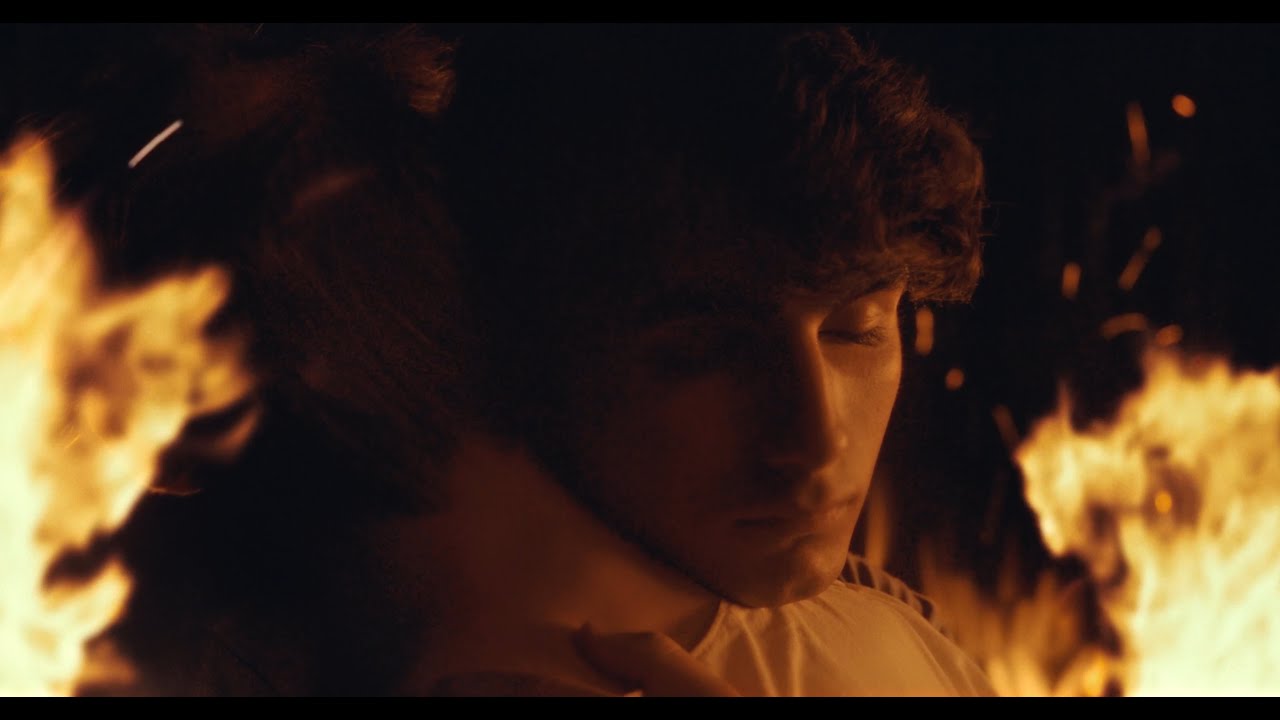
The Holy Boy is a compelling example of this evolution. The mysterious healing rituals surrounding Matteo are less important than the villagers' unquestioning devotion to them. The film gradually reveals how collective happiness can become a form of social control, exposing the dangers of blind faith, emotional repression, and the desire to eliminate suffering at any cost.
➡️ Key Takeaway: Modern folk horror is increasingly becoming psychological and philosophical, using isolated communities to examine conformity, belief systems, and the frightening consequences of sacrificing individuality for collective certainty.
Why This Film Is Worth Watching: Atmosphere Becomes the Film's Greatest Source of Terror
Rather than relying on conventional horror techniques, Paolo Strippoli creates unease through atmosphere, silence, and carefully sustained psychological tension. Every smiling face, every ritual, and every seemingly ordinary interaction carries an underlying sense of dread, encouraging audiences to question whether appearances can ever be trusted. The result is a slow-burning horror experience that becomes increasingly unsettling as the mystery unfolds.
The performances further strengthen the film's emotional impact. Michele Riondino delivers a restrained yet compelling portrayal of an outsider struggling to understand an increasingly disturbing community, while Giulio Feltri gives an unforgettable performance as Matteo, balancing innocence, vulnerability, and quiet menace in a way that keeps viewers constantly questioning his true nature.
➡️ Key Takeaway: The Holy Boy demonstrates that psychological tension, exceptional performances, and immersive atmosphere can create horror that lingers far longer than conventional scares.
What This Film Means for the Movie Industry: Italian Horror Is Experiencing a Creative Renaissance
For decades, Italian horror was defined by legendary filmmakers such as Dario Argento, Mario Bava, and Lucio Fulci. Today, a new generation of directors is reimagining the genre by combining arthouse storytelling with sophisticated psychological horror, moving beyond traditional slasher conventions toward films that are emotionally rich, visually distinctive, and thematically ambitious.
The Holy Boy represents this resurgence. Its festival success demonstrates that international audiences continue to embrace European horror films that prioritize atmosphere, symbolism, and social commentary over formulaic scares. It also confirms that Italian genre cinema is once again becoming an important creative force within contemporary world cinema.
➡️ Key Takeaway: The revival of Italian horror reflects a broader renaissance in European genre filmmaking, where artistic ambition and psychological storytelling are becoming as important as traditional horror elements.
Future Outlook: Prestige Horror Will Continue Exploring Faith, Community, and Emotional Trauma
The international success of films such as The Holy Boy highlights the growing demand for horror that offers intellectual depth alongside emotional intensity. As audiences increasingly seek stories that combine genre entertainment with meaningful social and psychological themes, filmmakers are likely to continue using horror to examine religion, collective identity, grief, and cultural anxiety.
For Paolo Strippoli, the film establishes him as one of Europe's most promising contemporary horror directors, demonstrating an ability to blend visual sophistication with emotionally resonant storytelling. The Holy Boy also signals a bright future for Italian genre cinema, proving that culturally specific stories can resonate with audiences around the world when grounded in universal human fears.
➡️ Key Takeaway: The future of prestige horror lies in stories that combine psychological realism, cultural specificity, and philosophical depth. The Holy Boy stands at the forefront of this movement, showing how horror can become one of cinema's most powerful forms of social and emotional storytelling.
If You Liked The Holy Boy: 4 Recent Films About Isolated Communities, Faith, and Psychological Horror
1. Bring Her Back (2025) — Directed by Danny Philippou & Michael Philippou
Why It Fits the Same Trend
Like The Holy Boy, Bring Her Back explores grief, ritual, and the dangerous consequences of placing blind faith in supernatural promises. Both films examine how vulnerable people can become trapped by belief systems that gradually transform compassion into psychological terror.
Story
After moving into the home of a mysterious foster mother, two siblings uncover increasingly disturbing rituals connected to loss, resurrection, and manipulation, leading to a chilling confrontation with forces beyond their understanding.
Where to Watch (U.S.)https://www.justwatch.com/us/search?q=Bring%20Her%20Back
2. Together (2025) — Directed by Michael Shanks
Why It Fits the Same Trend
Although framed through body horror, Together shares The Holy Boy's fascination with emotional dependence and the psychological consequences of surrendering personal identity. Both films use horror to explore how relationships and communities can become dangerously consuming.
Story
A couple's relationship begins to transform in increasingly disturbing ways after a mysterious event binds them together both emotionally and physically, forcing them to confront obsession, intimacy, and identity.
Where to Watch (U.S.)https://www.justwatch.com/us/search?q=Together%202025
3. The Ugly Stepsister (2025) — Directed by Emilie Blichfeldt
Why It Fits the Same Trend
Like The Holy Boy, The Ugly Stepsister uses horror to critique the pressures society places on individuals to conform to impossible ideals. Both films expose how communities normalize disturbing behavior in pursuit of perfection, acceptance, and social approval.
Story
This dark reimagining of the Cinderella fairy tale follows a young woman whose desperate pursuit of beauty and acceptance leads to shocking physical and psychological consequences.
Where to Watch (U.S.)https://www.justwatch.com/us/search?q=The%20Ugly%20Stepsister
4. Oddity (2024) — Directed by Damian Mc Carthy
Why It Fits the Same Trend
Both Oddity and The Holy Boy build terror through atmosphere, mystery, and psychological uncertainty rather than constant violence. Each film demonstrates how carefully controlled tension and unsettling imagery can create deeply immersive horror experiences.
Story
A blind medium investigates the mysterious death of her twin sister, uncovering a series of chilling secrets that blur the line between supernatural forces and psychological paranoia.
Where to Watch (U.S.)https://www.justwatch.com/us/search?q=Oddity
➡️ Watch Next: These films represent the growing evolution of prestige psychological horror, where atmosphere, emotional depth, and disturbing ideas take precedence over traditional scares, creating horror experiences that linger long after the credits roll.
Viewing Recommendation: One of the Year's Most Acclaimed European Folk Horror Films
Best Suited For: Fans of Slow-Burning Psychological and Folk Horror
If you appreciate horror built on atmosphere, symbolism, and psychological tension rather than relentless jump scares, The Holy Boy offers a deeply unsettling and intellectually rewarding experience. Its gradual pacing allows the mystery and emotional unease to build naturally toward a haunting conclusion.
Highly Recommended For: Viewers Interested in European Prestige Horror
Fans of modern European horror, psychological thrillers, and socially conscious genre filmmaking will find much to admire in The Holy Boy. Its exceptional direction, immersive atmosphere, and exploration of faith, conformity, and emotional repression make it one of the standout Italian horror films of recent years.
You May Want to Skip It If: You Prefer Fast-Paced or Conventional Horror
The film unfolds deliberately, emphasizing mood, symbolism, and character psychology over constant action or graphic scares. Viewers expecting a traditional supernatural horror film may find its measured pacing and ambiguous storytelling more contemplative than immediately frightening.
➡️ Viewing Recommendation: The Holy Boy is one of the strongest European folk horror films of 2025, combining psychological suspense, religious symbolism, and social commentary into an atmospheric and unforgettable exploration of belief, repression, and the terrifying power of collective faith.
Comments