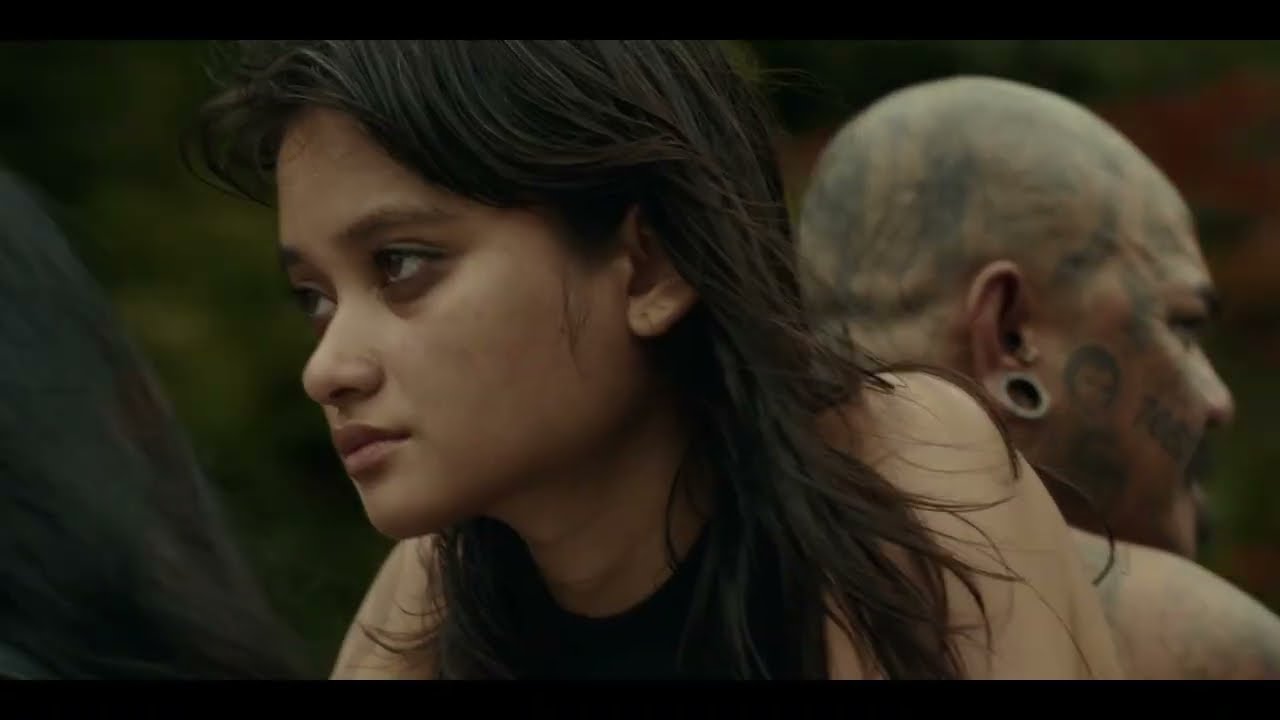




Love Letters (2025) by Alice Douard

FR | 2025 | 96 min | Drama, Comedy
Her Wife Is Pregnant. She Must Prove She Is a Mother Too.
Céline and Nadia are expecting their first daughter, but only Nadia is pregnant. As the birth approaches, Céline must gather testimonies supporting her place as the child’s mother while navigating her own doubts and a complicated relationship with her mother. Set in France in 2014, Love Letters follows a woman preparing for parenthood while being asked to demonstrate a bond she already feels.
➡️ Storyline: Preparing for a baby becomes a search for recognition when love alone cannot establish Céline’s place as a parent.
Why to Watch Love Letters: A Different View of Motherhood, With Room for Humor
The film offers an emotionally specific perspective: becoming a mother without carrying the child. Ella Rumpf and Monia Chokri lead the story as a couple preparing for a shared future while experiencing that transition differently. Noémie Lvovsky adds another generational dimension as Céline’s mother. For audiences drawn to intimate relationship dramas, the attraction is the overlap between anticipation, insecurity and the awkward situations that arise when private life requires outside approval.
Alice Douard brings personal experience to her feature debut, having gone through adoption proceedings after her wife gave birth. Her earlier short L’Attente, internationally titled Expecting, won the 2024 César for Best Fiction Short Film. Love Letters premiered in a special screening at Cannes Critics’ Week and received a Special Mention in Zurich’s 2025 feature competition. These provide concrete creative credentials alongside a premise that makes room for affection and comedy.
➡️ Reason to Watch: A distinctive parental perspective, an established cast and a filmmaker’s personal connection turn an administrative struggle into an intimate relationship story.
Why Love Letters Stands Out: The Couple Exists Before the World Fully Recognizes the Family
Many romantic dramas build toward two people choosing each other. Love Letters begins with that commitment already established. Its central uncertainty concerns Céline’s position within the family they are creating, giving the film a different emotional starting point from a coming-out story or a romance organized around separation.
The testimonies also make recognition tangible. Friends and relatives must put into words something the couple experiences through everyday life. That requirement links public validation with private vulnerability: asking others to describe her capacity for love also exposes Céline to their assumptions. Her relationship with her own mother adds another layer, connecting the wish to be recognized as a parent with the older need to be seen as a daughter.
➡️ Why it stands out: The film turns the requirement to document a family bond into a story about how people see one another—and what they fail to notice.
Movie Trend: Family Drama — Becoming a Parent Means Having to Prove a Bond Others Take for Granted
Love Letters represents a family-drama approach in which the central conflict concerns recognition rather than the existence of affection. Céline’s commitment is present, yet her position remains subject to external evaluation. This creates tension between lived experience and formal acknowledgment, allowing ordinary preparations for a child to carry an additional emotional burden.
The narrative connects that external process with internal uncertainty. Being committed to parenthood does not eliminate questions about competence, attachment or the kind of parent someone will become. The film can therefore examine unequal recognition without reducing Céline to a representative of an issue. Her vulnerability comes from facing familiar parental fears while also having to explain why she belongs in the role.
➡️ Movie Trend Insight: Family drama gains depth when it explores the distance between caring for someone and being recognized as entitled to provide that care.
Broad Trend: The Search for Recognition — Private Commitment Needs Public Acknowledgment
Recognition matters because it influences whether a person’s role is treated as legitimate by others. Within families, workplaces and communities, commitment may be obvious to those living it but less visible to people making decisions about them. Being repeatedly asked to explain an established bond can turn acknowledgment into an exhausting task.
The broader motivation goes beyond seeking praise or reassurance. Recognition can mean having one’s responsibilities, relationships and contribution taken seriously without constantly producing a justification. Love Letters makes this distinction emotionally accessible: Céline wants her place to be understood, while also working out what that place means to her. External acknowledgment and personal confidence are connected, but neither automatically supplies the other.
➡️ Broad Trend Insight: Recognition becomes especially valuable when it allows people to live their role without repeatedly defending their right to occupy it.
Viewer Profile: Drama Audiences Interested in Contemporary Culture, Social Change and European Cinema
The likely audience favors character-focused films, accomplished performers and stories that generate discussion through everyday situations. Age ranges below are editorial targeting estimates.
Profile | Audience Insight |
Core Audience | Viewers who regularly choose intimate dramas, comedy-dramas and contemporary French cinema. |
Age / Generation | Primarily adults approximately 25–60, with crossover potential among younger festival audiences and established arthouse viewers. |
Lifestyle | Culturally engaged audiences who follow books, interviews, arts coverage and social debate. |
Cinema Taste | Naturalistic performances, nuanced dialogue and an emotional register that accommodates humor. |
Story Motivation | Preference for layered characters and situations that invite reflection without requiring spectacle. |
Discovery Mindset | Likely to discover films through festival selections, reviews, familiar actors and curated streaming catalogs. |
Emotional Driver | Interest in seeing a familiar human experience approached from a less familiar perspective. |
Key Profiles: A Specific Family Experience Creates Several Points of Identification
1. The Contemporary Queer-Cinema Viewer
Audience Description: Adults approximately 20–50 interested in LGBTQ+ stories that give established relationships room for tenderness, humor and ordinary complexity. The focus on preparing for a child offers a distinct attraction beyond the beginnings of a romance.
2. The Parenthood-Drama Viewer
Audience Description: Adults approximately 28–55 drawn to stories about becoming a parent and negotiating changing family roles. Céline’s uncertainty about attachment and responsibility provides an emotional entry point across different family structures.
3. The Performance-Focused Filmgoer
Audience Description: Adults approximately 30–65 who select films for their actors and interpersonal dynamics. Rumpf, Chokri and Lvovsky offer a combination of partnership and intergenerational tension that suits this viewing preference.
➡️ Audience Insight: Representation, parental identification and cast appeal provide different routes into the same intimate story.
What This Movie Means for the Industry: Specific Representation Can Support Broadly Accessible Storytelling
Love Letters demonstrates how an underrepresented viewpoint can differentiate a family drama without requiring an unfamiliar narrative framework. Pregnancy supplies a clear timeline, while the adoption dossier creates concrete tasks and interpersonal encounters. Douard’s stated emphasis on romance, humor and a stable couple broadens the emotional range available to queer family storytelling. The visual approach also supports the period setting: cinematographer Jacques Girault and Douard developed an image texture inspired by flash Polaroids, using lens and color choices to suggest remembered experience. The industry contribution lies in the coordination of perspective, accessible structure and visual intention rather than a claim of technical invention.
➡️ Industry Insight: Representational specificity can strengthen a film’s identity when recognizable emotional stakes and deliberate craft make that perspective accessible.
Final Verdict: An Intimate Family Story About Being Seen
Love Letters offers a clear reason for interest: it places the mother who is not pregnant at the center of an expectant-parent story. Its cast, personal creative foundation and festival recognition support that proposition. The supplied reviews respond positively to the couple’s intimacy while also showing that the treatment of Céline’s mother may divide viewers.
Its Family Drama framing connects directly with The Search for Recognition. The approaching birth makes acknowledgment urgent, while Céline’s personal doubts prevent the story from becoming solely a question of paperwork.
➡️ Final Verdict Insight: The film’s emotional strength lies in the gap between knowing a family bond exists and needing others to recognize it.
Final Insights: Recognition Shapes Who Gets to Feel Secure in Their Role
The Search for Recognition reveals how much everyday confidence depends on social acknowledgment. A relationship can be deeply meaningful while remaining vulnerable to assumptions about what it should look like. Stories that make this tension visible help explain why apparently routine questions or procedures can carry substantial emotional weight.
Future family storytelling has room to explore a wider range of parental experiences without treating difference as the only source of drama. Affection, ambivalence, humor and uncertainty can coexist with questions of recognition. That range allows characters to become more fully realized while giving audiences several ways to understand them.
➡️ Final Insight: Recognition gives social weight to commitments people already live. Its absence can make ordinary milestones harder to navigate. Cinema can widen understanding by showing both the specific barriers and the everyday lives around them.
Comments