


Invisibles (2025) by Junna Chif

CAN | 2025 | 94 min | Social Drama
➡️ Where to Watch: CA
When Being Seen Means More Than Being Looked At
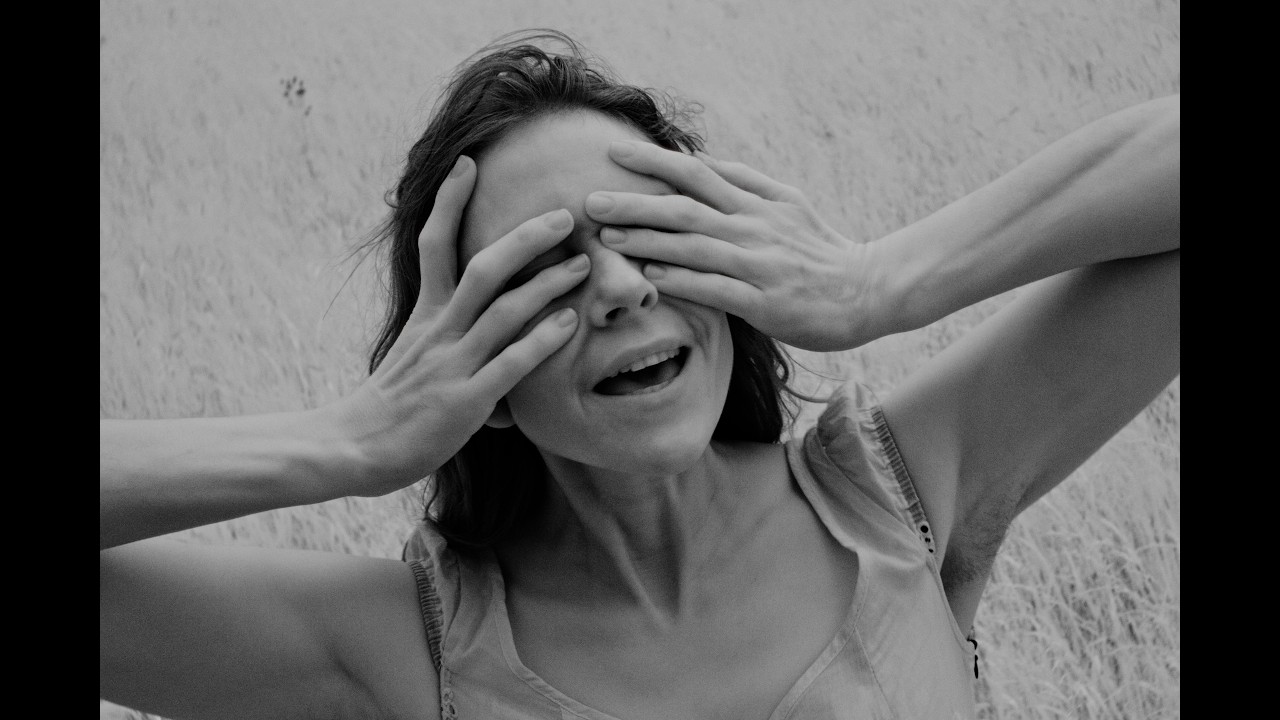
Elizabeth is a Montréal burlesque performer and sex worker who has spent years keeping part of her life secret. Although she is passionate about her work, she has reached a point where maintaining that divided existence has become difficult. Preparing to leave sex work behind, she accepts what she expects to be one final client: Floyd, a man with a disability.
Their encounter unsettles Elizabeth’s assumptions about intimacy and redirects the path she thought she had already chosen. Junna Chif uses that relationship to bring together two experiences cinema often marginalizes — sex work and the sexuality of people with disabilities — without positioning either character simply as someone requiring rescue.
➡️ Movie Insight: Invisibles begins with two people whose bodies are frequently defined by other people’s assumptions. Their encounter creates the possibility of intimacy without reducing either person to those assumptions. Being visible gradually becomes different from actually being seen.
Why This Movie Matters Right Now: Sexual Visibility Is Still Unequally Distributed
Sexual representation has expanded considerably on screen, yet some experiences remain far less visible than others. Invisibles deliberately brings sex work and disability into the same story, examining both through desire, autonomy and intimacy rather than treating either primarily as tragedy. Chif has described her approach as an attempt to avoid victimizing a woman who chooses sex work, while acknowledging that other realities also exist.
The disability perspective is equally important. Rather than portraying Floyd primarily through dependency, the film acknowledges him as someone with sexual desire and agency. Chif involved advisers from both sex-work and disability communities in the production, while Floyd Lapierre-Poupart also served as a disability consultant in addition to playing Floyd.
➡️ Why It Matters: Sexual freedom is incomplete when only certain bodies are allowed to possess visible desire. Invisibles brings two marginalized experiences into the same intimate conversation. Its social relevance comes from treating sexuality as part of human agency rather than something reserved for socially approved identities.
Should You Watch It?: An Intimate Social Drama That Challenges Comfortable Assumptions
Invisibles is aimed at audiences comfortable with character-driven cinema addressing sexuality directly but thoughtfully. Its dramatic interest lies less in whether Elizabeth will leave sex work than in how meeting Floyd changes her understanding of intimacy, identity and the social judgments surrounding both of their lives.
The film also avoids approaching either character exclusively through suffering. Cinémathèque québécoise describes Chif’s perspective as bold and luminous, emphasizing emancipation of bodies and desires without voyeurism, while festival descriptions similarly foreground sensitivity and respect.
➡️ Viewing Recommendation: Invisibles suits viewers drawn to intimate films that question how society defines sexuality and acceptable bodies. Its strongest material comes from human connection rather than dramatic spectacle. The film asks for openness toward characters whose experiences mainstream cinema often keeps outside the frame.
Why Everyone Is Talking About It: A Taboo-Breaking Debut Became an Award-Winning Quebec Discovery
Invisibles launched internationally in Tallinn Black Nights’ Critics’ Picks competition before making its North American premiere at CINEMANIA. There it won both the Air Canada Award for Best Quebec Film and the ARRQ Award for Best Quebec Direction, giving Junna Chif’s first feature significant early recognition.
Its subsequent festival path extended through Belgium, India, Canada, Guadeloupe, Poland and Germany. That circulation is notable for a film whose central subjects — sex work and disabled sexuality — remain comparatively unusual in mainstream narrative cinema.
➡️ Viral Potential: Invisibles has a conversation-generating premise because it addresses forms of sexuality that cinema frequently avoids or stereotypes. Its CINEMANIA wins give that provocative subject matter additional artistic credibility. The strongest word-of-mouth opportunity comes from audiences discovering that the film is ultimately less about taboo than about autonomy, intimacy and recognition.
Why Invisibles Stands Out: The Client Does Not Rescue the Sex Worker — Their Encounter Changes What She Wants
Stories about sex workers frequently organize their plots around exploitation, escape, romance or rescue. Invisibles starts differently: Elizabeth is explicitly described as passionate about both sex work and burlesque, meaning her profession is not automatically presented as the problem that someone else must solve.
Floyd therefore does not function as a conventional savior. Instead, meeting him challenges Elizabeth’s perception of what her work can mean and eventually opens the possibility of making sexual services more accessible to disabled people. That shifts the familiar transformation narrative away from abandoning sex work toward reconsidering whom intimacy includes and what purpose the work might serve.
➡️ Cinema Insight: Invisibles reverses the familiar assumption that a sex worker’s transformation must mean escaping sex work. Elizabeth’s encounter with Floyd instead expands her understanding of what intimacy can provide. Personal change becomes connected to inclusion rather than conventional respectability.
Movie Trend: Sex Worker Drama — When an Unexpected Client Makes a Woman Question the Life She Has Chosen
Contemporary sex-worker dramas are increasingly giving their protagonists greater agency over how their work, sexuality and identities are represented. Rather than automatically constructing sex work as shorthand for victimhood, films can use it to investigate labor, intimacy, stigma, autonomy and the complicated boundary between professional and personal connection.
Trend Formula:woman lives confidently through sex work → work and identity become intertwined → another client initially appears routine → unexpected connection breaks the pattern → assumptions about intimacy are challenged → professional boundaries become emotionally complicated → she begins questioning her choices → identity outside work becomes harder to ignore → possibility of another life emerges → self-reassessment becomes the real journey
Invisibles develops that structure further by connecting Elizabeth’s reconsideration of her work to disability and sexual accessibility. The transformation therefore moves outward as well as inward: understanding another person differently changes how she understands her own role.
➡️ Movie Trend: Sex-worker dramas are moving beyond narratives where the profession automatically defines the character’s tragedy. Greater agency allows these stories to examine work, identity and intimacy as separate but interconnected experiences. Invisibles extends that evolution by asking whether sex work can also become a space for forms of intimacy society otherwise neglects.
Why These Sex Worker Dramas Are Popular: Audiences Want Characters Behind the Social Labels
Sex workers remain highly visible as cultural symbols while their everyday experiences are frequently simplified into familiar stereotypes. Character-led dramas create an alternative by separating the person from assumptions attached to the profession and allowing audiences to understand motivations, contradictions, friendships and ambitions beyond a single label.
➡️ Audience Motivation: These films offer access to lives that audiences may recognize culturally without actually understanding personally. The attraction comes from discovering the human complexity hidden behind familiar social judgments. Intimacy becomes a way of replacing stereotype with recognition.
Viewer Profile: Human Connection Seekers - Adult Arthouse Viewers Following Intimate Character Transformations
Human Connection Seekers gravitate toward films where seemingly different people discover unexpected emotional common ground. They are interested in international and independent cinema, socially relevant subjects and character transformation, but generally prefer stories where issues emerge through relationships rather than lectures.
Audience Dimension | Profile |
Core Audience | Independent, festival and international cinema viewers |
Age Group | Primarily adult audiences |
Lifestyle | Culturally curious and open to unconventional perspectives |
Cinema Taste | Intimate character studies, social drama, sexuality, identity and human relationships |
Streaming Behavior | Moves between curated platforms, independent releases and festival discoveries |
Discovery Mindset | Reviews, festivals, emerging filmmakers, socially distinctive stories |
➡️ Audience Insight: Human Connection Seekers respond to films capable of making unfamiliar experiences emotionally accessible. They value characters who challenge assumptions without becoming simple representatives of an issue. Invisibles offers that audience a relationship through which two marginalized experiences can be understood from the inside.
What This Movie Means for the Industry: Authentic Representation Can Begin Behind the Camera
One of Invisibles’ most significant production choices is that representation was not limited to casting or subject matter. The official production credits identify sex-work advisers Astrea Leonis, Cybele Lesperance and Maxime Holliday, alongside disability advisers Floyd Lapierre-Poupart and Patrick Desjardins.
Chif also researched the subject by training as a sexual care assistant for disabled people. These choices illustrate an increasingly relevant production model: filmmakers dealing with communities historically misrepresented on screen can involve people with lived experience directly in the creative process rather than relying exclusively on external observation.
➡️ Industry Insight: Authenticity increasingly depends on who participates in storytelling as much as who appears on screen. Invisibles incorporates community knowledge directly into its production process. That approach offers independent cinema a practical route toward representation that is both more specific and less dependent on stereotype.
Creative Analysis: Intimacy Becomes a Way of Making Invisible Lives Visible
Chif’s feature debut is built around closeness rather than spectacle. Cinémathèque québécoise describes her filmmaking language as refined and sensory, bringing viewers closer to characters while questioning intimate and social representations.
The production combines Louka Boutin’s cinematography, editing by Aube Foglia and Chif, music by Pierre-Philippe “Pilou” Côté and sound design by Sylvain Bellemare.
Storytelling: One Final Client Opens an Unexpected New Direction
The screenplay begins with a familiar transition point: Elizabeth believes she is preparing to leave one chapter of her life behind. Floyd initially appears to belong to that closing chapter because he is supposed to be her final client.
Instead, the encounter creates another possibility. What looked like an ending becomes a catalyst for Elizabeth to reconsider not simply whether she wants to continue sex work, but what the work might mean when directed toward people whose sexuality is frequently ignored.
Direction: Junna Chif Refuses to Build the Story Around Victimhood
Chif’s central directorial decision is philosophical as much as aesthetic. She has explicitly described wanting to avoid automatically victimizing a woman who chooses sex work, while festival and cinematheque materials similarly emphasize her refusal to reduce disabled characters to victims.
That gives the film a different emotional baseline. The characters may encounter prejudice and social limitations, but their identities are not constructed exclusively through suffering.
Performances: Nadia Essadiqi Makes Elizabeth’s Reassessment Personal
Nadia Essadiqi plays Elizabeth, with Floyd Lapierre-Poupart appearing as Floyd. The supporting cast includes Stéphane Crête as François, Catherine Bérubé as Caroline and Victor Andres Turgeon-Trelles as Marco.
CINEMANIA specifically highlighted Essadiqi’s depth and nuance in portraying a woman caught between self-discovery and social judgment. Lapierre-Poupart’s participation also extends beyond performance because he contributed to the production as a disability adviser.
Visual Style: Sensory Filmmaking Keeps the Body Human Rather Than Symbolic
Louka Boutin serves as director of photography, with the production presented in a 2.35:1 aspect ratio.
The relevant creative challenge is significant: a film about sex work and disabled sexuality could easily turn bodies into objects of voyeurism or social symbolism. Chif instead describes an approach based around closeness and sensory experience, while contemporary commentary has highlighted the tenderness of the film’s intimate scenes.
Themes: Visibility Does Not Automatically Mean Recognition
Elizabeth is highly visible through performance and sex work, yet she hides part of her life from others. Floyd encounters a different contradiction: disability can make a body conspicuous while the person’s sexuality remains culturally invisible.
Bringing them together allows the title to operate across multiple experiences. Visibility becomes less about whether society notices someone and more about whether society recognizes the full range of that person’s desires and choices.
What Makes It Different: Sex Work and Disability Become Parallel Stories About Sexual Agency
The movie’s distinctive creative idea is not simply pairing a sex worker with a disabled client. It treats both experiences through the same larger question: who is allowed to possess sexual autonomy without being reduced to a stereotype?
That parallel prevents Floyd from functioning solely as a lesson for Elizabeth and prevents Elizabeth from functioning solely as a service provider for Floyd. Their interaction instead exposes different forms of judgment affecting both characters.
➡️ Creative Insight: Invisibles makes sexuality the point where two different forms of social marginalization intersect. Its most important creative choice is refusing to organize either character primarily around victimhood. Intimacy becomes a means of restoring complexity to people usually simplified by representation.
If You Liked Invisibles (2025): Intimacy Challenges the Identities Society Assigns
Pillion (2025) by Harry Lighton: An Unconventional Sexual Relationship Becomes a Path Toward Self-Discovery
A shy young man’s life changes when he enters a dominant-submissive relationship with a charismatic biker, forcing him to reconsider desire, dependency and the identity he previously accepted for himself.
➡️ Why It Connects: Both films use unconventional sexual relationships as catalysts for self-discovery rather than shock. Their characters encounter forms of intimacy that challenge assumptions about what they want from life. Sexuality becomes part of a broader process of learning how to define oneself.
Anora (2024) by Sean Baker: A Sex Worker Refuses to Become Someone Else’s Social Stereotype
Brooklyn sex worker Ani begins a whirlwind relationship with the son of a Russian oligarch, only to discover how quickly class privilege can attempt to strip her of control over her own story.
➡️ Why It Connects: Both films place a sex worker at the center of the narrative without reducing her identity to victimhood. Their protagonists possess desire, humor, contradictions and agency beyond their profession. Social judgment becomes part of the conflict because other people continually attempt to decide what kind of woman the protagonist is allowed to be.
Linda (2024) by Mariana Wainstein: Sexual Agency Changes How a Woman Understands Her Own Power
Linda enters a wealthy Buenos Aires household as a domestic worker but quickly becomes the center of attraction, forcing the people around her to confront desires hidden beneath their apparently stable lives.
➡️ Why It Connects: Both films center women whose sexuality cannot be comfortably separated from how society judges their identities. Neither protagonist functions simply as the passive object of someone else’s desire. Their stories instead ask what happens when women understand sexuality as something they can actively define for themselves.
➡️ If You Liked Insight: These films reject the idea that unconventional sexuality automatically requires tragedy, punishment or moral correction. Their characters use intimate experiences to reconsider identities other people have already assigned to them. Desire becomes part of discovering who gets to define a life.
Final Verdict: A Social Drama That Makes Sexual Agency the Opposite of Invisibility
Invisibles approaches two subjects frequently burdened by cinematic stereotypes and attempts to remove the assumptions surrounding both. Elizabeth is not automatically a victim because she performs sex work, while Floyd is not defined exclusively by disability. Their encounter becomes meaningful because both are allowed to exist as sexual people with agency.
The result is particularly interesting as a first feature because Chif connects representation with process. Consultation with sex workers and disabled people, research into sexual assistance and the casting of Floyd Lapierre-Poupart create a foundation from which the film can challenge familiar representations rather than simply reproduce them.
➡️ Final Verdict: Invisibles turns an intimate encounter into a broader examination of who society permits to possess visible desire. Its strength lies in refusing to make either sex work or disability synonymous with victimhood. The film argues that genuine visibility begins when people are allowed complexity rather than simply being noticed.
Quick Facts: Two Marginalized Experiences Meet Through an Unexpected Form of Intimacy
Quick Fact | Detail |
Director | Junna Chif |
Screenplay / Writer | Junna Chif; Isabelle Raynauld credited as screenplay consultant |
Lead Cast | Nadia Essadiqi as Elizabeth; Floyd Lapierre-Poupart as Floyd |
Key Cast | Catherine Bérubé, Stéphane Crête, Victor Andres Turgeon-Trelles, Tatiana Zinga Botao |
Country | Canada / Quebec |
Year | 2025 |
Runtime | 94 minutes |
Genre | Social Drama |
Languages | French / English |
Cinematography | Louka Boutin |
Editing | Aube Foglia, Junna Chif |
Music | Pierre-Philippe “Pilou” Côté |
Production Design / Art Direction | Alexandre Lechasseur-Dubé, Félix Grégoire |
Production | Les Films du Récif / Peripheria Productions |
Producers | Pierre Villepelet, Leslie Dabit |
Festival Profile | International premiere at Tallinn Black Nights; North American premiere at CINEMANIA; subsequent international festival circuit |
Awards & Recognition | CINEMANIA 2025 — Best Quebec Film and Best Quebec Direction |
Movie Trend | Sex Worker Drama — When an Unexpected Client Makes a Woman Question the Life She Has Chosen |
Central Characters | Elizabeth and Floyd |
Core Conflict | An escort preparing to leave sex work has an encounter that changes how she understands intimacy and her own future |
Creative Hook | Sex work and disabled sexuality intersect through two characters rarely granted this kind of screen agency |
Core Themes | Sexuality, disability, sex work, autonomy, stigma, intimacy, visibility, identity |
Why Watch | A socially distinctive character drama challenging conventional representations of sexuality and marginalized bodies |
Credits and production information are supported by the supplied IMDb material and official Canadian film/distribution sources.
Final Insights: Cinema Is Expanding Who Gets to Be Seen as a Sexual Person
Invisibles reflects a broader evolution in screen representation: inclusion increasingly means more than placing marginalized characters inside familiar narratives. The next challenge is allowing those characters experiences — desire, pleasure, contradiction, selfishness, uncertainty and sexual agency — that cinema has historically reserved more readily for conventional protagonists.
That shift can also change how socially conscious filmmaking works. Instead of creating characters whose primary function is to represent an issue, filmmakers can build stories where identity influences experience without completely determining personality. Invisibles moves in that direction by connecting social representation to an intimate relationship rather than making representation itself the entire dramatic destination.
➡️ Final Insight: The next stage of inclusive cinema is not simply making marginalized people visible but allowing them the full complexity routinely granted to everyone else. Sexuality is particularly important because desire remains one of the areas where cultural assumptions about acceptable bodies persist. Invisibles suggests that being truly seen begins when cinema stops deciding in advance what certain people are allowed to want.
Comments