
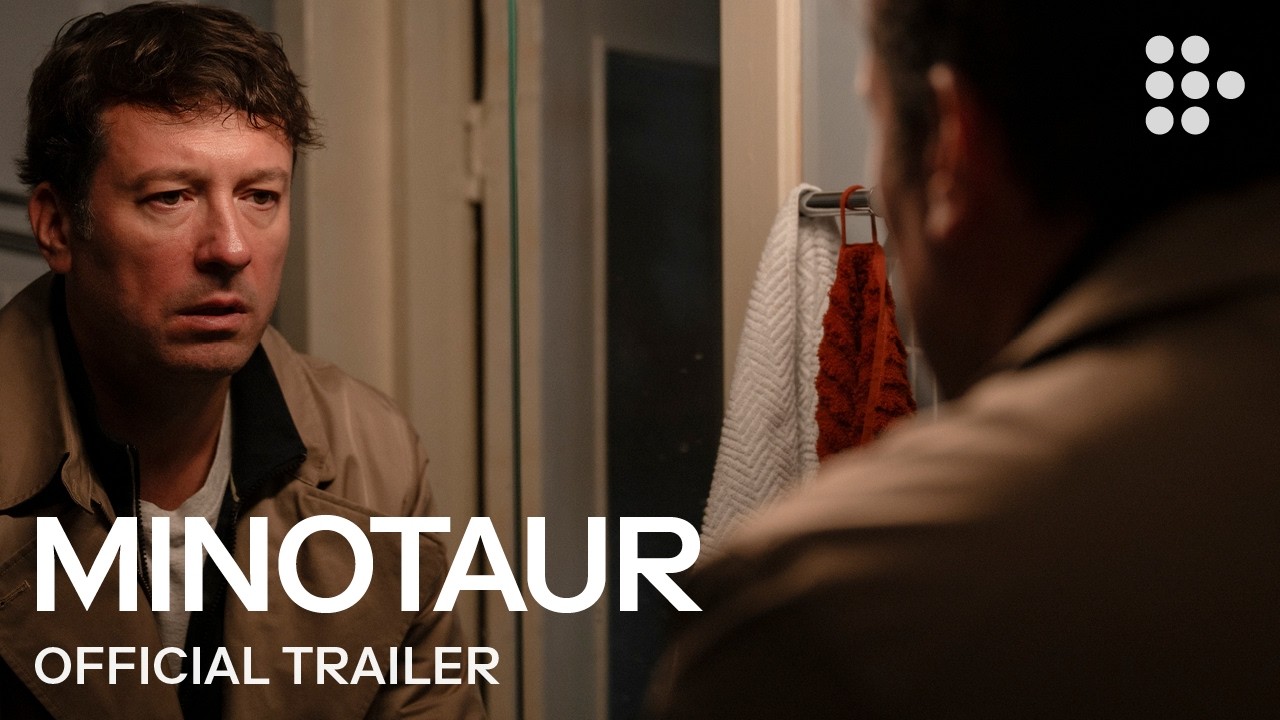




Minotaur (2026) by Andrey Zvyagintsev

FR / LV / DE | 2026 | 140 min | Political Thriller
➡️ Where to Watch: In Theaters — AU | CA | UK | IT. MUBI has also announced theatrical releases in Germany on November 5 and the US, Canada and Latin America on November 20, followed by the UK and Ireland on November 27.
When a Man Who Controls Everything Discovers His Marriage Cannot Be Controlled
Russia, 2022. Gleb is a successful company director accustomed to authority: he manages employees, enjoys political connections and lives comfortably with his wife Galina and their young son. But the stability surrounding him begins to fracture simultaneously. Corporate pressures intensify as Russian society is transformed by the war, while suspicion that Galina is having an affair introduces something Gleb cannot resolve through professional authority.
Andrey Zvyagintsev turns that convergence into the movie's central pressure point. Minotaur is loosely adapted from Claude Chabrol's The Unfaithful Wife, but it expands the marital crisis into a story about power, freedom and ethical responsibility. The question is no longer simply whether a marriage can survive betrayal. It becomes what happens when a man accustomed to controlling his environment discovers that another human being refuses to remain controllable.
➡️ Movie Insight: Gleb's crisis begins when professional and domestic control fail at the same time. Jealousy consequently becomes inseparable from his relationship with power. Minotaur turns marital suspicion into a wider examination of what people do when authority stops producing obedience.
Why This Movie Matters Right Now: Private Power and Political Power Begin to Look Uncomfortably Similar
Zvyagintsev deliberately places Gleb's marital breakdown against Russia in 2022. The director has described the film as a free adaptation of Chabrol's story reframed against the war launched by Russia that year, while the narrative places Gleb under pressure connected to the mobilization of employees. Cineuropa likewise describes the film as moving beyond marital betrayal toward questions about freedom, responsibility and contemporary Russian society.
What gives the movie contemporary force is the way these pressures overlap rather than functioning as separate political and domestic plots. Gleb's professional authority, his expectations inside marriage and the wider structures surrounding him all raise variations of the same question: what happens when power becomes a way of solving problems that cannot legitimately be controlled? That connection is an editorial interpretation, but it is consistent with the film's documented emphasis on ethical responsibility and the intersection of personal and political crisis.
➡️ Why It Matters: Minotaur makes large structures of power visible through an intimate relationship. Political instability is experienced through work, marriage, jealousy and personal decision-making rather than abstract argument. The result connects systemic questions to recognizable human behavior.
Should You Watch It?: A Marriage Thriller That Gradually Reveals a Much Larger Crisis
Minotaur is particularly suited to viewers who like slow-building psychological and political thrillers in which atmosphere, behavior and moral pressure matter as much as plot mechanics. Sydney Film Festival describes it as a taut thriller merging the personal and political, while the film's 140-minute running time allows Gleb's professional and domestic pressures to accumulate rather than immediately explode.
It is also unmistakably a Zvyagintsev film in its interest in compromised individuals operating within larger social structures. The marital thriller provides accessibility, but the film increasingly asks viewers to consider complicity, freedom and the ethical consequences of decisions made by people who possess power.
➡️ Viewing Recommendation: This is strongest for audiences comfortable with deliberate, morally demanding international cinema. The infidelity plot provides suspense while the political environment continuously enlarges its implications. Viewers looking for a straightforward domestic thriller should expect something considerably more expansive.
Why Everyone Is Talking About It: Zvyagintsev Returns With One of 2026's Major Festival Winners
Minotaur marked Zvyagintsev's first feature in nine years and premiered in Competition at the 79th Cannes Film Festival. It won the Grand Prix, while composers Evgueni and Sacha Galperine received the Cannes Soundtrack Award. The IMDb awards material supplied for this analysis records three wins and three nominations, including those Cannes honors.
The momentum continued at Sydney Film Festival, where Minotaur won the Sydney Film Prize, and the film subsequently entered Toronto's Special Presentations programme. Its international trajectory therefore extends beyond the attention generated by Zvyagintsev's return: it has converted that anticipation into major festival recognition.
➡️ Viral Potential: The return of a major filmmaker after almost a decade already gives Minotaur a strong discovery story. Its Cannes Grand Prix and subsequent festival success add concrete momentum. The collision of marriage thriller and contemporary political drama also creates substantial material for post-screening debate.
Why Minotaur Stands Out: The Betrayed Husband Is Also a Man Embedded in Systems of Power
Infidelity thrillers traditionally concentrate on suspicion, discovery, revenge and the psychological consequences of betrayal. Minotaur retains those mechanics but changes their significance by making the suspicious husband a politically connected company director operating during the upheaval of 2022. Gleb's authority therefore exists before his marriage begins collapsing.
That distinction matters. Rather than simply watching jealousy transform an ordinary husband, the film asks what jealousy does to someone already accustomed to exercising authority over other people's lives. Zvyagintsev's free adaptation consequently extends Chabrol's marital structure into a contemporary confrontation between private desire, institutional privilege and ethical responsibility.
➡️ Cinema Insight: Gleb does not acquire power because his marriage collapses; he already possesses it. Betrayal instead exposes how he behaves when existing authority cannot deliver the outcome he wants. That inversion gives a familiar infidelity narrative a substantially different moral architecture.
Movie Trend: Political Thriller — When a Powerful Man Losing Control of His Marriage Turns Private Jealousy Into Violence
Contemporary political thrillers increasingly locate political systems inside intimate behavior rather than restricting them to governments, elections or espionage. Workplaces, marriages and families become environments where larger attitudes toward authority, obedience and personal freedom can be observed at human scale.
Minotaur embodies that structure particularly clearly. Gleb faces pressure at work while Galina struggles against expectations attached to being the ideal wife and mother; suspicion then transforms their marriage into another arena where control is contested. Sydney Film Festival explicitly positions the film as merging the personal and political, while Zvyagintsev has emphasized ethical responsibility as central to the project.
Trend Formula:power and privilege → external instability → professional pressure → domestic suspicion → personal authority is threatened → jealousy intensifies → control becomes retaliation → institutional and private power intersect → violence follows → ethical responsibility becomes unavoidable
➡️ Movie Trend: Political thrillers become more immediate when systems of power enter recognizable personal relationships. Marriage can reveal attitudes toward control more intimately than institutional drama alone. Minotaur uses jealousy to connect the private exercise of authority with a much larger political environment.
Why These Political Thrillers Are Popular: Private Relationships Make Systems of Power Feel Personal
Political thrillers built around families and relationships allow audiences to experience power emotionally before interpreting it institutionally. Jealousy, fear, betrayal and the desire for autonomy are immediately understandable, giving viewers an accessible route into larger questions about authority and responsibility.
➡️ Audience Motivation: Audiences can understand political power more instinctively when they see how it changes intimate behavior. Domestic conflict turns abstract structures into recognizable emotional stakes. The tension comes from watching private choices acquire consequences far beyond the relationship itself.
Viewer Profile: Moral Explorers - Arthouse Thriller Audiences Drawn to Power, Complicity and Difficult Choices
Moral Explorers gravitate toward films that refuse to divide characters neatly into heroes and villains. Their interest lies in watching choices accumulate, understanding the systems surrounding those choices and deciding how much responsibility remains with individuals operating within compromised environments.
Minotaur naturally reaches this audience through its combination of festival prestige, thriller mechanics, international politics and psychologically complex relationships. Its Cannes and Sydney recognition additionally places it firmly within the global arthouse discovery ecosystem.
Audience Dimension | Profile |
Core Audience | International arthouse, political-thriller and festival audiences |
Age Group | Adult viewers |
Lifestyle | Culturally curious, internationally oriented and cinema-focused |
Cinema Taste | Slow-burn thrillers, morally complex drama, political cinema and psychological character studies |
Streaming Behavior | Arthouse theatrical releases, MUBI-style curated discovery, VOD and festival-driven viewing |
Discovery Mindset | Major festivals, filmmaker reputation, critics, awards and international cinema recommendations |
➡️ Audience Insight: Moral Explorers are attracted to stories where responsibility cannot easily be transferred to circumstances. Gleb offers exactly that tension because personal decisions unfold inside larger structures of power. The audience is invited to examine both without allowing one automatically to excuse the other.
What This Movie Means for the Industry: Prestige Political Cinema Can Still Operate as Genre Entertainment
Minotaur demonstrates the commercial and creative usefulness of genre as an entry point into politically complex filmmaking. The central premise can be communicated as a marriage and psychological thriller, while the film simultaneously addresses corporate authority, mobilization, war and ethical responsibility. That combination potentially broadens the route into material that might otherwise be positioned primarily as political arthouse cinema.
Its production model is similarly international. The film is a France-Latvia-Germany production involving MK Productions, CG Cinema, Forma Pro Films, Razor Film and Arte France Cinéma, with mk2 Films handling international sales. Its movement from Cannes Competition and the Grand Prix through Sydney and Toronto illustrates how internationally financed auteur cinema can use festivals to build visibility before wider theatrical distribution.
➡️ Industry Insight: Political cinema does not need to abandon genre mechanics to communicate complex ideas. Suspense and intimate conflict can create accessible entry points into difficult contemporary subjects. Minotaur shows how auteur prestige, recognizable thriller structure and international co-production can reinforce one another.
Creative Analysis: Control Shapes the Story Until Control Becomes the Problem
Zvyagintsev's creative strategy aligns the film's formal control with a story about a protagonist obsessed with maintaining order. Cineuropa describes the narrative as rigorously controlled and increasingly filled with political resonances while never abandoning the central confrontation between husband and wife.
That discipline matters because Minotaur does not need to separate domestic thriller from political allegory. The same escalating pressure can carry both.
Storytelling: A Marriage Crisis Expands Into a Crisis of Responsibility
The screenplay by Zvyagintsev and Simon Lyashenko uses the familiar architecture of marital suspicion as its narrative foundation. Gleb faces mounting corporate pressure while simultaneously investigating the possibility of Galina's infidelity, allowing professional and private threats to escalate alongside one another.
The structural strength lies in convergence. Rather than abandoning the marriage story once political themes emerge, the film allows the two dimensions to become progressively harder to separate.
Direction: Zvyagintsev Turns Restraint Into Moral Pressure
Zvyagintsev has explained that ethical responsibility was central to the film and that he wanted to locate the moment when a person can no longer escape it. That intention provides an important framework for understanding his direction: the film observes how decisions accumulate until circumstance is no longer a sufficient explanation for individual behavior.
His return after Loveless also continues a documented interest in examining individuals through the social environments surrounding them, while Minotaur gives that approach the propulsion of a thriller.
Performances: Dmitriy Mazurov and Iris Lebedeva Anchor Opposing Experiences of Control
Dmitriy Mazurov plays Gleb and Iris Lebedeva plays Galina, the married couple at the center of the narrative. Sydney Film Festival describes Gleb as a successful businessman under extreme professional pressure while Galina experiences the burden of being expected to perform the idealized roles of wife and mother.
That opposition is fundamental to the drama. Gleb experiences loss of control as threat, while Galina's conflict involves the restrictions created by someone else's expectations of how her life should operate.
Visual Style: Controlled Images Surround a World Moving Toward Disorder
Mikhail Krichman, Zvyagintsev's longtime collaborator, serves as cinematographer, and Sydney Film Festival specifically highlights the precision of his imagery. Cineuropa similarly describes the film's visual world through a carefully controlled atmosphere of gathering darkness.
The visual strategy therefore reinforces the narrative contradiction: Gleb attempts to preserve an ordered existence while the professional, marital and political environments surrounding him become increasingly unstable.
Themes: Power, Freedom and Responsibility Become Different Faces of the Same Conflict
The movie's central themes include marital freedom, institutional authority, individual responsibility and the ability of powerful people to distance themselves from consequences. Zvyagintsev's own discussion of the film emphasizes the point at which ethical responsibility becomes impossible to evade.
That keeps the political dimension grounded in character. The film does not merely ask what systems do to individuals; it also asks what individuals choose to do when those systems give them power.
What Makes It Different: Political Collapse Is Experienced Through a Marriage
The distinctive creative decision is not simply combining a domestic thriller with political drama. It is allowing the same concept — control — to organize both narratives.
Gleb's company, marriage and surrounding political environment consequently stop functioning as separate arenas. Each becomes another test of what authority means when other people retain agency.
➡️ Creative Insight: Minotaur builds its complexity from repetition rather than narrative excess. Control appears professionally, politically and domestically until the same behavior acquires different consequences in each environment. The movie's formal discipline makes those parallels increasingly difficult to ignore.
If You Liked Minotaur (2026): Recent Films Where Private Lives Reveal Larger Systems of Power
The Seed of the Sacred Fig (2024) by Mohammad Rasoulof: Political Authority Enters the Family Home
Mohammad Rasoulof's drama follows an investigating judge whose position within Iran's judicial system collides with political unrest and the changing perspectives of his wife and daughters. Like Minotaur, the home becomes the place where institutional power is most intimately exposed.
➡️ Why It Connects: Both films make political authority inseparable from domestic relationships. Fathers and husbands carry institutional power into spaces that initially appear private. Family conflict consequently exposes larger questions about obedience, fear and individual freedom.
A Different Man (2024) by Aaron Schimberg: Reinvention Cannot Eliminate the Need for Control
Aaron Schimberg's dark psychological drama follows aspiring actor Edward after a radical physical transformation offers him the possibility of a different life, only for another man to destabilize the identity he thought he had escaped.
➡️ Why It Connects: Both films destabilize men who believe they understand their positions in the world. External disruption exposes deeper insecurity rather than creating it. Control becomes increasingly difficult as other people refuse to occupy the roles the protagonists expect.
No Other Choice (2025) by Park Chan-wook: Professional Collapse Turns Masculine Anxiety Into Dangerous Action
Park Chan-wook's blackly comic thriller follows longtime paper-industry employee Man-su after losing the career that has defined his status and security. His determination to restore that position transforms economic desperation into increasingly extreme violence.
➡️ Why It Connects: Both films center men whose identities depend heavily on status and control. Professional pressure gradually contaminates private behavior. Thriller mechanics expose the dangerous distance between preserving a life and believing oneself entitled to preserve it at any cost.
➡️ If You Liked Insight: These films place threatened personal identity inside larger political, economic and social systems. Their protagonists discover how deeply power and status have shaped the way they understand themselves and other people. Like Minotaur, they turn private crisis into a revealing examination of systemic power.
Final Verdict: Losing Control Reveals What Power Has Made of Gleb
Minotaur takes the architecture of an infidelity thriller and makes one decisive change: the betrayed husband is already a man accustomed to power. That turns marital jealousy into something larger than romantic injury because every attempt Gleb makes to recover control carries the habits of his professional and political environment.
Its festival reception reinforces the strength of that proposition. The Cannes Grand Prix, Cannes Soundtrack Award and Sydney Film Prize place the film among the most prominently recognized international releases of 2026, while its forthcoming theatrical rollout extends the film beyond the festival circuit.
➡️ Final Verdict: Minotaur works simultaneously as marriage thriller, character study and political drama. Its defining idea is that power becomes most revealing when it encounters something it cannot legitimately control. Gleb's collapsing marriage turns that abstract proposition into an intimate and increasingly dangerous human conflict.
Quick Facts: A Marriage Thriller Turns Control Into a Political Question
Quick Fact | Detail |
Director | Andrey Zvyagintsev |
Screenplay / Writer | Andrey Zvyagintsev, Simon Lyashenko |
Source Material | Free/loose adaptation of Claude Chabrol's The Unfaithful Wife |
Lead Cast | Dmitriy Mazurov, Iris Lebedeva |
Key Cast | Varvara Shmykova, Juris Žagars, Anatoliy Beliy, Vladimir Friedman, Anastasia Mischenko, Yuriy Zavalnyouk |
Countries | France / Latvia / Germany |
Year | 2026 |
Runtime | 140 min official Cannes/Cineuropa listing |
Genre | Political Thriller / Drama |
Languages | Russian |
Cinematography | Mikhail Krichman |
Editing | Not verified |
Music | Evgueni Galperine, Sacha Galperine |
Production Design | Andrey Ponkratov, Masha Slavina |
Production | MK Productions / CG Cinema / Forma Pro Films / Razor Film Produktion / ARTE France Cinéma |
Producers | Charles Gillibert, Nathanaël Karmitz, Marco Perego, Vindhya Sagar |
Festival Profile | Cannes Competition & Grand Prix; Sydney Official Competition & Sydney Film Prize; Toronto Special Presentations |
Awards & Recognition | Cannes Grand Prix; Cannes Soundtrack Award; Sydney Film Prize. IMDb records 3 wins & 3 nominations. |
Movie Trend | Political Thriller — When a Powerful Man Losing Control of His Marriage Turns Private Jealousy Into Violence |
Central Characters | Gleb and Galina |
Core Conflict | A powerful executive's professional pressures and suspicions about his marriage converge into a struggle over control |
Creative Hook | An infidelity thriller where private jealousy increasingly reflects larger structures of authority |
Core Themes | Power, freedom, marriage, jealousy, complicity, responsibility and control |
Why Watch | A psychologically controlled thriller that connects intimate betrayal with wider questions about authority |
Final Insights: Political Thrillers Are Bringing Systems of Power Back Into Everyday Life
The significance of this strand of political cinema lies in its movement away from institutions as the only place where politics happens. Workplaces, marriages and families can reveal how attitudes toward authority are learned, reproduced and challenged. By beginning with recognizable human emotions such as jealousy and fear, these films make systemic questions experiential before they become ideological.
That creates considerable space for filmmakers to combine politically serious material with established genre structures. Marriage thrillers, crime stories, family dramas and psychological suspense can all become vehicles for examining how power operates because audiences already understand their emotional rules. Minotaur demonstrates how far that approach can travel when the intimate story remains compelling enough to function independently of its wider implications.
➡️ Final Insight: The next generation of political thrillers may increasingly make politics visible through behavior rather than explanation. Power becomes more unsettling when its logic appears inside homes, workplaces and relationships rather than only government institutions. Minotaur turns one collapsing marriage into a particularly concentrated examination of that shift.
Comments