



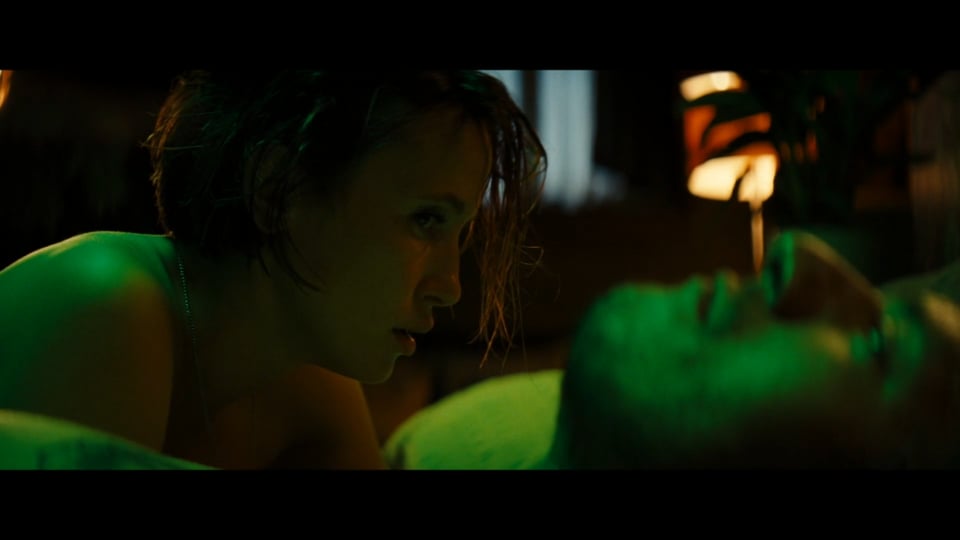
Into the Betaverse (2026) by Varun Raman and Tom Hancock

UK | 2026 | 14 min | Virtual Relationship Comedy
➡️ Where to Watch: Festival Circuit — Festival Scope Pro — Industry Professionals
If the Feelings Are Real, Does It Matter That the Relationship Is Virtual?
Gary has proposed to his girlfriend Chantelle. There is just one complication: their relationship exists entirely inside the Betaverse. His technophobic best friend Dave is convinced Chantelle could be a scammer, so he reluctantly enters the virtual world to investigate the woman his friend intends to marry.
Written and directed by Varun Raman and Tom Hancock, the 14-minute British short uses that deliberately comic premise to explore something increasingly less futuristic: whether intimacy experienced through technology should be considered less meaningful than intimacy experienced physically. The BFI describes the project as combining motion capture with observations about class, technology and virtual intimacy, while its original development synopsis centers Dave's fear that Gary's virtual relationship is not legitimate.
➡️ Movie Insight: Gary experiences his relationship as real while Dave sees the technology surrounding it as evidence that something must be wrong. Their disagreement turns virtual reality into a debate about intimacy rather than simply a futuristic setting. The film asks whether the location of a relationship matters when the feelings inside it are genuine.
Why This Movie Matters Right Now: Digital Relationships Are Becoming Relationships, Not Alternatives to Them
Digital spaces increasingly function as places where people meet, socialize, build communities and maintain relationships rather than merely escape physical life. Into the Betaverse pushes that evolution forward by imagining a man prepared to marry someone whose relationship with him exists inside a virtual environment.
The tension comes from the generational and cultural gap surrounding that shift. Dave represents the instinct to treat technologically mediated intimacy as suspicious or inferior, while Gary has already crossed that boundary and treats his digital relationship as consequential enough for marriage. Film Hub North describes the filmmakers' interest as extending into the increasingly complicated future of connection.
➡️ Why It Matters: Technology keeps changing where human connection can happen. Cultural acceptance does not necessarily evolve at the same speed. Into the Betaverse finds comedy in the moment when virtual intimacy becomes serious enough that outsiders can no longer dismiss it as merely virtual.
Should You Watch It?: A 14-Minute Sci-Fi Comedy With a Very Human Question Inside Its Technology
The short is particularly suited to viewers who enjoy speculative ideas delivered through character comedy rather than technological exposition. Gary and Dave's friendship gives the concept an immediately recognizable human foundation: one friend believes he has found love while the other thinks he needs rescuing.
It is also an interesting proposition for viewers interested in filmmaking technology. The production combines live action and animation, using motion capture and virtual-production techniques to move between physical reality and the Betaverse itself.
➡️ Viewing Recommendation: Watch it for the relationship comedy rather than expecting conventional hard science fiction. The technology creates the situation, but friendship, loneliness and intimacy give it meaning. Its compact runtime makes the central question immediate: what actually makes a relationship real?
Why Everyone Is Talking About It: A TIFF-Winning Short Where Virtual Production Becomes Part of the Story
Into the Betaverse arrived internationally with significant momentum. The BFI NETWORK-backed film had its world premiere in TIFF's 2026 Short Cuts programme before winning the Short Cuts Award for Best Animated Short Film, with directors Varun Raman and Tom Hancock receiving the festival honor. The Short Cuts award carried a CAD $10,000 bursary.
The recognition is particularly relevant because the film's form mirrors its subject. This is a story about entering a virtual world made through a hybrid of live action, animation and motion capture, with the production developing a lower-cost approach to virtual filmmaking. After Toronto, it continued to the 2026 Encounters Film Festival for its UK premiere.
➡️ Viral Potential: The TIFF win gives a 14-minute independent short a strong international discovery point. Its virtual-romance premise connects directly with current conversations around digital identity and technologically mediated relationships. The hybrid production method gives the film an additional story beyond the screen by making virtual technology both its subject and its creative tool.
Why Into the Betaverse Stands Out: The Metaverse Is Not the Point — The Relationship Is
Stories about virtual reality often focus on technological danger, simulated reality or the inability to distinguish digital worlds from physical ones. Into the Betaverse takes a more intimate route. Gary apparently knows where his relationship exists; the disagreement is over whether that makes the relationship less legitimate.
Dave therefore becomes essential. His decision to enter the Betaverse is motivated not by curiosity about technology but by concern for his friend, and the BFI's original project description explicitly frames his intervention as something that risks their friendship.
➡️ Cinema Insight: The Betaverse works because the film gives its futuristic idea an ordinary relationship problem. One friend has embraced a new definition of intimacy while another cannot accept it. Technology becomes most interesting when it reveals how differently people define love, friendship and reality.
Movie Trend: Virtual Relationship Comedy — When a Man Falls in Love With Someone He Has Only Met in a Digital World
Virtual-world storytelling is increasingly able to move beyond treating digital spaces simply as threats or escapist fantasies. As digitally mediated interaction becomes embedded in everyday life, stories can instead explore what happens when relationships formed through technology acquire the same seriousness traditionally associated with physical relationships.
Into the Betaverse pushes that transition to a comic extreme through Gary's proposal to Chantelle. The relationship is already real enough to him to justify marriage; the conflict emerges because Dave refuses to accept that virtual intimacy deserves the same confidence.
Trend Formula:virtual encounter → repeated digital connection → emotional intimacy → relationship becomes serious → marriage proposal → outsider questions its legitimacy → virtual world is investigated → friendship is tested → meaning of a real relationship is reconsidered
➡️ Movie Trend: Virtual relationships are becoming more interesting on screen when stories stop asking whether digital worlds exist and start asking what people can genuinely experience inside them. Romance gives those questions immediate human consequences. Into the Betaverse uses comedy to test whether love needs physical proximity to qualify as real.
Broad Trend: Redefining Connection — When Audiences Are Reconsidering What Makes a Relationship Feel Real
Redefining Connection reflects the expansion of intimacy beyond traditional physical environments. Messaging, gaming, online communities and virtual spaces increasingly allow relationships to begin and develop without requiring people to occupy the same physical place.
That does not eliminate skepticism. Instead, it creates a cultural negotiation between people who experience digital relationships as natural and those who continue to treat physical presence as evidence of authenticity.
Broad Trend Formula:physical distance → digital interaction → repeated connection → emotional intimacy → relationship becomes meaningful → outsiders question its legitimacy → virtual and physical boundaries weaken → connection becomes defined by experience rather than location
➡️ Broad Trend: Human connection adapts whenever communication technology changes. What once appeared artificial can become ordinary once people begin building genuine experiences inside it. The emerging question is less where a relationship happens and more whether the people involved experience it as meaningful.
Why Redefining Connection Stories Are Popular: Technology Changes Faster Than Our Definitions of Relationships
Audiences increasingly live across physical and digital spaces simultaneously, making stories about online intimacy recognizable rather than purely speculative. The tension comes from the fact that cultural definitions of authenticity still lag behind the ways people actually communicate, socialize and form relationships.
➡️ Audience Motivation: Viewers recognize that meaningful connection no longer requires every interaction to happen face-to-face. They also understand the skepticism that surrounds relationships formed through unfamiliar technologies. Stories like Into the Betaverse let audiences negotiate that contradiction through humor rather than prediction.
Viewer Profile: Comedy Explorers - Viewers Seeking Funny Stories That Turn Emerging Technology Into Human Situations
Comedy Explorers gravitate toward unconventional concepts when technology remains connected to recognizable behavior. They are less interested in technical explanations than in discovering how strange new environments expose familiar insecurities, relationships and social differences.
Into the Betaverse fits that behavior by making virtual reality the setting for friendship, romance, suspicion and social misunderstanding. Its short-film format also makes it particularly attractive to festival audiences looking for compact, concept-driven storytelling.
Audience Dimension | Profile |
Core Audience | Comedy Explorers interested in inventive sci-fi and unconventional relationship stories |
Age Group | Young adult and adult audiences |
Lifestyle | Digitally engaged viewers familiar with online communities, gaming culture and changing forms of communication |
Cinema Taste | Sci-fi comedy, relationship comedy, satire, animation and inventive short filmmaking |
Streaming Behavior | Festival discovery, short-film platforms, online recommendations and creator-led discovery |
Discovery Mindset | Emerging filmmakers, unusual concepts, technological experimentation and culturally relevant comedy |
➡️ Audience Insight: Comedy Explorers want new ideas without losing recognizable human behavior. Technology becomes accessible when audiences can see familiar relationships operating inside unfamiliar environments. Into the Betaverse makes the future funny because the people entering it remain completely human.
What This Movie Means for the Industry: Virtual Production Is Becoming Accessible Beyond Large-Budget Filmmaking
The production story behind Into the Betaverse makes the short especially relevant to independent filmmaking. The University of Salford hosted the production's motion-capture work as part of an effort to explore a more cost-effective virtual-production method, with producer Chuckie McEwan describing the approach as a budget-friendly alternative designed to help newcomers and independent filmmakers access technology normally associated with larger productions.
The film was supported by BFI NETWORK and developed through Film Hub North's Script Lab. British Council credits also identify a Virtual VFX Supervisor and Virtual Art Director alongside the conventional cinematography, production-design and editing teams, demonstrating how emerging virtual-production roles can integrate with traditional short filmmaking.
➡️ Industry Insight: Virtual production does not have to remain restricted to blockbuster filmmaking. Lower-cost workflows can allow independent creators to experiment with digital environments while preserving distinctive personal storytelling. Into the Betaverse demonstrates that technological innovation can expand creative possibility rather than simply increase production scale.
Creative Analysis: The Technology Becomes Both the Story and the Storytelling Tool
The most interesting creative alignment in Into the Betaverse is between subject and production. Dave enters a synthetic world to understand his friend's relationship, while Raman and Hancock use a combination of live action, animation and motion capture to create the distinction between those realities.
That makes the Betaverse more than production spectacle. The film's hybrid construction reinforces the central question about whether experiences created through technology can nevertheless produce authentic human responses.
Storytelling
The short begins from a deliberately simple comic disagreement. Gary believes his virtual girlfriend is real enough to marry; Dave believes the same circumstances are evidence that Gary may be getting scammed.
Making Dave enter the world he distrusts creates the story's natural progression. Skepticism cannot remain abstract once he must experience the environment himself.
Direction
Varun Raman and Tom Hancock co-wrote and co-directed the film after developing it through Film Hub North's Script Lab. The pair are a Manchester-based filmmaking duo whose earlier collaboration Man or Tree received festival recognition including a Clermont-Ferrand Lab Competition Prize.
Their approach to Into the Betaverse connects absurdist British comedy with speculative filmmaking rather than treating science fiction as a purely dramatic genre. TIFF similarly characterized the film through its collision of virtual identity with British comedy, masculinity, class and male friendship.
Performances
Andrew Ellis plays Gary, Olivia Frances Brown plays Chantelle and Corin Silva plays Dave, while David Avery appears as Charlie.
The relationship between Gary and Dave provides the human foundation underneath the virtual-world premise. Gary's commitment and Dave's suspicion give the actors opposing positions on the same technology without requiring the film to become a technical debate.
Visual Style
The film combines live action and animation with motion-capture and virtual-production techniques. James Oldham served as director of photography, Ruta Staseviciute as production designer, Daniel Garden as Virtual VFX Supervisor and Charles De La Mare as Virtual Art Director.
The production used Unreal Engine-related virtual filmmaking methods developed around a lower-cost motion-capture setup. This allows the contrast between physical and virtual environments to become part of the movie's visual language rather than merely its premise.
Themes
Connection is the central theme, but the film expands it through friendship, class, masculinity and technological change. Dave's suspicion of Chantelle is also a judgment about Gary's choices and therefore about whether his friend is capable of understanding his own relationship.
The story consequently asks who gets to decide when another person's connection is legitimate. A virtual relationship may appear artificial from the outside while remaining deeply consequential to the people experiencing it.
What Makes It Different
The strongest distinction is the alignment between production method and narrative subject. A film questioning the legitimacy of virtual experiences uses virtual-production technology to construct the world in which those experiences occur.
That creates a productive contradiction. The artificial environment is deliberately manufactured, yet the emotions the filmmakers want audiences to consider inside it are recognizably human.
➡️ Creative Insight: Into the Betaverse does not use virtual production merely to demonstrate technological possibility. Its filmmaking method reinforces its central question about whether synthetic environments can contain authentic experiences. Form and story meet around the same idea: virtual does not automatically mean unreal.
If You Liked Into the Betaverse (2026): Stories Where Technology Changes Human Connection
Companion (2025) by Drew Hancock: When Artificial Intimacy Complicates the Meaning of a Relationship
A relationship built around advanced technology becomes the foundation for a darkly comic exploration of intimacy, identity, control and what people expect from their partners.
➡️ Why It Connects: Both films use speculative technology to question assumptions about what makes intimacy authentic. Human expectations remain recognizable even when the relationship itself depends on unfamiliar technology. Comedy emerges from the gap between technological possibility and conventional relationship rules.
Molli and Max in the Future (2023) by Michael Lukk Litwak: When Familiar Romantic Problems Survive Inside a Completely Unfamiliar Future
Two people repeatedly collide across a strange science-fiction universe while their evolving relationship remains grounded in recognizable romantic uncertainty.
➡️ Why It Connects: Both films use speculative worlds to explore relationship problems audiences already understand. Futuristic environments amplify rather than replace ordinary questions about attraction and compatibility. The technology becomes funniest when human behavior refuses to become futuristic with it.
The Assessment (2025) by Fleur Fortuné: When Technology Begins Deciding What Relationships Are Allowed to Become
In a controlled future, a couple seeking permission to have a child must submit their relationship to an invasive assessment that challenges intimacy, autonomy and trust.
➡️ Why It Connects: Both films imagine futures where technology changes the framework surrounding intimate relationships. Their tones differ, but each asks whether systems can redefine experiences people consider deeply personal. Speculative worlds become tools for examining who controls the meaning of connection.
➡️ If You Liked Insight: These films make speculative technology meaningful by connecting it to recognizable relationship needs. Love, trust and belonging remain complicated even when the environments surrounding them become radically different. The future changes the tools of connection more easily than it changes the human desire to connect.
Final Verdict: The Future of Relationships May Look Strange Without Feeling Strange to the People Inside Them
Into the Betaverse takes a concept that could easily become technological satire and grounds it in something simpler: one man believes his relationship is meaningful while his friend believes the technology surrounding it makes that meaning suspect. That disagreement allows Raman and Hancock to explore virtual intimacy without losing the accessibility of friendship comedy.
Its production makes the idea even more compelling. The same emerging technologies being used to create the Betaverse are part of a broader transformation in how independent filmmakers can construct worlds, making the short simultaneously a story about technological change and an example of it.
➡️ Final Verdict: Into the Betaverse finds a human question inside a virtual world. Gary's relationship challenges the assumption that physical presence is required for meaningful intimacy. The film suggests that technology may change where connection happens long before it changes why people need it.
Quick Facts: When Virtual Love Becomes Real Enough for Marriage
Directors | Varun Raman / Tom Hancock |
Screenplay / Writers | Varun Raman / Tom Hancock |
Lead Cast | Andrew Ellis / Corin Silva / Olivia Frances Brown |
Key Cast | David Avery |
Country | United Kingdom |
Year | 2026 |
Runtime | 14 min 11 sec |
Genre | Virtual Relationship Comedy |
Language | English |
Format | Live action / animation / motion capture |
Cinematography | James Oldham |
Editing | Darrin Brading |
Music | Mitchell Sloan |
Production Design | Ruta Staseviciute |
Virtual VFX Supervisor | Daniel Garden |
Virtual Art Director | Charles De La Mare |
Producers | Chuckie McEwan / Archie Sinclair |
Executive Producer | Benjamin Taylor |
Production | Grey Moth; BFI NETWORK-backed |
Festival Profile | Toronto International Film Festival 2026 — World Premiere; Encounters Film Festival 2026 — UK Premiere |
Awards & Recognition | 1 win — TIFF 2026 Short Cuts Award for Best Animated Short Film, Varun Raman & Tom Hancock |
Movie Trend | Virtual Relationship Comedy — When a Man Falls in Love With Someone He Has Only Met in a Digital World |
Broad Trend | Redefining Connection — When Audiences Are Reconsidering What Makes a Relationship Feel Real |
Central Characters | Gary / Dave / Chantelle |
Core Conflict | Dave enters the Betaverse because he believes his best friend's virtual girlfriend may be a scammer |
Creative Hook | A virtual-romance comedy created through a hybrid of live action, animation and motion capture |
Core Themes | Virtual intimacy / friendship / masculinity / class / trust / technology / identity / belonging |
Why Watch | An award-winning British short that uses emerging filmmaking technology to explore whether virtual relationships can carry real human meaning |
Final Insights: Technology Keeps Changing the Place Where Connection Happens
Redefining Connection matters because digital relationships are becoming harder to separate from the rest of social life. As communication environments evolve, the distinction between online and offline intimacy becomes less useful when the emotions, commitments and consequences experienced by the people involved remain real.
Cinema will increasingly reflect that transition by treating virtual relationships not merely as futuristic curiosities but as ordinary human relationships taking place through new interfaces. Into the Betaverse captures an early stage of that shift while its own hybrid production demonstrates how technological change is simultaneously reshaping the tools filmmakers use to tell those stories.
➡️ Final Insight: Technology can change the environment of connection without eliminating the human need underneath it. Virtual relationships will become culturally significant when people stop asking whether the platform is real and start asking whether the feelings are. Into the Betaverse turns that transition into comedy while pointing toward a broader transformation in how cinema represents intimacy.
Comments