



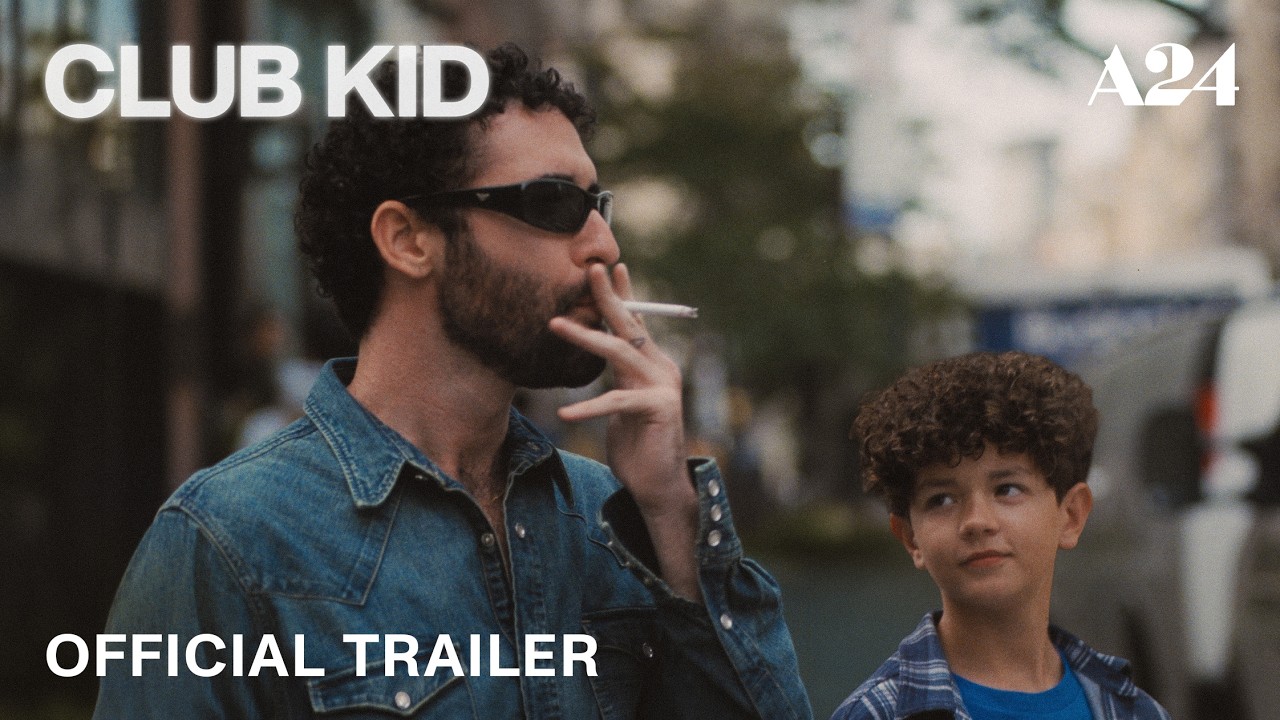
Club Kid (2026) by Jordan Firstman

US | 2026 | 122 min | Comedy, Drama, Queer Comedy-Drama
➡️ Where to Watch: In Theaters from November 6, 2026 — US. Currently continuing its international festival circuit ahead of the theatrical release.
When the Party Ends and Parenthood Begins
Peter has built his adult identity around New York nightlife. He is a club promoter surrounded by parties, drugs, friends and a social world where the next night always seems more important than whatever adulthood is supposed to look like. Then a 10-year-old son he never knew existed suddenly enters his life and makes continuing exactly as before impossible.
Jordan Firstman writes, directs and plays Peter in his feature filmmaking debut, turning a familiar unexpected-parenthood premise into something much more culturally specific. The question is not simply whether an irresponsible man can become a good father, but whether someone whose identity has been built around perpetual youth can accept that growing up does not necessarily mean abandoning the community that made him who he is.
➡️ Movie Insight: Club Kid puts unexpected fatherhood directly inside New York's queer nightlife culture. Peter does not simply have to learn how to raise a child; he has to reconsider the adult identity he has spent years avoiding. Parenthood becomes less an ending to his old life than an unexpected opportunity to build a different one.
Why This Movie Matters Right Now: Adulthood No Longer Follows a Predictable Timeline
Club Kid taps into a contemporary tension surrounding delayed adulthood. Marriage, children, home ownership and stable careers no longer arrive in the same order—or at the same age—for everyone, leaving many millennials constructing adult identities around friendships, work, nightlife and chosen communities instead.
Peter represents an exaggerated version of that reality. His lifestyle has allowed him to keep conventional adulthood at a distance until parenthood arrives instantly rather than gradually, forcing responsibility into a life specifically designed to avoid it. Critics have repeatedly identified this tension between arrested adolescence and emotional maturity as one of the film's strongest dimensions.
➡️ Why It Matters: Club Kid reflects a generation for whom adulthood has become less predictable and more individually constructed. Peter's crisis begins when responsibility arrives before he feels prepared to accept it. The film turns that anxiety into a funny and emotionally accessible story about growing up late.
Should You Watch It?: Queer Chaos Gives Way to an Unexpectedly Tender Family Story
Club Kid initially looks like a nightlife comedy: loud parties, drugs, sex, internet-age humour and a protagonist deeply invested in remaining the centre of his own social universe. What has surprised critics since Cannes is how successfully Firstman allows that chaos to evolve into an emotionally sincere father-son story without completely sanitising Peter or the queer community surrounding him.
The result should appeal beyond viewers already familiar with Firstman's comedy. Its humour remains culturally specific, but the emotional mechanism—someone discovering that caring for another person gives his life an unexpected direction—is deliberately universal.
➡️ Viewing Recommendation: Club Kid is particularly strong for audiences who like messy comedy-dramas that gradually reveal an emotional centre. Its queer nightlife specificity gives the familiar unexpected-parenthood story a genuinely different personality. The combination of outrageous comedy and sincere father-son intimacy gives it unusually broad crossover potential.
Why Everyone Is Talking About It: A Cannes Discovery Becomes a Genuine Audience Favourite
Club Kid premiered in Un Certain Regard at Cannes, where Jordan Firstman was also nominated for the Caméra d'Or and Queer Palm. Its momentum continued on the festival circuit, culminating in two significant wins at Deauville: the Grand Special Prize and Audience Award, followed by an Audience Award nomination at San Sebastián.
That combination matters because Club Kid has generated both critical and audience enthusiasm. The uploaded IMDb material records an 85 Metascore, while reviews have repeatedly singled out its unexpected emotional sincerity, humour and father-son relationship. A24's acquisition and November theatrical release now give what began as a festival discovery a clear route toward wider audiences.
➡️ Viral Potential: Club Kid has already moved beyond niche festival curiosity into genuine crossover territory. Firstman's existing cultural visibility provides attention, while the unexpectedly tender father-son story gives audiences something more substantial to recommend. Winning both jury and audience recognition at Deauville suggests that its appeal extends beyond its original queer nightlife context.
Why Club Kid Stands Out: The Irresponsible-Dad Comedy Gets a Queer Millennial Reinvention
Cinema has repeatedly used the unexpected-child formula to force irresponsible men into adulthood. Club Kid does not reinvent that basic mechanism; what changes is the world surrounding it. Peter is a gay underground New York party promoter whose idea of family has been built through friendships, nightlife and queer community rather than conventional domestic structures.
That means becoming a father does not simply require Peter to stop partying. It forces him to decide whether responsibility and his existing identity are actually incompatible. Rather than replacing chosen family with biological family, the film explores how the two might coexist, turning an old comedy premise into a contemporary story about queer adulthood.
➡️ Cinema Insight: Club Kid updates the unexpected-fatherhood comedy by changing the social world into which the child arrives. Peter's queer chosen family does not disappear simply because biological family suddenly becomes important. The familiar grow-up narrative becomes a more contemporary question about whether adulthood requires abandoning the person someone used to be.
Movie Trend: Queer Comedy-Drama — When Unexpected Parenthood Forces Party Boys to Grow Up
underground nightlife → commitment-free lifestyle → queer chosen family → unexpected child → instant parenthood → party life collides with responsibility → emotional avoidance becomes impossible → unconventional father-son relationship → adulthood arrives without warning → family gets redefined
Club Kid belongs to a wider storytelling trend about delayed adulthood colliding with unexpected responsibility. Contemporary characters who have postponed marriage, parenthood or conventional stability are increasingly being confronted with caregiving responsibilities that force them to reconsider what adulthood actually means.
The queer context makes Firstman's version distinctive. Peter's transformation does not require him to abandon his sexuality or chosen community in order to become a father; instead, the film expands the definition of family around him. Growing up becomes integration rather than conformity.
➡️ Movie Trend: Contemporary comedy-dramas are increasingly treating delayed adulthood as a legitimate lifestyle until responsibility suddenly changes the equation. Unexpected parenthood provides an immediate mechanism for forcing emotionally avoidant characters to reconsider their priorities. Club Kid gives that familiar transition a specifically queer and millennial identity.
Viewer Profile: Afterparty Adults - Millennial Viewers Who Like Messy Characters Growing Up Late
Afterparty Adults are viewers who recognise adulthood as something considerably less organised than traditional family movies suggest. They gravitate toward characters navigating unstable careers, unconventional relationships, chosen families, nightlife and the awkward transition from extended youth toward responsibility.
Viewer Dimension | Profile |
Core Audience | Afterparty Adults |
Age Group | Primarily millennials and younger adult viewers |
Lifestyle | Urban, culturally connected, socially active |
Cinema Taste | Contemporary comedy-drama, queer cinema, messy character studies, unconventional family stories |
Streaming Behavior | Mixes A24-style indie releases with prestige streaming and culturally buzzy series |
Discovery Mindset | Festivals, social media, critics, actors, online cultural conversation |
Firstman's established online profile gives the film another discovery route beyond traditional arthouse audiences. His transition from viral comedy and acting into writing, directing and leading a feature makes Club Kid particularly legible to viewers whose entertainment discovery already crosses social media, television and independent cinema.
➡️ Audience Insight: Afterparty Adults recognise characters whose emotional maturity has not necessarily kept pace with their chronological age. They respond to stories where responsibility arrives without requiring characters to become conventionally respectable overnight. Club Kid turns that tension into both comedy and emotional recognition.
What This Movie Means for the Industry: Queer Stories Can Become Mainstream Family Stories Without Losing Their Specificity
Club Kid demonstrates an important evolution in queer cinema. Peter's sexuality remains central to his world, humour, friendships and identity, but the primary narrative problem is not coming out or confronting sexuality—it is becoming a parent. Queer experience therefore becomes the perspective through which a broader family story is told.
That helps explain its crossover potential. The film can speak directly to queer audiences while offering a universally recognisable emotional structure to viewers outside that community. A24's acquisition after significant Cannes interest reinforces the commercial value of films that combine cultural specificity with accessible emotional storytelling.
➡️ Industry Insight: Queer cinema no longer needs to translate itself into generic storytelling in order to reach wider audiences. Cultural specificity can become the feature that distinguishes an otherwise familiar narrative. Club Kid suggests that unconventional queer families can increasingly occupy the centre of mainstream emotional storytelling rather than its margins.
Creative Analysis: Jordan Firstman Finds Sincerity Beneath the Chaos
Club Kid is built around contradiction: outrageous humour and genuine vulnerability, nightlife excess and domestic responsibility, chosen family and biological parenthood. Firstman's challenge is keeping those worlds connected rather than allowing the arrival of Arlo to turn Peter into an entirely different character.
Storytelling: An Old Parenting Formula Finds a New Cultural World
The narrative engine is deliberately familiar. A reckless adult discovers he has a child and is forced to reconsider his priorities.
What makes the storytelling contemporary is everything surrounding that formula: Peter's queer identity, New York club culture, millennial arrested development and chosen family transform a traditional parenting comedy into something culturally specific.
Direction: Jordan Firstman Turns Internet-Age Energy Into Feature Filmmaking
Club Kid marks Firstman's feature directorial debut after earlier work in comedy, short films and acting. Cannes positioned him as a distinctive emerging voice and noted that the film was shot on 35mm, despite its tight budget.
The directing style allows Peter's chaotic environment to retain its energy while gradually making space for emotional intimacy. Rather than rejecting the excess associated with his public persona, Firstman uses it as the surface beneath which a more vulnerable filmmaker emerges.
Performances: Father and Son Give the Chaos Its Emotional Centre
Firstman plays Peter, while Reggie Absolom plays his son Arlo. Cara Delevingne and Kirby Howell-Baptiste are among the prominent supporting cast, with the uploaded IMDb material identifying Firstman, Delevingne and Howell-Baptiste among the film's principal stars.
The film depends on Peter and Arlo avoiding the usual sentimental father-child dynamic. Their relationship grows through awkwardness and gradual recognition, allowing Peter's emotional transformation to feel connected to the messy personality established at the beginning.
Visual Style: 35mm Gives Queer Nightlife a Physical Texture
Cinematographer Adam Newport-Berra shot Club Kid on 35mm, an unusually tactile choice for a story immersed in contemporary nightlife and internet-era culture. Cannes specifically highlighted the format when introducing Firstman's debut.
The contrast is useful: a story about fleeting parties, digital-age identity and constant social performance is captured through a physical film medium associated with texture and permanence. That gives Peter's disappearing nightlife world a sense of memory even while he is still living inside it.
Themes: Fatherhood, Chosen Family and the Fear of Growing Up
Club Kid is ultimately less interested in whether Peter can become conventionally responsible than in why he has avoided responsibility for so long. Partying represents pleasure and community, but it also becomes a mechanism for postponing emotional vulnerability.
Arlo changes that equation because fatherhood requires Peter to become important to someone beyond himself. Biological family does not invalidate chosen family; instead, the film asks whether Peter can build an adult life capable of accommodating both.
What Makes It Different: Parenthood Does Not Require Becoming Conventional
The easiest version of this story would make queer nightlife the problem and domestic fatherhood the solution. Club Kid appears considerably more interested in refusing that binary.
Peter needs to change, but the world around him does not need to disappear. That distinction prevents the movie from becoming a morality tale about abandoning queer hedonism and allows it instead to become a story about expanding the definition of adulthood.
➡️ Creative Insight: Club Kid works because Peter's transformation does not require erasing the person introduced at the beginning. Firstman allows queer nightlife, chosen family and fatherhood to occupy the same emotional universe. Growing up becomes an act of adding responsibility rather than subtracting identity.
If You Liked Club Kid (2026): Messy Adults Discover That Family Changes Everything
Sacramento (2025) by Michael Angarano: Delayed Adulthood Meets Approaching Fatherhood
Michael Angarano's road comedy pairs free-spirited Rickey with Glenn, whose impending fatherhood has moved him toward a more settled adult life. Like Club Kid, it finds humour and melancholy in the widening gap between characters who continue living like younger versions of themselves and friends whose responsibilities are changing.
➡️ Why It Connects: Both films examine men discovering that adulthood cannot be postponed indefinitely. Friendship and responsibility collide with lifestyles built around freedom and avoidance. Neither treats growing up as a simple transition into conventional respectability.
The Mattachine Family (2023) by Andy Vallentine: Queer Parenthood Redefines What Makes a Family
Thomas and Oscar confront different ideas about parenthood after the foster child they have cared for returns to his birth mother. Its tone and structure differ from Club Kid, but both films place queer men inside stories about parenting, responsibility and the meaning of family rather than treating sexuality itself as the central conflict.
➡️ Why It Connects: Both films expand queer storytelling into questions of fatherhood and family construction. Biological connection becomes only one possible definition of what makes people responsible for one another. Parenthood becomes a way of exploring queer adulthood rather than replacing queer identity.
Rotting in the Sun (2023) by Sebastián Silva: Queer Chaos Without the Responsibility
Sebastián Silva's dark comedy places Jordan Firstman inside another aggressively contemporary queer world of narcissism, sex, social media and emotional disorder. Watching it alongside Club Kid makes Firstman's creative progression particularly revealing: similar cultural chaos remains, but fatherhood introduces an emotional responsibility absent from the earlier film.
➡️ Why It Connects: Both films embrace messy queer characters without making them respectable for mainstream audiences. Firstman's comic persona and contemporary gay culture are central to each film's identity. Club Kid takes that chaotic energy somewhere new by asking what happens when another person's wellbeing suddenly depends on the protagonist.
➡️ If You Liked Insight: These films explore adulthood without pretending maturity arrives automatically at a particular age. Parenthood, friendship and responsibility force characters to reconsider identities built around independence. Club Kid distinguishes itself by placing that transformation inside a specifically queer New York nightlife community.
Final Verdict: The Club Kid Finally Has Someone Waiting at Home
Club Kid takes a premise that could easily have become a predictable irresponsible-parent comedy and gives it a contemporary queer identity. Firstman's Peter is funny because he is spectacularly unprepared for fatherhood, but the movie becomes emotionally persuasive because it understands that irresponsibility and loneliness can exist beneath a socially exciting life.
Its festival trajectory strengthens the sense that Firstman has created more than a niche comedy. Cannes recognition, two Deauville wins, strong critical reception and A24 distribution suggest a film capable of moving from queer cultural specificity toward much wider emotional recognition.
➡️ Final Verdict: Club Kid finds an unexpectedly tender family movie inside the chaos of queer New York nightlife. Its familiar fatherhood premise becomes fresh because Peter does not need to abandon his community in order to become responsible for someone else. Growing up finally feels less like the end of the party than the beginning of a different life.
Quick Facts: The Party Promoter Who Suddenly Has to Become a Dad
Director | Jordan Firstman |
Screenplay / Writer | Jordan Firstman |
Lead Cast | Jordan Firstman as Peter; Reggie Absolom as Arlo |
Key Cast | Cara Delevingne, Kirby Howell-Baptiste, Diego Calva, Colleen Camp |
Country | United States |
Year | 2026 |
Runtime | 122 min (IMDb listing) |
Genre | Comedy / Drama / Queer Comedy-Drama |
Language | English |
Cinematography | Adam Newport-Berra |
Format | 35mm |
Editing | Not verified in supplied material |
Music | Cristobal Tapia de Veer |
Production Design | Not verified in supplied material |
Production | Rapt Film / Stay Gold / Topic Studios |
Producers | Alex Coco, Galen Core, Ryan Heller |
Distributor | A24 |
Festival Profile | Cannes Un Certain Regard; continuing international festival circuit |
Awards & Recognition | Deauville Grand Special Prize & Audience Award; Cannes Un Certain Regard, Caméra d'Or and Queer Palm nominations; San Sebastián Audience Award nomination |
Movie Trend | Queer Comedy-Drama — When Unexpected Parenthood Forces Party Boys to Grow Up |
Central Characters | Peter and Arlo |
Core Conflict | A hard-partying club promoter must suddenly become responsible for the son he never knew existed |
Creative Hook | Queer New York nightlife collides with instant fatherhood |
Core Themes | Parenthood, delayed adulthood, chosen family, queer identity, responsibility, sobriety, reinvention |
Why Watch | A funny and unexpectedly emotional reinvention of the irresponsible-dad comedy |
The uploaded material confirms Firstman as writer-director-star, the US production origin, English language, Manhattan filming and Rapt Film, Stay Gold and Topic Studios as production companies.
Final Insights: Queer Cinema Is Moving Into the Next Stage of Adulthood
Club Kid reflects a significant expansion in contemporary queer storytelling. Stories about identity, desire and chosen family remain important, but filmmakers are increasingly asking what happens afterward: what queer adulthood looks like when parenthood, ageing, caregiving and long-term responsibility enter lives that were not necessarily built around conventional family structures.
That shift opens a rich new territory for comedy and drama. Parenthood does not have to represent assimilation into a traditional lifestyle, just as nightlife and chosen family do not have to represent permanent adolescence. Club Kid suggests that the more interesting story lies in allowing these identities to coexist.
➡️ Final Insight: Queer family cinema is expanding from the fight to live differently toward the challenge of growing older differently. Club Kid captures that transition through a man who discovers fatherhood long after constructing a life without it. The future of queer storytelling may increasingly be about what happens after freedom has been won and responsibility unexpectedly arrives.

Comments