


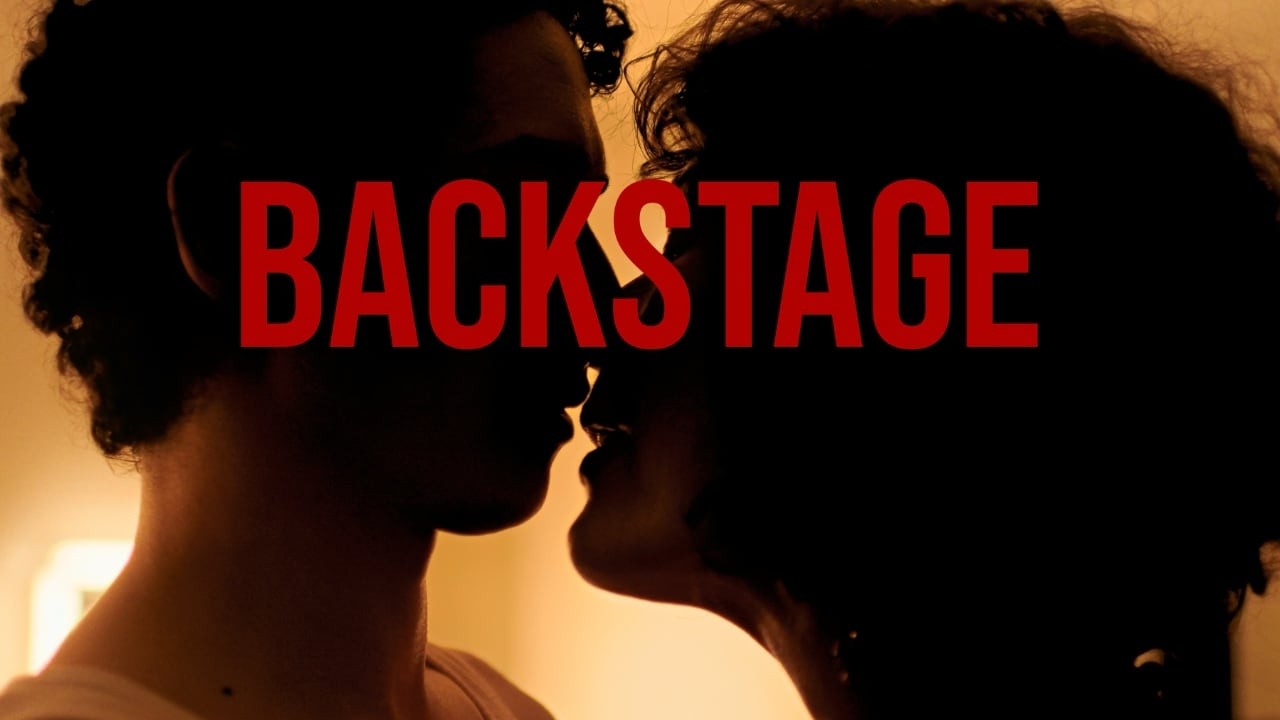
Backstage (2026) by Émile V. Schlesser

LU | 2026 | 27 min | Drama
➡️ Where to Watch: Public viewing availability has not been confirmed. An online release through Film Shortage and Cineshort is reported for 26 October 2026.
A Young Actor Navigates Attraction and Authority Behind the Curtain
Young actor Lukas enters a theatre production under the direction of Cosima Lambrecht, whose professional authority gives her considerable influence over his prospects. As attraction develops between them, the boundaries separating artistic guidance, personal attention and control become harder to distinguish. Lukas must navigate a relationship in which the person shaping his performance also has the power to destabilise his life beyond the stage.
➡️ Storyline: An actor’s ambition becomes entangled with attraction to the director who controls his professional opportunities.
Why to Watch Backstage: A Theatre Relationship Carries Two Different Kinds of Stakes
Backstage offers a concentrated psychological conflict in which professional ambition and personal vulnerability occupy the same relationship. Lukas cannot assess Cosima’s attention independently of her influence over his work. That overlap gives the premise tension beyond an affair: each interaction may affect both how he feels and what he believes is possible for his career.
Émile V. Schlesser directs Jonathan Joél Albrecht, Sascha Ley and Tommy Schlesser, working from a screenplay co-written with Jonas Brand. His earlier short Superhero won the 2020 Shocking Short Award, providing a useful introduction to his previous work. Backstage’s 2026 Luxembourg City Film Festival screening adds a verified discovery point, while its short format promises a focused encounter with the central relationship.
➡️ Reason to Watch: A compact drama where professional dependence makes personal decisions more difficult to interpret and act upon.
Why Backstage Stands Out: Psychological Drama Places Desire Inside a Professional Hierarchy
Dramas about unequal relationships often make the imbalance visible through an explicit demand or threat. Backstage’s stated approach concentrates on the gradual blurring of mentorship, attraction and coercion. This gives its psychological conflict a particular focus: Lukas must interpret behaviour within a relationship that can appear professionally valuable while becoming personally harmful.
The theatre setting adds another complication because a director legitimately asks an actor to experiment, become vulnerable and respond to guidance. Backstage examines how that authority can be extended beyond its professional purpose. Its distinction lies in placing the difficulty of recognising and resisting manipulation within the same creative relationship that initially offers opportunity.
➡️ Why It Stands Out: The relationship’s professional value helps explain why its troubling personal dynamics can become difficult to confront.
Movie Trend: Psychological Drama — Professional Dependence Complicates Attraction Between an Actor and His Director
Backstage connects its psychological tension to a concrete imbalance: Cosima directs the production in which Lukas wants to succeed. Attraction develops within that hierarchy, making personal attention difficult to separate from professional judgement. The premise allows uncertainty about the relationship to affect how Lukas understands his own choices, ambitions and limits.
The film illustrates a psychological-drama approach that examines manipulation through its development rather than relying solely on a decisive confrontation. Guidance, recognition and opportunity can give an unequal relationship reasons to continue. The storytelling value comes from showing how those attractions interact with pressure, making the situation understandable without suggesting that ambition makes someone responsible for another person’s misconduct.
➡️ Movie Trend Insight: Psychological drama gains depth when it explains what sustains a harmful relationship alongside what makes it damaging.
Broad Trend: The Search for Control — Personal Boundaries Become Harder to Defend When Opportunity Is at Stake
The Search for Control concerns the ability to make meaningful decisions about work, relationships and personal limits. Backstage gives that motivation a difficult setting: the person whose behaviour Lukas must assess also influences something he values professionally. His available choices therefore carry perceived consequences beyond the immediate interaction, complicating the freedom to respond.
Beyond cinema, this offers a lens for examining mentorship, career progression and relationships shaped by unequal authority. A choice can appear available while feeling costly to exercise. Greater control depends partly on whether people can question an arrangement, establish boundaries or seek support without believing that doing so will automatically jeopardise their prospects.
➡️ Broad Trend Insight: Meaningful control includes the ability to set a boundary without having to gamble an entire opportunity on the response.
Viewer Profile: Independent Drama Audiences Interested in Theatre, Creative Work and Contemporary Culture
The likely audience enjoys compact, performance-focused films that develop tension through dialogue, behaviour and shifting relationships. These viewers often discover shorts through festival programmes, curated platforms and filmmaker recommendations, valuing concentration over extensive exposition. The following profile is an editorial targeting assessment, with indicative age ranges rather than measured audience demographics.
Profile | Audience Insight |
Core Audience | Viewers of psychological drama, independent shorts and performance-centred European cinema. |
Age / Generation | Adult Gen Z, Millennials and Gen X, approximately 23–55, comfortable with interpretive and emotionally demanding storytelling. |
Lifestyle | Engaged with theatre, cultural journalism, creative communities and independent arts events. |
Cinema Taste | Small ensembles, restrained exposition and tension developed through character interactions. |
Story Motivation | Values credible behaviour and a clear conflict that supports several interpretations. |
Discovery Mindset | Uses festival selections, short-film curators, interviews and professional recommendations. |
Emotional Driver | Seeks focused engagement and material that rewards reflection after viewing. |
Key Profiles: Theatre Familiarity and Psychological Tension Provide Distinct Entry Points
1. Theatre and Performance Communities
Audience Description: Adults approximately 23–55 involved in or interested in acting, directing and stage production. The rehearsal environment offers a recognisable context, while the overlap between artistic guidance and personal authority gives this group a specific reason to examine the relationship closely.
2. Psychological Drama Followers
Audience Description: Adults approximately 25–55 who choose films for complicated motivations and tension between characters. Lukas and Cosima’s unequal professional positions provide a clear dramatic structure, with attraction adding uncertainty to decisions that already carry career consequences.
3. Short-Film Discovery Audiences
Audience Description: Adults approximately 20–45 who follow curated shorts, emerging filmmakers and festival programmes. Schlesser’s previous short-film recognition and the Luxembourg production context offer discovery hooks, while the contained premise can communicate its central conflict without requiring extensive background.
➡️ Audience Insight: The film can connect a recognisable creative workplace with a psychological conflict understandable beyond the performing arts.
What This Movie Means for the Industry: A Focused Workplace Conflict Gives Short Drama a Clear Creative Identity
Backstage demonstrates how a short film can organise a substantial subject around one professional relationship and a contained creative environment. The overlap between directing a performance and exercising personal influence provides both its narrative mechanism and a concise positioning statement. Production by Schlesser, Fabien Colas and Filmreakter connects the project to Luxembourg’s independent filmmaking community, while festival exhibition supplies an initial route to discovery. A reported move towards curated online release could extend that reach. Its broader relevance lies in aligning dramatic scope, performance demands and specialist distribution around a specific perspective, without treating thematic importance as evidence of audience impact.
➡️ Industry Insight: Short dramas can strengthen their identity when a precise workplace situation makes a wider power imbalance dramatically tangible.
Final Verdict: The Career Opportunity Makes the Personal Conflict More Difficult
Backstage has a strong premise because Lukas’s ambition is part of the relationship’s pressure. Cosima’s authority matters to him before its personal implications become clear, giving their connection a reason to continue. The resulting conflict allows the film to examine how attraction and professional dependence can complicate someone’s understanding of a situation.
Its pairing of Psychological Drama with The Search for Control creates a coherent analytical focus. The question concerns both recognising an overreach and feeling able to respond when opportunity is attached to the same person. The film’s potential rests on making that difficulty visible through specific interactions rather than reducing the relationship to an abstract warning.
➡️ Final Verdict Insight: Understanding a boundary has been crossed and feeling free to defend it are different stages of the same conflict.
Final Insights: Personal Control Depends on the Consequences of Saying No
Stories about professional power become more revealing when they examine what a person believes they could lose by resisting. Ambition, recognition and belonging can all influence how an interaction is interpreted. Giving those pressures dramatic attention helps explain why an unequal relationship may continue even when discomfort has already appeared.
For filmmakers, the opportunity lies in showing how authority operates through ordinary exchanges, shifting expectations and uncertainty about consequences. A contained setting can make those mechanisms especially legible. This gives psychological drama room to explore control as an everyday condition shaped by relationships, rather than only as an extreme act imposed at a single moment.
➡️ Final Insight: A boundary matters only if someone feels able to defend it. Professional dependence can make that freedom difficult to exercise. Psychological drama gains depth when it examines both the misuse of authority and the conditions that make resistance costly.
Comments