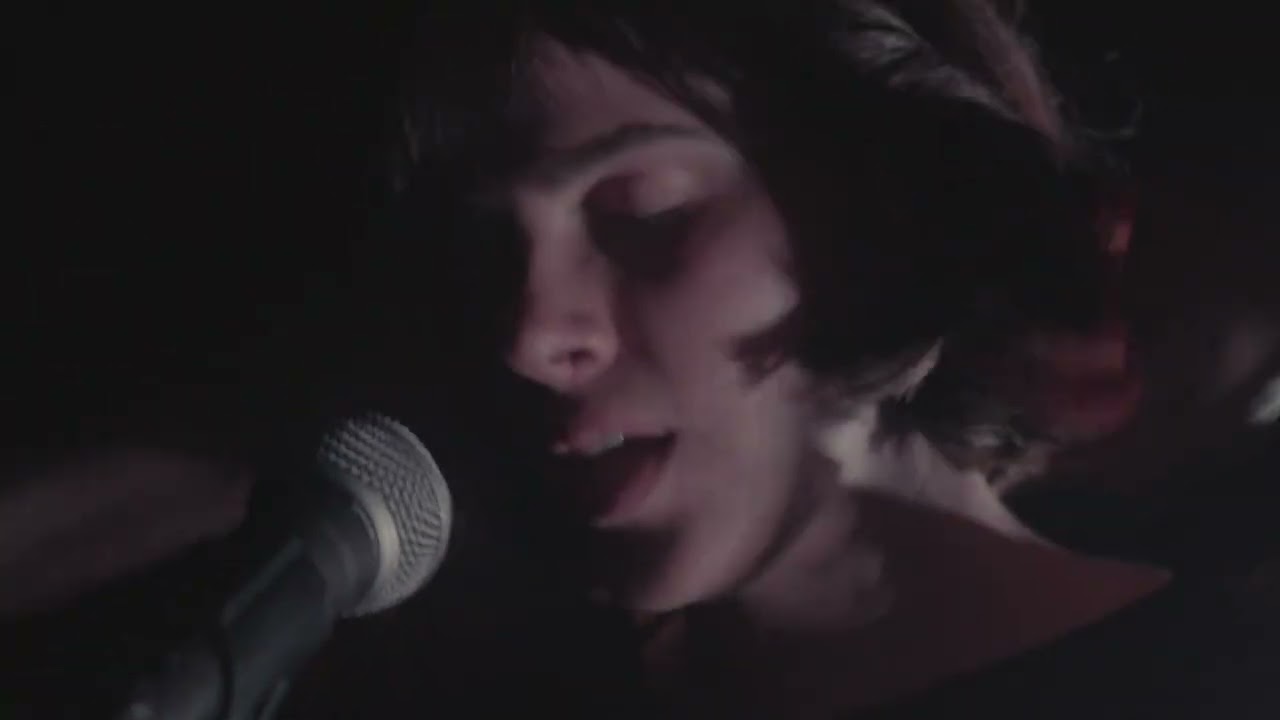




The Ugly (2025) by Yeon Sang-ho

South Korea | 2025 | 102 min | Psychological Drama
A Mother’s Death Exposes Society’s Cruelty
Why This Movie Matters Right Now: Beauty Standards Become Personal
The Ugly follows Im Dong-hwan, played by Park Jeong-min, after the remains of his mother—missing for 40 years—are unexpectedly discovered. His attempt to understand her disappearance gradually reconstructs the life of a woman repeatedly described and judged through her physical appearance. What begins as a family mystery therefore expands into something more uncomfortable: a story about beauty standards, humiliation, exclusion and the lasting consequences of how society treats people it considers different.
That makes The Ugly especially relevant at a moment when appearance has become increasingly public, measurable and open to judgment. Social media, beauty culture and constant visual comparison have intensified conversations around attractiveness and self-image, but Yeon Sang-ho approaches those pressures through an intimate family story rather than contemporary digital culture. The investigation asks audiences to reconsider where ugliness actually exists—in someone's appearance or in the cruelty of the people judging it.
➡️ Movie Insight: The Ugly turns one woman's treatment because of her appearance into a disturbing social mystery. Its relevance comes from showing how beauty standards can influence dignity, relationships and even the way someone's life is remembered.
Should You Watch It?: A Dark Mystery About Human Judgment
The Ugly is primarily for viewers interested in psychological dramas where solving a mystery gradually reveals something larger about society. Dong-hwan's search for the truth about his mother provides the investigative structure, but the deeper attraction is discovering how other people perceived and treated her. Prejudice, shame, family secrets and memory give the movie its emotional weight while keeping the central mystery moving.
It is also an intriguing change of scale for Yeon Sang-ho, the filmmaker behind Train to Busan. Instead of zombies, catastrophe and large-scale genre spectacle, he uses ordinary human behaviour as the source of discomfort. Park Jeong-min leads the story, while Kwon Hae-hyo and Shin Hyeon-bin help create a world where conflicting memories gradually expose the cruelty hidden beneath seemingly ordinary lives.
➡️ Viewing Takeaway: Watch The Ugly for a psychological mystery that begins with a mother's unexplained death and develops into a disturbing examination of beauty, prejudice, memory and human cruelty.
Why Everyone Is Talking About It?: A Small Film Makes a Big Impact
Part of the fascination surrounding The Ugly comes from seeing Yeon Sang-ho work on an unusually intimate scale. The filmmaker associated internationally with Train to Busan turns away from spectacular monsters and instead explores the ugliness hidden inside ordinary social behaviour. The film also generated significant recognition in South Korea, receiving 10 Blue Dragon Award nominations, including Best Film, Best Director, Best Actor for Park Jeong-min and Best Screenplay, while Kwon Hae-hyo won Best Supporting Actor at the Chunsa Film Art Awards.
Its commercial story makes the film even more striking. Made for a reported estimated budget of just $160,000, The Ugly went on to gross approximately $7.77 million worldwide. That combination of a recognisable filmmaker, provocative social theme, awards attention and exceptional budget-to-box-office performance gives a relatively small psychological drama a much larger industry story.
➡️ Viral Insight: The Ugly has a question-driven viral hook: who is really ugly? The title invites audiences to expect a story about physical appearance before gradually redirecting judgment toward society itself. That reversal, combined with family secrets and a death mystery, gives viewers an immediately understandable idea to debate and share.
Why The Ugly Stands Out: The Victim’s Face Becomes the Mystery
One of the film's most distinctive creative choices is how it builds the absent mother through other people's memories. Dong-hwan is searching for a woman he cannot simply know for himself, meaning her identity is filtered through stories, judgments and recollections from people who encountered her. Her supposed ugliness therefore becomes less a physical fact than a social construction created by the voices surrounding her.
That device changes the meaning of the mystery. Finding out what happened to Dong-hwan's mother matters, but understanding how she was seen becomes equally important. By withholding certainty and making audiences depend on other people's perceptions, Yeon Sang-ho turns appearance itself into part of the investigation.
➡️ Standout Insight: The Ugly makes the way people look at someone part of the mystery itself. The deeper Dong-hwan investigates his mother's past, the more the film shifts attention away from her appearance and toward the people who defined her by it.
Movie Trend: Psychological Drama Exposes Social Cruelty
The Ugly reflects a broader direction in psychological drama where intimate mysteries are being used to expose uncomfortable social behaviour. Rather than treating beauty standards and appearance-based prejudice as abstract issues, the film places them inside a family investigation. Dong-hwan's search for answers gradually reveals how judgment, exclusion and humiliation can shape a person's life and remain embedded in family memory decades later.
This approach gives psychological drama a strong social dimension. Mystery attracts audiences through questions and revelations, while character drama exposes the attitudes behind what happened. In The Ugly, the crime is therefore only part of the darkness—the larger subject is a society capable of reducing someone's humanity to whether other people consider them attractive.
➡️ Movie Trend Insight: Psychological drama is increasingly powerful when personal mysteries expose wider patterns of human behaviour. The Ugly uses one family's buried past to turn beauty prejudice, social exclusion and everyday cruelty into something audiences can see—and judge—for themselves.
Viewer Profile: The Psychological Drama Viewer — Mysteries Reveal Human Behaviour
The core audience extends beyond mystery fans to viewers drawn to psychologically complex stories where family secrets expose uncomfortable truths about people and society.
Audience Profile
Audience Profile | Description |
Core Audience | Psychological drama and mystery audiences |
Secondary Audience | Korean cinema followers and viewers interested in beauty standards, prejudice and social behaviour |
Age Group | Primarily adult audiences |
Gender | Broad audience |
Income | Broad |
Lifestyle | Culturally curious, socially aware and psychologically engaged viewers |
Viewing Habits | Psychological dramas, mysteries, Korean cinema, family dramas and socially engaged films |
Some viewers will approach The Ugly because of Yeon Sang-ho, while others will be attracted by its mystery or its exploration of appearance and prejudice. Those motivations ultimately converge around the same experience: audiences are not simply trying to discover what happened to Dong-hwan's mother, but understand why the people around her behaved as they did. The mystery becomes a way of studying human judgment.
➡️ Audience Insight: Psychological-drama audiences increasingly want mysteries that reveal more than the identity of a culprit. The strongest stories also uncover why people judge, exclude, hide the truth and participate in cruelty.
What This Movie Means for the Industry: Small Films Can Create Large Returns
The Ugly demonstrates how distinctive concepts can give comparatively small productions significant commercial reach. Its reported estimated $160,000 budget contrasts dramatically with approximately $7.77 million in worldwide box office, while its 10 Blue Dragon Award nominations provided additional cultural visibility. Instead of competing through production scale, the film combines a recognised filmmaker, a clear mystery hook and a provocative social idea that audiences can immediately understand.
For producers and distributors, that highlights the potential of concept-led psychological drama. A strong central question—what happened to a missing mother and why was she treated so cruelly?—can provide the accessibility of genre entertainment while deeper themes create critical conversation and word of mouth. Films do not necessarily need spectacle to travel when mystery, social relevance and a distinctive creative idea give audiences compelling reasons to discover them.
➡️ Industry Insight: The Ugly shows how psychological dramas can compete through concept, conversation and creative distinction rather than scale. A modest production can achieve significant visibility when an accessible mystery opens the door to a larger social question.
Creative Analysis: A Family Mystery Exposes Social Cruelty
The Ugly turns the discovery of a woman’s remains 40 years after her disappearance into an investigation of how appearance can shape an entire life. Yeon Sang-ho uses Dong-hwan’s search for his mother to move beyond the question of how she died and toward something more disturbing: how prejudice, humiliation and other people’s judgments helped determine who she was allowed to become.
Storytelling — A Death Reconstructs a Life
The screenplay builds Young-hee’s identity through Dong-hwan’s investigation and the memories of people who knew her, meaning audiences encounter the missing woman largely through other people’s descriptions and judgments. Each recollection adds information about her disappearance while exposing how completely her supposed ugliness influenced the way people treated her, turning a family mystery into the gradual reconstruction of a life shaped by prejudice.
Direction — Human Behaviour Becomes the Horror
Yeon Sang-ho moves away from the large-scale genre spectacle associated with Train to Busan and creates tension through conversations, memories, uncomfortable revelations and ordinary acts of cruelty. His restrained direction makes the people surrounding Young-hee more important than any conventional monster, allowing bullying, exclusion and casual humiliation to become the disturbing forces driving the story.
Performances — Park Jeong-min Connects Past and Present
Park Jeong-min takes on the unusual dual responsibility of playing Dong-hwan and the younger version of his father, creating a physical connection between the son investigating the past and the family history he is uncovering. Kwon Hae-hyo plays the older Yeong-gyu, while Shin Hyun-been’s Young-hee must establish a strong emotional presence even as the film deliberately restricts how audiences see the character whose appearance everyone discusses.
Visual Style — The Hidden Face Challenges the Viewer
One of the film’s most effective visual decisions is withholding a clear view of Young-hee’s face while other characters repeatedly describe her as ugly. Framing and concealment make audiences increasingly curious to see the face at the centre of the story, but that curiosity becomes part of the film’s argument: viewers are subtly placed in the same position as the people who judged Young-hee according to how she looked.
Themes — Beauty Becomes a Form of Social Power
Physical appearance provides the film’s most visible theme, but underneath it are questions about dignity, bullying, exclusion, shame, memory and social complicity. Young-hee’s supposed lack of beauty influences how others value her, while the investigation gradually redirects the meaning of ugliness away from physical appearance and toward the cruelty of supposedly ordinary people.
What Makes It Different — Ugliness Exists in the Eye of the Judger
The Ugly does not simply tell audiences that beauty standards are harmful; it builds that idea into the structure of the mystery itself. Because Young-hee is reconstructed through other people’s memories, audiences must continually decide whether they are learning something truthful about her or discovering the prejudices of the people describing her, transforming the investigation into a study of how society creates and reinforces judgment.
➡️ Creative Insight: The Ugly is strongest when the mystery stops being only about what happened to Young-hee and becomes an investigation of how she was seen. By making beauty, memory and prejudice inseparable, the film turns one missing woman’s story into an uncomfortable examination of the people who judged her.
If You Liked The Ugly (2025): Beauty and Judgment Become Social Horror
These three recent films similarly examine what happens when appearance becomes connected to acceptance, identity and social value. The closest 2026 match is Slanted, while The Ugly Stepsister and Shell extend the same conversation through body horror, beauty culture and the pressure to transform yourself.
Slanted (2026) by Amy Wang: Acceptance Requires a New Face
Chinese-American teenager Joan Huang desperately wants the acceptance represented by becoming prom queen, but her pursuit takes an extreme turn when she undergoes an experimental procedure that transforms her into a white girl. Amy Wang uses body horror, satire and teen drama to examine racial identity, assimilation and the psychological cost of changing yourself to satisfy someone else’s definition of beauty and belonging.
➡️ Why It Connects: Like The Ugly, Slanted asks what happens when other people’s perceptions begin determining a person’s value. Both films turn appearance into a social force capable of reshaping identity, dignity and the desire to belong.
➡️ Where to Watch: US
The Ugly Stepsister (2025) by Emilie Blichfeldt: Beauty Becomes Brutal
Elvira lives in a fairy-tale world where beauty determines desirability, status and the possibility of marrying a prince. Her increasingly extreme attempts to compete with her beautiful stepsister transform the familiar Cinderella story into grotesque body horror, making the physical pain of becoming “beautiful” impossible to separate from the social system demanding that transformation.
➡️ Why It Connects: Both films question why physical appearance is allowed to determine human value. The Ugly explores the cruelty directed toward someone judged unattractive, while The Ugly Stepsister shows the destructive lengths someone may take to escape that judgment.
Shell (2025) by Max Minghella: Perfection Comes With a Price
Samantha Lake is an actress confronting impossible entertainment-industry beauty standards when she encounters a powerful wellness company promising transformation and renewed success. What initially appears to offer control over aging and appearance gradually becomes something much darker, using horror and satire to explore an industry where remaining desirable can feel like a requirement for remaining visible.
➡️ Why It Connects: The Ugly examines the punishment imposed on someone who does not satisfy society’s beauty standards; Shell explores the pressure to transform yourself before that judgment pushes you aside. Both expose appearance as a form of social power.
➡️ Where to Watch: US
Final Verdict: The Mystery Is Really About Judgment
The Ugly works best when approached as a psychological social drama rather than simply a mystery about a woman’s death. Dong-hwan’s investigation supplies the suspense, but every discovery about Young-hee also reveals something about the people who surrounded her. Beauty prejudice, family secrets, humiliation and memory gradually become more important than the mechanics of solving the case.
Yeon Sang-ho’s stripped-back approach gives those ideas room to dominate the film. Viewers expecting the scale and momentum of Train to Busan may find its deliberate construction considerably quieter, but the intimacy serves its subject: there is nowhere for ordinary human cruelty to hide. The result is a disturbing mystery in which discovering who people really were matters more than simply discovering what happened.
➡️ Final Verdict: 4/5 — A dark psychological mystery that turns one woman’s hidden past into a sharp examination of beauty, prejudice and the ugliness of social judgment.
Quick Facts: A Hidden Face Reveals Social Cruelty
Category | Details |
Genre | Psychological Drama · Mystery · Thriller |
Topic | Beauty standards, prejudice, bullying, family secrets, memory and social cruelty |
Format | Feature Film |
Director | Yeon Sang-ho |
Writer | Yeon Sang-ho |
Based On | Yeon Sang-ho’s graphic novel Face |
Country / Countries of Origin | South Korea |
Language(s) | Korean |
Runtime | 102 minutes |
Release Year | 2025 |
Principal Cast | Park Jeong-min · Kwon Hae-hyo · Shin Hyun-been · Im Sung-jae · Han Ji-hyun |
Production Company | Wow Point |
Awards | 1 win · 10 nominations |
Major Recognition | Toronto International Film Festival 2025; major Korean awards recognition |
Movie Trend | Psychological Drama Exposes Social Cruelty |
Final Insight: Psychological Drama Turns Judgment Into Suspense
Psychological drama becomes particularly powerful when personal mysteries expose the social behaviour hidden underneath them. Beauty standards, bullying, exclusion and prejudice can appear like familiar cultural problems, but The Ugly gives those subjects dramatic urgency by making every revelation about Young-hee another piece of an unresolved family mystery. Audiences investigate what happened to her while simultaneously discovering what society did to her.
The opportunity for psychological cinema is therefore larger than simply creating darker mysteries. Genre storytelling can use disappearances, deaths and family secrets as accessible entry points into questions about identity, prejudice and human behaviour. The Ugly demonstrates how an intimate story can make an everyday form of judgment feel as disturbing as the crime audiences initially came to solve.
➡️ Final Insight: Psychological drama can make ordinary social cruelty feel extraordinary by revealing its consequences one piece at a time. The Ugly begins by asking what happened to a missing woman and ends by asking why everyone believed they had the right to judge her. The mystery may uncover a death, but its deeper discovery is the ugliness hidden inside society itself.

Comments