

The Thing with Feathers (2025) by Dylan Southern: The Grief‑Fantasy Drama Everyone Is Talking About
- dailyentertainment95

- 3 hours ago
- 9 min read
Summary of the Movie: A Father, Two Sons, and the Creature Grief Invites In
After the sudden death of his wife, a father is left to raise his two young sons while navigating the emotional freefall that follows unimaginable loss. Their home becomes a fragile ecosystem of silence, confusion, and raw tenderness — until an unexpected visitor arrives. Crow, an unpredictable, chaotic, and strangely comforting presence, inserts himself into their lives with a force that is both unsettling and transformative. He taunts, soothes, provokes, and protects, becoming a living embodiment of the grief they cannot articulate. What begins as a psychological spiral becomes a poetic, surreal exploration of how families survive the unthinkable.
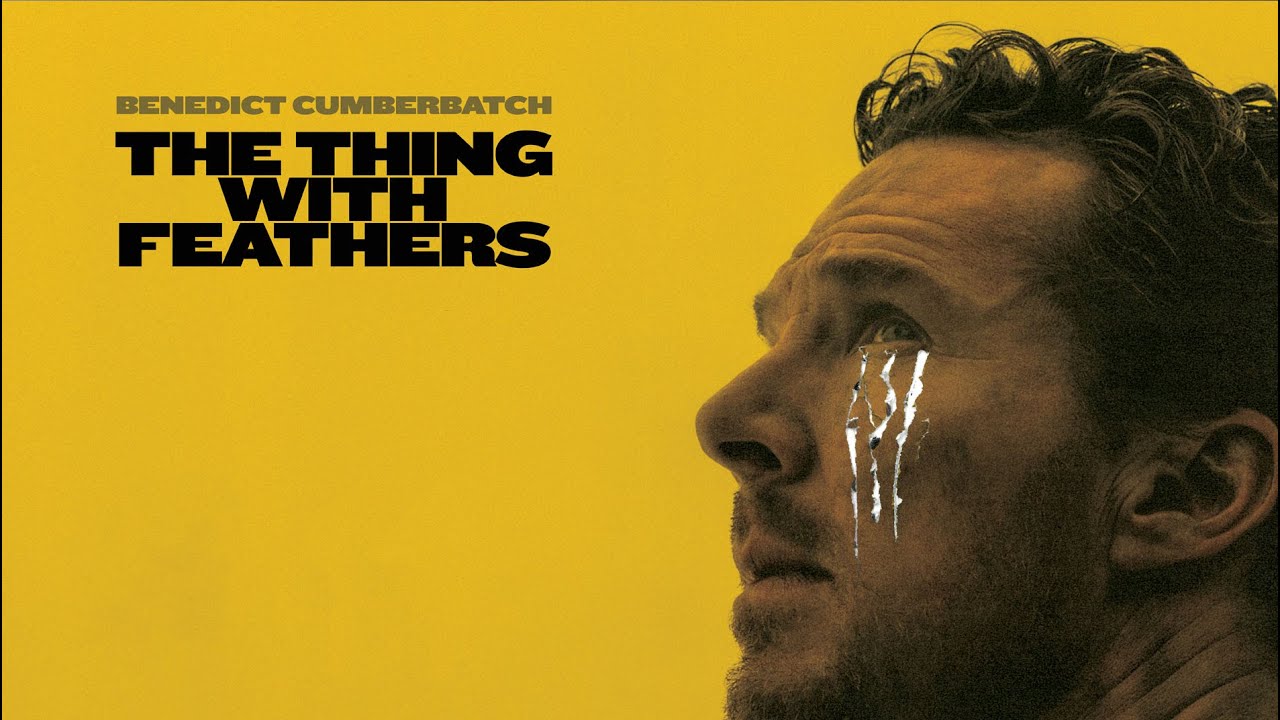
The film moves between grounded domestic realism and dark, mythic fantasy, creating a world where emotional truth matters more than literal logic. Benedict Cumberbatch delivers one of his most vulnerable performances, capturing the exhaustion, fear, and fierce love of a parent trying to hold everything together. The boys bring heartbreaking authenticity, and Crow — voiced by David Thewlis and performed physically by Eric Lampaert — becomes the film’s emotional wildcard. This is not a horror story; it’s a story about the strange, messy, unpredictable ways grief shows up.
A father tries to keep his family afloat — and grief arrives in the form of a creature that refuses to be ignored.
Where to watch: https://www.justwatch.com/us/movie/the-thing-with-feathers (US), https://www.justwatch.com/au/movie/the-thing-with-feathers (Australia), https://www.justwatch.com/ca/movie/the-thing-with-feathers (Canada)
Link IMDB: https://www.imdb.com/title/tt27773954/
Limk Review: https://www.rogerebert.com/reviews/the-thing-with-feathers-benedict-cumberbatch-film-review-2025
Genre: Psychological drama with surreal, mythic, and darkly poetic elements. It blends emotional realism with fantasy in a way that feels intimate and unsettling.
Movie themes: Grief, resilience, fatherhood, emotional chaos, and the strange forces that enter our lives when we’re at our most vulnerable. These themes shape the film’s emotional core.
Movie trend: The rise of grief‑fantasy cinema — emotionally raw dramas that use surreal imagery to explore trauma. Audiences are drawn to stories that feel both symbolic and deeply human.
Social trend: Viewers are seeking films that acknowledge emotional complexity rather than offering neat resolutions. Stories about loss, healing, and mental struggle resonate strongly right now.
Movie director: Dylan Southern brings a lyrical, atmospheric approach that blends domestic realism with dreamlike tension, creating a film that feels intimate and mythic at once.
Top casting: Benedict Cumberbatch delivers a raw, soul‑baring performance, supported by Sam Spruell’s grounded presence and David Thewlis’ haunting vocal work as Crow.
Awards and recognition: With four nominations and strong festival buzz, the film is gaining traction as one of the year’s most emotionally daring dramas.
Release and availability: Released November 21, 2025 in the UK, now expanding through international platforms and festival circuits, fueling global conversation.
Why to watch movie: It’s a bold, emotionally charged film that blends grief, fantasy, and psychological depth into something haunting and unforgettable.
Key Success Factors: Its mix of surreal imagery, emotional honesty, and standout performances makes it a must‑see for audiences craving meaningful, unconventional storytelling.
Insights: Driven by the Rise of Surreal Grief‑Centered Storytelling — The film works now because audiences are embracing emotionally ambitious dramas that use surreal metaphor to express the inner turbulence of grief in ways realism alone cannot.
Industry Insight: Studios and festivals are increasingly championing films that merge psychological realism with symbolic or mythic elements, seeing them as a fresh evolution of prestige drama. This hybrid form is gaining traction because it offers filmmakers a more expressive language for depicting trauma and healing. Consumer Insight: Viewers are gravitating toward stories that acknowledge the nonlinear, chaotic nature of grief rather than presenting tidy emotional arcs. They want films that feel honest, imaginative, and willing to explore vulnerability without softening its edges. Cultural Insight: Audiences are responding to works that reflect a broader cultural shift toward emotional transparency and mental‑health‑centered storytelling. The film’s blend of surreal imagery and raw human experience aligns with a growing appetite for narratives that explore inner life with artistic boldness.
Why the Movie Is Trending: A Surreal, Emotion‑Forward Grief Drama Perfectly Timed for Today’s Audience
The Thing with Feathers is trending because it captures the emotional climate of today’s viewers — people who want stories that acknowledge the complexity of grief rather than reducing it to a tidy arc. Its fusion of grounded family drama with surreal, mythic metaphor feels contemporary and expressive, offering a cinematic language that mirrors the internal turbulence many audiences recognize in themselves. Crow’s presence — chaotic, intrusive, and strangely nurturing — has become a cultural talking point, sparking online discussion, symbolic interpretations, and emotional reactions that spread far beyond the film’s marketing. This is the kind of movie that grows through conversation, not spectacle, and that organic momentum is driving its rise.
Emotional timing: Audiences are gravitating toward films that explore mental health, loss, and healing with honesty and imagination. The film’s surreal approach makes grief feel both universal and intensely personal.
Cinematic freshness: The hybrid of domestic realism and mythic fantasy stands out in a landscape dominated by predictable genre formulas. Viewers are responding to its willingness to take risks and trust emotional truth over narrative neatness.
Performance buzz: Benedict Cumberbatch’s vulnerable, soul‑baring portrayal is generating strong word‑of‑mouth, especially among viewers who appreciate emotionally fearless acting. His dynamic with the child actors adds authenticity that resonates deeply.
Cultural alignment: The film reflects a broader shift toward emotional transparency and psychological storytelling — themes that resonate strongly with younger audiences. Its willingness to depict grief as messy and nonlinear aligns with current cultural conversations.
Social conversation: Scenes, quotes, and interpretations of Crow’s symbolism are circulating widely, turning the film into a shared emotional experience rather than a passive watch. This social momentum is amplifying its reach across platforms.
Festival momentum: Early critical attention and award nominations have positioned the film as a must‑watch for fans of prestige drama and literary adaptations. That credibility is fueling renewed interest as it expands to wider audiences.
Audience payoff: Viewers leave the film feeling moved, unsettled, and understood — the exact emotional cocktail that drives repeat viewing and long‑tail cultural relevance. It’s a film people want to talk about because it articulates feelings they struggle to express.
Insights: Driven by the Rise of Surreal Grief‑Centered Storytelling — The film works now because audiences are embracing emotionally ambitious dramas that use surreal metaphor to express the inner turbulence of grief in ways realism alone cannot.
Industry Insight: Studios and festivals are increasingly championing films that merge psychological realism with symbolic or mythic elements, seeing them as a fresh evolution of prestige drama. This hybrid form is gaining traction because it offers filmmakers a more expressive language for depicting trauma and healing. Consumer Insight: Viewers are gravitating toward stories that acknowledge the nonlinear, chaotic nature of grief rather than presenting tidy emotional arcs. They want films that feel honest, imaginative, and willing to explore vulnerability without softening its edges. Cultural Insight: Audiences are responding to works that reflect a broader cultural shift toward emotional transparency and mental‑health‑centered storytelling. The film’s blend of surreal imagery and raw human experience aligns with a growing appetite for narratives that explore inner life with artistic boldness.
These elements converge to make the film feel both timely and emotionally necessary, the kind of story that resonates because it reflects how people are actually experiencing grief today. Its mix of surreal metaphor, raw performances, and cultural relevance positions it not just as a trending title, but as a defining emotional work of the moment — a film that lingers, circulates, and grows through conversation rather than marketing.
What Movie Trend Is Followed: The New Wave of Surreal, Emotion‑Driven Grief Cinema
The Thing with Feathers follows one of the most influential cinematic trends of the moment: the rise of surreal, emotionally expressive grief storytelling. This trend blends grounded domestic realism with symbolic, mythic, or dreamlike elements to articulate the internal experience of loss in ways traditional drama cannot. Instead of presenting grief as a linear process, these films externalize emotional turbulence through metaphor — creatures, visions, distortions, or uncanny presences that embody what characters cannot say aloud. Crow fits directly into this lineage: not a monster, not a hallucination, but a living metaphor for the chaos, tenderness, and unpredictability of healing.
Trend positioning: The film sits alongside a growing body of work that uses surrealism to explore mental health, trauma, and emotional reconstruction. Audiences are embracing this style because it feels more honest than realism and more grounded than fantasy.
Stylistic markers:
A domestic setting disrupted by a symbolic or mythic figure
Emotional states expressed through visual metaphor rather than exposition
A narrative that prioritizes psychological truth over plot mechanics
A tone that oscillates between unsettling, poetic, and intimate
Performances that lean into vulnerability and rawness
Why this trend matters now: Viewers are increasingly seeking films that reflect the emotional complexity of contemporary life — stories that acknowledge uncertainty, instability, and the nonlinear nature of healing. Surreal grief cinema gives them a language for feelings that are difficult to articulate, and it does so with artistic boldness.
Cultural relevance: The trend aligns with a broader shift toward emotional transparency, mental‑health awareness, and a desire for storytelling that feels both imaginative and psychologically authentic. These films resonate because they mirror the internal landscapes people are navigating today.
Artistic impact: By merging realism with metaphor, the trend expands what grief cinema can be — not just sad, but strange, expressive, and transformative. The Thing with Feathers stands out as a defining example of this evolution, using Crow as a symbolic force that deepens the emotional stakes rather than distracting from them.
Insights: This Trend Reflects a Shift Toward Emotionally Expressive, Metaphor‑Driven Storytelling — The film aligns with a cultural moment where audiences want stories that articulate inner life with boldness and psychological depth.
Industry Insight: Filmmakers and studios are increasingly investing in hybrid narratives that blend realism with symbolic or surreal elements, seeing them as a way to differentiate prestige drama. This approach is gaining traction because it allows for more expressive, emotionally resonant storytelling. Consumer Insight: Viewers are gravitating toward films that acknowledge emotional complexity and resist simplified portrayals of grief. They want stories that feel honest, imaginative, and reflective of their own internal experiences. Cultural Insight: The trend mirrors a broader cultural embrace of emotional transparency and mental‑health‑centered narratives. Audiences are responding to works that explore vulnerability through metaphor, symbolism, and psychological depth.
These elements position The Thing with Feathers as a standout within this evolving cinematic movement, a film that embodies the emotional ambition audiences are actively seeking. Its use of metaphor, psychological depth, and surreal imagery makes it not just part of the trend, but one of its clearest and most compelling expressions — a work that feels both timely and artistically forward‑looking.
Final Verdict: A Surreal Grief Film That Quietly Reshapes Emotional Storytelling
The Thing with Feathers asserts itself as a culturally necessary work by capturing the volatility of grief with rare restraint and symbolic precision. Its surreal emotional language gives viewers a way to understand their own internal turbulence without being overwhelmed. The film’s quiet discipline — never sentimental, never sensational — creates a delayed emotional impact that deepens long after the credits roll. It concludes not with catharsis, but with resonance, leaving audiences changed in ways they only recognize later.
Meaning — Where Grief Becomes Myth Without Losing Its Humanity
The film reframes grief as a living, shifting presence rather than a narrative endpoint, allowing audiences to experience loss as something intimate, disruptive, and strangely transformative. Crow’s symbolic role gives the story a mythic dimension that elevates the emotional stakes without distancing the viewer. This fusion of surreal metaphor and grounded vulnerability is what makes the film feel emotionally “expensive” — rich, layered, and deeply felt.
Relevance — A Film Perfectly Tuned to the Emotional Frequency of Now
The story resonates because it mirrors the cultural shift toward emotional transparency and mental‑health‑centered storytelling. Audiences are seeking narratives that acknowledge complexity rather than offering tidy resolutions, and this film meets that desire with honesty and imagination. Its blend of domestic realism and symbolic expression reflects the way people actually experience grief today — nonlinear, chaotic, and filled with unexpected tenderness.
Endurance — A Work That Expands in the Viewer’s Mind Over Time
This is a film that grows after the viewing experience, revealing new emotional layers as audiences reflect on its imagery and psychological architecture. Its restraint gives it longevity: nothing is overstated, nothing is forced, and the quiet spaces become the film’s most resonant moments. As conversations continue across cultural and digital spaces, the film’s symbolic language ensures it will remain relevant long beyond its release window.
Legacy — A Defining Marker in the Evolution of Surreal Grief Cinema
The film’s legacy will be its ability to expand what grief cinema can be — not just cathartic or sorrowful, but imaginative, unsettling, and psychologically expressive. It stands as a benchmark for how metaphor can deepen emotional storytelling without alienating the audience. Future filmmakers will look to it as a model for blending domestic realism with symbolic boldness in a way that feels both intimate and culturally attuned.
Insight: Why Surreal Grief Storytelling Speaks So Powerfully to This Moment Audiences are gravitating toward films that articulate inner life with emotional precision and symbolic daring, offering a cinematic language that feels more truthful than realism alone.
Industry Insight: Studios and filmmakers are increasingly investing in hybrid narratives that merge psychological realism with symbolic or surreal elements, seeing them as a way to differentiate prestige drama. This approach is gaining traction because it allows for more expressive, emotionally resonant storytelling. Consumer Insight: Viewers are seeking stories that acknowledge emotional complexity and resist simplified portrayals of grief. They want films that feel honest, imaginative, and reflective of their own internal experiences. Cultural Insight: The trend mirrors a broader cultural embrace of emotional transparency and mental‑health‑centered narratives. Audiences are responding to works that explore vulnerability through metaphor, symbolism, and psychological depth.
The industry can respond by championing films that prioritize emotional truth over formulaic structure, allowing metaphor to deepen rather than obscure meaning. It can support storytellers who take risks with tone, symbolism, and psychological depth, expanding the expressive vocabulary of contemporary cinema. It can invest in narratives that reflect the nonlinear nature of healing, giving audiences space to see their own experiences mirrored with nuance. And it can trust viewers to engage with complexity, ensuring emotionally ambitious films continue shaping the cultural landscape.
Comments