


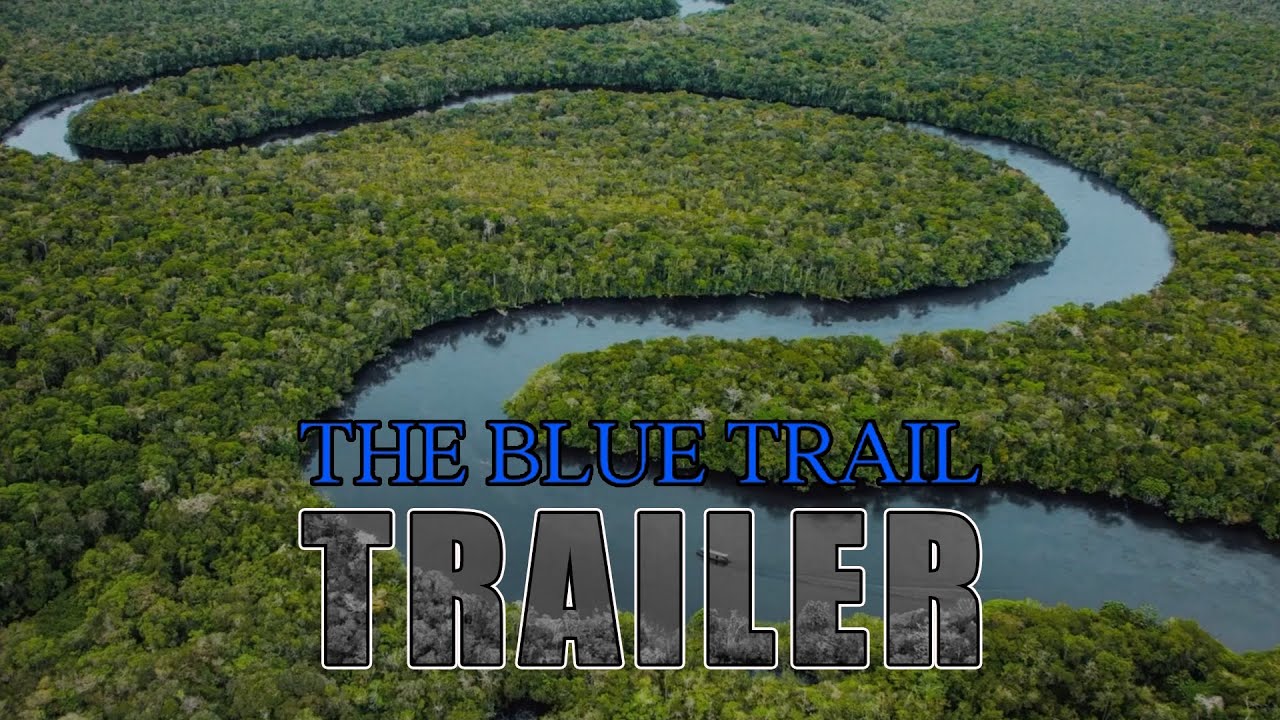

The Blue Trail (2025) by Gabriel Mascaro
- dailyentertainment95

- 11 hours ago
- 12 min read
A dystopian Amazon odyssey about aging, freedom, and the right to determine one's own future
The Blue Trail (O Último Azul) is a dystopian drama set in a near-future Brazil where the government implements a policy forcing elderly citizens into remote housing colonies in the name of economic productivity. At the center of the story is Tereza, a 77-year-old woman who refuses to accept her state-mandated relocation. Instead, she embarks on a journey through the Amazon, determined to fulfill a lifelong dream before losing her independence. Along the way she encounters smugglers, wanderers, dreamers, and fellow outsiders who help reshape her understanding of freedom and possibility. Combining social satire, road-movie elements, magical realism, and political allegory, the film explores how societies treat aging populations. Through Tereza's rebellion, Gabriel Mascaro crafts a story about dignity, resistance, and self-determination.
➡️ Implication: The film transforms a deeply political issue into a personal journey about reclaiming agency and purpose.
Why It Is Trending: Ageism, freedom, and social value becoming urgent cultural conversations
The Blue Trail gained international attention because it tackles one of the least explored forms of discrimination in cinema: ageism. While many dystopian stories focus on race, class, or technology, Mascaro imagines a society where aging itself becomes a social crime. The film asks uncomfortable questions about productivity, usefulness, and how societies value older citizens. Its Amazon setting and magical-realist elements make the story visually distinctive while reinforcing its political themes. Audiences and critics have responded strongly to its emotional sincerity and originality. Its major festival success further elevated its visibility.
➡️ Implication: Stories centered on aging are becoming increasingly relevant as populations around the world grow older.
Elements Driving the Trend: A powerful heroine challenging a system designed to erase her
Tereza is one of the film's greatest strengths. Rather than portraying old age as decline, the story presents her as capable, curious, resilient, and determined. Her decision to flee before relocation transforms the narrative into a journey of self-discovery and resistance. The film's emotional power comes from watching someone society has written off reclaim control over her own future. This perspective feels both refreshing and socially significant.
➡️ Implication: Audiences increasingly embrace stories that challenge stereotypes about aging and capability.
Virality of Film: Festival acclaim and discussions about aging society
The film generated substantial discussion among critics and festival audiences because of its unusual premise and political relevance. Conversations often focused on its depiction of state-controlled aging, the symbolism of the Amazon journey, and the emotional power of Tereza's rebellion. The film's magical realism, particularly the mythical "blue slime snail," became another frequently discussed element. These themes helped the film stand out within the crowded international festival circuit.
➡️ Implication: Films addressing overlooked social issues often generate strong discussion beyond traditional cinephile communities.
Critics Reception: Widespread acclaim for imagination, humanity, and political relevance
Critics widely praised The Blue Trail for its originality, emotional depth, and social commentary. Many highlighted Mascaro's ability to combine dystopian world-building with intimate character storytelling. Reviewers frequently celebrated the film's visual beauty, Amazonian setting, and dreamlike atmosphere. Particular praise was directed toward Denise Weinberg's lead performance, which anchors the film's emotional and political themes. The combination of satire, realism, and magical elements helped distinguish it from more conventional dystopian dramas.
➡️ Implication: Contemporary audiences increasingly reward socially conscious films that remain emotionally engaging and visually inventive.
Awards and Recognitions: One of the most acclaimed international films of the year
The Blue Trail achieved extraordinary recognition with 10 wins and 33 nominations, making it one of the most celebrated international films of 2025.
Its most prestigious success came at the Berlin International Film Festival where Gabriel Mascaro won the Silver Berlin Bear – Grand Jury Prize, one of the festival's highest honors. The film also won the Prize of the Ecumenical Jury and the Berliner Morgenpost Readers' Jury Award, while earning nominations for the Golden Berlin Bear and Teddy Award.
Additional major victories included:
Best Feature at the Guadalajara International Film Festival
Youth Jury Award – Best Film at the Valladolid International Film Festival
Luminaries Jury Award at the Milwaukee Film Festival
Denise Weinberg received major recognition, winning:
Best Performance at Guadalajara
Coral Award for Best Actress at the Havana Film Festival
Golden Panda Award for Best Actress in a Leading Role.
➡️ Implication: The film's broad festival success demonstrates both critical admiration and audience enthusiasm.
Director and Cast: Gabriel Mascaro delivering one of his most ambitious works
Gabriel Mascaro continues his exploration of Brazilian identity, social structures, and human resilience through a highly imaginative narrative. His direction balances political commentary with emotional intimacy and visual beauty. At the center of the film is Denise Weinberg, whose portrayal of Tereza earned widespread acclaim. Supporting performances from Rodrigo Santoro, Miriam Socarras, and Adanilo enrich the journey and the world around her. Together, they create a story that feels both intimate and epic.
➡️ Implication: Powerful performances help transform political allegory into deeply human storytelling.
Conclusion: A moving and imaginative defense of dignity, freedom, and aging
The Blue Trail succeeds because it treats aging not as decline but as an ongoing struggle for autonomy and self-expression. Gabriel Mascaro uses dystopian fiction to expose real-world prejudices while celebrating resilience and personal freedom. Tereza's journey through the Amazon becomes both a physical escape and a symbolic rejection of society's attempts to define her value. Supported by remarkable performances and stunning imagery, the film combines political relevance with emotional warmth. Its festival success confirms its status as one of the most significant international films of its year. Ultimately, The Blue Trail is a powerful reminder that the future belongs to everyone, regardless of age.
➡️ Implication: The film argues that dignity and freedom should never be conditional on productivity or age.
What Movie Trend Is Followed: Dystopian social realism and late-life liberation narratives challenging age-based exclusion
The Blue Trail follows a growing international cinema trend that combines dystopian world-building with deeply human social issues. Similar to Children of Men, Nomadland, The Eternal Memory, and I'm Still Here, the film examines vulnerable populations navigating systems that seek to marginalize them. Rather than focusing on technological dystopia, Gabriel Mascaro explores institutional ageism and the societal obsession with productivity. The film also belongs to an emerging category of stories centered on older protagonists reclaiming agency and pursuing unfinished dreams. Through Tereza's journey, the narrative challenges assumptions about aging, usefulness, and freedom. This combination of political critique and personal liberation aligns strongly with contemporary arthouse cinema.
➡️ Implication: Modern international cinema increasingly uses speculative settings to expose real-world social inequalities.
Trend Drivers: Aging populations and growing concerns about social exclusion
Many societies are experiencing significant demographic shifts as populations age. Alongside these changes, debates surrounding retirement, healthcare, elder care, and economic productivity have become more prominent. The Blue Trail amplifies these concerns through dystopian exaggeration, imagining a future where older citizens are literally removed from society. The story resonates because it reflects anxieties already present in contemporary discussions about aging. Tereza's resistance becomes symbolic of broader struggles for dignity and autonomy.
➡️ Implication: Films addressing aging and social value are becoming increasingly relevant to global audiences.
What Is Influencing Trend: Human dignity becoming a central theme in global cinema
Contemporary filmmakers increasingly focus on stories about individuals resisting systems that reduce people to statistics, categories, or economic functions. The Blue Trail reflects this movement by portraying Tereza as a fully realized individual rather than a social burden. The film's critique extends beyond ageism to broader questions about freedom, bureaucracy, and human worth. These themes connect with audiences concerned about how institutions shape personal lives.
➡️ Implication: Human dignity has become one of the defining themes of contemporary international filmmaking.
Macro Trends Influencing: Freedom, self-determination, and resistance to institutional control
Across film, literature, and culture, there is growing interest in stories about individuals reclaiming control over their own destinies. Tereza's journey reflects this broader cultural movement. Her refusal to accept forced relocation transforms the narrative into a story of personal sovereignty. The film suggests that freedom is not something granted by institutions but something individuals must actively defend. This message resonates far beyond the issue of aging.
➡️ Implication: Audiences increasingly gravitate toward stories celebrating personal autonomy and self-determination.
Consumer Trends Influencing: Viewers embracing socially conscious arthouse cinema
Modern arthouse audiences increasingly seek films that combine emotional storytelling with meaningful social commentary. The Blue Trail delivers both through its intimate character study and political allegory. Its Amazon setting, magical-realist elements, and universal themes broaden its appeal beyond traditional festival audiences. Viewers appreciate stories that encourage reflection while remaining emotionally engaging.
➡️ Implication: Socially relevant films continue attracting audiences seeking substance alongside artistic ambition.
Audience Analysis: Festival audiences, socially conscious viewers, and fans of international cinema
The film is particularly suited to viewers who appreciate character-driven dramas with political and philosophical depth. Festival audiences are likely to connect with its blend of realism, dystopian satire, and magical realism. Older viewers may find its themes especially meaningful, while younger audiences can engage with its broader critique of social systems. Fans of Latin American and international arthouse cinema represent another core audience segment.
➡️ Implication: Universal themes allow culturally specific stories to resonate with global audiences.
Conclusion: A powerful example of dystopian cinema rooted in human compassion
The Blue Trail demonstrates how speculative storytelling can illuminate real social issues. Gabriel Mascaro uses dystopia not to predict the future but to challenge present-day assumptions about aging, productivity, and human value. Through Tereza's journey, the film celebrates resilience, freedom, and the refusal to surrender one's identity. Its combination of political relevance and emotional warmth helps distinguish it within contemporary international cinema. The film's widespread festival success reflects the strength of its themes and storytelling. Ultimately, The Blue Trail follows a growing cinematic trend that uses personal stories to confront societal injustices while affirming human dignity.
➡️ Implication: The strongest dystopian films often reveal uncomfortable truths about the world we already live in.
Final Verdict: A visually imaginative and emotionally powerful dystopian drama about aging, dignity, and the right to remain visible
The Blue Trail stands among the most distinctive international films of 2025 because it transforms a deeply human concern into a compelling dystopian odyssey. Gabriel Mascaro constructs a future that feels unsettlingly plausible, where aging becomes grounds for exclusion and social invisibility. Yet rather than dwelling in despair, the film becomes a celebration of resilience, curiosity, and self-determination. Tereza's journey through the Amazon is both a personal adventure and a political act of resistance. Denise Weinberg's remarkable performance gives emotional weight to every stage of that journey. Ultimately, The Blue Trail succeeds as both a social critique and a deeply moving story about reclaiming one's life.
➡️ Implication: The film argues that personal freedom remains meaningful at every stage of life.
Audience Relevance: Speaking directly to fears of invisibility and loss of independence
One reason the film resonates so strongly is that it addresses universal fears. Many people worry about aging, becoming irrelevant, or losing control over their lives. Tereza's struggle reflects these anxieties in a heightened but emotionally recognizable way. The story reminds viewers that dignity is not tied to youth, productivity, or economic value. This emotional accessibility helps the film connect across generations.
➡️ Implication: Stories about aging often resonate because they address concerns shared by nearly everyone.
What Is the Message of Movie: Human worth cannot be measured by productivity
At its core, The Blue Trail rejects the idea that people lose value as they age. The dystopian society depicted in the film treats older citizens as burdens, but Tereza's journey exposes the cruelty and absurdity of this mindset. Her refusal to comply becomes an affirmation of individuality and human dignity. The film suggests that life remains meaningful regardless of age or economic contribution. Personal dreams and aspirations do not expire simply because society expects them to.
➡️ Implication: Human value should never be determined by usefulness or productivity alone.
Relevance to Audience: Challenging modern attitudes toward aging
The film's themes feel especially relevant as populations age across much of the world. Questions about elder care, retirement, social participation, and age discrimination are becoming increasingly important. The Blue Trail approaches these issues through allegory, making them accessible without becoming didactic. Audiences are encouraged to reconsider assumptions about what aging means and how older people are treated within society.
➡️ Implication: Cinema can challenge cultural biases by placing marginalized experiences at the center of the narrative.
Social Relevance: A critique of systems that prioritize efficiency over humanity
Beyond ageism, the film critiques broader systems that value efficiency above compassion. The government's relocation program symbolizes institutions that reduce people to statistics and economic calculations. Tereza's resistance becomes a defense of individuality against bureaucratic control. These themes extend beyond aging to questions about freedom, autonomy, and human rights. The film's social commentary remains relevant far beyond its dystopian setting.
➡️ Implication: The film warns against societies that prioritize productivity at the expense of human dignity.
Performance: Denise Weinberg delivering one of the year's most acclaimed performances
Denise Weinberg delivers a performance that anchors the entire film. Her portrayal of Tereza balances vulnerability, determination, humor, and emotional depth. The character's transformation feels authentic because Weinberg never reduces her to a symbol or political statement. Her work earned major awards recognition, including Best Performance at the Guadalajara International Film Festival, the Coral Award for Best Actress at the Havana Film Festival, and a Golden Panda Award for Best Actress in a Leading Role. Supporting performances from Rodrigo Santoro and Adanilo further strengthen the film.
➡️ Implication: Great performances often transform political themes into emotionally unforgettable experiences.
Legacy: A landmark contribution to contemporary Brazilian cinema
The Blue Trail continues Brazil's strong tradition of socially engaged filmmaking while introducing a unique blend of dystopian fiction and magical realism. Gabriel Mascaro expands conversations about representation by placing an elderly woman at the center of an epic cinematic journey. The film's festival success ensures it will be remembered as one of the major Latin American films of its year. Its themes are likely to remain relevant as societies continue confronting demographic and social change.
➡️ Implication: The film broadens the range of stories and protagonists typically represented in global cinema.
Success: One of the most awarded international films of 2025
The film accumulated an impressive 10 wins and 33 nominations across major international festivals and awards bodies.
Its most prestigious achievement was winning the Silver Berlin Bear – Grand Jury Prize at the Berlin International Film Festival. It also won:
Prize of the Ecumenical Jury (Berlin)
Berliner Morgenpost Readers' Jury Award (Berlin)
Best Feature at the Guadalajara International Film Festival
Youth Jury Award – Best Film at the Valladolid International Film Festival
Luminaries Jury Award at the Milwaukee Film Festival
In addition, the film received nominations for the Golden Berlin Bear, Sydney Film Prize, Golden Spike, and numerous Brazilian national awards.
➡️ Implication: The breadth of recognition demonstrates both critical acclaim and strong audience support across multiple countries.
Insights: The Blue Trail transforms concerns about aging into a universal story about freedom, dignity, and self-determination. Industry Insight: International cinema is increasingly embracing older protagonists and stories traditionally overlooked by mainstream filmmaking. Audience Insight: Viewers respond strongly to narratives that combine personal journeys with broader social relevance. Social Insight: Ageism is emerging as a significant cultural issue receiving greater attention through film and media. Cultural Insight: The film challenges the assumption that adventure, transformation, and self-discovery belong only to the young.
Conclusion: A beautiful and deeply human journey toward freedom
The Blue Trail succeeds because it combines political relevance with emotional warmth and imagination. Gabriel Mascaro creates a dystopian world that exposes real social prejudices while never losing sight of the humanity at its center. Through Tereza's journey, the film celebrates curiosity, resilience, and the refusal to accept imposed limitations. Denise Weinberg's extraordinary performance elevates the story into something both intimate and universal. The film's major festival success reflects its artistic achievement and cultural importance. Ultimately, The Blue Trail is a moving reminder that every stage of life deserves dignity, purpose, and the freedom to choose one's own path.
➡️ Implication: True freedom lies in retaining the right to define your own future, regardless of age.
Summary of the Movie: A dystopian Amazon adventure about aging, freedom, and the fight to remain visible
• Movie themes: Aging, freedom, self-determination, dignity, resistance, social exclusion, ageism, identity, autonomy, and human resilience.➡️ Implication: The film argues that personal value and purpose do not diminish with age.
• Movie director: Gabriel Mascaro blends dystopian fiction, magical realism, political satire, and road-movie storytelling into one of his most ambitious works.➡️ Implication: The film uses speculative storytelling to address urgent real-world social issues.
• Top casting: Denise Weinberg as Tereza, Rodrigo Santoro, Adanilo, and Miriam Socarras.➡️ Implication: The cast helps transform a political allegory into a deeply personal and emotional journey.
• Awards and Recognition:The Blue Trail was one of the most acclaimed international films of 2025, earning 10 wins and 33 nominations.
Its most significant achievement came at the Berlin International Film Festival where it won:
Silver Berlin Bear – Grand Jury Prize
Prize of the Ecumenical Jury
Berliner Morgenpost Readers' Jury Award
The film was also nominated for:
Golden Berlin Bear (Best Film)
Teddy Award (Best Feature Film)
Additional major victories included:
Best Feature at the Guadalajara International Film Festival
Youth Jury Award – Best Film at the Valladolid International Film Festival
Luminaries Jury Award at the Milwaukee Film Festival
Denise Weinberg received exceptional recognition, winning:
Best Performance (Guadalajara)
Coral Award for Best Actress (Havana Film Festival)
Golden Panda Award for Best Actress in a Leading Role
The film additionally received nominations at the Cinema Brazil Grand Prize, Platino Awards, Sydney Film Festival, São Paulo Association of Art Critics Awards, and numerous international critics organizations.
➡️ Implication: The extensive awards recognition confirms the film's status as one of the year's most celebrated arthouse productions.
• Why to watch movie: The film offers a unique dystopian premise, stunning Amazonian imagery, powerful social commentary, a remarkable lead performance, and an emotionally uplifting journey about freedom and dignity.➡️ Implication: It appeals to viewers seeking meaningful cinema that combines political relevance with emotional storytelling.
• Key success factors: Original concept, Gabriel Mascaro's direction, Denise Weinberg's award-winning performance, strong social themes, magical realism, and universal emotional resonance.➡️ Implication: The film succeeds because it balances artistic ambition with emotional accessibility.
• Where to watch: Released in 2025 through the international festival circuit before wider theatrical distribution across multiple territories.
➡️ Implication: Strong festival momentum helped establish the film as a major international arthouse success.
https://www.justwatch.com/us/movie/o-ultimo-azul (US), https://www.justwatch.com/ca/movie/o-ultimo-azul (Canada), https://www.justwatch.com/uk/movie/o-ultimo-azul (UK), https://www.justwatch.com/fr/film/o-ultimo-azul (France), https://www.justwatch.com/it/film/o-ultimo-azul (Italy), https://www.justwatch.com/es/pelicula/o-ultimo-azul (Spain), https://www.justwatch.com/de/Film/o-ultimo-azul (Germany)
Conclusion: A moving celebration of dignity, independence, and the right to shape one's own future
The Blue Trail stands as one of the most important and original international films of 2025. Gabriel Mascaro transforms concerns about aging and social exclusion into an inspiring adventure filled with imagination, warmth, and humanity. Through Tereza's journey, the film challenges assumptions about usefulness, productivity, and personal worth while celebrating resilience and self-determination. Denise Weinberg delivers a career-defining performance that gives emotional power to every stage of the story. Supported by major festival recognition and widespread critical acclaim, the film has become a landmark achievement in contemporary Brazilian cinema. Ultimately, The Blue Trail reminds audiences that freedom, curiosity, and hope remain essential at every age.
➡️ Implication: The film's enduring message is that no institution should have the power to decide when a person's life story is finished.

Comments