

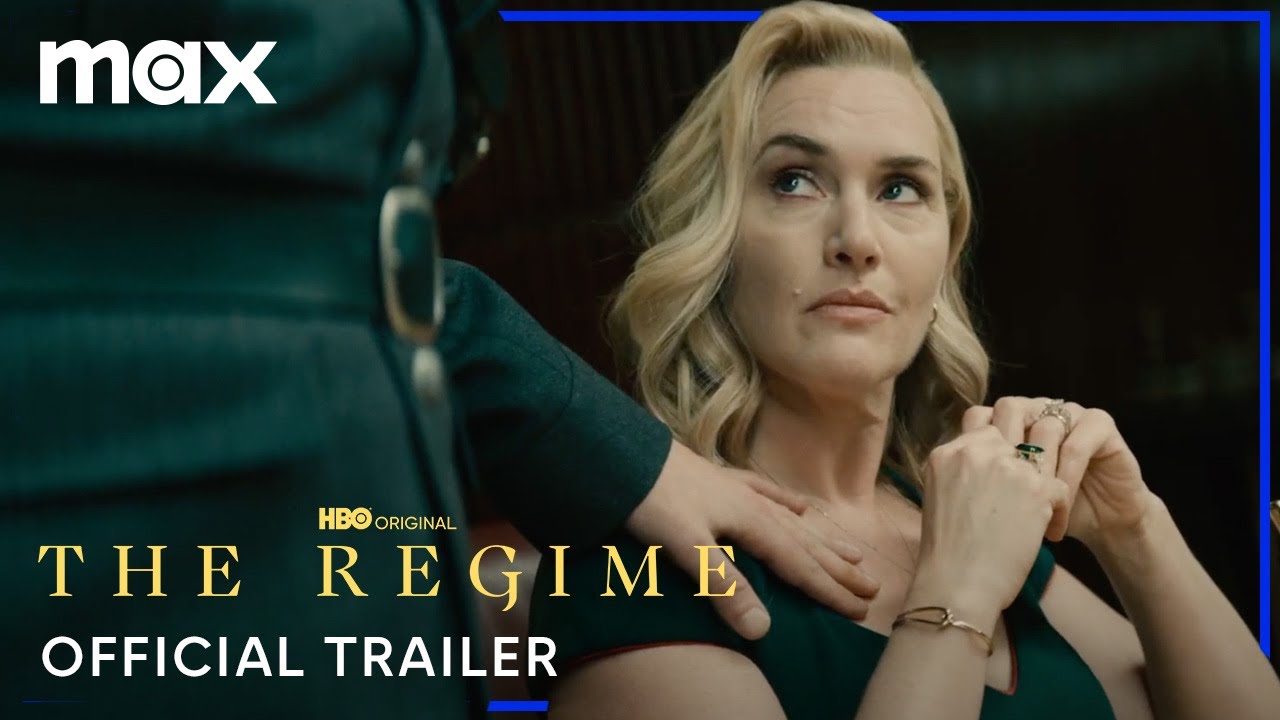
Series: The Regime (2024) by Will Tracy: Power rots fastest when it believes its own performance
- dailyentertainment95

- 2 hours ago
- 6 min read
Summary of the Series: Authority collapses when control becomes personal
The Regime traps the viewer inside the final year of an authoritarian fantasy, where paranoia, vanity, and ritual replace governance. Rather than tracking revolution from the outside, the series stays locked inside the palace, watching power decay in real time.
This is a political satire where the real instability isn’t the state—it’s the ruler.
Where to watch: https://www.justwatch.com/us/tv-show/the-regime (US), https://www.justwatch.com/au/tv-show/the-regime (Australia), https://www.justwatch.com/ca/tv-show/the-regime (Canada), https://www.justwatch.com/uk/tv-series/the-regime (UK), https://www.justwatch.com/fr/serie/le-regime (France), https://www.justwatch.com/it/serie-tv/the-regime (Italy), https://www.justwatch.com/es/serie/the-regime (Spain), https://www.justwatch.com/de/Serie/the-regime (Germany)
Link IMDB: https://www.imdb.com/title/tt21375036/
Series premise: A palace sealed off from realitySet over one year, the story follows Chancellor Elena Vernham as her modern European regime begins to fracture under internal pressure. The narrative remains claustrophobically focused on palace life, where decisions are driven by fear, superstition, and loyalty tests rather than public need.
Series themes: Control, paranoia, and delusion of careThe show explores how authoritarian leaders confuse personal obsession with national duty. Protection becomes punishment, and love for “the people” turns into justification for isolation and cruelty.
Series trend: Prestige political satireThe Regime continues HBO’s tradition of glossy, character-driven power dramas that blend absurdity with menace. The tone favors discomfort and irony over punchline comedy.
Social trend: Authoritarianism as spectacleThe series reflects a world where power increasingly performs itself for validation. Optics, ceremony, and narrative control matter more than outcomes.
Creator’s vision: Will TracyComing off Succession, Tracy applies similar DNA to politics: elites circling each other, power spoken in coded language, and collapse driven from within. Satire is delivered through behavior, not commentary.
Top casting: Performance as dominanceKate Winslet delivers a volatile, unhinged turn that oscillates between charm and threat. Her Elena rules less through ideology than emotional gravity.
Awards and recognition: Prestige attention, divided responseWith seven nominations, including a Primetime Emmy nod, the series occupies awards-season visibility without consensus acclaim. Its reception mirrors its tone—polarizing, not crowd-pleasing.
Release and availability: Weekly prestige rolloutPremiering March 3, 2024, the series streamed weekly on HBO and Max, reinforcing appointment viewing rather than binge comfort.
Why to watch series: Watching power unravel up closeThe Regime appeals to viewers drawn to political stories that dissect ego and collapse rather than policy.
Key Success Factors: Containment over scaleBy refusing to leave the palace, the series turns repetition, ritual, and paranoia into narrative engines. The limitation sharpens its critique.
Insights: When power becomes a closed loop
Industry Insight: The series shows prestige TV leaning into political satire that favors discomfort over relatability. Polarization becomes part of the brand.Consumer Insight: Audiences engage with power stories that expose absurdity without offering moral relief. Watching collapse is the appeal.Brand Insight: The Regime reinforces HBO’s identity as a home for elite, character-first political storytelling. Containment signals confidence.
The Regime holds because it refuses to humanize power through redemption. By staying inside the palace as authority eats itself alive, the series captures how regimes don’t usually fall from the outside—they suffocate from within.
Why It Is Trending: Power stories stop glamorizing leaders and start exposing the rot
The Regime lands because it meets a cultural appetite for political storytelling that doesn’t explain systems—it dissects personalities. The series resonates by showing collapse as something intimate, petulant, and deeply human.
Concept → consequence: Governance collapses into ego managementBy framing the state as an extension of Elena’s emotional life, the show reveals how authoritarianism often functions as personal therapy disguised as leadership. Policy becomes mood regulation.
Culture → visibility: Satire sharpens when reality catches upThe series mirrors a world where real leaders already behave like caricatures. Absurdity no longer distances—it clarifies.
Distribution → discovery: Prestige television as weekly autopsyReleased episodically, the show invites slow absorption rather than instant judgment. The discomfort compounds over time instead of dissipating in a binge.
Timing → perception: After disbelief, before normalizationArriving in a moment when authoritarian aesthetics feel familiar rather than shocking, the series captures unease before it hardens into acceptance.
Insights: When power loses its mask
Industry Insight: The show confirms demand for political dramas that privilege psychological depth over ideological debate. Character has become the battleground.Consumer Insight: Audiences engage more deeply with power stories that expose instability rather than strength. Watching decay feels instructive.Brand Insight: HBO continues to position itself as the platform for elite dysfunction narratives. Prestige now lives in discomfort.
The Regime trends because it understands that modern authority rarely announces its failures—it performs them. By focusing on personality over policy, the series taps into a collective recognition: power today looks fragile long before it falls.
What Series Trend Is Followed: Political satire trades ideology for psychology
The show aligns with a wave of prestige series that stop arguing about systems and start mapping the inner lives that corrode them. Power isn’t challenged from the streets—it unravels in private rooms, through habit, fear, and self-mythology.
Format lifecycle: From institutional critique to character autopsyEarlier political dramas explained how regimes work; this trend examines how leaders break. Narrative energy comes from interior collapse, not external revolt.
Aesthetic logic: Claustrophobic luxuryPalatial spaces feel airless, ceremonial, and repetitive. Opulence becomes a pressure chamber rather than a reward.
Psychological effect: Discomfort without releaseBy denying cathartic opposition, the series keeps viewers locked inside the ruler’s volatility. Unease replaces suspense.
Genre inheritance: From satire to slow-burn menaceBorrowing irony from political comedy and dread from prestige drama, the genre fuses humor with threat. Laughter curdles into anxiety.
Insights: When rulers become the plot
Industry Insight: Prestige TV is leaning into character-first political storytelling where psychology outranks policy. Intimacy sharpens critique.Consumer Insight: Audiences gravitate toward power narratives that feel disturbingly familiar rather than instructive. Recognition sustains attention.Brand Insight: Series that commit to containment and tone build strong, polarizing identities. Specificity beats balance.
This trend endures because contemporary power is increasingly legible as personality. By turning governance into a psychological study, the series captures a moment where understanding the ruler explains the regime.
Trends 2026: Power stops pretending to be rational
The Regime captures a shift where authority is no longer framed as strategic, competent, or even coherent. Power is revealed as emotional, reactive, and governed by impulse rather than ideology.
Control doesn’t collapse through failure. It dissolves through mood.
Implications — Leadership becomes emotional infrastructurePolitical storytelling gains force by showing how governance increasingly operates through personal insecurity, obsession, and fear. Decision-making feels less institutional and more therapeutic, as if the state exists to stabilize the leader rather than the people.
Where it is visible (industry) — Prestige TV abandons the wide-angle lensHigh-end series move away from global politics and sprawling systems toward sealed environments: palaces, bunkers, compounds, executive floors. Containment allows creators to study how power behaves when it has nowhere to hide and no one to impress but itself.
Related series trends — Authority without coherence
Psychology-first regimes: Leaders are written as emotional engines rather than ideological figures, with personal habits shaping national consequences.
Luxury-as-distortion narratives: Wealth and ceremony don’t legitimize power—they magnify delusion and paranoia.
Collapse-through-routine arcs: Systems decay not through rebellion but through repetition, inertia, and self-reinforcing rituals.
Related consumer trends — Reading power through behavior
Optics exhaustion: Grand speeches and symbolism are met with skepticism rather than belief.
Behavioral literacy: Attention shifts to patterns, tics, and reactions as indicators of truth.
Expectation of instability: Inconsistency no longer shocks; it’s assumed.
Ego becomes the real infrastructure
Trend Name | Description | Implications |
Core Series Trend | Psychological power drama | Power explained through personality. |
Core Consumer Trend | Optics skepticism | Actions outweigh messaging. |
Core Social Trend | Normalized volatility | Instability feels permanent. |
Core Strategy | Contained storytelling | Pressure reveals truth. |
Core Motivation | Decode authority | Understanding replaces trust. |
This trend holds because authority no longer convinces—it performs. As rational leadership feels increasingly fictional, television turns inward to examine the emotional machinery behind power. The Regime lands exactly where governance stops making sense and starts acting out.
Final Verdict: Power collapses when belief turns inward
The Regime closes without redemption, correction, or external rescue, committing fully to the idea that authoritarian systems don’t implode from opposition—they wither from self-absorption. The series ends where it began: inside a sealed reality that mistakes obsession for governance.
Meaning: Authority as emotional dependencyThe show reframes dictatorship as a need state rather than an ideology. Control exists to soothe insecurity, not to serve structure or people.
Relevance: Leadership after competenceIn a moment when power increasingly feels performative and unstable, The Regime reads as less allegory and more diagnosis. It understands that belief erodes long before systems officially fail.
Endurance: Discomfort as the takeawayThe series lingers because it refuses to explain itself away. Its claustrophobic repetition leaves a residue of unease rather than clarity.
Legacy: Personality over policyRather than redefining political drama through scope or spectacle, the series does so through psychological exposure. It leaves behind a template where understanding the ruler explains the regime.
Insights: When power stops governing
Industry Insight: The Regime confirms prestige television’s turn toward contained, psychology-led political narratives. Internal collapse now carries more weight than external conflict.Consumer Insight: Audiences engage deeply with power stories that mirror emotional volatility rather than strategic control. Recognition replaces reassurance.Brand Insight: The series strengthens HBO’s identity as a platform for uncomfortable, elite-focused power dissections. Intimacy becomes authority.
The Regime endures because it refuses the fantasy of rational leadership. By exposing power as fragile, reactive, and self-referential, it captures a contemporary truth: regimes don’t fall when they are challenged—they fall when they can no longer tell the difference between the state and themselves.
Comments