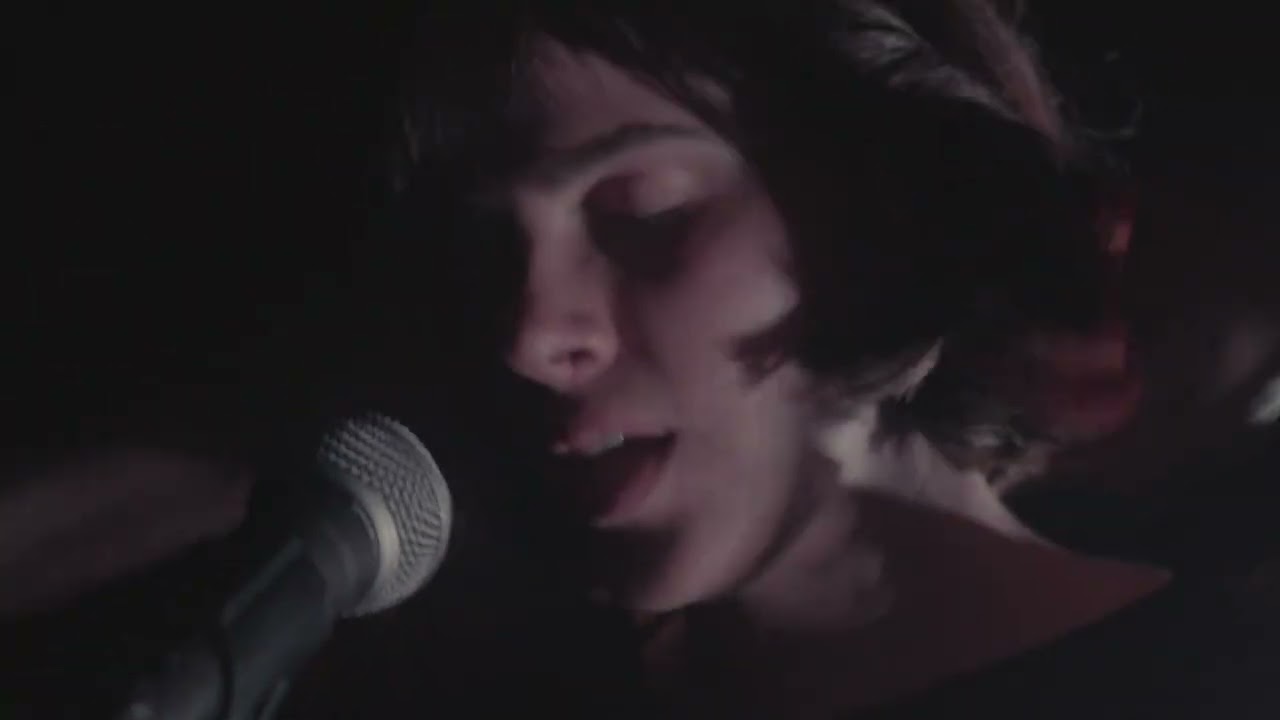




Pour le meilleur (2026) by Marie-Castille Mention-Schaar

France · Belgium | 2026 | 107 min | Biographical Drama
Love Makes the Impossible Feel Possible
➡️ Where to Watch: FR
After losing all four limbs in a devastating accident, Philippe Croizon rediscovers love, ambition and the desire to attempt something extraordinary: swimming across the English Channel.
Inspired by the real life of Philippe Croizon, Pour le meilleur begins with a man whose existence has been radically transformed. Years after an electrical accident resulted in the amputation of both arms and both legs, Philippe is trying to rebuild a life that involves much more than physical rehabilitation. Meeting Suzana gives that process a new emotional direction. Their relationship restores his appetite for possibility and eventually helps turn an almost unimaginable idea—crossing the English Channel by swimming—into a goal.
Marie-Castille Mention-Schaar approaches Croizon's story as both an inspirational biographical drama and a love story. The sporting achievement provides the film with its extraordinary destination, but the emotional journey is about rediscovering purpose after life has apparently removed every familiar route forward. Pierre Rabine plays Croizon alongside Lilly-Fleur Pointeaux as Suzana, with Sandrine Bonnaire, Corinne Masiero and Pierre Deladonchamps supporting them.
➡️ Movie Insight: Pour le meilleur shifts the familiar triumph-over-adversity story toward something more emotional: extraordinary achievement begins when someone finds a reason to imagine a future again.
Should You Watch It?: An Emotional True Story With Heart
Pour le meilleur is aimed at viewers drawn to inspirational true stories, emotionally accessible French cinema and films about people attempting what others consider impossible. Its most powerful asset is the extraordinary reality behind the screenplay: Croizon became the first quadruple amputee to swim the English Channel, giving the movie an accomplishment that needs little cinematic exaggeration. Pierre Rabine adds another unusual layer of authenticity because, like Croizon, he is himself a quadruple amputee following a serious accident.
The movie is also much more relationship-driven than a conventional sports biopic. Suzana is central to Philippe's emotional reconstruction, turning the Channel challenge into the culmination of a broader story about love, confidence and rediscovering ambition. The approach is deliberately uplifting and accessible, although viewers looking for a tougher or more formally unconventional treatment of disability may find its inspirational storytelling relatively traditional.
➡️ Viewing Takeaway: Watch it for the remarkable true story, but stay for the idea that Philippe's greatest transformation begins before he ever enters the Channel.
Why Everyone Is Talking About It?: The Real Story Makes the Movie Bigger
Pour le meilleur arrives with a built-in conversation hook that fiction could struggle to match: Philippe Croizon really survived catastrophic injuries and went on to swim the English Channel. The film adds another remarkable layer by casting Pierre Rabine as Philippe. Rabine is also a para-swimmer and quadruple amputee after suffering a serious accident at 19, giving his performance an authenticity that has itself become part of the film's media story. The combination of Croizon's widely recognisable achievement, Rabine's personal experience and a love story about rebuilding a life makes the film highly shareable as both cinema and human-interest storytelling.
Audience reaction has strengthened that conversation. AlloCiné currently shows a 4.1/5 audience score from more than 560 ratings, compared with a more restrained 2.9/5 press score, creating a notable critic-audience divide. Its French trailer has also generated more than 60,000 views on AlloCiné, while preview screenings generated enthusiastic responses centred on the film's emotion, optimism and resilience. That suggests its strongest momentum is coming from audiences connecting personally with Croizon's story rather than from prestige positioning or awards attention.
➡️ Viral Insight: The strongest viral element is the reality behind the movie: an extraordinary athlete is portrayed by a performer whose own life gives the role unusual authenticity. Add a remarkable physical challenge, an emotional love story and strong audience response, and Pour le meilleur becomes the kind of true story people naturally want to recommend and discuss.
Why Pour le meilleur Stands Out: Disability Without Giving Up Desire
The film's most interesting idea is not simply that Philippe refuses to surrender after his accident. It is that survival alone is not presented as enough. He wants intimacy, independence, family, ambition and eventually an objective so extreme that most able-bodied people would never consider attempting it. That shifts disability away from being only a story about coping and toward a story about continuing to want more from life.
Suzana's role is essential to that distinction. Their relationship does not magically reverse Philippe's physical reality; instead, it helps restore the emotional confidence required to imagine possibilities beyond it. The English Channel consequently becomes more than a sporting finish line. It represents Philippe reclaiming the right to set his own limits after circumstances—and potentially other people's expectations—have attempted to define those limits for him.
➡️ Standout Insight: The film becomes most powerful when disability stops being the destination of the story and becomes the starting point for love, ambition and a radically expanded idea of what life can still contain.
Movie Trend: Real-Life Resilience — Inspiration Gets More Personal
True-story cinema continues to find power in extraordinary achievement, but the more interesting evolution is toward understanding the relationships and emotional circumstances behind the headline accomplishment. Audiences may already know that someone crossed an ocean, survived an accident or broke a sporting barrier; what cinema can add is an understanding of why that person wanted to do it and who helped make the impossible psychologically imaginable.
Pour le meilleur fits this direction by placing Philippe and Suzana's relationship alongside the Channel crossing rather than treating romance as secondary material surrounding a sporting biography. The physical achievement supplies the spectacle, while love and emotional reconstruction provide the motivation. The result reflects a broader move toward inspirational cinema in which personal connection matters as much as public accomplishment.
➡️ Movie Trend Insight: Inspirational true stories become more relatable when cinema moves behind the famous achievement and reveals the relationships that made extraordinary ambition possible.
Viewer Profile: The Hope-Seeking Viewer — Inspired by Real Possibility
The Hope-Seeking Viewer wants emotionally accessible cinema that leaves them feeling that difficult circumstances do not have to determine what happens next.
Audience Profile
Audience Profile | Description |
Core Audience | Viewers of inspirational true stories, French drama and emotionally uplifting cinema |
Secondary Audience | Sports audiences, disability and representation audiences, couples and viewers attracted to real-life love stories |
Age Group | Broad adult audience, approximately 25–65+ |
Gender | Broad audience |
Income | Broad middle-income audience |
Lifestyle | Family-oriented, emotionally engaged and interested in real people, personal achievement and human resilience |
Viewing Habits | Biographical dramas, inspirational films, sports stories, French mainstream cinema and true-life adaptations |
The movie's audience appeal comes from combining several familiar emotional entry points without requiring viewers to be interested specifically in para-sport. Some will arrive because they know Croizon's story; others because of the romance, the extraordinary Channel challenge or Rabine's unusual casting. What connects those groups is the desire to watch someone transform circumstances that appear limiting into a new reason to move forward.
➡️ Audience Insight: The movie speaks most strongly to viewers who want true stories to provide more than admiration—they want to leave believing that possibility can return after life changes completely.
What This Movie Means for the Industry: Authentic Casting Becomes Part of the Story
Pierre Rabine's casting gives Pour le meilleur an industry dimension extending beyond the traditional inspirational biopic. Casting a quadruple-amputee para-swimmer as Philippe Croizon means the production does not have to manufacture the physical reality at the centre of its story. Rabine brings lived experience to the role while still playing another person rather than himself, creating a more meaningful form of representation than simply using disability as a dramatic device.
That authenticity is also commercially useful because it gives distributors and media an additional story with which to introduce the film. The Pacte's French theatrical release could be promoted not only through Croizon's recognisable life story and Mention-Schaar's directing career, but through the remarkable connection between the person being portrayed and the actor portraying him. In a crowded true-story market, authenticity itself becomes a point of differentiation.
➡️ Industry Insight: Inclusive casting can become both a creative advantage and a powerful discovery tool when lived experience deepens the performance instead of functioning as a marketing label.
Creative Analysis: Resilience Becomes a Love Story
Marie-Castille Mention-Schaar makes a revealing creative choice with Pour le meilleur: Philippe Croizon's extraordinary sporting achievement is not treated as the entire story. The film concentrates on the emotional reconstruction that comes before it, particularly the relationship between Philippe and Suzana. The Channel crossing provides the destination, but love, family and rediscovered ambition provide the dramatic journey.
Storytelling — The Achievement Comes After the Relationship
The screenplay by Mention-Schaar and Christian Sonderegger structures Philippe's story around rebuilding rather than simply overcoming. His accident has permanently changed his body and daily life, but meeting Suzana gradually opens another possibility: moving from adapting to what happened toward actively wanting something from life again. The decision to swim the English Channel therefore develops as the consequence of emotional renewal rather than functioning as an isolated sporting challenge.
This gives the story two interconnected journeys. Philippe is learning to imagine an ambitious future, while his relationship with Suzana develops into a new family structure with its own practical and emotional complications. The film's inspirational arc becomes more relatable because the extraordinary physical achievement grows from recognisable desires for intimacy, belonging and purpose.
Direction — Emotion Comes Before Spectacle
Mention-Schaar keeps the filmmaking accessible and emotionally direct, consistent with a story intended to reach beyond audiences already familiar with Croizon or para-sport. Rather than building the entire movie toward athletic spectacle, she spends considerable time establishing Philippe and Suzana as a couple and showing how everyday life changes around their relationship.
That approach also explains the strong difference between the film's audience and critical response. Its emotional clarity has connected strongly with viewers, while some critics have found the treatment conventional. The creative priority is clear: Pour le meilleur wants audiences to emotionally participate in Philippe's return to life rather than observe his story from a detached distance.
Performances — Lived Experience Changes the Role
Pierre Rabine gives the film its most distinctive creative element. A para-swimmer and quadruple amputee himself, Rabine brings physical experience to Philippe that cannot simply be recreated through performance technique or visual effects. The casting allows ordinary movements, physical limitations and moments of intimacy to exist naturally rather than being presented as demonstrations of transformation.
Lilly-Fleur Pointeaux has an equally important dramatic responsibility because Suzana cannot function merely as the person who inspires Philippe. Their chemistry has to make his renewed emotional confidence believable. The relationship consequently gives Rabine's performance room to move beyond resilience and into humour, attraction, vulnerability, frustration and family life.
Visual Style — The Body Becomes Capability
The film's visual challenge is to depict Philippe's disability without reducing him to it. Everyday physical actions establish the reality of his circumstances, while swimming progressively changes the way his body is perceived. In daily environments, viewers are conscious of practical limitations; in water, the same body becomes capable of pursuing something extraordinary.
That contrast gives the Channel crossing its visual power. The water is not simply an obstacle Philippe must conquer. It becomes a space where conventional assumptions about physical capability are disrupted, allowing the movie to transform an image of limitation into one of movement and possibility.
Themes — Love Restores the Desire to Want More
Resilience is the obvious theme, but Pour le meilleur becomes more interesting when it asks what makes resilience possible. Philippe does not simply decide to become inspirational. His relationship with Suzana gives him emotional reasons to participate more fully in life again, and those reasons gradually expand into larger ambitions.
The film therefore connects romantic love with personal agency without suggesting that love can erase disability. Philippe remains a quadruple amputee; what changes is his understanding of what that fact is allowed to determine. The emotional movement is from surviving circumstances toward choosing ambitions.
What Makes It Different — Representation Meets Real Experience
Biographical films about disability frequently depend on an able-bodied performer physically transforming into a disabled real-life figure. Pour le meilleur takes a substantially different route by casting Rabine, whose own physical experience has remarkable parallels with Croizon's.
That decision changes the film beyond questions of representation. It removes the spectacle of an actor pretending to have Philippe's disability and allows attention to move toward Philippe as a partner, father figure, athlete and individual. Disability remains fundamental to the story without becoming the performance trick around which the movie is marketed.
➡️ Creative Insight: Pour le meilleur works best when it moves beyond the extraordinary Channel crossing and shows the emotional transformation that made Philippe willing to attempt it. Authentic casting gives that journey an additional layer of credibility.
If You Liked Pour le meilleur (2026): True Stories of Starting Again
These recent films similarly explore people confronting circumstances that radically change the direction of their lives. Their stories differ, but each turns real or deeply human challenges into questions about resilience, connection and discovering what remains possible.
The Salt Path (2025) by Marianne Elliott: Keep Moving Forward
After losing their home and confronting a life-changing diagnosis, a married couple embark on a long walk along England's South West Coast Path, transforming displacement into an unexpected journey through endurance, marriage and the natural world.
➡️ Why It Connects: Like Pour le meilleur, the film connects physical endurance with a relationship under extraordinary pressure, showing how an apparently impossible journey can give people a new way of understanding what their lives still contain.
Unstoppable (2025) by William Goldenberg: Refusing Other People's Limits
The true story of wrestler Anthony Robles follows a young athlete born with one leg who refuses to allow expectations surrounding his disability to determine how far he can compete.
➡️ Why It Connects: Both films transform disability and elite physical achievement into stories about agency. Their protagonists are compelling not simply because they overcome physical challenges, but because they insist on defining their own ambitions.
The Penguin Lessons (2025) by Peter Cattaneo: Connection Changes Everything
A disillusioned English teacher working in Argentina unexpectedly rescues a penguin, and the unusual relationship gradually changes his engagement with the people and turbulent world around him.
➡️ Why It Connects: While much lighter in tone, both films use an unexpected relationship as the catalyst for personal renewal. Change begins not with a grand ambition but with connection—and only later becomes something larger.
Final Verdict: An Extraordinary Life Made Personal
Pour le meilleur has an inherently remarkable true story, but its most effective decision is refusing to make the Channel crossing the only reason audiences should care about Philippe Croizon. The relationship with Suzana gives the achievement emotional context, while Pierre Rabine's casting brings an unusual level of authenticity to Philippe's physical experience. Audience response in France has been particularly positive, with AlloCiné currently recording a 4.1/5 viewer rating from more than 560 ratings.
Its conventional inspirational approach may be less persuasive for viewers looking for a more challenging treatment of disability or a formally adventurous biographical drama. Yet accessibility is also part of the film's purpose. Mention-Schaar wants Croizon's experience to function as an emotionally direct story about rediscovering love, family, ambition and the willingness to imagine a future after everything familiar has changed.
➡️ Final Verdict: 4.0/5 — An emotionally accessible true story elevated by authentic casting, a remarkable real-life achievement and the decision to make love as important as resilience.
Quick Facts: Love Rebuilds the Future
Category | Details |
Genre | Drama / Biographical Drama |
Topic | Disability, love, resilience, family, swimming and personal reinvention |
Format | Feature Film |
Director | Marie-Castille Mention-Schaar |
Writer(s) | Marie-Castille Mention-Schaar · Christian Sonderegger |
Country / Countries of Origin | France · Belgium |
Language(s) | French |
Runtime | 107 minutes |
Release Year | 2026 |
Principal Cast | Pierre Rabine · Lilly-Fleur Pointeaux · Sandrine Bonnaire · Corinne Masiero · Pierre Deladonchamps |
Production Companies | Willow Films · Federation Studios · Versus Production |
Awards | — |
Major Recognition | Strong French audience response and authentic casting of para-swimmer Pierre Rabine as Philippe Croizon |
Movie Trend | Real-Life Resilience |
Final Insight: Resilience Stories Are Becoming More Human
Inspirational cinema is most effective when extraordinary achievement stops being the entire point of the story. Audiences can admire someone for swimming the English Channel, breaking a sporting barrier or rebuilding life after catastrophe, but emotional connection becomes stronger when films reveal the relationships, doubts and everyday desires behind those achievements. Pour le meilleur reflects that shift by making Philippe's relationship with Suzana central to understanding the ambition that follows.
That direction can also expand how disability appears in mainstream cinema. Authentic representation allows characters to move beyond being symbols of adversity and become romantic partners, parents, athletes and complicated individuals whose ambitions extend far beyond simply overcoming disability. The opportunity for filmmakers is not merely to tell more inspirational stories, but to make the people inside them more complete.
➡️ Final Insight: The next evolution of resilience cinema is not about making achievements look even more impossible. It is about making the people behind them more recognisable. When authentic representation and emotional connection lead the story, inspiration becomes less about watching an exceptional person from a distance and more about understanding why they chose to keep moving forward.

Comments