


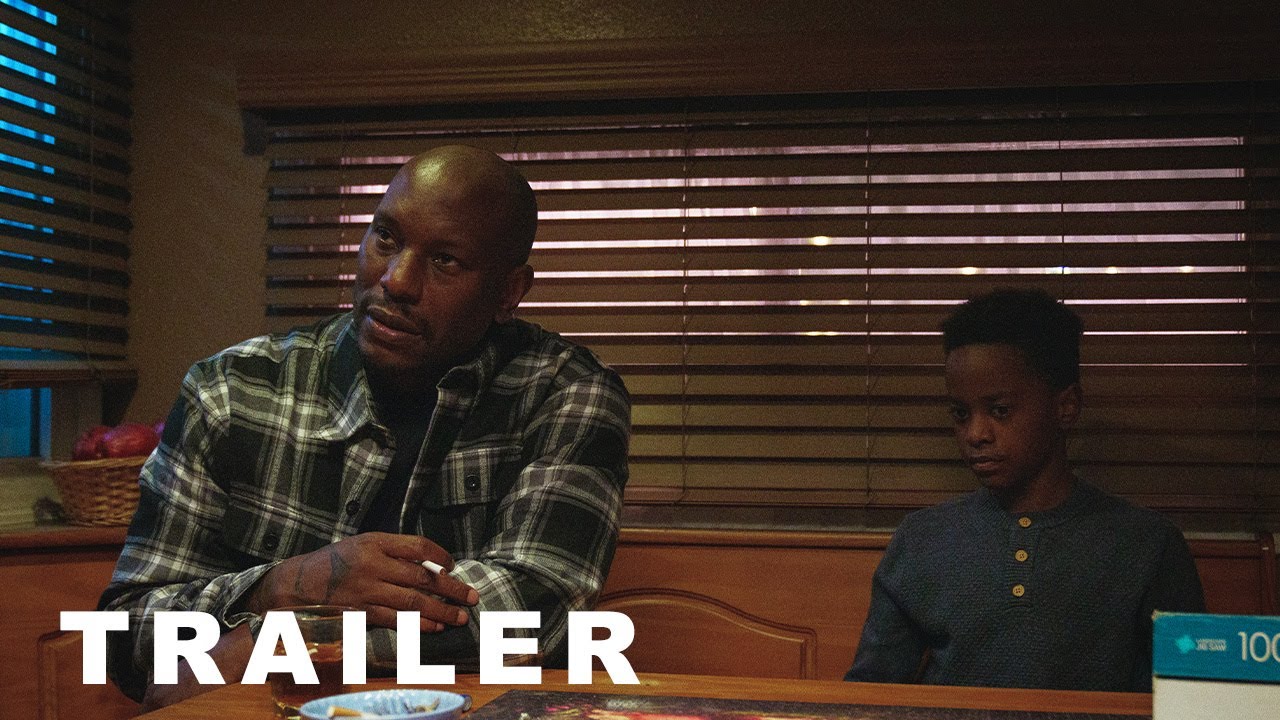

Bosco (2024) by Nicholas Manuel Pino: 35 Years for Marijuana — The Escape the System Never Saw Coming
- dailyentertainment95

- 5 hours ago
- 9 min read
Why It Is Trending: When the Sentence Is the Crime
Bosco lands at a moment when mass incarceration and marijuana sentencing reform are at the center of American criminal justice debate — making the true story of Quawntay "Bosco" Adams, sentenced to 35 years for attempted marijuana possession, feel less like history and more like a live indictment. The film arrived on Peacock in February 2024, timed precisely to an era when legal cannabis generates billions in tax revenue while thousands of Black men remain imprisoned for the same substance. Adams' 2006 escape from federal maximum-security solitary confinement — the only person to do so that year — is the kind of story that travels, and streaming gave it reach that a theatrical release wouldn't have guaranteed for a debut feature.
Elements Driving the Trend: Why This Story Won't Stay Quiet
Bosco taps into a cultural moment ripe for prison reform narratives — a true escape story that doubles as a systemic indictment, landing on a platform with broad mainstream reach.
The sentence as the story's engine — 35 Years for Weed: The absurdity of a 35-year maximum-security sentence for marijuana possession in the same decade states began legalizing it is the film's central provocation. It transforms what could be a genre escape thriller into an argument about the racial architecture of American drug enforcement.
The escape itself — The Only One to Do It in 2006: Adams' actual escape from federal maximum-security solitary confinement is a genuinely extraordinary real-world event, and its hook — a lonely-hearts newspaper ad connecting him to a woman on the outside — gives the story a human texture that pure procedural escape films lack.
Black fatherhood as the emotional core — He Escaped to See His Daughter: The driving motivation is not freedom in the abstract but the birth of his child — a narrative framing that centers Black fatherhood as something the carceral system specifically destroys, and that Adams refused to surrender.
The ensemble casting — Peacock's Bet on the Story: Tyrese Gibson, Vivica A. Fox, Thomas Jane, Theo Rossi, and Nikki Blonsky signal a production that wants mainstream streaming audiences, not just prestige film viewers — a strategic choice that broadens the prison reform message beyond the arthouse crowd that typically receives it.
Real-world activism closing the loop — From Escape to Reform: The film ends with Adams' ongoing involvement in sentencing reform advocacy, converting the escape narrative into a call to action. That structural choice positions the film as social impact entertainment rather than pure spectacle.
Virality: Audience response on IMDb and Letterboxd shows strong community engagement around the sentencing injustice, with multiple viewers stating the film prompted them to engage with prison reform. The Peacock premiere drove word-of-mouth among audiences specifically drawn to true crime and prison genre content.
Critics Reception: Critical response was divided — Flickering Myth gave it one star, calling it a generic prison break film that buries its most compelling element (the Adams-Tammy relationship) as a subplot. Rotten Tomatoes consensus acknowledges the earnest intent while noting shallow supporting characters and unresolved genre tropes as structural weaknesses.
Awards and Recognitions: 1 nomination at the time of release — no wins. The film's impact is primarily measured through audience engagement and social conversation rather than awards recognition. Peacock premiere February 2, 2024.
Bosco trends not because it is formally ambitious but because the story it carries is genuinely explosive — and streaming removes every barrier between that story and the audience that needs to hear it. The industry should note the gap between critic response and audience engagement here: for socially charged true stories, those are often two completely separate publics.
What Movie Trend Is Followed: The Streaming Prison Reform Film — When True Stories Become Movements
The prison drama has existed as long as American cinema, but its current iteration — streaming-first, socially engaged, based on real events, designed to convert viewers into advocates — represents a distinct contemporary category. Bosco sits within a wave of Black American incarceration narratives that treat the prison system not as backdrop but as subject, films that position themselves explicitly as part of the reform conversation. The trend is mature on prestige platforms; on mainstream streaming like Peacock, it is still finding its audience and its form.
What is influencing the trend: The ongoing legislative battle over sentencing reform — particularly around marijuana convictions — gives films like Bosco immediate political currency. The Innocence Project and related advocacy organizations have built public literacy around wrongful incarceration and disproportionate sentencing, creating an audience primed to receive these stories as more than entertainment. True crime's dominance on streaming has also normalized narrative nonfiction about criminal justice from the perspective of the incarcerated.
Macro trends influencing: Cannabis legalization is now the law in 24 states, creating an acute national awareness of the sentencing disparity between those who profit legally from cannabis today and those still imprisoned for the same activity. The post-13th (2016) documentary wave established incarceration as a subject for mainstream cultural conversation, not just academic or activist circles. Peacock's investment in socially resonant content reflects streaming platforms' broader shift toward films that generate conversation as well as views.
Consumer trends influencing: Audiences — particularly Black American audiences — have demonstrated consistent appetite for true stories that validate lived experience of systemic injustice on screen. The prison break genre has a proven mainstream audience (from Shawshank to Prison Break) that Bosco can recruit toward its deeper social argument. Social impact entertainment — films designed to move audiences toward action — is an emerging and commercially viable content category.
Audience of the film: The primary audience is Black American viewers who recognize Adams' story as systemic rather than individual. Prison genre enthusiasts bring a secondary layer. Peacock's broad subscriber base captures casual streaming audiences who might not have sought the film out on a prestige platform.
Audience motivation to watch: The escape narrative is the draw — a genuinely extraordinary real event with a compelling romantic subplot. The sentencing injustice keeps audiences morally engaged beyond genre satisfaction. Adams' activism at the film's close gives the experience a sense of purpose that typical prison break films don't offer.
Similar movies — what they are saying about the trend:
Just Mercy (2019) by Destin Daniel Cretton The clearest precedent — a true story of American racial injustice in the criminal system, starring Michael B. Jordan, that converted mainstream streaming audiences into sentencing reform advocates and demonstrated the genre's box office viability.
Clemency (2019) by Chinonye Chukwu Sundance Grand Jury Prize winner that examines the death penalty from the warden's perspective, showing that incarceration narratives can achieve awards recognition and critical legitimacy when formally ambitious — the standard Bosco gestures toward without fully reaching.
Queen & Slim (2019) by Melina Matsoukas The romantic fugitive film as racial justice statement — demonstrates that a love story and a systemic indictment can occupy the same film, which is exactly the structure Bosco attempts with the Adams-Tammy relationship, with less disciplined results.
The streaming prison reform film is a proven category that Bosco enters with extraordinary source material and a debut director still finding his formal confidence. The industry response should be to develop the genre more deliberately — this story deserved more resources than it received, and the audience for it is demonstrably there.
Final Verdict: The System Lost. The Film Almost Did Too.
Bosco is a film caught between what it is and what it could have been — a debut feature with a story so remarkable that even imperfect execution can't fully suppress it. Adams' actual life is a more compelling argument for prison reform than any dramatization could construct: a man sentenced to 35 years for marijuana who escaped federal solitary confinement, motivated by the birth of his child, and who has since dedicated himself to sentencing advocacy. The film is most valuable as a delivery mechanism for that story, and on that measure it succeeds despite its structural limitations.
Audience Relevance — The Sentence That Made Everyone Angry The core statistic — 35 years for marijuana possession in a country that has since legalized it — lands as visceral injustice regardless of genre familiarity. Audience reviews consistently center this as the film's emotional ignition point, which means the story is doing its job even when the filmmaking doesn't.
What Is the Message — Freedom Is a State of Mind, But the Cage Is Real The film argues that the carceral system's cruelest mechanism is not physical containment but the destruction of family bonds — Adams escaped not for himself but to witness his daughter's birth. The freedom the film is actually about is relational, not geographical.
Relevance to Audience — A 2006 Story That Belongs to 2024 The timeline between Adams' 2006 escape and the legalization wave that followed makes his sentence a period piece and a present-tense injustice simultaneously. That dual temporality is the film's sharpest edge, and mainstream audiences — many now living in states where cannabis is legal — feel it acutely.
Social Relevance — Marijuana, Race, and the Law That Applied Selectively Viewers couldn't stop thinking about how Adams received 35 years in maximum security for marijuana — a reaction that converts entertainment into civic awareness. The film functions as an accessible entry point into the documented racial disparity in drug sentencing for audiences who haven't engaged with the policy debate directly.
Performance — Joseph Carries the Weight, Gibson and Fox Steal the Scenes Aubrey Joseph's performance divides critics and audiences — critics found it under-powered, audiences found it raw and authentic. Tyrese Gibson and Vivica A. Fox, as Adams' parents, deliver the film's most technically assured work. Nikki Blonsky as Tammy generates the film's only genuine chemistry, making the script's choice to minimize her role its most consequential structural error.
Legacy — A True Story That Outlasts Its Film Whatever the film's formal limitations, Adams' story now has a widely accessible screen version that connects it to the ongoing sentencing reform debate. Bosco will be remembered as an early chapter in Nicholas Manuel Pino's career — a director who took on a story larger than his debut resources and whose next film should be watched closely.
Success — Audience Over Critics IMDb 5.4 from a mixed critical consensus vs. genuinely passionate audience engagement — 71% on Apple TV audience score. One award nomination. The film's real performance metric is social conversation: it prompted viewer calls to action in a way that technically superior films in the genre routinely fail to do.
The story of Quawntay Adams is the kind of American injustice that cinema was built to amplify — and even an imperfect film can't diminish it. Industry Insight: Bosco demonstrates the commercial and social viability of true-story prison reform content on mainstream streaming platforms, but also the cost of under-resourcing it. The story deserved a larger budget, a more developed script, and directorial confidence — gaps that the industry should address when greenlighting the next Adams-scale true crime reform narrative. Audience Insight: The gap between critical response (mixed) and audience engagement (passionate) is the film's defining data point. For socially charged true stories centered on Black American experience, audience identification with systemic injustice drives engagement in ways that formal filmmaking quality does not fully control. Social Insight: The film is most effective as a gateway drug — a mainstream-accessible entry point into marijuana sentencing reform for viewers who would not seek out a documentary or advocacy content. Its Peacock placement maximizes that reach, putting the story in front of audiences well beyond the arthouse or activist circles that typically receive it. Cultural Insight: Bosco joins Just Mercy, Clemency, and 13th in a growing body of work that treats American incarceration as a cultural emergency rather than a genre subject. Its placement on a mainstream platform marks a broadening of that conversation — one that the film industry should accelerate with better-resourced projects in the same vein.
Adams became an advocate; the film became his megaphone. For a debut feature built on an extraordinary true story, that is not a small thing — it is exactly what social impact entertainment is supposed to do, even when the craft is still catching up to the mission.
Summary of the Movie: Bosco — The Most Expensive Marijuana Charge in American Cinema
Movie themes: Racial injustice in drug sentencing, Black fatherhood under systemic pressure, and the gap between the law as written and the law as applied — with an escape story as the engine.
Movie director: Nicholas Manuel Pino's feature debut, adapted from Quawntay Adams' memoir Chasin' Freedum — a director whose social conviction is evident and whose formal development will be worth tracking in subsequent work.
Top casting: Aubrey Joseph as Adams, Nikki Blonsky as Tammy, Tyrese Gibson and Vivica A. Fox as his parents — with Thomas Jane and Theo Rossi as the brutalizing guards who define the film's most viscerally uncomfortable sequences.
Awards and recognition: 1 nomination total. No wins. Audience score 71% on Apple TV; IMDb 5.4. Primary recognition is through audience engagement and social impact rather than formal awards.
Why to watch: A genuinely extraordinary true story — a man sentenced to 35 years for marijuana who escaped federal maximum-security solitary confinement in 2006, motivated by the birth of his daughter — told with enough raw conviction to land its social argument even when the filmmaking strains.
Key success factors: Unlike prestige prison films that target awards, Bosco targets awareness — positioning Adams' story for the mainstream streaming audience and ending with an explicit call to engage with sentencing reform, a structural choice that maximizes its social utility over its cinematic ambition.
Where to watch: Peacock (primary), Apple TV, Prime Video — released February 2, 2024.
https://www.justwatch.com/us/movie/bosco (US), https://www.justwatch.com/ca/movie/bosco (Canada), https://www.justwatch.com/uk/movie/bosco (UK), https://www.justwatch.com/de/Film/bosco (Germany)
Comments