


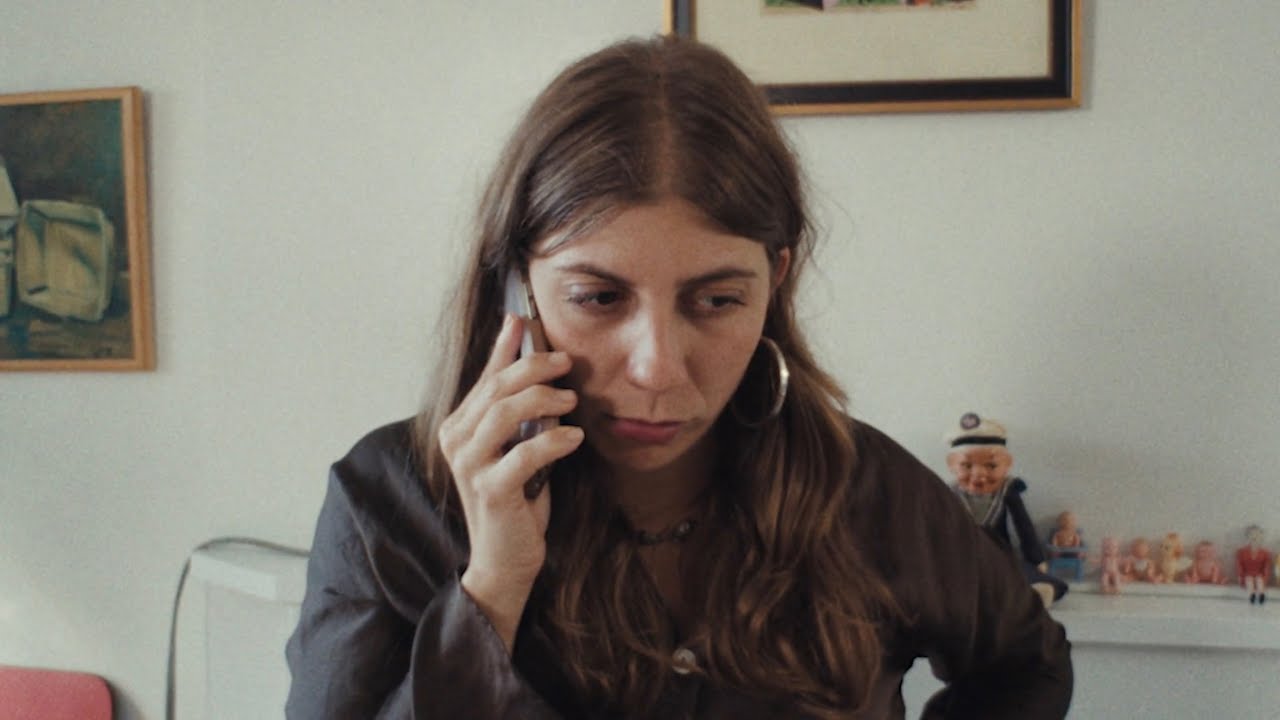



Adam's Sake (2025) by Laura Wandel
- dailyentertainment95

- Apr 9
- 9 min read
A head nurse, a malnourished four-year-old, a mother who won't leave, and the system that stands between all of them
Lucy is the head nurse on an overburdened paediatric ward when four-year-old Adam arrives — malnourished, broken arm, his mother Rebecca barred by court order from remaining at his side. Adam won't eat without her. Rebecca won't leave. Lucy, who knows the system isn't going to solve this in time, begins quietly making decisions she wasn't authorised to make. In 78 minutes, in almost real time, in a single hospital shift. Produced by the Dardenne Brothers through Les Films du Fleuve.
Why It Is Trending: Opening Film of Cannes 2025 Critics' Week — Wandel's Dardenne-Adjacent Second Feature Arrives with Significant Expectations
Wandel's debut Playground (Un Certain Regard 2021) was Belgium's international Oscar entry and established her as one of the most formally rigorous young voices in Belgian social realist cinema. Adam's Sake opened Cannes 2025 Critics' Week — its second consecutive Cannes selection — produced by Jean-Pierre and Luc Dardenne through their own production company Les Films du Fleuve, with cinematographer Frédéric Noirhomme returning from Playground. Wandel spent three weeks observing in the paediatric department of Brussels' Saint-Pierre Hospital before writing the script, signed an NDA, and also consulted a social worker and a family judge on procedural accuracy. Streaming on Max. Santa Barbara International Film Festival 2026 winner.
Elements Driving the Trend: Noirhomme's handheld camera shadows Lucy through long unbroken tracking shots, occasionally staring at the back of her head in explicit homage to Rosetta — the film even references Rosetta in its connections. The single-shift real-time structure compresses the hospital's social, medical, and legal conflicts into 78 minutes that critics consistently describe as suffocating, gripping, and relentless. The film's central line — Adam looking at his mother and saying "I want you, but I don't want to be dead" — is called chilling and unforgettable by every critic who references it. Vartolomei, following L'Événement/Happening, continues her run as Belgian-French cinema's most compelling young actress of moral complexity.
Virality: The Dardenne Brothers' producing credit immediately establishes the film's register and audience for international arthouse viewers. The Rosetta comparison, made explicitly by multiple critics and the film itself, positions it within a specific and prestigious lineage. The Santa Barbara win generated additional awards-season attention.
Critics Reception: Variety — emotionally wrenching, pair of terrific performances, not quite as effective as Playground but confirms Wandel as a filmmaker to be reckoned with. Cineuropa — visceral portrait, the nurse's powerlessness against the institution is the film's central tension. InSession Film — the same effective realist sting as Playground, Wandel as potential Dardenne heir, occasionally heavy-handed. Film Stage — empathetic but uneven, Adam has too little agency for a film bearing his name, catharsis relies too heavily on single late scene. ION Cinema — impact occasionally surface-level, vital cinematic voice confirmed. Letterboxd: suffocating, loud, poignant.
Awards and Recognitions: 2 wins and 10 nominations total. Cannes 2025 Critics' Week Opening Film. Santa Barbara International Film Festival 2026 winner. Streaming on Max. French theatrical release September 17, 2025. Budget €3 million.
Adam's Sake arrives as one of the most formally accomplished social realist films of its Cannes cycle — and as the confirmation that Wandel's Playground was not a debut's lucky strike but the first statement of a coherent and rigorous filmmaking project.
What Movie Trend Is Followed: The Dardenne School of Social Realism Extends Into the Belgian Hospital
Adam's Sake belongs explicitly and consciously to the Dardenne Brothers' tradition — produced by their company, shot by their approach, referencing their most iconic film directly, and drawing the inevitable comparison from every reviewer. What Wandel adds to that tradition is a subject — the paediatric ward — that the Dardennes haven't specifically addressed, and a central protagonist who is not a social victim but a professional navigating the institutional constraints that stand between her and what she knows is right. Lucie's position — head nurse, competent, morally clear, legally constrained — gives the film a different power geometry than Rosetta's desperate survival. The question is not whether she will survive but what it will cost her to act on what she knows.
Trend Drivers: Three Weeks in a Hospital Ward as the Film's Entire Foundation Wandel's research — NDA-signed, note-taking, no cameras — gave the script's procedural texture an authenticity that the Dardenne tradition requires but scripts rarely achieve. The social worker and family judge consultations give the legal dimension its specific Belgian institutional accuracy. That foundation produces the film's most formally disciplined quality: the hospital protocols, the chain of command, the split-second decisions are all precise enough to feel documentary without requiring explanation. The film's refusal to explain Rebecca's food restrictions — religion? Politics? allergy? — is a deliberate formal choice that some critics found frustrating and others called honest.
The film's most powerful formal decision is giving Lucy the narrative without simplifying her complicity in a system she is simultaneously serving and subverting.
What Is Influencing Trend: Les Films du Fleuve's production infrastructure — the Dardennes' company, responsible for Rosetta, La Promesse, L'Enfant — gives the film the prestige positioning that Wandel's Playground had already earned but that the second feature requires confirmation of. The paediatric ward as social realist setting is underexplored in European arthouse cinema, and Wandel's hospital research gives Adam's Sake a specificity that distinguishes it from generic hospital drama. Cannes Critics' Week, following Un Certain Regard for Playground, confirms a distribution pathway from Wandel's films to the arthouse theatrical circuit.
Macro Trends Influencing: The French-Belgian social realist tradition has a large and loyal international arthouse audience, and the Dardenne producer credit is one of European cinema's most reliable quality signals. The debate around child welfare, parental authority, and institutional intervention — specifically the question of whether court-mandated visitor restrictions serve the child's interest — is one of the most politically live welfare policy debates in contemporary European social services. The underfunded, understaffed hospital as a site of systematic moral compromise gives the film its widest social argument beyond the specific case.
Consumer Trends Influencing: Drucker's consistent French cinema prestige — Last Summer, Case 137, now Adam's Sake — gives the film a star signal for the French arthouse theatrical audience. Vartolomei's Happening profile and growing awards-circuit presence give the film international discovery across the audiences who responded to her previous work. Max streaming gives the film a sustained discovery pathway beyond theatrical.
Audience Analysis: Belgian and French Social Realist Cinema Fans, Playground Audience, and Dardenne Followers The core audience is 30–60 — French and Belgian arthouse cinema regulars who followed Playground, Dardenne Brothers fans who follow their production company's output, and the Cannes Critics' Week audience globally. Drucker and Vartolomei give the film commercial legibility beyond specialist arthouse. The 78-minute runtime is the film's most commercially accessible attribute — a sustained single-shift immersion that rewards without requiring the patience that longer Dardenne productions sometimes demand.
Final Verdict: Adam's Sake Is a Formally Rigorous, Emotionally Genuine, and Slightly Uneven Confirmation of Wandel as Belgian Social Realism's Most Important New Voice
Wandel delivers a second feature that sustains the formal conviction of Playground in a new institutional setting — the hospital ward's architectural specificity gives Noirhomme's camera exactly the constricting corridors and loaded doorways it needs. Drucker is impeccable. Vartolomei's haunting devotion-sliding-into-obsession is the film's most emotionally complex performance. The child's single devastating line is the film's most unforgettable moment. The critics' consensus that it doesn't quite reach Playground's level is accurate — the school setting gave Wandel more access to her central subject's interiority. But the critics' agreement that it confirms Wandel as a filmmaker to be reckoned with is equally accurate and more important.
Audience Relevance: For Anyone Who Has Watched a System Make the Wrong Decision for Someone Vulnerable While Everyone Followed the Rules Correctly The film's moral geometry is its most precise achievement: there are no villains. The judge is doing their job. The social services are doing their job. The ward supervisor is doing his job. Lucy is the only person willing to step outside her job to do what the situation actually requires — and the film neither celebrates nor condemns her for it.
What Is the Message: Care and Control Are Not the Same Thing — and the Systems Designed to Protect Children Often Can't Tell the Difference Rebecca loves Adam. Her love is also the cause of his malnutrition. That is the film's most uncomfortable and most honest observation — that love and harm can be inseparable, and that institutional intervention designed to protect the child can make the harm worse while following every protocol correctly.
Relevance to Audience: A Paediatric Ward as the Most Compressed Available Site of European Social Systems Failure The hospital — underfunded, understaffed, with badges that don't even work half the time — is the physical expression of what budget cuts do to the systems charged with protecting the most vulnerable. Wandel doesn't state this; she puts her camera in the corridor and lets you feel it.
Social Relevance: The Institutional System's Inability to Distinguish Harm From Love — and What It Costs Professionals Who Can Lucy's professional risk — bending the court order because she can see what the court can't — is the film's most politically precise observation. The professionals closest to the child have the least institutional authority over decisions about the child. That inversion is not incidental but structural.
Performance: Drucker Is the Film's Anchor; Vartolomei Is Its Heart; Delsart's Single Line Is Its Most Devastating Moment Drucker's professional women between rock and hard place has become her defining screen register, and Adam's Sake deploys it at full intensity. Vartolomei makes Rebecca's devotion and her damage inseparable — a character the film could easily have made sympathetically simple, made genuinely complex instead. Delsart's Jules — saying the line that no one who sees it will forget — is Wandel's most striking formal bet on the capacity of a child performer.
Legacy: The Dardenne School's Most Formally Rigorous Inheritor Has Now Confirmed the First Film Was Not an Accident Playground was Belgium's Oscar entry. Adam's Sake opened Cannes Critics' Week. The third film — whatever it is — will be one of Belgian and French social realist cinema's most anticipated releases. Wandel is building a career whose coherence is already visible after just two features.
Success: Cannes 2025 Critics' Week Opening Film, 2 Wins and 10 Nominations, Santa Barbara Winner Cannes 2025 Critics' Week Opening Film. Santa Barbara International Film Festival 2026 winner. 2 wins and 10 nominations total. French theatrical release September 17, 2025. Streaming: Max. Budget €3 million. Worldwide gross $301,534.
Adam's Sake is the film that a four-year-old refusing to eat without his mother deserves — formally rigorous, morally honest, and made by a filmmaker who spent three weeks in a paediatric ward because she understood that the story earned no less than that level of preparation.
Industry Insights: The Dardenne Brothers' production of Wandel's second feature — through Les Films du Fleuve, the company that made Rosetta and L'Enfant — is the most significant institutional endorsement available in Belgian social realist cinema, confirming that the tradition's most important living practitioners see Wandel as their successor. Audience Insights: The 78-minute runtime and real-time single-shift structure give Adam's Sake a formal accessibility that longer social realist films can lack — and the Max streaming placement gives the Playground audience a direct discovery pathway to Wandel's second film without requiring theatrical attendance. Social Insights: A film that shows a paediatric ward where institutional protocols designed to protect children regularly prevent the care those children need — staffed by professionals doing their best with broken equipment and insufficient authority — is making an argument about European public health infrastructure that its modest runtime doesn't diminish. Cultural Insights: Adam's Sake positions Wandel as the Dardenne tradition's most formally serious inheritor — but one who is already developing her own register, with more access to professional authority's moral complexity than the Dardennes' working-class survival narratives typically allow. The school and the hospital are her territory. The third film will reveal whether she stays in institutional settings or expands.
Adam's Sake proves that the most devastating things a film can show are the moments when the system works exactly as designed — and that's still the wrong answer.
Summary: One Child, One Shift, One Nurse Who Decides the Rules Don't Cover This
Movie themes: The gap between institutional care and genuine care, parental love that harms the child it loves, professional authority constrained by institutional hierarchy, underfunded public health as systemic moral compromise, and the specific cost of acting on what you know when the system says otherwise.
Movie director: Laura Wandel — two consecutive Cannes selections, Dardenne-produced, three weeks of hospital fieldwork before writing a single scene. Building a filmography of institutional microcosms observed with formal precision and genuine moral seriousness. Writes, directs.
Top casting: Drucker is impeccable as Lucy — professional conviction and moral urgency simultaneously. Vartolomei gives Rebecca's damaging devotion a complexity the film couldn't function without. Delsart's single line is the film's most formally audacious and most emotionally devastating bet.
Awards and recognition: 2 wins and 10 nominations total. Cannes 2025 Critics' Week Opening Film. Santa Barbara International Film Festival 2026 winner. French theatrical release September 17, 2025. Streaming: Max.
Why to watch: 78 minutes of sustained formal rigour — a paediatric ward in almost real time, two powerhouse performances, the Dardenne production infrastructure, and one line from a four-year-old that no one who hears it will forget.
Key success factors: Wandel's hospital fieldwork plus Dardenne production backing plus Noirhomme's cinematography plus Drucker's sustained excellence plus Vartolomei's complex portrayal plus the Cannes Critics' Week platform — a combination that gives a modest-budget social realist film the institutional authority its subject requires.
Where to watch: Streaming on Max. French theatrical release September 17, 2025.
https://www.justwatch.com/be/film/linteret-dadam (Belgium), https://www.sooner.fr/films/l-interet-d-adam (France)
Comments