


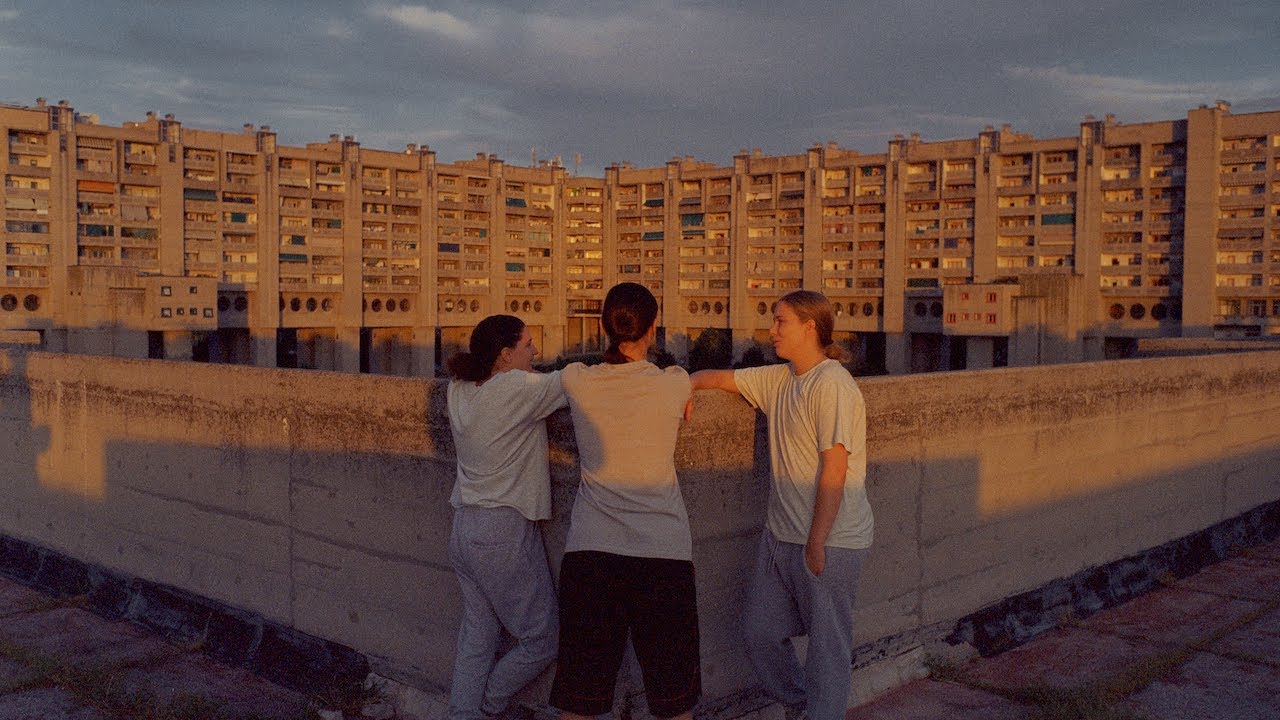
Wild Foxes (2025) by Valéry Carnoy

FR / BE | 2025 | 92 min | Psychological Sports Drama
When Your Body Says Stop Before Your Mind Is Ready to Listen
Camille is a promising young boxer whose talent has given him status, friendship and a clear path forward. After surviving a potentially fatal accident thanks to his friend Matteo, he appears physically ready to return to training, yet mysterious pain begins spreading through his body. In a sporting environment built around endurance, his inability to simply push through it threatens far more than his boxing career.
Valéry Carnoy turns that contradiction into the psychological center of Wild Foxes. Rather than treating pain as another obstacle a determined athlete must conquer, the film asks whether Camille's body might understand something before Camille himself does: that returning to exactly the same life may no longer be possible—or even desirable.
➡️ Movie Insight: Wild Foxes reverses the conventional sports comeback story by making recovery more complicated than returning to competition. Camille's body appears healed, yet pain continues to interrupt the future everyone expects him to resume. The real conflict becomes whether strength means overcoming that signal or finally learning to listen to it.
Why This Movie Matters Right Now: Performance Culture Makes Stopping Feel Like Failure
Modern performance culture rewards endurance. Athletes train through discomfort, employees continue through exhaustion and young people learn to associate constant achievement with ambition, creating environments where slowing down can feel like weakness even when continuing is causing damage.
Wild Foxes makes that pressure physical through boxing, a sport where pain is not merely an accidental consequence but something competitors learn to tolerate. Camille understands how to endure pain with an obvious cause, but his mysterious symptoms destabilize that logic because there is no opponent to defeat and no simple injury to overcome. The harder he tries to return to the person he was before the accident, the more his body appears to resist.
Carnoy has described Camille's condition through a comparison with burnout, suggesting that the pain can be understood as the mind and body warning him that something about his relationship with boxing has changed. That makes Camille's struggle recognizable beyond sport: sometimes people continue performing because stopping would require them to question the identity, ambitions and expectations that have structured their lives.
➡️ Why It Matters: Performance culture often teaches people to interpret stopping as weakness rather than information. Camille's unexplained pain challenges an environment built around continuing regardless of discomfort. Wild Foxes asks what happens when the body refuses to maintain the identity that ambition has constructed around it.
Should You Watch It?: A Boxing Drama Where the Most Important Fight Happens Inside the Athlete
Watch Wild Foxes if you prefer sports films that use competition to explore psychology rather than simply building toward victory. Boxing provides the physical intensity, but Camille's central struggle concerns trauma, anxiety, friendship, masculinity and the possibility that the future he has trained for may no longer be the future he wants.
Samuel Kircher carries that tension through a highly physical performance. Camille struggles to explain what is happening to him, which means hesitation, exhaustion, discomfort and fear frequently emerge through his body before they can be expressed through words. His relationship with Matteo adds another layer because boxing is connected not only to Camille's ambition but also to friendship and belonging, meaning that moving away from the sport could also mean moving away from the community that has helped define him.
➡️ Viewing Recommendation: Watch it for the psychology behind the boxing rather than a conventional comeback narrative. The film transforms unexplained pain into a conflict between physical limitation and social expectation. Camille's hardest opponent becomes the version of himself everyone expects him to remain.
Why Everyone Is Talking About It: A Cannes Discovery Connecting With Younger Audiences
Wild Foxes emerged internationally through the 2025 Directors' Fortnight at Cannes, where Valéry Carnoy won the SACD Prize and the Europa Cinemas Label, alongside a nomination for the Caméra d'Or. Its momentum continued across an extensive international festival run, with recognition at Namur, Valladolid, Warsaw, Zagreb, Hamburg and other festivals.
Samuel Kircher's performance has become another major source of visibility. The awards record supplied for the film includes Best Actor recognition at the 2026 Angers European First Film Festival and Festival 2 Valenciennes, strengthening his position as one of the film's major discoveries.
One particularly revealing pattern is the film's recognition from youth juries and youth-oriented festivals. Awards and recognition across Namur, Valladolid, Zagreb, Seoul, Ciné Junior and other programs suggest that Camille's struggle with pressure, vulnerability and belonging is connecting particularly strongly with younger viewers.
That response matters because the film is not simply offering an adult interpretation of contemporary masculinity. Camille's fear of falling behind, disappointing his peers and losing the identity created by achievement reflects pressures younger audiences increasingly encounter across sport, education and social life.
➡️ Viral Potential: Wild Foxes has expanded beyond its Cannes discovery through sustained festival recognition and strong responses from younger audiences. Samuel Kircher's increasingly recognized performance gives the film another discovery point beyond its boxing premise. Its conversation potential comes from transforming a sports problem into a recognizable question about how long people should keep performing strength when something inside them is already asking them to stop.
Why Wild Foxes Stands Out: The Injury Is Not Something Camille Simply Needs to Overcome
Traditional sports dramas frequently establish a familiar progression in which injury interrupts an athlete's career, rehabilitation tests determination and eventual return demonstrates resilience. Wild Foxes disrupts that structure because Camille survives the accident and returns, yet recovery does not restore the person he was before it happened.
His mysterious pain becomes increasingly significant because the absence of an obvious physical explanation forces him to confront possibilities that are much harder to control. Perhaps the problem is no longer simply his body. Perhaps the life surrounding that body has become part of the problem.
That possibility turns the conventional comeback narrative inside out. If Camille no longer wants the future everyone expects him to pursue, then successfully returning to boxing may not actually represent recovery.
➡️ Cinema Insight: Wild Foxes replaces the familiar question of whether an injured athlete can return with the more complicated question of whether he should. Camille's body becomes an unreliable performer but potentially a truthful messenger. The film turns stopping from an apparent failure into a possible form of self-recognition.
Movie Trend: Psychological Sports Drama — When Your Body Says Stop but Everyone Around You Expects You to Continue
Wild Foxes belongs to a form of sports cinema increasingly interested in what happens psychologically behind athletic performance. Camille's body becomes the battleground. He has survived the accident. Doctors can examine him. Training can resume. Yet the pain remains.
That disconnect creates a conflict conventional sporting discipline cannot easily solve because Camille has been trained to respond to difficulty by working harder. The strategy that helped make him successful may now prevent him from understanding what is happening.
His psychological struggle therefore develops through a fundamental contradiction: everyone around Camille wants evidence that he is ready to continue, while his body repeatedly produces evidence that something remains unresolved.
Movie Trend Formula:TALENT → ACCIDENT → RECOVERY → RETURN → UNEXPLAINED PAIN → DENIAL → PRESSURE TO CONTINUE → ANXIETY → BODY RESISTS → IDENTITY CRISIS → LISTENING TO HIMSELF
The meaning of strength consequently changes. At first, strength means tolerating pain and continuing to fight; gradually, another possibility emerges in which strength might mean acknowledging vulnerability and questioning whether the fight is still worth continuing.
➡️ Movie Trend: Psychological sports dramas move beyond the scoreboard to examine what performance demands from the person behind the athlete. Camille discovers that physical recovery cannot automatically restore psychological certainty. Wild Foxes makes his body the place where an identity built around strength finally begins to break apart.
Broad Trend: Pressure to Perform — When Belonging Depends on Constantly Proving You Can Keep Up
Camille's crisis reflects a broader performance culture in which achievement can gradually become inseparable from identity. Before the accident, the equation appears straightforward: perform, succeed, receive recognition and belong. Camille is talented, respected and integrated into a collective of young men who share the same physical routines and competitive ambitions.
Once his performance becomes uncertain, however, the equation changes. Struggling means falling behind; falling behind makes weakness visible; visible weakness threatens the sense that Camille still belongs within the same world.
This is where Wild Foxes moves beyond boxing. Similar pressures exist wherever belonging depends on continuous performance, from education and careers to social groups and competitive lifestyles. The psychological cost emerges when people stop distinguishing between what they accomplish and who they are.
Broad Trend Formula:ABILITY → PERFORMANCE → RECOGNITION → BELONGING → EXPECTATION → PRESSURE → STRUGGLE → HIDDEN VULNERABILITY → PERFORMANCE BREAKDOWN → SELF-REDEFINITION
Camille's pain breaks that cycle because his body prevents him from maintaining the performance on which his identity has been built.
➡️ Broad Trend: Performance becomes psychologically dangerous when achievement determines whether someone feels valued or accepted. Camille fears losing more than boxing because the sport connects him to friendship, recognition and identity. His crisis begins revealing the difference between belonging because of who he is and belonging because of what he can continuously deliver.
Why Psychological Sports Dramas Are Popular: Audiences Want to See What Exists Behind Performance
Sports cinema traditionally celebrates visible achievement: winning, records, physical transformation, discipline and extraordinary resilience. Psychological sports dramas shift attention toward what audiences cannot see by asking what happens when motivation disappears, the body stops cooperating or an athlete becomes frightened of losing the identity created by success.
These stories connect with contemporary audiences because performance pressure is no longer limited to professional sport. Productivity, academic success, physical appearance and social visibility increasingly create similar expectations in everyday life.
The athlete therefore becomes an intensified version of a familiar experience: someone expected to keep performing even when continuing has become psychologically difficult.
➡️ Audience Motivation: Psychological sports dramas reveal the emotional cost hidden behind visible achievement. Audiences can recognize Camille's pressure even without sharing his experience as a boxer because the fear of falling behind extends far beyond sport. His struggle turns athletic burnout into a broader question about when persistence stops being resilience and starts becoming self-destruction.
Viewer Profile: Identity Explorers - Viewers Choosing Coming-of-Age Dramas About Young People Questioning the Roles Others Expect Them to Perform
Identity Explorers are attracted to stories in which characters discover that the futures available to them do not necessarily correspond with the people they are becoming. Camille fits this viewing behavior because boxing has already given him an identity before he has fully decided whether he wants to keep it.
His accident creates an involuntary interruption, but that interruption gradually gives him the opportunity to question assumptions that previously seemed permanent. The central attraction is therefore not simply whether Camille returns to boxing but whether he can separate what he wants from what everyone around him expects.
Audience Dimension | Profile |
Core Audience | Viewers drawn to psychological sports dramas, coming-of-age stories and character-led European cinema |
Age Group | Younger adults and adults interested in identity, masculinity, pressure and psychological wellbeing |
Lifestyle | Achievement-aware viewers questioning the relationship between success, wellbeing and personal identity |
Cinema Taste | Sports drama, coming-of-age cinema, male friendship stories and psychologically driven independent film |
Streaming Behavior | Festival discovery, curated platforms, independent releases and recommendation-led viewing |
Discovery Mindset | Looks for familiar genres that reveal unexpected psychological or social dimensions |
➡️ Audience Insight: Identity Explorers respond to characters whose lives change when inherited expectations stop matching internal reality. Camille has been taught how to become a successful boxer before fully learning who he wants to become outside boxing. His unexplained pain creates the interruption that finally forces those two identities apart.
What This Movie Means for the Industry: Sports Cinema Is Moving Beyond Winning
Wild Foxes demonstrates how sports cinema can use familiar genre language while rejecting the conventional assumption that success must mean returning stronger. The boxing environment gives Carnoy immediate cinematic tools—physical movement, competition, bodies under pressure, locker-room intimacy and the dramatic potential of the ring—yet those elements become mechanisms for examining masculinity, friendship and psychological vulnerability rather than simply generating sporting suspense.
Its festival trajectory strengthens that positioning. Recognition beginning with Cannes Directors' Fortnight and continuing across international and youth festivals demonstrates the crossover potential of sports stories that remain accessible while carrying more complex psychological themes.
The film also arrives at a moment when younger audiences are increasingly exposed to conversations about burnout, psychological wellbeing and the limits of relentless performance. Camille turns those ideas into physical cinema.
➡️ Industry Insight: Sports films do not need victory to deliver emotional payoff. By shifting the central question from whether Camille can keep fighting to why he believes he must, Wild Foxes opens the genre toward psychology, identity and social pressure. The athlete's decision about who to become can ultimately matter more than the result of the match.
Creative Analysis: Turning Physical Pain Into the Body's Refusal to Keep Performing
Wild Foxes builds its creative identity around the growing separation between what Camille consciously believes he should do and what his body appears willing to tolerate. His mysterious pain initially seems like another obstacle preventing him from returning to boxing, but it gradually becomes something more psychologically revealing: a physical expression of a conflict Camille cannot yet articulate. Rather than positioning the body as something that must simply be disciplined back into submission, Carnoy allows it to become the part of Camille that first begins resisting the future everyone else expects him to continue pursuing.
Storytelling: Turning the Sports Comeback Story Inside Out
The film begins with the ingredients of a familiar comeback narrative because Camille survives a serious accident, recovers and attempts to return to the sport that previously defined his future. Instead of allowing rehabilitation to restore stability, however, the unexplained pain introduces a problem that determination alone cannot solve.
That changes the dramatic question from whether Camille is physically capable of returning to whether returning is psychologically right for him. The story consequently uses the audience's familiarity with sports-movie conventions against expectations, gradually transforming what appears to be a recovery narrative into an identity crisis.
Direction: Making Vulnerability More Disruptive Than Physical Violence
Carnoy places Camille inside an environment where physical aggression is structured, practiced and socially accepted, meaning that being punched can paradoxically feel less threatening than admitting fear or uncertainty. Boxing gives these young men a clear language for strength, while emotional vulnerability remains considerably harder to express.
The direction draws its tension from that contradiction by allowing violence and tenderness to coexist within the same male collective. Friendship, physical closeness, competition and aggression are intertwined, making Camille's increasing vulnerability threatening not because the other boys are incapable of affection but because their shared culture gives them few ways of understanding weakness without connecting it to failure.
Performances: Making Camille's Body Say What He Cannot Explain
Samuel Kircher's performance is central because Camille's psychological conflict often becomes visible physically before the character can explain it verbally. Confidence gradually gives way to hesitation, discomfort and uncertainty, allowing changes in posture, movement and expression to reveal the widening distance between the boxer Camille knows how to perform and the person he may actually be becoming.
That physical expressiveness makes the mysterious pain dramatically convincing without requiring the film to reduce it to a simple diagnosis. Kircher allows Camille to appear strong and fragile almost simultaneously, reinforcing the idea that vulnerability does not suddenly replace masculinity but begins existing visibly inside it. His performance has also become one of the film's major points of recognition, including Best Actor awards at Angers and Festival 2 Valenciennes.
Visual Style: Keeping Bodies Trapped Inside the World That Defines Them
The film's 1.33:1 aspect ratio creates a compact visual field that keeps attention concentrated on bodies, faces and relationships. Within the boxing environment, that compression reinforces the physical closeness of the group while also making Camille's growing discomfort increasingly difficult to escape.
The visual approach consequently works with the film's psychological conflict rather than simply making boxing dynamic. Camille remains surrounded by the bodies, routines and spaces that previously confirmed his identity, but those same environments gradually feel different as his relationship with the sport changes. The world has not necessarily transformed; Camille's experience of occupying it has.
Themes: Pain Becomes the Price of Belonging
Boxing requires Camille to understand pain as something temporary, manageable and ultimately conquerable. The larger culture surrounding him extends that logic psychologically, teaching him that continuing despite discomfort is evidence of commitment and strength.
His unexplained pain destabilizes this belief because it refuses to behave like an opponent that can simply be defeated. The more Camille tries to ignore it, the more clearly the film connects physical suffering with his fear of disappointing the people around him and losing his place within the group. Pain therefore becomes both a bodily sensation and a measure of how much he is willing to endure in order to remain the person everyone expects.
What Makes It Different: The Real Victory May Be Deciding Not to Keep Fighting
Wild Foxes distinguishes itself from conventional boxing cinema by questioning the assumption that returning to competition must represent Camille's ultimate victory. If the sport has become inseparable from external expectations, male belonging and an identity he is beginning to outgrow, successfully forcing himself back into the ring might simply restore the conditions creating his crisis.
The possibility of stopping therefore acquires a different meaning. Walking away would not necessarily prove that Camille lacks resilience; it could demonstrate that he has finally separated his own desires from the future constructed around his talent. The film makes that distinction powerful because choosing not to fight can require more independence than enduring another round.
➡️ Creative Insight: Wild Foxes transforms physical pain from a sporting obstacle into a psychological language Camille must learn to understand. His body begins resisting an identity his conscious mind is still trying to preserve, forcing him to question whether endurance is always evidence of strength. By reversing the traditional comeback narrative, Carnoy suggests that sometimes recovery begins not when someone learns to keep going, but when they finally understand why they need to stop.
If You Liked Wild Foxes (2025): When Sport Becomes a Test of Identity Rather Than Simply Ability
Corredora / Runner (2026) by Laura García Alonso: When Athletic Ambition Pushes the Mind Beyond Its Limits
Cris has devoted herself completely to athletics and the dream of competing at the highest level, but mounting pressure culminates in a severe psychological breakdown while she prepares for the Spanish National Championships. Recovery does not automatically end her attachment to the track, leaving her caught between protecting herself and returning to the ambition that has defined her identity.
➡️ Why It Connects: Corredora and Wild Foxes both reverse the conventional sports narrative by asking what happens when an athlete's body or mind can no longer sustain the pressure surrounding performance. Cris and Camille struggle to separate personal identity from the sport that has structured their futures. In both films, recovery becomes less about returning to competition than understanding whether returning is actually the right destination.
➡️ Where to Watch: ES
The Smashing Machine (2025) by Benny Safdie: When Physical Dominance Cannot Protect an Athlete From Psychological Vulnerability
MMA fighter Mark Kerr builds his identity around extraordinary physical strength, but success inside the cage exists alongside addiction, relationship instability and the accumulating psychological consequences of professional fighting. The stronger his public identity becomes, the more difficult it is to separate athletic endurance from personal deterioration.
➡️ Why It Connects: The Smashing Machine and Wild Foxes challenge the assumption that physical toughness automatically produces psychological resilience. Both use combat sports to expose the vulnerability hidden behind bodies trained to withstand extraordinary punishment. Their fighters eventually encounter problems that determination and athletic discipline cannot simply defeat.
Challengers (2024) by Luca Guadagnino: When Winning Becomes Impossible to Separate From Identity, Desire and Self-Worth
Tashi, Art and Patrick have spent years allowing tennis to shape not only their careers but also their relationships with one another. When Art's confidence begins collapsing, competition becomes a psychological arena where professional performance, desire, rivalry and personal worth can no longer be separated.
➡️ Why It Connects: Challengers and Wild Foxes treat sport as an identity system rather than simply a competition. Art and Camille both experience moments when the ability to perform no longer matches the expectations surrounding them, forcing deeper questions about who they are without sporting success. Both films ultimately reveal how psychologically dangerous competition can become when performance determines self-worth.
➡️ If You Liked Insight: These films turn athletic performance into a psychological question about identity, pressure and the cost of continuing. Their protagonists discover that the ability to compete does not necessarily mean that continuing to compete is healthy or personally meaningful. Wild Foxes takes this tension further by making Camille's body the first part of him willing to question the future everyone else expects him to pursue.
Final Verdict: Sometimes Strength Means Listening When Your Body Says Stop
Wild Foxes begins with the familiar image of a talented athlete whose future has been interrupted and gradually dismantles the expectation that recovery must return him to where he started. Camille's unexplained pain becomes powerful because it cannot be separated from everything boxing represents in his life: ambition, friendship, social recognition and an established identity.
Carnoy consequently transforms the sporting question from "Can Camille fight again?" into something more psychologically complex: "Why does Camille believe he must?" The answer determines whether returning represents resilience or simply another attempt to satisfy expectations that no longer belong to him.
➡️ Final Verdict: Wild Foxes makes the body the first part of Camille willing to challenge a life built around constant performance. His pain forces him to distinguish endurance from wellbeing and ambition from personal desire. The film ultimately finds strength not in the ability to absorb another blow, but in recognizing when continuing to fight is no longer the same thing as moving forward.
Quick Facts: A Boxing Comeback Becomes a Psychological Fight Against the Pressure to Continue
Original Title | La Danse des renards |
International Title | Wild Foxes |
Director | Valéry Carnoy |
Writers | Jacques Akchoti, Valéry Carnoy |
Lead Cast | Samuel Kircher, Fayçal Anaflous, Anna Heckel |
Year | 2025 |
Runtime | 92 min |
Countries | FR / BE |
Language | French |
Festival Launch | Cannes Directors' Fortnight 2025 |
Major Cannes Recognition | SACD Prize; Europa Cinemas Label |
Movie Trend | Psychological Sports Drama — When Your Body Says Stop but Everyone Around You Expects You to Continue |
Broad Trend | Pressure to Perform — When Belonging Depends on Constantly Proving You Can Keep Up |
Viewer Profile | Identity Explorers |
Core Conflict | Camille's unexplained pain prevents him from maintaining the athletic identity everyone expects him to resume |
Creative Hook | The athlete's body becomes the first part of him to reject the future constructed around his talent |
Core Themes | Performance pressure, pain, masculinity, friendship, belonging, vulnerability, identity and self-determination |
Final Insights: When Endurance Stops Being the Same Thing as Strength
Performance culture teaches persistence as an almost universal virtue, but Wild Foxes exposes the problem with treating endurance as an automatic measure of character. When achievement provides recognition, community and identity, stopping becomes frightening because people risk losing much more than the activity itself. The pressure to continue can therefore survive long after continuing has stopped being healthy or meaningful.
The broader shift is toward redefining strength around self-awareness rather than unlimited endurance. Sport provides an especially visible version of this tension, but the same conflict extends into work, education and everyday achievement culture, where people increasingly question whether constant performance should determine personal worth. Camille's body makes that cultural tension impossible for him to ignore.
➡️ Final Insight: The pressure to perform becomes most powerful when success determines whether we feel that we belong. Wild Foxes shows how difficult it is to separate personal desire from expectations once achievement has become identity. Its larger message is that knowing when to stop can require as much courage as learning how to keep going.
Comments