
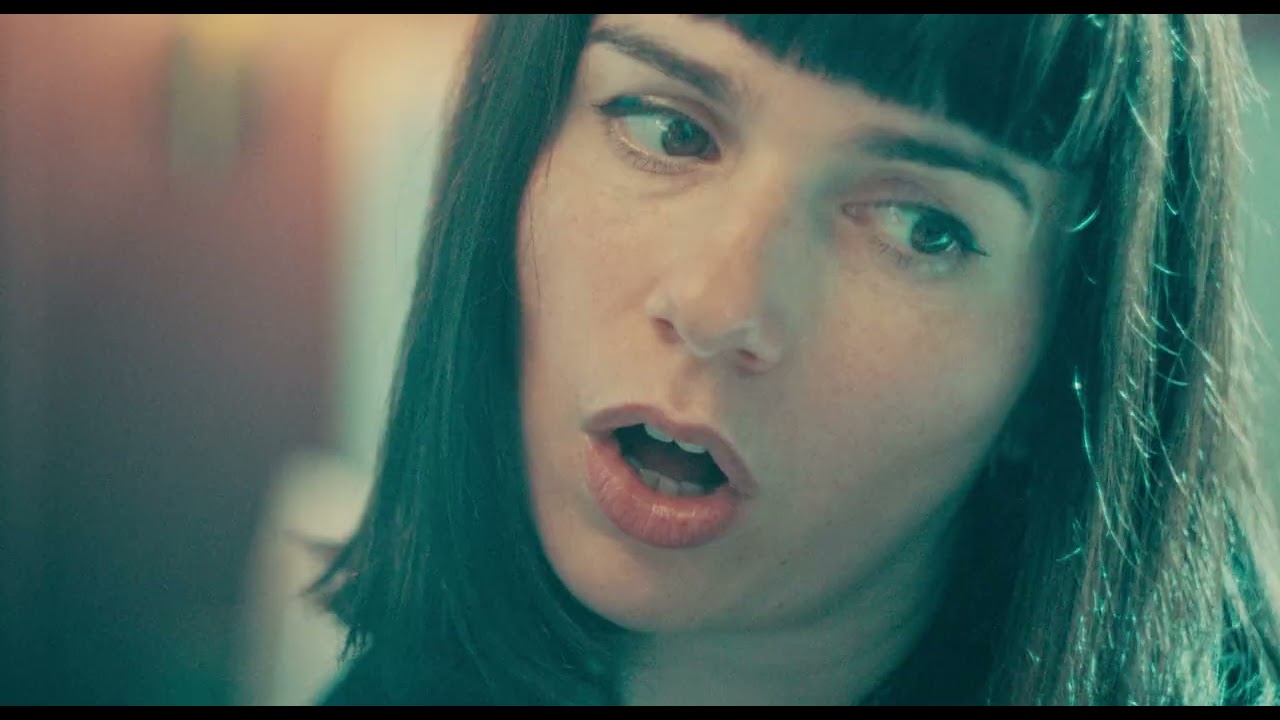



The Seed of the Sacred Fig (2024) by Mohammad Rasoulof: A political thriller where family dinner becomes paranoid interrogation during revolution
- dailyentertainment95

- 5 hours ago
- 11 min read
Summary of the Movie: Paranoia roots itself in patriarchy, strangling trust from within
The film operates in the space where state oppression infiltrates domestic life, treating family hierarchy as microcosm of authoritarian control. It's a 167-minute pressure cooker that asks whether a regime-serving father can maintain his power when his daughters stop obeying. Mohammad Rasoulof, fleeing Iran mid-edit to avoid eight years in prison, weaponizes real protest footage against fictional family collapse—the personal becomes political because they're already the same thing.
Where to watch: https://www.justwatch.com/us/movie/the-seed-of-the-sacred-fig (US), https://www.justwatch.com/au/movie/the-seed-of-the-sacred-fig (Australia), https://www.justwatch.com/ca/movie/the-seed-of-the-sacred-fig (Canada), https://www.justwatch.com/uk/movie/the-seed-of-the-sacred-fig (UK), https://www.justwatch.com/fr/film/les-graines-du-figuier-sauvage (France), https://www.justwatch.com/it/film/the-seed-of-the-sacred-fig (Italy), https://www.justwatch.com/es/pelicula/the-seed-of-the-sacred-fig (Spain), https://www.justwatch.com/de/Film/the-seed-of-the-sacred-fig (Germany)
Link IMDB: https://www.imdb.com/title/tt32178949/
Genre: The film blends political thriller with domestic psychological drama, using a missing gun as literal Chekhov's device while 2022 Woman Life Freedom protests erupt outside—tension builds through accusation cycles, revolutionary fervor bleeding into family conflict, and the slow recognition that patriarchal authority only survives through violence
Movie plot: Iman, newly promoted investigating judge in Tehran's Revolutionary Court, receives a gun for protection as Mahsa Amini protests intensify—when the weapon disappears from his home, he suspects his wife Najmeh and university-age daughters Rezvan and Sana, imposing increasingly brutal interrogations that mirror the regime he serves
Movie themes: Patriarchy as state apparatus miniature, paranoia as control mechanism, generational rebellion as political awakening, how complicity corrupts families same way it corrupts nations, surveillance culture destroying intimacy
Movie trend: Part of Iranian dissident cinema documenting state violence through family allegory—fits alongside films treating domestic spaces as political battlegrounds where authoritarian logic plays out in miniature
Social trend: Reflects global conversations about Iran's Woman Life Freedom movement, how authoritarian regimes depend on family-level enforcement, questioning whether reform is possible when oppression lives in every household
Movie director: Mohammad Rasoulof (There Is No Evil, Golden Bear 2020) shot this secretly while facing prosecution, fled Iran on foot through mountains after sentencing, completed edit in exile—his fourth feature examining moral compromise under authoritarianism
Top casting: Missagh Zareh plays Iman's escalating paranoia; Soheila Golestani (arrested for anti-hijab activism) as complicit-then-awakening wife Najmeh; Mahsa Rostami and Setareh Maleki as daughters caught between obedience and revolution; both Zareh and Golestani unable to leave Iran, held as photographs on Cannes red carpet
Awards and recognition: Cannes 2024 Special Jury Prize, FIPRESCI Prize, 12-minute standing ovation (festival record), 84 Metascore, Oscar nomination Best International Feature (German entry), Golden Globe nomination, BAFTA nomination, National Board of Review Best International Film 2024, 36 wins and 72 nominations total
Release and availability: May 24, 2024 Cannes premiere, September 18, 2024 France theatrical, December 26, 2024 Germany, February 18, 2025 US limited release via Neon, $6.58M worldwide gross
Why to watch movie: For audiences who want revolution documented through dinner table interrogations, real protest footage spliced into family drama, paranoia thrillers where the monster is patriarchy itself
Key Success Factors: Sacred Fig scores through making the political devastatingly personal—Rasoulof's real-life prison escape gives the film urgency that can't be manufactured, while casting actual activists in lead roles collapses distance between fiction and documentary
Insights: The regime lives inside families—daughters can't overthrow their father without overthrowing the state he represents
Industry Insight: Dissident filmmakers fleeing authoritarian regimes create festival events beyond cinema—Rasoulof's escape story generates emotional investment that amplifies the film's political urgency and legitimizes Germany's Oscar submission. Consumer Insight: Audiences increasingly demand films connecting private oppression to public revolution—treating family dysfunction as political allegory validates viewers' understanding that authoritarianism starts at home. Brand Insight: Real-world stakes elevate festival positioning—films made under life-threatening conditions receive critical benefit of doubt that formally similar but safely produced work doesn't automatically earn.
The film operates as both historical document and family thriller, splicing actual protest footage from Iran's 2022 Woman Life Freedom uprising into fictional narrative about a judge's family falling apart. Rasoulof makes paranoia contagious—Iman's suspicion that his daughters stole his gun mirrors the regime's suspicion that all citizens are potential traitors. The title references a fig species that strangles its host tree while appearing sacred—it's the regime, it's patriarchy, it's Iman himself, wrapping around his family until he destroys them while claiming protection. Critics who found it too long missed the point: authoritarian control is exhausting, and 167 minutes lets audiences feel that exhaustion rather than just observe it.
Why It Is Trending: Revolution finally gets its family drama—protest footage meets domestic thriller
The film arrives as Iran's Woman Life Freedom movement remains unresolved but internationally recognized. Sacred Fig capitalizes on global attention to Iranian women's resistance while providing inside view that news footage can't capture—what happens when revolution comes home to regime servants' families.
Concept → consequence: Family hierarchy mirrors state oppression, reframing domestic violence as political control system rehearsal—the film argues you can't dismantle authoritarian regimes without confronting patriarchal power in every household
Culture → visibility: Released as Mahsa Amini's death and subsequent protests remain in global consciousness, the film positions itself as experiential rather than explanatory—audiences feel what living under theocratic patriarchy does to families
Distribution → discovery: Cannes Special Jury Prize plus director's dramatic escape generates festival prestige while Neon's US acquisition and Germany's Oscar submission create mainstream accessibility rare for Iranian dissident cinema
Timing → perception: Drops during ongoing Iranian state repression and international debates about women's rights in theocratic regimes—feels urgent rather than historical even though depicting 2022 events
Performance → relatability: Iman's paranoid collapse and daughters' revolutionary awakening mirror global experiences with authoritarian family structures and generational political divides
Insights: Protest footage spliced into fiction—audiences get revolution from inside regime-serving families instead of just streets
Industry Insight: Filmmakers fleeing authoritarian regimes create unique distribution opportunities—Rasoulof's exile story generates publicity that traditional marketing can't buy while legitimizing festival prizes as political statements. Consumer Insight: Viewers increasingly value films documenting recent historical events through personal rather than journalistic lens—family allegory makes revolution comprehensible where news footage just documents chaos. Brand Insight: Real-world danger elevates perceived artistic authenticity—films made under life-threatening conditions receive critical generosity that safely produced political cinema must earn through formal innovation alone.
The film trends because it provides experiential access to Iran's revolution that news coverage can't—audiences don't just watch protests, they experience living with a regime-serving father as he becomes the regime in miniature. Rasoulof's escape narrative adds meta-layer: making this film cost him his country, and viewers know it. The 12-minute Cannes standing ovation wasn't just for the film but for Rasoulof's survival, collapsing distance between art and activism. It's trending not despite its 167-minute runtime but because that length forces audiences to endure the psychological warfare that authoritarian families inflict, making revolution feel necessary rather than just righteous.
What Movie Trend Is Followed: Family-as-microcosm political allegory from dissident filmmakers
The film operates within cinema treating domestic spaces as political laboratories where authoritarian logic reveals itself through intimate relationships. This trend emerged through A Separation's moral complexity and matured with Asghar Farhadi and Jafar Panahi—stories where family dinner becomes ideological battlefield and missing objects trigger existential crises.
Format lifecycle: Iranian cinema evolved from neorealist social observation (Kiarostami) through moral puzzle films (Farhadi's A Separation) into explicit dissident filmmaking where family dysfunction directly allegorizes state oppression—Sacred Fig sits where personal becomes unavoidably political
Aesthetic logic: Real protest footage spliced into fiction creates documentary urgency while maintaining narrative control—the film uses actual revolution as ambient threat that invades domestic space until distinction between public and private collapses
Psychological effect: Audiences experience authoritarian control as intimate betrayal rather than abstract oppression, making patriarchy feel personally threatening even to viewers in democratic societies
Genre inheritance: Borrows from Iranian moral complexity cinema (A Separation), paranoid domestic thrillers (Michael Haneke's Caché), revolution-adjacent family dramas (Roma), and dissident filmmaking tradition (Panahi, Rasoulof's previous work) to create hybrid documentary-fiction political allegory
Insights: The revolution happens at dinner—dissident cinema documents how state oppression plays out in private before it erupts in public
Industry Insight: Iranian dissident filmmakers create festivals' most politically urgent programming—their inability to attend premieres (or attendance under dramatic circumstances) generates emotional investment beyond the films themselves. Consumer Insight: Audiences accept extremely long runtimes when films treat political oppression as lived experience rather than explained concept—endurance becomes empathy mechanism. Brand Insight: Films made under authoritarian conditions receive critical benefit of doubt that similar formally-produced work must earn—real-world stakes function as artistic validation regardless of execution quality.
Sacred Fig demonstrates Iranian dissident cinema's maturity by refusing to explain Iran to Western audiences—it assumes viewers understand enough context to follow family dynamics without exposition. The film trusts that splicing real protest footage into narrative will feel necessary rather than exploitative, positioning documentary elements as emotional truth rather than just authenticity marker. This trend succeeds because it treats audiences as sophisticated enough to recognize how authoritarian systems reproduce themselves at every social scale—family dinner becomes regime miniature not through heavy-handed metaphor but through showing how surveillance, accusation, and violent control naturally flow from patriarchal authority that mirrors state power.
Trends 2026: Political urgency becomes festival currency
Audiences increasingly value films documenting authoritarian oppression through personal experience rather than journalistic distance. The shift reflects growing recognition that understanding political movements requires feeling them rather than just learning about them.
Implications: Lived oppression replaces explained politics as cinematic subject
Sacred Fig signals movement toward films trusting emotional experience to convey political complexity rather than exposition explaining systems
Viewers accept that revolution feels chaotic, exhausting, and unresolved rather than narratively satisfying—the film's lack of cathartic ending validates ongoing struggle
This reshapes political filmmaking from issue-driven to experience-driven, where audiences endure oppression alongside characters rather than just observing from critical distance
The trend suggests cinema functioning as witness rather than explainer, documenting authoritarian life for those who'll never experience it while validating those who live it
Where it is visible (industry): Dissident filmmakers become festival programming cornerstones
Film festivals prioritize work from authoritarian contexts as both artistic and political statements—programmer solidarity with persecuted filmmakers generates goodwill beyond film quality
Real-world consequences for filmmakers (prison, exile, censorship) create festival narratives that amplify distribution opportunities
European festivals particularly embrace dissident cinema as values demonstration—supporting persecuted artists becomes cultural diplomacy
Oscar submissions increasingly select dissident work from adopted countries (Germany selecting Rasoulof) as political solidarity gestures
Related movie trends:
Documentary-fiction hybrid dissident cinema - Films splicing real protest footage into narrative to collapse distance between journalism and storytelling, making revolution experiential rather than observed
Family-as-state-allegory thrillers - Stories treating domestic patriarchy as authoritarian regime rehearsal, where missing objects trigger paranoid interrogations revealing political systems
Exile filmmaker narratives - Directors fleeing authoritarian regimes mid-production, with escape stories becoming as important as films themselves for festival positioning
Marathon political dramas - 150+ minute runtimes justified by making audiences endure oppression duration rather than just witness it, turning length into empathy mechanism
Related consumer trends:
Experiential political engagement - Audiences preferring to feel oppression through character identification over learning about systems through exposition or documentary journalism
Solidarity viewing - Consumers treating film attendance as political action, supporting dissident artists through box office rather than just appreciation
Endurance as empathy - Viewers accepting extreme runtimes when length creates psychological experience matching subject matter's emotional weight
Real-world stakes fetishization - Growing audience preference for films made under dangerous conditions, treating filmmaker persecution as authenticity validation
The Trends: Family-as-microcosm political allegory hits because audiences need to feel authoritarianism rather than just understand it
Viewers seek films making oppression experiential rather than explicable—Sacred Fig's power lives in forcing audiences to endure 167 minutes of paranoid family interrogation that mirrors state control mechanisms. The trend resonates because it provides emotional access to political realities that news coverage documents but can't make visceral. Rasoulof's real prison escape validates the film's urgency beyond its formal qualities—audiences know this cost him everything, making the viewing experience feel like political solidarity rather than just entertainment consumption.
Trend Type | Trend Name | Description | Implications |
Core Movie Trend | Dissident family-allegory thrillers | Films from authoritarian contexts treating domestic patriarchy as state oppression miniature, where family dynamics directly mirror political systems | Cinema shifts from explaining politics to experiencing them—filmmakers under threat create urgency that safely produced work can't manufacture |
Core Consumer Trend | Solidarity viewing as activism | Audiences treating film attendance and discussion as political action, supporting persecuted artists through engagement rather than just aesthetic appreciation | Consumption becomes activism substitute—viewers feel politically engaged by watching and sharing dissident cinema rather than requiring direct action |
Core Social Trend | Intimate authoritarianism recognition | Growing awareness that state oppression reproduces through family structures, making personal dynamics political rather than just private matters | Society treats domestic patriarchy as regime enforcement mechanism—can't dismantle authoritarian states without confronting household-level control systems |
Core Strategy | Real-world stakes as marketing | Filmmakers' persecution, exile, or imprisonment functioning as distribution advantage and critical validation beyond film's formal qualities | Brands and festivals recognize that danger legitimizes artistic choices—life-threatening production conditions create benefit of doubt for challenging work |
Core Motivation | Empathy through endurance | Audiences need to feel duration and weight of oppression rather than just intellectually understand systems—long runtimes create shared experience with subjects | Media provides emotional access to political realities inaccessible through journalism—feeling becomes understanding when explanation fails |
Insights: Revolution gets personal—audiences can't care about protests until they live with families caught between obedience and uprising
Industry Insight: Dissident filmmakers create festival programming that functions as political statement beyond artistic merit—supporting persecuted artists becomes values demonstration that justifies prize decisions. Consumer Insight: Viewers increasingly value experiential political cinema over explanatory documentaries—feeling what living under authoritarianism does to families creates understanding that fact-based reporting can't achieve. Brand Insight: Films made under life-threatening conditions receive marketing advantage through filmmaker persecution narratives—real-world danger validates artistic choices and generates publicity traditional campaigns can't buy.
The 2026 landscape reveals audiences treating political films as empathy machines rather than education tools. Sacred Fig succeeds because it makes viewers experience authoritarian family dynamics rather than just observe them—the 167-minute runtime isn't indulgence but necessary duration for audiences to feel the exhaustion of living under constant surveillance and interrogation. Rasoulof's exile story amplifies this by collapsing distance between filmmaker and subject—he didn't just document authoritarian oppression, he fled it, making the film feel like recovered evidence rather than constructed narrative. This trend suggests cinema evolving from political explanation toward political witness, where success means making audiences feel trapped in the same psychological warfare the characters endure.
Final Verdict: A revolution document disguised as family thriller—or vice versa
Sacred Fig functions as both historical record and paranoid chamber piece, treating the 2022 Woman Life Freedom protests as backdrop that eventually invades foreground until politics and family become indistinguishable. The film's cultural role sits at intersection of dissident cinema and festival activism, where supporting the work becomes inseparable from supporting the filmmaker's survival.
Meaning: The film argues that authoritarian regimes survive by reproducing their logic in every family—patriarchal fathers enforce state oppression in miniature, making revolution impossible without dismantling domestic power structures first
Relevance: Arrives as Iran's protests remain brutally suppressed but internationally visible, offering experiential access to what living under theocratic patriarchy actually feels like rather than just news footage of resistance
Endurance: The film's staying power depends on whether Iran's political situation resolves or intensifies—if reform happens, this becomes historical document; if repression continues, it remains urgent witness
Legacy: Establishes that dissident filmmakers can maintain artistic careers in exile, proving that authoritarian regimes can't silence artists by forcing geographic displacement—the work continues, just from different locations
Insights: The film sells revolution as family dinner turned interrogation—audiences pay to endure authoritarian psychological warfare for 167 minutes
Industry Insight: Filmmaker persecution narratives function as distribution advantage—Rasoulof's prison escape and cast members held in Iran generate emotional investment and publicity that traditional marketing campaigns can't achieve. Consumer Insight: Viewers treat extremely long runtimes as acceptable when films make them endure oppression alongside characters—length becomes empathy mechanism rather than pacing failure. Brand Insight: Films from dissident contexts receive critical generosity that safely produced political cinema must earn through formal innovation—real-world danger validates artistic choices regardless of execution consistency.
Sacred Fig's cultural role is documenting Iran's revolution from inside rather than outside, showing what happens in regime-serving families when daughters stop obeying fathers. Rasoulof makes the personal unavoidably political by treating family hierarchy as authoritarian system miniature—Iman's paranoid interrogations of his wife and daughters mirror the regime's surveillance and control mechanisms, revealing how oppression reproduces itself at every social scale. The film succeeds not because it explains Iranian politics but because it makes audiences experience living under theocratic patriarchy, turning 167 minutes into psychological warfare that viewers endure alongside characters. Rasoulof's real exile story collapses critical distance—this wasn't safely observed from democratic comfort but documented at enormous personal cost, making every frame feel like recovered evidence of a system that wanted this film destroyed.
Comments