


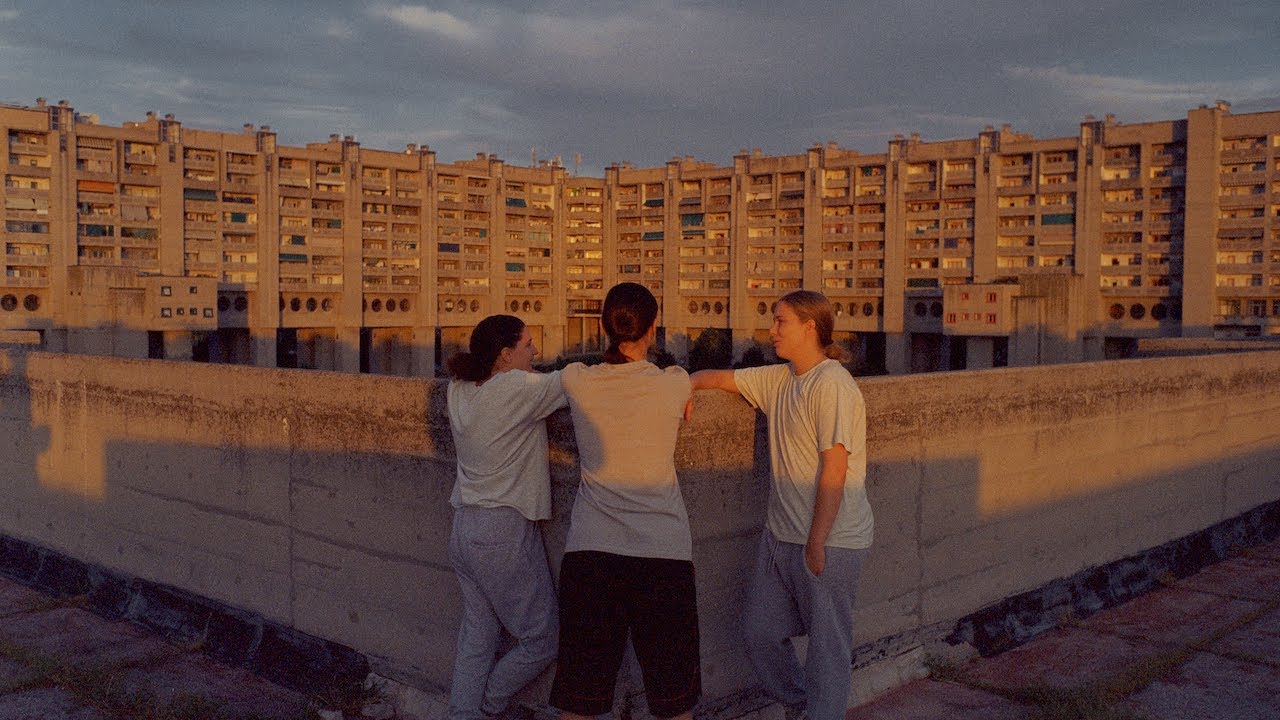
Omaha (2025) by Cole Webley

US | 2025 | 83 min | Child-Perspective Family Drama
When Children Feel the Truth Before Adults Are Ready to Explain It
One morning in 2008, a father wakes his two children, Ella and Charlie, puts them and their dog into the car and announces that they are going on a road trip to Nebraska. Charlie experiences the journey largely as an adventure, but nine-year-old Ella quickly notices something different. Dad is evasive, their lives appear strangely unsettled and the spontaneous trip feels increasingly like it has a purpose he refuses to explain.
Cole Webley turns that gap between adult knowledge and childhood understanding into the emotional architecture of Omaha. Dad knows why they are traveling. Ella knows something is wrong. Charlie understands even less. The audience moves between those levels of awareness as an apparently ordinary family journey gradually reveals the consequences of grief, financial collapse and a parent running out of choices.
➡️ Movie Insight: Omaha understands that children do not need to know the details of a crisis to experience its consequences. Ella reads changes in her father's behavior long before she understands the decisions behind them. The film turns childhood observation into the place where an adult crisis becomes emotionally visible.
Why This Movie Matters Right Now: Children Often Carry Problems They Had No Part in Creating
Economic insecurity is usually measured through adult indicators such as income, employment, debt and housing, but families experience those pressures emotionally as well as financially. Children may not understand why a parent is frightened, why routines suddenly change or why a home can no longer be kept, yet they still experience the instability those changes produce.
Omaha makes that distinction central. Dad faces the adult realities of grief, foreclosure and financial desperation, while Ella and Charlie encounter their consequences without possessing the language necessary to explain them. The story takes place during the Great Recession, which Webley has described as the historical crisis surrounding the family's desperate search for stability.
One of the film's most painful ideas emerges through Ella's tendency to apologize even when she has done nothing wrong. Her behavior suggests how easily children can internalize instability, searching within themselves for explanations when adults cannot tell them what is happening.
➡️ Why It Matters: Childhood insecurity begins long before children fully understand the adult problems creating it. They notice silence, stress, disappearing routines and changes in the people responsible for making life feel safe. Omaha reveals how crises created by adults and institutions can quietly become emotional burdens carried by children.
Should You Watch It?: A Road Movie Where the Destination Matters Less Than What the Children Gradually Understand
Watch Omaha if you prefer restrained family dramas that allow emotion to emerge through behavior rather than constant explanation. The film uses an accessible road-movie structure—cars, motels, fast food, swimming, kite flying and changing landscapes—while gradually revealing that Dad and his children are experiencing completely different versions of the same journey.
John Magaro gives Dad warmth without removing the unease surrounding his decisions, while Molly Belle Wright becomes the film's emotional center as Ella. Webley has said Wright effectively owns the film, while Sundance similarly describes Ella as perceptive enough to realize her father is hiding something even while ordinary pleasures temporarily preserve the feeling of a family vacation.
The result is emotionally difficult without becoming dependent on melodrama. Omaha asks viewers to remain close to people making and experiencing decisions that become increasingly hard to judge from a comfortable distance.
➡️ Viewing Recommendation: Watch it for the relationship between childhood perception and parental desperation rather than for a conventional road-trip story. Ella's incomplete understanding makes ordinary family moments increasingly painful because viewers can recognize meanings she cannot yet fully name. The film's emotional power comes from knowing that love can remain genuine even when security is disappearing.
Why Everyone Is Talking About It: Sundance Discovery Turned Into a Festival Breakout
Omaha premiered in the U.S. Dramatic Competition at the 2025 Sundance Film Festival, where its intimate performances quickly became central to the film's reception. Sundance reported an emotional premiere response and highlighted the naturalism of John Magaro, Molly Belle Wright and Wyatt Solis, particularly the contrast between expansive American landscapes and close observation of Ella.
Its momentum expanded considerably through the festival circuit. The film won the Jury Prize at Deauville, the Jordan Ressler First Feature Award at Miami, the CineKindl Award at Munich and the Grand Jury Prize at Dallas, while John Magaro received a Special Jury Prize for acting at Montclair. Molly Belle Wright also received a Golden Starfish Honorable Mention at Hamptons, reinforcing her emergence as one of the film's major discoveries.
That recognition is particularly meaningful because the film relies so heavily on the children's perspective. The Munich jury praised its decision to keep the camera at the children's level and its ability to make an extremely difficult family situation understandable through emotion rather than excessive explanation.
The film's U.S. theatrical release followed on April 24, 2026, extending a journey that began at Sundance more than a year earlier.
➡️ Viral Potential: Omaha has grown through emotional word-of-mouth rather than spectacle, with festival audiences responding strongly to its performances and child-centered perspective. Molly Belle Wright gives the film a particularly memorable discovery story because Ella carries much of its emotional weight without being given full access to the adult truth. Its conversation potential comes from the impossible question underneath the journey: how should we judge a parent whose love remains visible even when his decisions become devastating?
Why Omaha Stands Out: The Children Think They Are Going Somewhere Together While Dad Knows the Journey Means Something Else
Road movies traditionally transform movement into possibility. Characters leave familiar lives behind, encounter new places and discover something that allows them to move forward differently.
Omaha turns that promise inside out.
Ella and Charlie see new landscapes, sleep in motels and experience small pleasures that can temporarily make the journey feel adventurous. Dad experiences those same moments with completely different knowledge because he understands what waits at the destination.
That produces the film's most painful contradiction: the family can still experience genuine happiness together even while Dad knows their security is collapsing. The tender moments are therefore not interruptions to the tragedy; they intensify it.
➡️ Cinema Insight: Omaha makes one road trip contain two different emotional realities. The children experience movement as adventure while their father experiences it as a countdown toward a decision he cannot explain to them. The film becomes devastating because both versions of the journey are true at the same time.
Movie Trend: Child-Perspective Family Drama — When Children Feel an Adult Crisis Before They Understand It
Omaha belongs to a form of family drama that places adult problems inside a child's incomplete understanding. Ella cannot interpret every financial or emotional detail surrounding Dad's behavior, but she is observant enough to recognize that the official explanation for the road trip does not match what she is experiencing.
That difference matters because childhood perception operates through fragments. Ella notices tone. She notices evasiveness. She notices unusual decisions. She notices that familiar structures are disappearing. Each observation gives her another piece of an adult reality she cannot yet assemble completely.
The audience is deliberately placed close to that position. Information arrives gradually, allowing viewers to experience uncertainty rather than simply receiving an explanation of Dad's circumstances.
Movie Trend Formula:FAMILY LOSS → ADULT CRISIS → PARENT HIDES THE TRUTH → CHILD OBSERVES CHANGES → CONFUSION → SMALL MOMENTS OF NORMALITY → GROWING SUSPICION → PARTIAL UNDERSTANDING → TRUTH EMERGES → CHILDHOOD SECURITY CHANGES
Webley has described the film as an exercise in empathy and emphasized the importance of understanding people before immediately judging their decisions. Keeping the story close to Ella makes that ambition particularly effective because viewers experience consequences before receiving enough information to explain them.
➡️ Movie Trend: Child-perspective family dramas make adult crises more powerful by showing how they are experienced before they can be understood. Ella senses instability through behavior, silence and disappearing routines rather than financial explanations. Omaha turns partial understanding into emotional truth.
Broad Trend: Childhood Insecurity — When Children Carry the Emotional Consequences of Problems They Cannot Control
Ella and Charlie did not cause their mother's death. They did not create the Great Recession. They did not create Dad's financial problems or the foreclosure threatening their home. Yet they experience the consequences of every one of those events.
This is what makes Childhood Insecurity stronger than Economic Insecurity as the film's Broad Trend. Economic collapse explains Dad's circumstances, but childhood insecurity explains what those circumstances become once they move through a family.
The progression is subtle:
ADULT CRISIS → PARENTAL STRESS → ATTEMPTED PROTECTION → CHILD SENSES CHANGE → CONFUSION → SELF-BLAME → LOSS OF SECURITY
Dad tries to preserve moments of childhood through treats, games and experiences along the road, yet protection becomes increasingly difficult because children do not need complete information to recognize emotional change. Sundance specifically describes Ella as watching her father closely even during apparently ordinary family activities.
Broad Trend Formula:SECURITY → FAMILY CRISIS → ADULT SECRECY → DISRUPTED ROUTINE → CHILDHOOD CONFUSION → EMOTIONAL INSECURITY → SEARCH FOR EXPLANATION → SELF-BLAME → TRUTH → CHANGED UNDERSTANDING OF FAMILY
The larger insight is uncomfortable: protecting children from information cannot necessarily protect them from experience.
➡️ Broad Trend: Childhood insecurity often begins when the structures making life predictable start disappearing. Children may not understand the economic, emotional or social causes, but they still absorb the uncertainty surrounding them. Omaha shows how an adult crisis becomes a childhood experience long before anyone explains what is happening.
Why Child-Perspective Family Dramas Are Popular: Audiences Experience Adult Problems Differently When They Cannot See the Whole Picture
Adult-centered dramas usually explain motivation through information, conversation and backstory. Child-perspective storytelling can remove that certainty because children often encounter consequences without understanding the systems creating them.
That limitation changes how audiences watch. A strange decision becomes more unsettling because nobody explains it. A parent's silence becomes significant because the child notices it. A small moment of happiness becomes more emotional because viewers understand how fragile it may be.
Omaha uses that perspective to create empathy in several directions simultaneously. Viewers can recognize Ella's fear while also gradually understanding Dad's desperation, making it difficult to reduce the family into innocent children on one side and an irresponsible parent on the other.
➡️ Audience Motivation: Child-perspective dramas make familiar adult problems feel newly uncertain by removing the explanations adults normally use to organize them. Viewers experience instability through observation before they can rationalize it through information. Omaha uses that gap to make empathy more important than immediate judgment.
Viewer Profile: Life Reflectors - Viewers Choosing Intimate Family Dramas That Turn Everyday Relationships Into Questions About Love, Responsibility and Difficult Choices
Life Reflectors choose films that make large emotional questions recognizable through ordinary relationships. They are drawn to characters facing decisions without clean solutions and to stories that encourage reflection about how they themselves might respond under similar pressure.
Omaha fits this behavior because its emotional question is not abstract. Dad loves Ella and Charlie, but love does not automatically give him the economic or emotional resources required to protect them. The film therefore asks audiences to hold affection, responsibility, desperation and consequence together rather than simplifying the character into a single moral category.
Audience Dimension | Profile |
Core Audience | Viewers drawn to intimate family dramas, road movies and socially conscious independent cinema |
Age Group | Adults and younger adult viewers interested in family relationships, childhood and parental responsibility |
Lifestyle | Reflective viewers sensitive to economic insecurity, family pressure and difficult life transitions |
Cinema Taste | Naturalistic drama, American independent cinema, child-perspective storytelling and emotionally restrained films |
Streaming Behavior | Festival discoveries, prestige streaming, independent releases and recommendation-led viewing |
Discovery Mindset | Looks for emotionally recognizable stories that complicate easy judgments about difficult decisions |
➡️ Audience Insight: Life Reflectors are attracted to stories that make them reconsider situations they might otherwise judge from a distance. Omaha provides no comfortable separation between love and failure because Dad can care deeply for his children while still making decisions that hurt them. The film's emotional challenge is asking viewers to understand that contradiction without pretending its consequences disappear.
What This Movie Means for the Industry: Social Issues Become More Powerful When Audiences Experience Them Before They Are Explained
Omaha demonstrates how independent cinema can address economic insecurity without turning characters into illustrations of a social problem. The Great Recession matters, but Webley and screenwriter Robert Machoian keep the story attached to one father, two children, a dog and a car moving across the American West.
That scale makes the systemic dimension more accessible. Foreclosure and financial instability become meaningful because viewers see how they alter breakfast, motel stays, conversations, small purchases and the emotional relationship between parent and child.
The film's festival success also demonstrates the continued strength of restrained storytelling. Its awards trajectory—from Sundance discovery through Deauville, Miami, Munich, Dallas, Montclair and Hamptons—suggests that emotionally direct independent dramas can generate international attention without abandoning small-scale storytelling.
➡️ Industry Insight: Social dramas become more emotionally powerful when systems are translated into everyday consequences rather than explained only through issues. Omaha turns recession, foreclosure and insufficient support into changes children can see even when they cannot understand their causes. Its success reinforces the value of intimate storytelling as a way of making structural problems personally legible.
Creative Analysis: Making the Audience Understand the Crisis at the Speed of a Child
Omaha builds its creative identity around unequal knowledge. Dad understands the destination and the seriousness of the family's situation, Ella understands that something is being hidden and Charlie remains closest to experiencing the trip as an adventure. Instead of resolving those differences immediately, the film allows the audience to inhabit them, making incomplete information part of the emotional experience rather than merely a device for preserving a late revelation.
Storytelling: Turning Missing Information Into Childhood Experience
Robert Machoian's screenplay withholds the complete purpose of the journey while giving viewers enough behavioral information to recognize that Dad's explanation is incomplete. The structure therefore mirrors Ella's experience because both audience and child accumulate fragments rather than receiving a clear adult explanation.
Ordinary road-trip events gradually change meaning as those fragments accumulate. A motel stop can still be fun for the children while carrying anxiety for Dad, and a small treat can simultaneously represent parental affection and an attempt to preserve normality. The storytelling becomes powerful because the same event can hold childhood innocence and adult desperation at once.
Direction: Keeping the Emotional Perspective Close to the Children
Webley avoids explaining Dad's crisis too early because doing so would move the audience away from Ella's uncertainty. Instead, he repeatedly allows the children to experience consequences before understanding causes, preserving their emotional perspective even as viewers gradually recognize more of what Dad is carrying.
This approach extends to the production itself. Webley has described allowing young Wyatt Solis's natural behavior to influence scenes rather than forcing him rigidly toward predetermined results, helping the family interactions retain spontaneity.
Performances: Making Ella Understand More Than Anyone Tells Her
Molly Belle Wright's performance is essential because Ella exists between innocence and awareness. She is still young enough to depend completely on Dad but old enough to recognize changes in his behavior, making observation itself one of the character's most important dramatic actions.
John Magaro complements that performance by keeping Dad emotionally readable without making every motivation explicit. Warmth, grief, exhaustion and secrecy can coexist within him, allowing the audience to understand why Ella remains attached to the father she increasingly realizes is hiding something.
Webley has described Wright as central to the film, while her performance received a Golden Starfish Honorable Mention at Hamptons.
Visual Style: Making an Open Landscape Feel Like a Family Running Out of Options
Cinematographer Paul Meyers described the visual approach as grounded in realism but seen through a child's perspective. His references included photographer Justine Kurland's American highway imagery, particularly its ability to combine beauty with something more unsettled underneath.
That contradiction becomes central to Omaha. The American West appears enormous, creating images associated with freedom and possibility, while Dad's actual options become progressively narrower. The road looks open. The horizon looks open. The family's future does not.
The cinematography therefore turns geography into emotional irony: they are surrounded by space while becoming increasingly trapped.
Themes: Children Can Inherit Fear Without Understanding Its Cause
Omaha repeatedly explores the difference between information and emotion. Dad can withhold information from Ella and Charlie, but he cannot completely prevent them from experiencing his stress, altered behavior and the disappearance of familiar stability.
Ella's repeated apologies become particularly painful within this context because they suggest a child searching for responsibility inside herself. When children lack explanations for instability, they can attempt to create their own, even when the crisis has nothing to do with them.
The film consequently questions whether protection based on secrecy can truly protect children when the emotional reality remains visible.
What Makes It Different: The Road Trip Moves Forward While the Family Falls Apart
Most road movies use movement to bring characters closer to freedom, reconciliation or a new beginning. Omaha allows the family to keep moving physically while the possibility of remaining together becomes increasingly uncertain.
That inversion gives every mile additional emotional weight. Ella and Charlie believe they are traveling somewhere with Dad, while Dad understands that reaching the destination may fundamentally change what being together means.
The journey therefore contains its own contradiction: movement normally promises possibility, but here movement carries the family toward the consequences of having almost no possibilities left.
➡️ Creative Insight: Omaha transforms incomplete information into the emotional language of childhood insecurity. Ella understands the crisis gradually through changes in her father's behavior, allowing the audience to feel instability before receiving the adult explanation behind it. The film's most distinctive achievement is making a road trip feel simultaneously like a child's adventure and a parent's countdown toward an impossible choice.
If You Liked Omaha: When Children Experience the Consequences of Adult Decisions
Propeller: One-Way Night Coach (2026) by John Travolta: When a Child Begins to See the Complicated Adult World Behind the Journey
A young boy travels with his loving but unsettled mother, experiencing their journey through the curiosity and limited understanding of childhood. What initially feels like an adventure gradually exposes him to a more complicated adult reality, turning travel into a passage between childhood innocence and growing awareness.
➡️ Why It Connects: Propeller: One-Way Night Coach and Omaha use journeys to place children close to adult problems they cannot yet completely understand. Both allow young protagonists to observe parents whose love remains genuine even while their lives are unstable. The emotional connection comes from watching children gradually recognize that the adults protecting them may themselves be lost.
➡️ Where to Watch: Availability varies by market; no verified JustWatch pages found yet for US | AU | CA | UK | FR | IT | ES | DE.
Rebuilding (2025) by Max Walker-Silverman: When Losing a Home Forces a Father to Redefine What Providing for His Child Means
After a wildfire destroys his ranch, Dusty is displaced into a temporary community while trying to rebuild both his life and his relationship with his young daughter. Material loss becomes inseparable from fatherhood as he confronts the possibility that providing security may require accepting help rather than maintaining complete independence.
➡️ Why It Connects: Rebuilding and Omaha examine fathers whose identities as providers collapse alongside the physical security of home. Both connect housing insecurity with responsibility, love and the fear of failing a child, while refusing to reduce their fathers to simple examples of success or failure. Where Omaha moves toward an impossible separation, Rebuilding asks whether losing material stability can eventually create another form of family connection.
Janet Planet (2024) by Annie Baker: When Childhood Means Watching Adults Without Fully Understanding Them
Eleven-year-old Lacy spends the summer of 1991 closely observing her mother Janet and the adults who move through their lives. She cannot completely understand the emotional complexities surrounding them, but her intense attention to behavior, conversations and changing relationships gradually becomes its own form of knowledge.
➡️ Why It Connects: Janet Planet and Omaha understand childhood as a state of intense observation rather than ignorance. Lacy and Ella notice emotional changes long before they possess the adult context required to interpret them completely. Both films reveal how children construct an understanding of family from gestures, silences and fragments adults may not realize they are communicating.
➡️ If You Liked Insight: These films place children close to adult instability without giving them complete access to its causes. Parents may try to preserve security, but children continue reading the silences, changing routines and emotional signals surrounding them. Omaha makes this especially painful by turning a family road trip into the moment when Ella gradually realizes that love cannot always keep a family safe.
Final Verdict: Love Cannot Always Protect Children From the Reality Surrounding Them
Omaha refuses the comforting idea that loving your children guarantees the ability to protect them. Dad's affection remains visible throughout the journey, yet grief, financial collapse and shrinking options place the family inside circumstances that love alone cannot repair.
That distinction makes the film more complicated than a story about either parental sacrifice or parental failure. Webley has emphasized empathy as a central intention, asking viewers to understand why people make desperate decisions before reducing them to judgments about those decisions.
Ella ultimately gives that idea its emotional force. She does not understand every adult problem surrounding the journey, but she experiences its consequences with extraordinary clarity.
➡️ Final Verdict: Omaha turns a father's economic and emotional crisis into a child's changing understanding of security. Ella discovers that adults can love their children deeply while still being unable to keep their world intact. The film's deepest sadness comes from recognizing that childhood can change before a child even understands why.
Quick Facts: A Family Road Trip Becomes a Child's Journey Toward an Adult Truth
Title | Omaha |
Director | Cole Webley |
Writer | Robert Machoian |
Lead Cast | John Magaro, Molly Belle Wright, Wyatt Solis |
Year | 2025 |
Runtime | 83 min |
Country | US |
Language | English |
Setting | United States, 2008 |
Festival Launch | Sundance Film Festival 2025 — U.S. Dramatic Competition |
Movie Trend | Child-Perspective Family Drama — When Children Feel an Adult Crisis Before They Understand It |
Broad Trend | Childhood Insecurity — When Children Carry the Emotional Consequences of Problems They Cannot Control |
Viewer Profile | Life Reflectors |
Core Conflict | A father conceals the real purpose of a road trip while his daughter gradually realizes their family is in crisis |
Creative Hook | The audience discovers the adult crisis at approximately the same emotional speed as Ella |
Core Themes | Childhood insecurity, parental love, grief, economic precarity, housing loss, secrecy, responsibility and empathy |
Final Insights: Children Do Not Need to Understand a Crisis for It to Change Them
Childhood security depends on more than whether adults reveal difficult information. It is created through predictable routines, stable relationships, familiar spaces and confidence that the people responsible for protecting us still know what happens next. When those structures disappear, children can experience instability long before they understand the economic or emotional forces causing it.
The broader shift is toward recognizing childhood as an active experience of family crisis rather than a protected space outside it. Children observe adults closely, absorb stress and create explanations from whatever information is available, which means attempts to shield them can sometimes leave them alone with feelings they cannot name. Omaha turns that reality into an intimate road movie where the most important journey is Ella's changing understanding of what safety means.
➡️ Final Insight: Adult crises do not remain exclusively adult once they begin changing a family's everyday life. Children experience uncertainty through the people, places and routines they depend on, even when nobody explains what is happening. Omaha reveals that protecting childhood requires more than hiding painful truths because children are often already living inside their consequences.
Comments