



O Jacaré (2026) by Basil da Cunha

CH, PT | 2026 | 92 min | Drama, Thriller
➡️ Where to Watch: Industry Professionals — Festival Scope Pro, festival circuit
When Stolen Money Turns Neighbors Into Suspects
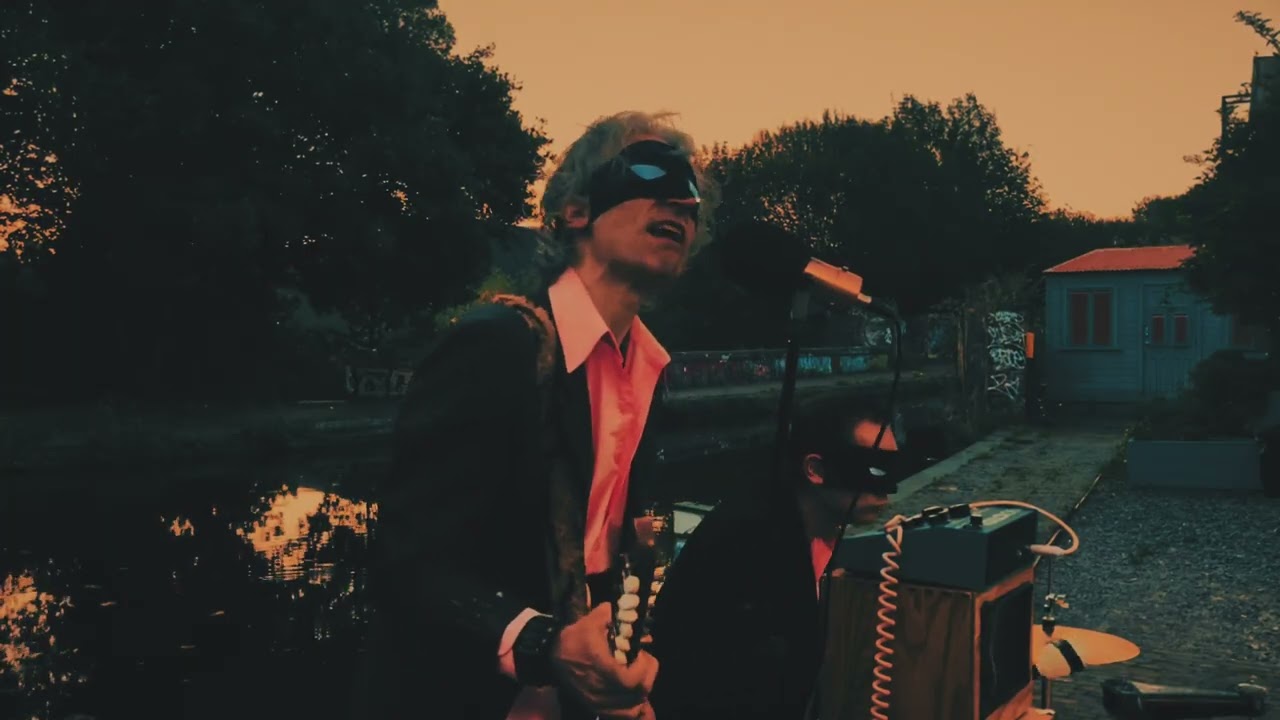
In Reboleira, on the outskirts of Lisbon, a robbery goes wrong and a car crashes in the middle of the neighborhood. The driver is arrested, but the €180,000 stolen in the robbery has disappeared. Police seal off the area, rumors spread through the streets, and a community built around close relationships suddenly finds itself wondering who might be hiding the money.
PC, an influential neighborhood figure, sends his young protégé Chandi to reconnect with KP and discover whether his group has the missing cash. Machine develops his own plan, Xana faces the return of her violent husband, and an escaped crocodile adds another layer of absurdity to a neighborhood already overflowing with suspicion, schemes and competing loyalties.
➡️ Movie Insight: O Jacaré uses a crime story to activate an entire neighborhood rather than following a single criminal protagonist. The missing money exposes relationships, rivalries and ambitions that already existed beneath the community’s surface. Reboleira becomes both the setting and the film’s central character.
Why This Movie Matters Right Now: Crime Reveals What Holds a Community Together
O Jacaré arrives at a moment when the physical Reboleira that Basil da Cunha has filmed for more than fifteen years is disappearing. Built largely by Cape Verdean immigrants on Lisbon’s outskirts, the neighborhood has been central to his filmmaking, with residents repeatedly participating in stories drawn from the place where they lived.
That history changes the meaning of the crime plot. The hunt for €180,000 is entertaining, but it also gives da Cunha a way to bring different generations and personalities together for what he has described as a final cinematic gathering before the neighborhood disappears. Crime therefore becomes a mechanism for preserving a community on screen.
➡️ Why It Matters: O Jacaré captures a neighborhood at the moment when its physical existence is being erased. The crime story allows its relationships, humor, contradictions and personalities to remain visible. Cinema becomes both entertainment and community memory.
Should You Watch It?: A Fast, Chaotic Crime Drama With a Comic Pulse
O Jacaré is not a conventional crime thriller built around a controlled investigation or a single protagonist pursuing the truth. It is an ensemble film where characters, rumors, confrontations and competing schemes collide rapidly, creating a deliberately crowded portrait of neighborhood life.
The film also carries a playful streak that separates it from grim social realism. Gangster-film energy, comedy, music, eccentric personalities and the increasingly strange presence of a loose crocodile push the story toward a colorful neighborhood caper without removing the social pressures underneath it.
➡️ Viewing Recommendation: O Jacaré is best suited to audiences who enjoy energetic ensemble crime films rather than tightly structured procedural thrillers. Its appeal comes from personalities, atmosphere, humor and neighborhood dynamics as much as the missing money. Expect social realism filtered through the energy and freedom of genre cinema.
Why Everyone Is Talking About It?: Reboleira Reached Locarno’s Main Competition
O Jacaré received its world premiere in the International Competition at the 79th Locarno Film Festival, where Basil da Cunha competed for the Golden Leopard for Best Film. The selection placed a highly local story about Reboleira within one of international arthouse cinema’s most visible competition platforms.
Its Portuguese theatrical release followed quickly on September 3 through Nitrato Filmes, with special screenings and conversations with da Cunha accompanying the launch. The film also carries additional significance within his career because it gathers residents and performers from a neighborhood he has filmed repeatedly as that physical community approaches disappearance.
➡️ Viral Potential: O Jacaré has a strong conversation hook because its crime story combines stolen money, neighborhood rivalries, colorful characters and an escaped crocodile. Locarno gave that unusual mixture international arthouse visibility before its Portuguese theatrical launch. Its most powerful word-of-mouth asset is the collision between authentic community life and playful gangster-movie spectacle.
Why O Jacaré Stands Out: The Neighborhood Matters More Than the Robbery
The missing €180,000 provides the narrative engine, but da Cunha continually redirects attention toward the people searching for it. PC suspects KP, Chandi moves between competing loyalties, Machine develops another scheme and Xana confronts dangers that extend beyond the robbery itself. Each thread reveals another relationship inside Reboleira.
This makes O Jacaré less interested in solving a mystery than watching what the possibility of sudden wealth does to a fragile social ecosystem. Money creates suspicion, fear, ambition and betrayal, turning people who know one another into possible rivals while simultaneously demonstrating how deeply their lives remain interconnected.
➡️ Cinema Insight: O Jacaré transforms the mechanics of a crime film into a collective portrait. The missing money matters because everyone responds to it differently, allowing relationships to become the real source of suspense. The film expands crime cinema by making community dynamics more important than solving the crime.
Movie Trend: Crime Drama — When Crime Tests the Loyalty Holding a Neighborhood Together
Crime dramas are increasingly powerful when criminal activity reveals the social ecosystem surrounding it rather than existing only as a confrontation between criminals and authorities. A robbery, missing money or betrayal can become a way of testing relationships inside communities where trust functions as an informal form of security.
O Jacaré embodies this approach by allowing one missing bag of money to destabilize Reboleira. Rumors turn neighbors into suspects, friendships become strategically valuable and existing rivalries intensify as different characters imagine what the money could change. The criminal event exposes how solidarity survives — or fractures — when personal opportunity collides with collective loyalty.
➡️ Movie Trend: Crime drama is increasingly using criminal events to expose the relationships and informal codes holding communities together. O Jacaré reflects this shift by turning stolen money into a test of loyalty across an entire neighborhood. Crime provides the trigger, but trust, betrayal and community survival become the deeper conflict.
Viewer Profile: Crime Drama Audience (Street Loyalists) - Audiences Drawn to Crime Stories About Loyalty, Trust and Neighborhood Survival
O Jacaré naturally appeals to viewers who enjoy crime stories where social relationships matter as much as criminal mechanics. The combination of stolen money, competing schemes, street-level characters and neighborhood loyalties creates an accessible genre framework, while its Locarno profile and community-based filmmaking extend its reach toward international arthouse audiences.
Its strongest audience sits between genre cinema and socially grounded filmmaking. Viewers attracted to urban stories, ensemble casts, neighborhood cultures and crime narratives with humor and personality are particularly well positioned to respond to da Cunha’s approach.
Audience Profile | Description |
Core Audience | Crime Drama Audience — viewers drawn to street-level crime, loyalty, rivalry and community |
Secondary Audience | European arthouse, Portuguese cinema, international festival and socially grounded genre audiences |
Age Group | 20–44 — particularly aligned with contemporary crime cinema, urban ensemble stories and genre experimentation |
Gender | Broad appeal, with a slight male skew from gangster and street-crime genre conventions |
Income | Broad middle-income, working-class, student and culturally engaged audiences |
Lifestyle | Urban, culturally curious and interested in music, street culture, community identity and unconventional cinema |
Viewing Habits | Crime dramas, gangster films, European arthouse, festival cinema and socially grounded urban stories |
➡️ Audience Insight: Street Loyalists are drawn to crime stories where relationships create as much tension as criminal activity. O Jacaré offers recognizable gangster-film pleasures while grounding them inside a distinctive Lisbon community. Its combination of crime, humor and neighborhood authenticity allows it to bridge genre and arthouse audiences.
What This Movie Means for the Industry: Communities Can Become the Authors of Their Own Crime Stories
O Jacaré demonstrates how genre filmmaking can provide an alternative route into socially grounded cinema. Rather than approaching Reboleira through an observational social drama, da Cunha uses robbery, gangsters, missing money, comedy and even an escaped crocodile to give its residents heightened cinematic identities.
The production model strengthens that positioning. A Switzerland-Portugal production from Thera Production and Continue Walking, with RTS as co-producer, the film is sold internationally by Low Light Films and distributed theatrically in Portugal by Nitrato Filmes. Its move from Locarno’s International Competition directly into Portuguese cinemas shows how locally embedded genre filmmaking can operate simultaneously as festival cinema and theatrical entertainment.
➡️ Industry Insight: Socially grounded cinema does not need to abandon genre in order to represent communities seriously. O Jacaré demonstrates how crime conventions can make a highly specific neighborhood story more cinematic, accessible and internationally exportable. That hybrid approach creates opportunities for filmmakers working between community storytelling, arthouse cinema and commercial genre language.
Creative Analysis: A Crime Story Becomes a Final Dance Through Reboleira
O Jacaré is constructed as an ensemble film because no single character can represent the neighborhood da Cunha wants to preserve. The missing money allows him to move rapidly between residents, schemes and relationships, creating a network rather than a conventional protagonist-led narrative.
That structure also reflects the film’s deeper purpose. Reboleira is not simply where the plot happens; its streets, personalities, humor and social relationships are the material from which the story is built.
Storytelling: One Bag of Money Activates an Entire Neighborhood
The robbery establishes a simple narrative device: €180,000 has disappeared and everyone wants to know where it is. That clarity gives da Cunha freedom to construct a much more complicated ensemble around it.
Every new suspicion opens another relationship. Instead of moving straightforwardly toward the recovery of the money, the film repeatedly branches into competing ambitions, personal conflicts and neighborhood gossip, making collective behavior the real narrative.
Direction: Genre Cinema Meets Community Memory
Da Cunha has worked with Reboleira and its residents for more than fifteen years, and O Jacaré brings many of those relationships together. His direction therefore operates somewhere between constructed genre cinema and a form of collective memory.
He deliberately refuses the idea that difficult social circumstances must produce relentlessly bleak cinema. The neighborhood instead appears energetic, humorous and full of personality, allowing genre to become a form of celebration rather than an escape from social reality.
Performances: Residents Become Crime-Movie Characters
Alexandre Da Costa Fonseca leads the ensemble as Chandi, while Paulo César Lima Fonseca plays PC and Nelson Carvalho plays KP. Pedro Diniz appears as Machine, Alexandra Sena as Xana and Heidir Correia as Batcha, with Carloto Cotta and Filipe Vargas among the film’s special appearances.
The ensemble is central because da Cunha has repeatedly worked with people drawn directly from the community. That relationship gives the characters a distinctive presence: they belong simultaneously to a fictional crime narrative and to the real neighborhood history surrounding the production.
Visual Style: Reboleira Is Filmed With Energy Rather Than Distance
Patrick Tresch’s cinematography supports da Cunha’s desire for a bright, energetic and physically immersive film. Moving through streets, interiors and groups of characters, the camera places the audience within Reboleira rather than observing the neighborhood from a detached sociological distance.
The visual approach also resists the expectation that marginalized urban spaces must automatically appear grey or hopeless. Da Cunha has described the film through the bright, pop energy of the 1990s cinema that shaped his own moviegoing imagination, giving Reboleira the visual confidence normally associated with genre spectacle.
Themes: Money Turns Trust Into Suspicion
The stolen money represents possibility. For people navigating limited resources and uncertain futures, €180,000 can transform lives, making the temptation to betray relationships immediately understandable.
But the money also exposes the cost of that possibility. As suspicion spreads, loyalty becomes conditional and people begin seeing neighbors through the question of who might be lying, demonstrating how quickly economic desire can destabilize community trust.
What Makes It Different: Social Reality Is Allowed to Be Entertaining
O Jacaré does not separate socially meaningful filmmaking from entertainment. A disappearing immigrant-built neighborhood can coexist with gangsters, comic misunderstandings, music, elaborate schemes and a crocodile wandering through the streets.
That mixture gives the film its distinctive identity. Rather than asking audiences to pity Reboleira, da Cunha gives its residents the scale, charisma and unpredictability of genre characters while preserving the real community that inspired them.
➡️ Creative Insight: O Jacaré turns genre cinema into a form of community portraiture. Its crime plot provides momentum while humor, music and ensemble storytelling preserve the personality of Reboleira. The result demonstrates how entertainment can carry social memory without reducing a community to its difficulties.
If You Liked O Jacaré (2026): Crime Reveals the Communities Behind the Headlines
These recent films similarly use crime, pressure and social conflict to explore communities from the inside. Their characters operate within environments where survival depends on understanding informal relationships as much as formal rules.
The Story of Souleymane (2024) by Boris Lojkine: Survival Moves Through the Streets
Boris Lojkine follows Guinean asylum seeker Souleymane as he cycles through Paris delivering food while preparing for the asylum interview that could determine whether he can remain in France. Its thriller-like urgency transforms the city into a network of economic pressures, relationships and survival strategies.
➡️ Why It Connects: Both films make marginalized urban life central rather than peripheral. Their characters navigate informal systems where relationships can determine survival. The Story of Souleymane replaces O Jacaré’s criminal caper with migration pressure while maintaining the same street-level immediacy.
The Siege at Thorn High (2025) by Joko Anwar: Social Pressure Turns a Community Into a Battleground
Joko Anwar’s Indonesian thriller traps a teacher inside a school as escalating violence transforms existing social tensions into immediate danger. Like O Jacaré, a contained environment becomes a pressure chamber where mistrust and survival expose deeper fractures already present within the surrounding society.
➡️ Why It Connects: Both films use genre tension to reveal social relationships beneath the immediate danger. Communities become unpredictable once established forms of trust begin collapsing. The Siege at Thorn High takes that mechanism toward darker survival-thriller territory while O Jacaré answers it with humor and criminal chaos.
The New Year That Never Came (2024) by Bogdan Mureșanu: Private Survival Collides With Collective Instability
Bogdan Mureșanu follows several people during the final hours of Nicolae Ceaușescu’s Romania, connecting individual fears and private conflicts as the political system surrounding them begins to collapse. Its ensemble structure similarly allows a larger social world to emerge through multiple intersecting lives.
➡️ Why It Connects: Both films build communities through interconnected characters rather than a single dominant protagonist. External pressure exposes hidden tensions, alliances and personal ambitions. The New Year That Never Came replaces O Jacaré’s stolen-money chaos with political collapse while preserving the idea of society revealed through an ensemble.
➡️ If You Liked Insight: These films use pressure to reveal how communities actually function. Crime, migration and political instability expose relationships that remain less visible during ordinary life. Together they show how contemporary international cinema is using genre tension to transform social environments into active dramatic forces.
Final Verdict: The Real Treasure Is the Neighborhood the Film Preserves
O Jacaré works because the missing €180,000 never becomes more interesting than the people searching for it. The robbery sets Reboleira in motion, but the film’s lasting identity comes from its personalities, conversations, rivalries, music, humor and the sense that everyone belongs to a social ecosystem larger than the plot.
That makes the film particularly meaningful as da Cunha’s long relationship with Reboleira reaches a turning point. What begins as a chaotic hunt for stolen money ultimately functions as a cinematic gathering of people and places facing disappearance, transforming a crime drama into a lively record of community memory.
➡️ Final Verdict: O Jacaré is a vibrant crime drama that makes community more important than criminal mechanics. Its mixture of street-level authenticity, ensemble chaos, humor and genre energy gives Reboleira unusual cinematic presence. The film entertains through crime while preserving something more valuable: the relationships and personalities of a neighborhood disappearing from the physical city.
Quick Facts: O Jacaré at a Glance
Quick Fact | Details |
Director | Basil da Cunha |
Screenplay / Writer | Basil da Cunha |
Lead Cast | Alexandre Da Costa Fonseca, Paulo César Lima Fonseca, Nelson Carvalho |
Key Cast | Pedro Diniz, Alexandra Sena, Heidir Correia, Carlos Fonseca, Pedro Ferreira, Frederico Lopes, Verónica Lii |
Countries | Switzerland, Portugal |
Year | 2026 |
Runtime | 92 min |
Genre | Drama, Thriller |
Languages | Cape Verdean Creole, Portuguese |
Cinematography | Patrick Tresch |
Editing | Basil da Cunha, Kostas Makrinos, Noa Roquet, João Nunes |
Music | Henrique Silva |
Production Design | Artur Pinheiro |
Production | Thera Production, Continue Walking, RTS Radio Télévision Suisse |
Producers | Julien Rouyet, Xavier Rui, João Nunes |
Portuguese Distribution | Nitrato Filmes |
International Sales | Low Light Films |
Festival Profile | Locarno 2026 — International Competition |
Awards & Recognition | 2026 Golden Leopard — Best Film nominee |
Movie Trend | Crime Drama — When Crime Tests the Loyalty Holding a Neighborhood Together |
Central Characters | Chandi, PC, KP, Machine, Xana |
Core Conflict | €180,000 disappears after a failed robbery, turning neighbors into suspects and destabilizing community trust |
Creative Hook | A missing-money crime story unfolds through an ensemble drawn from the Reboleira community |
Core Themes | Loyalty, trust, money, betrayal, community, survival, neighborhood identity, memory |
Why Watch | An energetic ensemble crime drama combining community authenticity, humor and gangster-film spectacle |
Final Insights: Crime Cinema Is Becoming a Portrait of Community
Crime cinema becomes more socially revealing when the question shifts from who committed the crime to what the crime exposes about everyone surrounding it. Money, violence and suspicion can reveal informal systems of loyalty, hierarchy and mutual dependence that conventional investigations often leave unexplored.
O Jacaré points toward crime films in which neighborhoods become protagonists rather than backdrops. By combining genre entertainment with community-based filmmaking, directors can use crime to explore places from within while giving marginalized characters the charisma, complexity and cinematic scale traditionally reserved for fictional gangsters.
➡️ Final Insight: Crime can reveal the invisible relationships holding a community together. O Jacaré turns one missing bag of money into a test of trust across an entire neighborhood. Its broader significance lies in showing how crime drama can simultaneously entertain, document a place and preserve a community’s memory.

Comments