

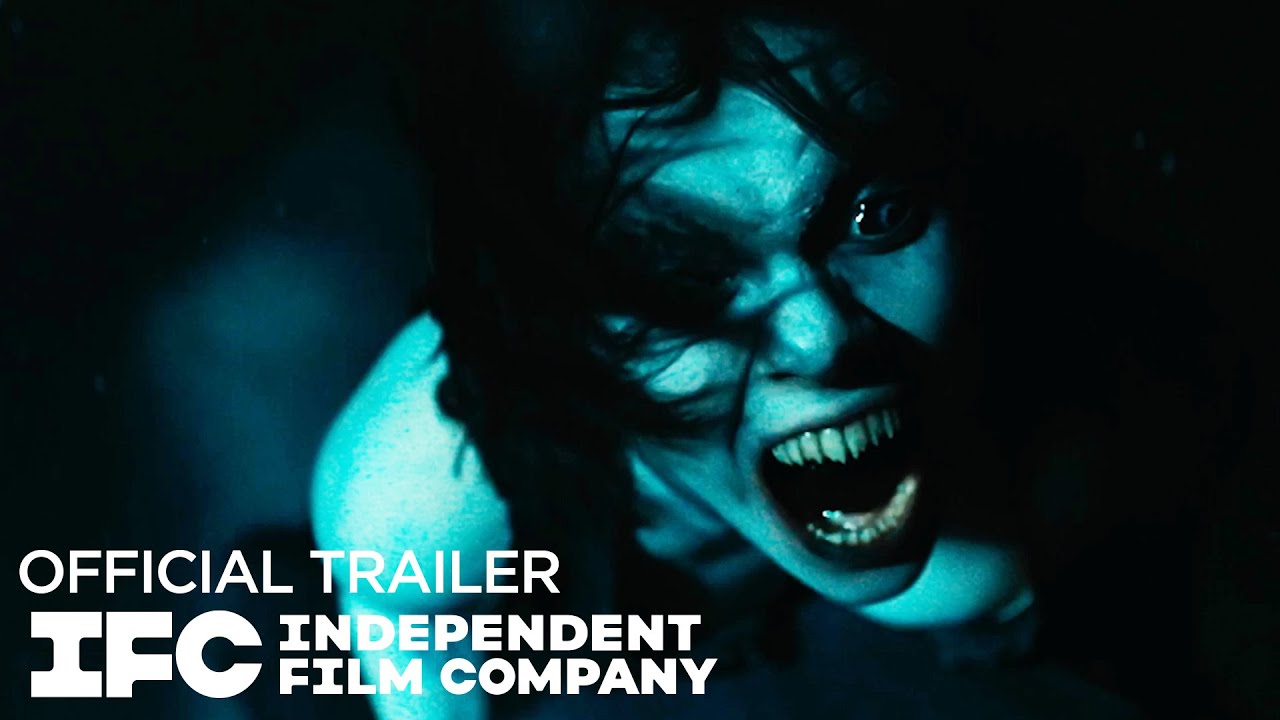


In Theaters: The Strangers: Chapter 3 (2026) by Renny Harlin: When a hated finale becomes the conversation
- dailyentertainment95

- 4 hours ago
- 8 min read
Summary of the Movie: A franchise ending that refuses to go quietly
This movie is loud, divisive, and impossible to ignore.It doesn’t ask for approval; it dares the audience to react.Love it or hate it, the film understands that attention is the currency now.
At its core, the story traps survivors back inside the nightmare they thought they escaped, forcing confrontation not just with the killers, but with what survival has done to them.
Where to watch: In Theaters
Link IMDB: https://www.imdb.com/title/tt28682323/
• Genre — Brutal franchise horror:A stripped-down, R-rated horror finale that leans into cruelty, repetition, and endurance rather than elegance.
• Movie plot — Escape collapses inward:The film turns survival into a closed loop where answers arrive, but safety never does.
• Movie themes — Trauma doesn’t end:Fear mutates into obsession, and survival becomes a psychological prison rather than a victory.
• Movie trend — Hate-watched horror finales:It fits a growing wave of franchise endings that thrive on backlash, discourse, and extremity instead of consensus.
• Social trend — Curiosity over consensus:Audiences are drawn to cultural flashpoints they “have to see” just to understand the outrage.
• Movie director — Maximalist persistence:Renny Harlin pushes forward with momentum-first filmmaking, prioritizing impact and speed over refinement.
• Top casting — Final girl endurance:Madelaine Petsch anchors the chaos with physical intensity that sells exhaustion, panic, and stubborn survival.
• Awards and recognition — Attention without trophies:0 major wins, multiple genre-festival screenings, and heavy placement across horror media coverage.
• Release and availability — Event-style rollout:Theatrical release on February 6, 2026, followed by rapid VOD and streaming circulation.
• Why to watch movie — You’ll want an opinion:This is a movie people argue about, and not seeing it means missing the conversation.
• Key Success Factors — Controversy as fuel:Its visibility comes from polarizing choices that keep the franchise culturally loud even at the end.
Insights: When backlash becomes marketing
Industry Insight: Horror franchises no longer rely on critical approval to drive relevance. Visibility now comes from reaction velocity. Consumer Insight: Viewers are increasingly drawn to films they expect to debate, mock, or dissect. Participation matters more than satisfaction. Brand Insight: Even damaged IP can stay valuable if it keeps generating noise. Silence is the only real failure.
Conclusion:The Strangers: Chapter 3 is trending because it refuses to fade out politely.It transforms divisiveness into a feature rather than a flaw.The film’s cultural role is less about fear and more about friction.As a result, it becomes a must-see not for excellence, but for relevance.
Why It Is Trending: When backlash becomes the engine
This movie isn’t trending because it’s loved, it’s trending because it refuses to disappear.It lands at the exact moment when horror audiences are hyper-aware of franchise exhaustion.Instead of playing it safe, it pushes into uncomfortable territory and forces a reaction.That friction keeps it circulating long after opening weekend.
• Concept → consequence — Mystery gets dismantled:By choosing to explain what was once unknowable, the film deliberately risks breaking the franchise’s original spell, trading fear for confrontation.
• Culture → visibility — Outrage as oxygen:Negative reviews, angry threads, and ironic praise don’t cancel momentum, they multiply it across platforms.
• Distribution → discovery — Designed for immediacy:Short runtime, fast release cadence, and rapid digital rollout make it easy to sample, react, and repost.
• Timing → perception — The “end it already” moment:Dropping as audiences openly question endless trilogies turns the film into a symbol of the debate itself.
Insights: Controversy now functions like marketing
Industry Insight: Studios increasingly accept polarization as a measurable form of success, especially in horror where strong reactions equal engagement. This film exemplifies how outrage can outperform traditional buzz. Consumer Insight: Viewers are drawn to films that promise a stance, even if that stance frustrates them. Watching becomes a way to join the conversation rather than escape it. Brand Insight: Franchises no longer aim for universal approval at the finish line. Ending loudly can preserve cultural relevance longer than ending well.
Conclusion:The Strangers: Chapter 3 trends because it becomes unavoidable rather than unforgettable.Its divisiveness keeps it active in feeds, forums, and rankings.The movie’s value lies in how strongly it provokes, not how cleanly it concludes.In a crowded horror landscape, being argued over is sometimes the loudest victory.
What Movie Trend Is Followed: When horror trades fear for exposure
This film sits inside a late-stage franchise horror trend that’s fully self-aware.It arrives after mystery has already peaked and can no longer be protected.The goal shifts from sustaining fear to sustaining relevance.What remains is visibility, not silence.
• Format lifecycle — Endgame horror:The movie belongs to the “final chapter” phase where closure matters less than impact.
• Aesthetic logic — Brutality over atmosphere:It leans into explicit threat and repetition rather than slow-burn dread or restraint.
• Psychological effect — Anxiety through overload:Instead of unsettling viewers quietly, it exhausts them with constant confrontation.
• Genre inheritance — Slasher stripped bare:The film inherits the slasher form but removes ambiguity, turning menace into spectacle.
Insights: When horror stops hiding
Industry Insight: Horror franchises increasingly abandon subtlety once their core idea has been exhausted. The trend favors exposure and explanation over implication. Consumer Insight: Audiences recognize when fear has been replaced by familiarity, but still show up to witness the transformation. Curiosity outpaces disappointment. Brand Insight: Legacy horror IPs now function as cultural artifacts rather than pure scare machines. Their power lies in recognition, not surprise.
Conclusion:The Strangers: Chapter 3 follows a trend where horror franchises prioritize being seen over being feared.It reflects a genre phase that values confrontation instead of mystery.This shift explains both its backlash and its visibility.In today’s horror ecosystem, exposure itself becomes the final scare.
Trends 2026: Fear shifts from mystery to exposure
Horror no longer waits in the dark.It shows its face early, often, and without apology.
Implications — When hiding stops working
Fear now comes from saturation, not surprise.
• Overexposure as strategy:Franchises reveal everything because mystery is harder to sustain across multiple installments.The risk shifts from “too little information” to “too much too fast.”
• Audience endurance tests:Films ask viewers to sit with discomfort longer rather than startling them briefly.Stamina becomes part of the viewing experience.
• Lore replaces legend:Backstory is used to extend IP life even when it weakens original tension.Explanation becomes a form of content padding.
• Shock as branding:Extreme moments are designed to travel socially rather than linger psychologically.Virality overtakes atmosphere.
Where it is visible (industry) — Horror in loud mode
Studios favor clarity, scale, and repeatability.
• Franchise-first development:Films are built to connect chapters rather than stand alone.Narrative cohesion outweighs emotional precision.
• Simultaneous production models:Multiple entries are shot back-to-back to reduce cost and accelerate release cycles.Efficiency replaces creative distance.
• Marketing-led storytelling:Trailers reveal major beats early to lock in attention.Discovery happens before release, not during viewing.
• Fan debate as fuel:Polarized reactions are anticipated and leveraged.Conversation becomes part of the rollout.
Related movie trends — Horror without patience
• Endless endings: Final chapters that feel definitive but leave doors open anyway.• De-mystified villains: Antagonists explained until they feel procedural.• Trauma-centric finales: Fear reframed as psychological fallout rather than threat.• Volume-over-vibe horror: Loud design replacing quiet tension.• IP closure cinema: Films marketed as conclusions first, stories second.
Related consumer trends — Watching for the moment
• Hate-watch engagement: Viewers tune in to participate in discourse, not immersion.• Completion behavior: Audiences finish trilogies out of obligation.• Clip culture fear: Scares consumed as moments, not arcs.• Franchise fatigue awareness: Viewers recognize decline but remain curious.• Experience-first viewing: The act of watching matters as much as the film itself.
Summary of Trends: Horror trades restraint for reach
The table below captures how fear is being repackaged.These trends show a shift from emotional impact to cultural presence.
Trend Name | Trend Title | Description | Implications |
Core Movie | Exposed Horror | Fear is shown, not suggested | Reduced longevity of tension |
Core Consumer | Curiosity Viewing | Watching to see how it ends | Engagement without attachment |
Core Social | Discourse Fear | Reactions matter more than scares | Films live online |
Core Strategy | IP Sustain | Extend brands past peak | Familiarity over innovation |
Insights: When fear becomes content
Industry Insight: Horror is adapting to shorter attention spans by increasing intensity. Longevity is measured in clicks, not chills. Consumer Insight: Viewers accept less fear in exchange for participation. Being part of the moment outweighs being scared. Brand Insight: Horror brands now survive through recognition cycles. Visibility replaces suspense as the core asset.
Conclusion:These trends explain why The Strangers: Chapter 3 feels unavoidable despite resistance.The film exists at the intersection of fatigue and fascination.It succeeds by being talked about, not by being terrifying.In 2026, horror wins by showing up loudly, even when it stops haunting quietly.
Final Verdict: When the nightmare ends by being fully exposed
This film closes its story not with mystery, but with confrontation.It chooses answers over silence and intensity over restraint.What once felt unknowable becomes visible and tangible.That choice defines both its power and its limits.
• Meaning — Fear without shadows:The movie reframes fear as something that must be faced head-on rather than imagined. By removing ambiguity, it turns terror into endurance instead of suspense.
• Relevance — Franchise anxiety on screen:It mirrors a moment where horror franchises struggle between legacy and exhaustion. The film becomes a case study in how long fear can survive repetition.
• Endurance — A moment, not a myth:This chapter is unlikely to linger as a haunting memory. Its impact lives in conversation, reaction, and debate rather than long-term dread.
• Legacy — The end of anonymity:By explaining and escalating everything, the film closes the door on what made the original unsettling. What remains is a loud, visible endpoint rather than an open wound.
Insights: When endings become exposure events
Industry Insight: Final chapters are increasingly designed as cultural events rather than narrative resolutions. Closure is marketed as value, even when mystery was the original asset. Consumer Insight: Audiences may critique the outcome, but still engage to complete the journey. Finishing the story becomes part of viewing identity. Brand Insight: Horror IPs now peak through recognition rather than reinvention. The end itself becomes the product.
Final Verdict: When the nightmare ends by being fully exposed
This film closes its story not with mystery, but with confrontation.It chooses answers over silence and intensity over restraint.What once felt unknowable becomes visible and tangible.That choice defines both its power and its limits.
• Meaning — Fear without shadows:The movie reframes fear as something that must be faced head-on rather than imagined. By removing ambiguity, it turns terror into endurance instead of suspense.
• Relevance — Franchise anxiety on screen:It mirrors a moment where horror franchises struggle between legacy and exhaustion. The film becomes a case study in how long fear can survive repetition.
• Endurance — A moment, not a myth:This chapter is unlikely to linger as a haunting memory. Its impact lives in conversation, reaction, and debate rather than long-term dread.
• Legacy — The end of anonymity:By explaining and escalating everything, the film closes the door on what made the original unsettling. What remains is a loud, visible endpoint rather than an open wound.
Insights: When endings become exposure events
Industry Insight: Final chapters are increasingly designed as cultural events rather than narrative resolutions. Closure is marketed as value, even when mystery was the original asset. Consumer Insight: Audiences may critique the outcome, but still engage to complete the journey. Finishing the story becomes part of viewing identity. Brand Insight: Horror IPs now peak through recognition rather than reinvention. The end itself becomes the product.
The Strangers: Chapter 3 is trending because it represents the breaking point of modern franchise horror.It’s watched less for fear and more for finality.The film’s significance lies in what it reveals about the genre’s current limits.In ending loudly, it shows exactly how far the horror has traveled from the dark.
Comments