


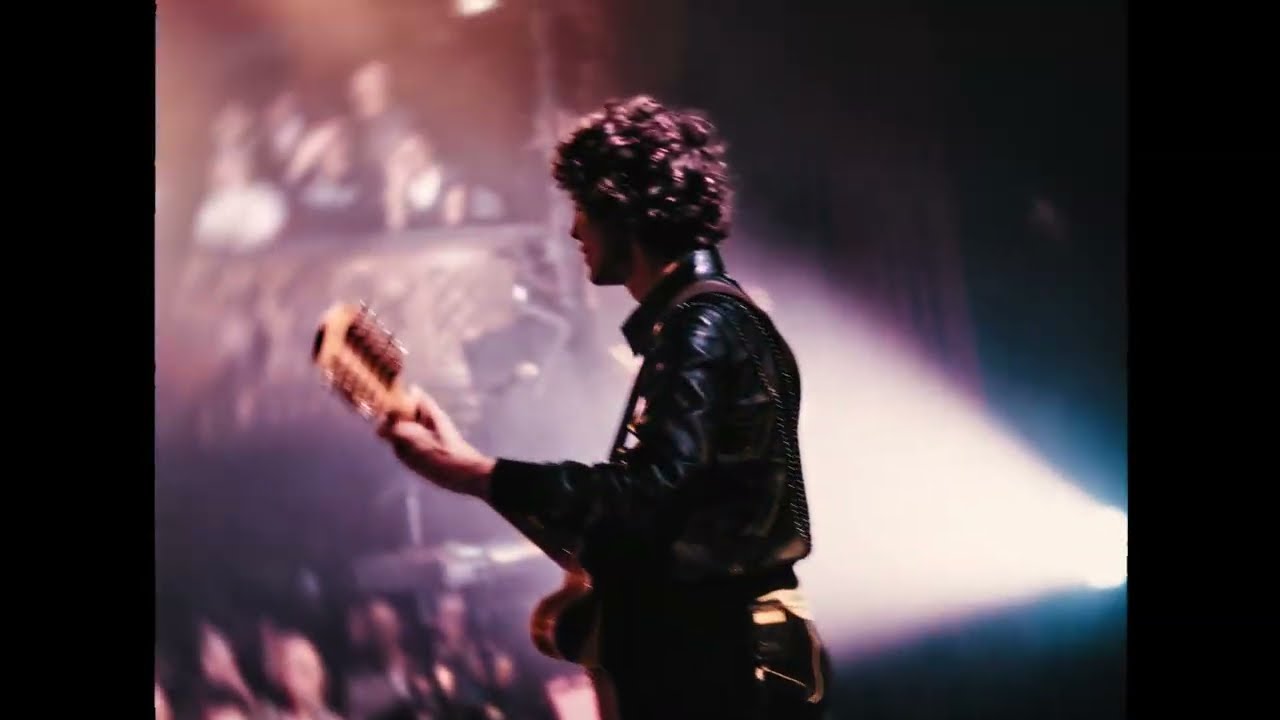


Downbeat (2026) by Danny Madden

US | 2026 | 1h 31m | Action, Drama, Music
➡️ Where to Watch: Digital — Letterboxd Video Store
When Making Music Is Easier Than Fixing Your Life
Mauro is a struggling drummer running from a trail of bad decisions. With little money and nowhere stable to go, he leaves Atlanta and lands on the couch of his younger sister Isa in Boston, where he begins bucket drumming on the street. The performances reconnect him with the freedom that originally made him pursue music, but his growing momentum cannot prevent the same reckless behavior from damaging the relationships around him.
Danny Madden builds the film around a compelling contradiction: Mauro can find rhythm in music while remaining unable to create rhythm in his own life. Street performance gives him purpose, connection and immediate validation, but it can also become another way of avoiding the responsibility required to change.
➡️ Movie Insight: Downbeat turns musical talent into both salvation and escape. Mauro can transform the street into a stage while remaining incapable of stabilizing the relationships closest to him. The film asks whether rediscovering your passion actually matters if you keep repeating the behavior that made you lose your way.
Why This Movie Matters Right Now: Creative Freedom Collides With the Economics of Being an Artist
Downbeat captures a particularly contemporary version of artistic precarity. Mauro is talented, but talent does not automatically produce income, housing or stability; when professional music fails to support him, street performance becomes both economic necessity and creative liberation. Stony Brook Film Festival described the production itself as a “zero-budget kinetic drama,” creating an interesting parallel between a film about making art with limited resources and an independent filmmaking model doing something similar.
The film therefore avoids treating creative passion as an uncomplicated inspirational solution. Mauro's music can attract strangers and restore his confidence, but artistic authenticity does not absolve him of accountability. His central struggle is learning the difference between continuing to move and actually growing.
➡️ Why It Matters: Downbeat reflects the growing instability surrounding creative careers while refusing to romanticize the struggling artist completely. Passion can provide identity without providing security or emotional maturity. The film makes artistic survival inseparable from the harder question of how an artist lives when the performance ends.
Should You Watch It?: Come for the Drumming, Stay for an Artist Who Keeps Sabotaging His Own Comeback
Downbeat is particularly suited to viewers who like character-driven music films where performance is integrated into everyday life rather than presented as polished spectacle. Daniel Rashid actually performed in public spaces during production, and the heavily collaborative screenplay credited Madden, Rashid, Addie Weyrich and Arkira Chantaratananond developed alongside a production approach that embraced improvisation and real street interactions.
The film is also less conventionally uplifting than its comeback premise might suggest. Mauro's talent is never really the problem. His impulsiveness, resistance to compromise and tendency to pull other people into his instability make the emotional journey more complicated than simply watching a musician rediscover his gift.
➡️ Viewing Recommendation: Watch it if you respond to raw music dramas driven by performance, personality and imperfect characters. The film offers the exhilaration of artistic rediscovery without pretending that creativity automatically fixes a damaged life. Its strongest rhythm comes from the tension between Mauro's obvious musical talent and his much less developed ability to change.
Why Everyone Is Talking About It: A Tiny Production Is Building Momentum Through the Festival Circuit
Downbeat world-premiered in SXSW's Narrative Spotlight program, where its screenings began on March 13, 2026. The festival positioned it as a raw, high-energy portrait of an artist using music as escape, while subsequent festival exposure has extended the film's life well beyond Austin.
That momentum has also produced recognition. The supplied IMDb awards record lists Danny Madden as the 2026 Stony Brook Film Festival Festival Achievement Award winner for Directing. The film also received the Student Jury Prize at the 2026 Ouray International Film Festival.
➡️ Viral Potential: Downbeat has the kind of production story that can travel alongside the movie itself: minimal resources, real street performances and a highly collaborative creative process. Festival recognition gives that DIY identity additional credibility. Its strongest word-of-mouth hook is the sense that the film practices the same resourceful artistic survival that Mauro is trying to rediscover.
Why Downbeat Stands Out: The Music Is Happening in the Street, Not Waiting for a Stage
Mauro's return to music does not begin with an audition, recording contract or carefully engineered comeback. It begins with discarded buckets and public space. Madden lets street performance become an encounter between musician and environment, turning Boston into something Mauro can rhythmically interact with rather than merely using the city as background.
That choice also keeps musical success at human scale. A crowd stopping to listen, a stranger responding to the beat or Mauro rediscovering pleasure in playing can matter more than traditional career milestones. The film is interested in the moment when an artist remembers why the art mattered before professional ambition complicated it.
➡️ Cinema Insight: Downbeat strips the music movie back to the physical act of making sound. There is no need for a giant stage when a street corner can restore an artist's sense of purpose. By shrinking the scale of success, the film makes creative rediscovery feel immediate and personal.
Movie Trend: Independent Music Drama — When Returning to Creative Passion Becomes a Fight Against Self-Sabotage
Downbeat fits an emerging strand of music cinema less interested in fame than in the unstable lives surrounding creative work. Mauro is not trying to become a superstar; he is trying to determine whether music can still provide a meaningful way forward when his finances, relationships and behavior repeatedly push him backward.
Trend Formula: failed professional musician → financial collapse → return to family → street performance → creative rediscovery → small public victories → reckless personal choices → relationships destabilize → music becomes escape → artist must choose between movement and growth
This distinguishes the film from the conventional rise-to-fame narrative. The central obstacle is not whether the world will recognize Mauro's talent. It is whether Mauro can stop using talent as justification for refusing to confront himself.
➡️ Movie Trend: Contemporary music dramas are increasingly moving beyond success stories toward the psychological cost of remaining an artist. Downbeat treats creative expression as necessary but insufficient for rebuilding a life. The new artist narrative is becoming less about getting discovered and more about discovering whether creativity can coexist with responsibility.
Viewer Profile: Independent Music Drama Audience (Creative Survivors) - Audiences Drawn to Struggling Artists, Raw Performance and Messy Creative Lives
Downbeat is aimed at audiences who respond to music as lived experience rather than polished entertainment. Its DIY production energy, Boston street setting, complicated sibling relationship and self-destructive protagonist position it between independent character drama and performance-driven music cinema.
Audience Profile | Description |
Core Audience | Independent music-drama and character-driven cinema viewers |
Secondary Audience | Musicians, creatives, SXSW followers and DIY filmmaking audiences |
Age Group | 25–44, particularly viewers navigating creative careers, financial instability and adulthood |
Gender | Broad appeal |
Income | Broad, with particular resonance among working creatives and younger urban audiences |
Lifestyle | Musicians, artists, freelancers, independent-culture followers and live-music audiences |
Viewing Habits | Film festivals, arthouse discovery, digital rentals, music films and filmmaker-driven recommendations |
➡️ Audience Insight: Creative Survivors understand that passion and stability do not always arrive together. They respond to artists whose ambitions coexist with financial pressure, complicated relationships and personal failure. Downbeat speaks directly to the tension between needing creativity to survive emotionally and needing something more than creativity to build a sustainable life.
What This Movie Means for the Industry: DIY Filmmaking Can Make Production Limitations Part of the Aesthetic
Downbeat provides an especially interesting case because its production method mirrors its subject. The screenplay credits Madden alongside Rashid, Weyrich and Chantaratananond, reflecting a heavily collaborative process, while real public drumming and Madden's multiple roles as director, cinematographer and editor helped create a lean production structure. SXSW confirms Madden as director, cinematographer and editor, Benjamin Wiessner as producer and Charles Humenry as composer.
For independent cinema, that matters beyond this particular movie. Limited resources do not necessarily need to be hidden by imitating the visual or production scale of larger films. They can instead determine the language of the movie — location work, improvisation, performance and creative collaboration becoming strengths precisely because conventional infrastructure is unavailable.
➡️ Industry Insight: Downbeat demonstrates how production constraint can become creative identity rather than simply financial limitation. Independent filmmakers can build scale through energy, authenticity and access instead of expensive spectacle. The film's festival trajectory suggests that distinctive execution can still make a very small production visible within a crowded independent market.
Creative Analysis: The Movie Moves With the Restlessness of Its Drummer
Downbeat's creative language grows directly from Mauro. Madden's filmmaking emphasizes movement, rhythm, sound and the unstable energy surrounding a protagonist who rarely seems capable of remaining still long enough to examine what he is doing. The approach is therefore not simply decorative; form reflects character.
Music supplies the film with exhilaration, but the interpersonal scenes continually return Mauro to consequences he would rather outrun. That tension between performance and accountability gives the movie its emotional architecture.
Storytelling: A Comeback Story Where Talent Is Not the Problem
The screenplay initially resembles an artistic recovery narrative: struggling musician loses direction, reconnects with music and begins attracting attention. Downbeat complicates that trajectory by making Mauro's own behavior the central obstacle. His progress as a performer does not necessarily correspond with progress as a brother, partner or adult.
Direction: Danny Madden Builds the Film Around Controlled Spontaneity
Madden embraces improvisational energy without abandoning narrative momentum. Real-world performance, collaborative writing and location-driven filmmaking allow scenes to feel discovered, while editing and sound impose rhythm on that apparent disorder.
His work also earned the Festival Achievement Award for Directing at the 2026 Stony Brook Film Festival, giving the movie's kinetic filmmaking concrete festival recognition.
Performances: Daniel Rashid Makes Mauro's Talent and Damage Equally Convincing
Rashid has to make two seemingly contradictory things believable: why strangers would stop to watch Mauro play and why people close to him would become exhausted by his behavior. Addie Weyrich's Isa provides the familial counterweight, while Arkira Chantaratananond's Mallory becomes entangled in Mauro's tendency to turn temporary refuge into additional complication.
Visual Style: Boston Becomes a Performance Space
Madden served as his own cinematographer, and the film's street-level approach makes public space central to Mauro's creative reawakening. Rather than separating performance into conventional concert sequences, the camera follows music into sidewalks and everyday environments.
Themes: Movement Is Not the Same Thing as Growth
The most important distinction in Downbeat is between continuing and changing. Mauro is constantly moving — geographically, musically, romantically and emotionally — but movement can itself become avoidance. SXSW's own description captures the film as a portrait of the damage produced “when movement replaces growth.”
What Makes It Different: The Artist's Greatest Obstacle Is the Artist
There is no simple villain preventing Mauro from succeeding. Economic precarity matters, and the music industry has not given him stability, but the movie gradually refuses to let those external pressures explain everything. His inability to compromise and accept responsibility becomes part of the problem.
➡️ Creative Insight: Downbeat synchronizes filmmaking style with the unstable momentum of its protagonist. Music provides release while editing, sound and street performance keep the movie physically alive. The deeper creative achievement is using that exhilaration to make Mauro's inability to stop moving feel simultaneously liberating and dangerous.
If You Liked Downbeat (2026): More Films Where Music Becomes a Way to Survive Yourself
O'Dessa (2025) by Geremy Jasper: Music Becomes the Only Way Forward
Geremy Jasper's post-apocalyptic rock opera operates on a dramatically larger and more fantastical scale than Downbeat, following a young musician whose journey through a dangerous future world turns music into a means of resistance, love and survival. Despite the difference in scale, both films are built around characters for whom making music is inseparable from figuring out who they are.
➡️ Why It Connects: Both films treat music as something more urgent than career ambition. Their protagonists need creative expression because it gives direction to lives that have become unstable. Downbeat makes that struggle street-level and realistic while O'Dessa transforms it into mythology.
JustWatch currently lists O'Dessa on Hulu in the US, while Disney+ carries it in Australia, the UK, France, Italy, Spain and Germany. Canada currently lists Disney+ and Crave among its streaming options.
Pavements (2025) by Alex Ross Perry: Music Refuses to Fit Inside a Conventional Artist Story
Alex Ross Perry combines documentary, scripted reenactment, performance, musical theater and biopic parody to explore the legacy of Pavement. It connects with Downbeat through a similarly restless refusal to reduce musicianship to a conventional rise-to-success narrative.
➡️ Why It Connects: Both films are interested in the unruly energy surrounding people who make music. Creative identity matters more than conventional biographical achievement. Each uses filmmaking form to capture something unstable about how artists experience their work.
JustWatch currently lists MUBI among the streaming options in the US, Australia, Canada, UK and France, alongside various rental and purchase services depending on territory. IT | ES | DE: I could not verify dedicated local JustWatch title pages, so I have not invented links.
Kneecap (2024) by Rich Peppiatt: Making Music Becomes an Act of Identity
Rich Peppiatt's kinetic comedy-drama follows the Belfast hip-hop trio as making music evolves from personal expression into cultural and linguistic resistance. Its tone is very different from Downbeat, but both films make musical performance inseparable from the characters' understanding of themselves and their place in the world.
➡️ Why It Connects: Both films make music feel immediate, physical and rooted in place. Performance becomes a way of transforming frustration into identity rather than merely pursuing conventional success. Their energy comes from watching musicians create because suppressing that creativity would mean suppressing something fundamental.
Current availability varies significantly by market: Hulu carries Kneecap in the US, Prime Video in the UK, Crave in Canada, SBS On Demand offers an ad-supported option in Australia, and Filmin carries it in Spain. France and Germany currently have digital rental/purchase options. IT: I could not verify a dedicated Italian JustWatch page, so I have left it unlinked rather than extrapolating a URL.
➡️ If You Liked Insight: These films reject the idea that music cinema must culminate in fame. Creativity instead becomes survival, identity and a way of negotiating unstable circumstances. Downbeat belongs to a growing space where the artist's most important breakthrough is personal rather than commercial.
Final Verdict: A Music Drama Where Finding Your Rhythm Does Not Mean Finding Your Way
Downbeat has the outward shape of an inspirational artist comeback story but a more uncomfortable emotional argument underneath it. Mauro rediscovers something genuine through street drumming, yet the film refuses to pretend that artistic fulfillment automatically produces maturity. His ability to create remains far more developed than his ability to take responsibility.
That tension gives the movie its strongest identity. The drumming provides exhilaration; Mauro's relationships provide resistance. Downbeat understands that a person can be completely alive while performing and still have no idea how to live when the music stops.
➡️ Final Verdict: Downbeat is a kinetic independent music drama with a deliberately imperfect artist at its center. Its most compelling idea is that creative rediscovery and personal growth are not the same journey. Mauro can find the beat again long before he learns how to stop sabotaging everything around it.
Quick Facts: Street Drumming Turns Artistic Survival Into a Test of Personal Growth
Quick Fact | Details |
Director | Danny Madden |
Screenplay / Writers | Danny Madden, Daniel Rashid, Addie Weyrich, Arkira Chantaratananond |
Lead Cast | Daniel Rashid, Addie Weyrich, Arkira Chantaratananond |
Key Cast | Terence Nance, Will Madden, Francesca Blanchard, Skyler Bible |
Country | United States |
Year | 2026 |
Runtime | 91 minutes |
Genre | Action, Drama, Music |
Language | English |
Cinematography | Danny Madden |
Editing | Danny Madden |
Music | Charles Humenry |
Production Design | Rowan Landaiche |
Production | Vanishing Angle |
Producer | Benjamin Wiessner |
Festival Profile | SXSW 2026 Narrative Spotlight world premiere; subsequent 2026 festival circuit |
Awards & Recognition | Stony Brook Film Festival — Festival Achievement Award for Directing, Danny Madden; Ouray International Film Festival — Student Jury Prize |
Movie Trend | Independent Music Drama — When Returning to Creative Passion Becomes a Fight Against Self-Sabotage |
Central Character(s) | Mauro, Isa, Mallory |
Core Conflict | Mauro rediscovers his passion for music while his reckless choices threaten his relationships and fragile stability |
Creative Hook | Real street drumming and collaborative, improvisational filmmaking turn Boston into a performance space |
Core Themes | Creativity, self-sabotage, artistic precarity, family, responsibility, freedom, personal growth |
Why Watch | A raw music drama that asks whether an artist can change his life as successfully as he can rediscover his sound |
The supplied IMDb material confirms the film's 91-minute runtime, Danny Madden as director, Rashid, Weyrich and Chantaratananond as its principal stars, and its core story of a troubled drummer rediscovering music through Boston street performance. IMDb also records its US origin, English language and Vanishing Angle as the listed production company. SXSW provides the more complete collaborative screenplay and principal craft credits.
Final Insights: Music Cinema Is Moving Beyond Fame Toward the Reality of Creative Survival
Downbeat points toward a more grounded direction for contemporary artist stories. The question is increasingly not whether somebody has enough talent to succeed, but whether creativity can survive financial instability, damaged relationships and the emotional contradictions of the person producing it. That shift makes the artist's everyday life as important as the art itself.
It also creates space for independent films whose production methods reflect their subjects. A resourceful movie about a resourceful street musician can turn limitations into aesthetic choices, replacing scale with immediacy and polish with lived energy. Downbeat's festival recognition — including Madden's Stony Brook directing win — strengthens that connection between DIY production and artistic identity.
➡️ Final Insight: The new struggling-artist movie is less interested in asking whether talent will eventually be rewarded. It asks whether creativity can help someone become capable of living rather than merely performing. Downbeat's answer is deliberately complicated: music can restart a life, but it cannot do the growing for you.

Comments