


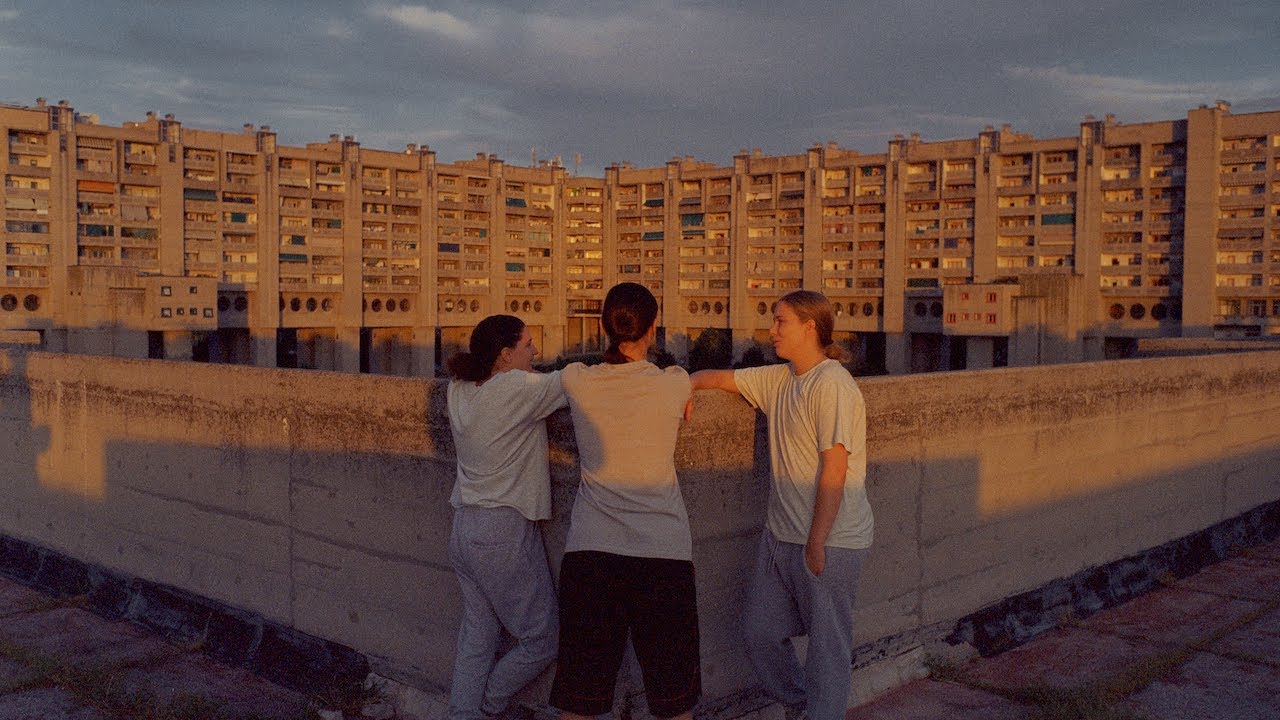
Do Us Part (2026) by Reed Arnold

US | 2026 | 94 min | Second-Chance Romance Comedy
When the Person From the Past Arrives on the Most Important Day of the Future
Ryan is hours away from marrying Julia when Rose, his former college best friend and the woman he once loved, arrives at the wedding uninvited. She has chosen the worst possible moment to reveal feelings that remained unresolved for years, forcing Ryan to reconsider a relationship he believed belonged safely in his past. Standing between them is Mark, Ryan's best man and longtime college friend, whose questionable judgment turns him into both an unlikely crisis manager and another source of chaos.
Written and directed by Reed Arnold, Do Us Part takes the familiar wedding-crasher setup and turns it into a comedy about memory, friendship and the dangerous appeal of the life that almost happened. Flashbacks to Ryan, Rose and Mark's college years gradually complicate what initially looks like a straightforward romantic triangle, contrasting youthful possibility with the harder decisions of adulthood.
➡️ Movie Insight: Do Us Part is not simply asking whether Ryan should choose Rose or Julia. Rose represents a version of Ryan's life that remained unfinished, while his wedding represents the future he has actually chosen to build. The real question is whether discovering that another life might have worked should be enough to abandon the one already becoming real.
Why This Movie Matters Right Now: Choosing a Life Also Means Accepting the Lives You Did Not Choose
Modern adulthood offers more visible possibilities than previous generations could easily imagine. Careers can change, relationships can restart, people from the past can reappear and alternative lifestyles remain constantly visible through social media. More possibilities can create greater freedom, but they can also make commitment psychologically harder because every choice creates another path that must be left unexplored.
Romantic relationships make this particularly emotional. Former partners and old friends can remain mentally preserved as possibilities precisely because those relationships never had to survive the ordinary compromises of a shared adult life.
Rose represents that unresolved possibility for Ryan.
Their college relationship contains affection, attraction and unfinished emotional business. Because they never fully discovered what being together would have meant, Ryan can continue imagining the relationship through possibility rather than reality.
Julia represents something fundamentally different: a relationship that has already moved from possibility into commitment.
PAST POSSIBILITY → PRESENT RELATIONSHIP → ALTERNATIVE LIFE RETURNS → WHAT IF? → DOUBT → CHOICE → ACCEPTING THE PATH NOT TAKEN → OWNING THE FUTURE
➡️ Why It Matters: Choosing one life inevitably means leaving other possible lives unexplored. Those alternatives can appear more attractive because imagination preserves their possibilities while reality exposes the imperfections of the path we actually take. Do Us Part turns that tension into a wedding-day crisis where Ryan must decide whether an unfinished possibility deserves more power than the future he has consciously built.
Should You Watch It?: A Wedding Comedy Where Romantic Chaos Hides a Surprisingly Adult Question About Choice
Watch Do Us Part if you enjoy romantic comedies that combine fast dialogue, friendship chaos, emotional nostalgia and a central dilemma audiences can argue about afterward. Rose's arrival creates the obvious disruption, but Mark prevents the movie from becoming simply a competition between two romantic partners by bringing the history of their college friendship into the present.
The flashbacks are especially important. Ryan and Rose's past is not merely explained through dialogue; audiences are allowed to experience enough of their earlier connection to understand why her return has emotional power. But seeing that history does not automatically prove they belong together now.
That distinction gives the comedy its more reflective dimension.
WHAT COULD HAVE HAPPENED ≠ WHAT SHOULD HAPPEN NOW
➡️ Viewing Recommendation: Watch Do Us Part for the collision between romantic nostalgia and adult commitment rather than simply for the wedding-day chaos. Rose's confession makes the past emotionally present again, while Ryan's wedding forces him to decide whether possibility should outweigh the life he has already chosen. The comedy works because an absurdly badly timed confession exposes a genuinely difficult question: how certain do we ever need to be before committing to one future?
Why Everyone Is Talking About It: Festival Audiences Turned an Indie Wedding Comedy Into an Award Winner
Do Us Part built meaningful momentum before its 2026 U.S. release through an unusually successful festival run. The film won the 2026 Phoenix Film Festival Donor's Choice Audience Award for Competition Feature, demonstrating direct audience enthusiasm rather than recognition limited to industry juries.
That response followed additional recognition including the Audience Choice award for Best Feature Comedy at Sedona, Best Comedy at Route 66, and Best First Feature at the Naples International Film Festival. Kelly Russo also received Best Actress recognition at the Wyoming International Film Festival, while the film accumulated further performance and craft awards during its festival run.
That audience response matters for a film like Do Us Part because its central premise naturally encourages debate. Rose's arrival immediately divides viewers around questions of timing, loyalty and whether unresolved love deserves another chance.
WEDDING → OLD LOVE RETURNS → CONFESSION → CHAOS → SECRETS → AUDIENCE TAKES SIDES → WHAT WOULD YOU DO?
The chemistry also has an authentic foundation: Arnold, Travis Laughlin and Kelly Russo knew one another through acting class years before making the film, helping the central friendship feel like something with genuine history.
➡️ Viral Potential: Do Us Part has strong recommendation-driven potential because its central dilemma immediately invites audiences to choose sides. Festival audience awards provide concrete evidence that its combination of comedy, romantic nostalgia and friendship drama has already connected with viewers. Its most shareable question is also its simplest: if the person you once thought might be right for you appeared on your wedding day and finally said what you had once wanted to hear, would it change anything?
Why Do Us Part Stands Out: The Love Triangle Is Really a Battle Between Memory and Reality
The most interesting thing about Rose is not simply that she loves Ryan.
It is that she arrives carrying evidence of another possible life.
Flashbacks reconstruct Ryan and Rose's college friendship, allowing audiences to experience the emotional foundation of their connection rather than merely being told that it existed. But memories have an advantage over present relationships: they can preserve possibility without requiring characters to experience everything that might eventually have gone wrong.
Ryan therefore is not comparing two equivalent relationships.
He is comparing:
ROSE = AN UNFINISHED POSSIBILITY
with
JULIA = A LIVED RELATIONSHIP AND CHOSEN FUTURE
That difference changes the romantic triangle.
The central question becomes less:
WHO DOES RYAN LOVE MORE?
and more:
HOW MUCH POWER SHOULD THE LIFE THAT NEVER HAPPENED HAVE OVER THE LIFE THAT ACTUALLY DID?
Mark further complicates the structure because he belongs to Ryan and Rose's original friendship triangle. He remembers their shared history but also exists inside Ryan's present, making him both witness and participant as old secrets begin destabilizing the wedding.
➡️ Cinema Insight: Do Us Part turns romantic nostalgia into part of the dramatic problem rather than automatically treating it as evidence that two people belong together. The flashbacks make Ryan and Rose's connection emotionally persuasive while the wedding reminds audiences that memory is competing against an actual present-day relationship. That allows a familiar love triangle to become a larger question about whether unfinished possibilities deserve another chance simply because they remained unfinished.
Movie Trend: Second-Chance Romance Comedy — When Someone From Your Past Returns Just as You Have Chosen a Different Future
Second-chance romances usually reunite two people after circumstances separated them, allowing unfinished feelings to finally receive another opportunity.
Do Us Part makes the timing much more uncomfortable.
Rose does not return when Ryan is lonely, newly single or searching for direction. She returns on his wedding day.
That means her confession cannot simply reopen an old possibility without threatening a new commitment.
COLLEGE FRIENDSHIP → ATTRACTION → FEELINGS REMAIN UNSPOKEN → LIVES SEPARATE → TIME PASSES → RYAN BUILDS ANOTHER RELATIONSHIP → WEDDING → ROSE RETURNS → CONFESSION → OLD POSSIBILITY REOPENS → DOUBT → CHOICE
The wedding creates a literal deadline. Ryan cannot indefinitely explore both futures. One of them must remain hypothetical.
That makes the film's second-chance mechanism particularly effective because the question is not simply whether Rose deserves another opportunity. It is whether reopening one possibility justifies destabilizing everything that has developed since that opportunity disappeared.
➡️ Movie Trend: Second-Chance Romance Comedies turn unresolved relationships into opportunities to test whether old feelings still belong in present lives. Do Us Part makes that test unusually urgent by bringing Rose back at the exact moment Ryan is committing to another future. Her return transforms romantic nostalgia into a decision about whether unfinished love represents destiny—or simply a possibility whose moment has passed.
Broad Trend: Life on Your Own Terms — When Choosing Your Future Means Accepting That Another Version of Your Life Might Have Worked Too
Life on Your Own Terms is often framed as maximizing freedom: keeping options open, resisting expectations and refusing to settle for a life chosen by somebody else.
But genuine self-direction also requires something less celebrated:
choosing.
Every meaningful choice closes alternatives.
Choosing a partner means not discovering what life might have looked like with someone else. Choosing a career means leaving other professional identities unexplored. Choosing where to live means accepting experiences that might have existed somewhere else.
Modern culture makes those alternative lives unusually visible. People can see former partners, old friends, different careers and radically different lifestyles continuously, making it easy to imagine parallel versions of themselves living somewhere beyond the decisions they actually made.
That produces:
MULTIPLE POSSIBILITIES → ONE PATH CHOSEN → ALTERNATIVE PATHS REMAIN IMAGINABLE → WHAT IF? → COMPARISON → DOUBT → CONSCIOUS CHOICE → ACCEPTANCE → OWNERSHIP OF YOUR LIFE
Ryan's wedding turns this broad tension into a romantic crisis.
Rose is not necessarily the wrong person.
That is precisely why the decision matters.
If Rose were obviously wrong for Ryan, there would be no meaningful dilemma. The more difficult possibility is that they genuinely might have built a good life together—and that Ryan can still choose Julia.
Adult commitment does not require proving that every alternative would have failed.
It requires deciding which life you want to make real.
Broad Trend Formula:POSSIBILITY → CHOICE → COMMITMENT → ALTERNATIVE RETURNS → DOUBT → SELF-QUESTIONING → CONSCIOUS DECISION → ACCEPTING WHAT WAS NOT CHOSEN → LIFE ON YOUR OWN TERMS
The broader insight therefore extends beyond romance. Personal freedom is not simply the ability to keep every possibility available. Eventually, freedom also means having enough confidence in your own decisions to allow other possibilities to remain unexplored.
➡️ Broad Trend: Life on Your Own Terms means more than refusing to let other people choose your path; it also means accepting responsibility for the path you choose yourself. Alternative lives can remain attractive precisely because they never had to encounter reality, compromise or disappointment. Do Us Part turns that broader tension into a romantic dilemma where Ryan must recognize that another life potentially being good does not automatically mean the life he chose is wrong.
Why Second-Chance Romance Comedies Are Popular: Everyone Has a Life They Occasionally Wonder About
Second-chance romances activate one of the most universal forms of nostalgia: wondering what might have happened if timing, courage or circumstances had been different.
An old relationship carries a particular emotional advantage because audiences can imagine everything that might have happened without confronting everything that probably would have gone wrong.
That makes the fantasy powerful:
WHAT IF I HAD SAID SOMETHING?WHAT IF THEY HAD STAYED?WHAT IF WE HAD TRIED?WHAT IF THE TIMING HAD BEEN DIFFERENT?
Do Us Part understands that emotional appeal but also challenges it.
Rose's return gives Ryan access to the fantasy he never resolved. Instead of allowing that fantasy to remain perfect because it never happened, he must compare it with the imperfect reality of the life he is actually building.
➡️ Audience Motivation: Second-chance romances allow audiences to revisit the emotionally seductive idea that an unfinished relationship might still contain an unrealized future. Do Us Part adds tension by making that possibility arrive only after another future has already been chosen. The pleasure comes from romantic possibility, while the deeper emotional recognition comes from understanding that adulthood eventually requires turning some possibilities into memories.
Viewer Profile: Life Reflectors - Viewers Choosing Romantic Comedies About How Past Relationships Shape the Choices We Make in the Present
Life Reflectors enjoy romantic stories that create recognizable questions underneath their entertainment hooks. They are interested not simply in who ends up together but in what relationships reveal about memory, timing, regret and the choices that shape adult life.
Audience Dimension | Profile |
Core Audience | Viewers drawn to romantic comedies, friendship stories and relationship dilemmas |
Age Group | Adults familiar with changing friendships, past relationships and major life choices |
Lifestyle | Reflective viewers balancing nostalgia for earlier possibilities with present commitments |
Cinema Taste | Character-driven rom-coms, wedding comedies, friendship ensembles and relationship dramas |
Streaming Behavior | Accessible independent films, romantic discoveries and recommendation-led viewing |
Discovery Mindset | Looks for entertaining relationship stories that generate recognizable questions about their own choices |
➡️ Audience Insight: Life Reflectors recognize that important relationships do not simply disappear when people take different paths. Some remain psychologically alive because they represent earlier versions of ourselves and futures we never explored. Do Us Part speaks directly to these viewers by asking whether revisiting those possibilities helps us understand our choices—or makes it harder to value the life already in front of us.
What This Movie Means for the Industry: Familiar Rom-Com Structures Can Feel Fresh When the Emotional Question Changes
Do Us Part does not need to abandon recognizable romantic-comedy ingredients to create something distinctive.
It has the wedding.The returning old love.The chaotic best friend.The secrets.The romantic dilemma.The countdown to the ceremony.
What changes is the question underneath them.
Rather than assuming romantic destiny means identifying the single correct partner, the film creates room for the more adult possibility that multiple relationships might have produced meaningful lives.
That subtly changes the genre's traditional logic.
OLD ROM-COM QUESTION:WHO IS THE ONE?
becomes:
NEW QUESTION:WHICH LIFE ARE YOU WILLING TO CHOOSE?
The film's development also demonstrates the adaptability of intimate relationship stories. Arnold originally conceived the project as a stage play before expanding it for cinema, adding locations, characters and a more developed visual language while retaining the dialogue and relationship dynamics at its center.
➡️ Industry Insight: Romantic comedy can remain culturally relevant without abandoning familiar structures when filmmakers update the assumptions underneath them. Audiences no longer necessarily need a story to prove that one person was cosmically destined for another. Do Us Part suggests a more contemporary romantic idea: meaningful commitment can come from consciously choosing one imperfect real relationship even when other possible relationships might also have worked.
Creative Analysis: Turning a Wedding Deadline Into an Emotional Reckoning
Arnold builds the film around two contrasting timelines: the immediate pressure of Ryan's wedding and the expansive memories of college. That creates a useful dramatic opposition between a future that must be chosen now and a past that still feels emotionally unfinished.
The film's creative identity therefore depends less on reinventing the wedding comedy than on changing what the interruption means. Rose is not simply an obstacle arriving to produce chaos; she represents an entire alternative history suddenly demanding reconsideration.
Storytelling: Two Timelines Challenge the Romantic Fantasy
The wedding-day narrative supplies urgency because Ryan cannot indefinitely postpone a decision. Flashbacks slow that countdown to show why Rose's confession carries enough emotional force to destabilize him, gradually giving the audience information about the friendship among Ryan, Rose and Mark.
This structure also makes memory part of the storytelling mechanism.
Arnold has explained that he deliberately considered which memory might naturally be occupying a character's mind at a particular present-day moment. The flashbacks therefore function less like neutral historical evidence and more like emotionally activated recollections.
That distinction matters because memory itself becomes part of Ryan's dilemma.
Direction: Making Past and Present Feel Like Different Emotional Worlds
Arnold and cinematographer Nic Vannatta deliberately separate the timelines visually. The wedding-day material has a brighter, slightly sharper quality, while the college flashbacks carry a softer nostalgic texture.
That visual distinction reinforces the film's central tension without needing to explain it verbally.
PRESENT = DEFINITION, CONSEQUENCE, DECISION
PAST = WARMTH, POSSIBILITY, NOSTALGIA
The contrast also subtly warns audiences that memory can make the past look more attractive than it actually was.
Performances: Making Friendship History More Important Than Romantic Competition
Kelly Russo's Rose needs to be disruptive without becoming merely an antagonist because the movie depends on audiences understanding why Ryan once cared so deeply about her. Travis Laughlin's Ryan must simultaneously communicate affection for his past and investment in his present without reducing his dilemma to indecision.
Reed Arnold's Mark provides the disruptive third energy. His questionable behavior generates much of the comedy, but his deeper function comes from belonging to the original Ryan-Rose-Mark friendship. He remembers the people they were before adulthood separated their lives.
That makes him a living bridge between both timelines.
Visual Style: Using Nostalgia to Make the Past Seductive
The softer college imagery does more than differentiate time periods.
It helps audiences experience the emotional attraction of memory.
College becomes a space of possibility before careers, marriages and adult commitments narrowed the characters' available paths. The wedding setting represents almost the opposite: Ryan is about to transform possibility into permanence.
The visual movement therefore becomes:
OPEN POSSIBILITY → NOSTALGIC MEMORY → PRESENT-DAY REALITY → DECISION
The film's look reinforces the emotional reason Rose's return is so destabilizing: she does not simply remind Ryan of another person. She reconnects him with another version of himself.
Themes: Choosing One Future Does Not Require Proving Every Other Future Would Have Failed
The film's most mature idea emerges when romantic choice stops being framed as a competition requiring one relationship to be invalidated.
Rose and Ryan might have worked.
Ryan and Julia might work.
Both things can potentially be true.
That creates the harder adult question:
IF MULTIPLE LIVES COULD MAKE US HAPPY, HOW DO WE DECIDE WHICH ONE TO LIVE?
The answer is not necessarily certainty.
It is commitment.
Life cannot provide evidence from futures we never lived. At some point, choosing requires accepting uncertainty rather than eliminating it.
What Makes It Different: Rose Is Not Simply Another Woman—She Is Ryan's Unlived Life
That is the film's strongest conceptual idea.
Rose carries college memories, unfinished attraction and the possibility of a relationship that never had the opportunity to become ordinary. Julia represents something less fantastical but more concrete: the person with whom Ryan has actually decided to construct his adult future.
The triangle therefore becomes:
ROSE = POSSIBILITY
JULIA = COMMITMENT
RYAN = CHOICE
And Mark, caught between the past and present, becomes the chaotic guardian of the consequences.
➡️ Creative Insight: Do Us Part transforms the familiar wedding-crasher premise by making Rose represent more than a romantic alternative—she represents an entire life Ryan never lived. The flashbacks make that possibility emotionally seductive while the wedding continually pulls him back toward the future already taking shape. Arnold's strongest idea is that adulthood does not require proving the road not taken would have been wrong; it requires deciding which road you are willing to make your own.
If You Liked Do Us Part: When the Past Returns and Makes the Future Feel Less Certain
Relationship Goals (2026) by Linda Mendoza: When an Ex Returns Just as You Think You Know What Your Future Should Look Like
Ambitious television producer Leah Caldwell is focused on reaching the next stage of her career when an ex re-enters her life as a professional rival, forcing old chemistry into direct competition with the future she has been working toward. Like Ryan, Leah discovers that moving forward becomes more complicated when someone associated with an earlier version of your life suddenly becomes relevant again.
➡️ Why It Connects: Relationship Goals and Do Us Part both use the return of an old connection to disrupt a future that appeared increasingly defined. Rose forces Ryan to reconsider the romantic possibility he left behind, while Leah must determine whether renewed chemistry with her ex belongs to her present or simply reactivates something unresolved from her past. Both turn second chances into questions about whether choosing life on your own terms sometimes means reconsidering a path you thought you had already left behind.
Materialists (2025) by Celine Song: When Choosing Between Two People Becomes Choosing Between Two Different Versions of Your Life
New York matchmaker Lucy has built her career around turning relationships into carefully considered choices, yet her own romantic life becomes much harder to calculate when she finds herself caught between Harry, a wealthy man who appears to represent the ideal future, and John, the struggling ex who reconnects her with a very different version of love. The triangle forces Lucy to reconsider whether the life that looks right according to every external measure is necessarily the life she actually wants.
➡️ Why It Connects: Materialists and Do Us Part both make the romantic triangle larger than a simple choice between two people. Rose represents the unfinished life Ryan might once have built, while Julia represents the future he has already chosen; similarly, Lucy's two relationships embody competing ideas about what her future could become. Both films suggest that living on your own terms means eventually choosing which imperfect reality you want rather than endlessly comparing it with another potentially attractive life.
We Live in Time (2024) by John Crowley: When Choosing a Shared Life Means Accepting That No Future Comes Without Sacrifice
Almut and Tobias build a relationship across years of choices involving love, careers, family and the limited amount of time available to them. Rather than presenting commitment as the discovery of a perfect future, the film shows two people repeatedly deciding what kind of life they want together while recognizing that every decision inevitably means sacrificing another possibility.
➡️ Why It Connects: We Live in Time approaches Do Us Part's Broad Trend from the other side of the decision. Ryan must choose whether to continue into the future he has built or reopen the alternative represented by Rose, while Almut and Tobias demonstrate what happens after people choose one another and begin confronting all the compromises that make that chosen life real. Both ultimately suggest that commitment becomes meaningful precisely because choosing one life requires accepting the other lives that will never be lived.
➡️ If You Liked Insight: Relationship Goals, Materialists and We Live in Time all explore the tension between keeping possibilities open and consciously choosing the life you want to make real. Their characters discover that another relationship, career or future potentially being meaningful does not automatically make the path already chosen wrong. Do Us Part belongs to this same trend because Ryan's real challenge is not discovering which possible life would have been perfect, but deciding which imperfect future he is willing to choose and make his own.
Final Verdict: The Road Not Taken Can Be Meaningful Without Becoming the Road You Should Take
Do Us Part uses wedding-day chaos to explore an uncomfortable reality about adult decision-making: there may not always be one objectively correct life waiting to be discovered.
Rose can matter deeply to Ryan without necessarily belonging in his future. Their unfinished relationship can represent something real without automatically becoming something that needs to be completed. The possibility that they might once have built a meaningful relationship does not invalidate the relationship Ryan eventually chose to build with someone else.
That distinction gives the film more emotional maturity than its chaotic rom-com surface initially suggests.
➡️ Final Verdict: Do Us Part turns the romantic fantasy of the one who got away into a question about how much power unrealized possibilities should retain over our present lives. Rose represents a future Ryan never tested, while his wedding forces him to decide whether possibility is enough reason to abandon commitment. The film ultimately suggests that living on your own terms requires not only choosing the life you want but accepting that another life might also have been good.
Quick Facts: Wedding Chaos Meets the Life That Almost Happened
Title | Do Us Part |
Director / Writer | Reed Arnold |
Lead Cast | Kelly Russo, Travis Laughlin, Reed Arnold, Laura Delhauer |
Year | 2026 |
U.S. Release | August 7, 2026 |
Runtime | 94 min |
Country | United States |
Language | English |
Production Companies | Hello Starling Films / Stargazer Media / Warm Soda Films |
Movie Trend | Second-Chance Romance Comedy — When Someone From Your Past Returns Just as You Have Chosen a Different Future |
Broad Trend | Life on Your Own Terms — When Choosing Your Future Means Accepting That Another Version of Your Life Might Have Worked Too |
Viewer Profile | Life Reflectors |
Core Conflict | Rose crashes Ryan's wedding to confess feelings left unresolved since college |
Creative Hook | The returning old love represents an entire alternative life rather than simply another romantic partner |
Core Themes | Choice, commitment, nostalgia, friendship, timing, regret, possibility and adulthood |
Festival Momentum | 12 wins and 5 nominations in the supplied IMDb record, including Phoenix Film Festival's 2026 Donor's Choice Audience Award for Competition Feature |
Final Insights: Living on Your Own Terms Means Making Peace With the Lives You Could Have Lived
Modern freedom creates an abundance of possibilities, but possibilities do not automatically create fulfillment. The more alternative lives people can imagine, the easier it becomes to compare imperfect reality with hypothetical futures that never had to encounter compromise, disappointment or ordinary life. The road not taken can therefore remain emotionally perfect precisely because nobody ever had to travel it.
Building a life requires a different relationship with possibility. Rather than proving every alternative would have been worse, people eventually have to accept that several paths might have produced meaningful lives while still committing themselves to one. Choice becomes powerful not because uncertainty disappears but because someone decides which possibility they are willing to turn into reality.
➡️ Final Insight: Life on Your Own Terms is not about keeping every possible future available forever. It is about choosing deliberately while accepting that the lives left unexplored may also have contained happiness. Do Us Part turns that broader tension into romantic comedy by showing that sometimes the hardest part of choosing your future is making peace with the future you could have had.

Comments