


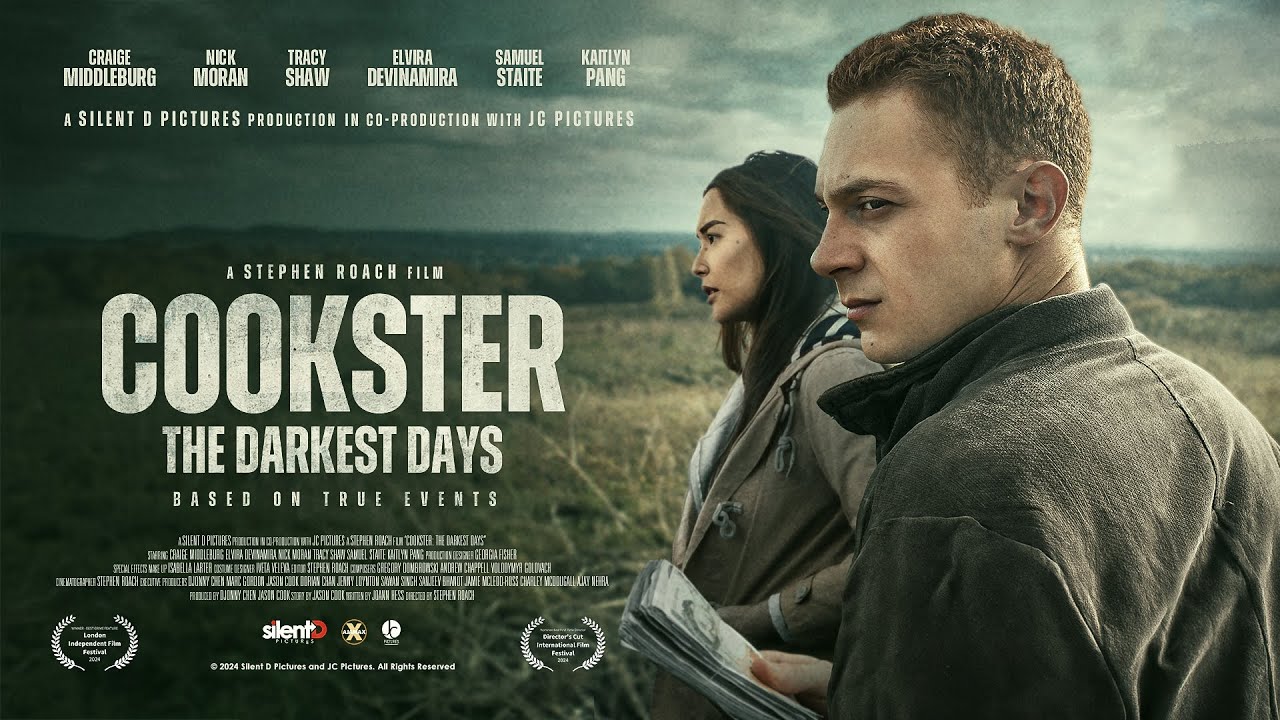


Cookster: The Darkest Days (2024) by Stephen Roach: Working-Class Survival as Crime-Origin Confession
- dailyentertainment95

- 50 minutes ago
- 4 min read
Why It Is Trending: Micro-Budget Crime Drama with Autobiographical Edge
Cookster: The Darkest Days enters the conversation as a passion-driven British indie blending biography, crime, and coming-of-age grit. Positioned as the origin chapter of a larger autobiographical saga, the film taps into sustained appetite for working-class realism in UK storytelling. Its micro-budget production—reportedly shaped over nearly two years of post-production—has become part of its narrative, reinforcing authenticity. With 5 wins and 9 nominations, it leverages festival recognition to offset limited mainstream marketing reach.
Elements Driving the Trend: Raw Realism in a Franchise Era
• Autobiographical crime lensThe narrative frames drug dealing not as glamorized ascent but as consequence of systemic neglect and dyslexia-related marginalization.
• Working-class Britain nostalgiaPeriod textures of the 80s and 90s resonate with audiences revisiting formative decades through cultural memory.
• Micro-budget authenticityGrassroots production values enhance the film’s reputation as a passion project rather than corporate product.
• Sequel positioningThe tease of Cookster: No Going Back signals franchise ambition within indie parameters.
• Virality checkOnline engagement reflects polarized reactions—strong supporter advocacy counterbalanced by critical skepticism.
• Critics and user reception12 user reviews (6.3 rating) reveal divided perception, a common marker for indie crime biopics challenging polish expectations.
• Awards and recognition5 wins and 9 nominations across indie circuits bolster credibility within specialty markets.
• Theatrical presenceLimited UK cinema screenings emphasize community-level support rather than wide distribution.
• Franchise continuationPart of a multi-book autobiographical series, suggesting long-term narrative extension potential.
The film trends not because of scale but because of story ownership. Audiences increasingly value origin narratives rooted in lived experience over stylized crime spectacle. Specialty crime drama remains a durable lane for regional filmmakers. The industry can respond by supporting micro-budget autobiographical projects with targeted distribution and streaming amplification.
What Movie Trend Is Followed: Gritty British Crime Memoir in Mature Phase
The film aligns with a long-standing British crime realism tradition where personal trauma intersects with systemic failure. This trend is mature, with audiences well-versed in narratives of youth delinquency shaped by economic marginalization. Emotional credibility outweighs stylization within this category. Viewer readiness centers on psychological backstory rather than surface-level gangster mythology.
• Macro trends influencing — economic precarity & identity crisisRising living costs and educational inequality sustain interest in stories about limited upward mobility.
• Implications of macro trends for audiencesViewers interpret crime arcs as survival narratives rather than purely moral failings.
• Industry trend shaping the filmTrue-story and memoir-based adaptations continue to anchor credibility in crime storytelling.
• Audience motivation to watchThe appeal lies in witnessing transformation from vulnerability to hardened resilience.
Other Films Shaping This Trend
• Kidulthood (2006) by Menhaj HudaA raw portrayal of urban youth navigating violence and limited institutional support in London.
• The Football Factory (2004) by Nick LoveA testosterone-fueled exploration of working-class masculinity and tribal loyalty.
• Top Boy (2011) by Ronan BennettA crime saga examining drug economies and systemic marginalization in modern Britain.
This gritty crime memoir lane remains culturally potent. Audiences continue to reward realism grounded in socioeconomic truth. Streaming platforms provide scale for regional crime stories once confined to local cinemas. The industry can extend this trend through hybrid theatrical-streaming models that protect authenticity while widening access.
Final Verdict: Crime as Consequence, Not Fantasy
Cookster: The Darkest Days functions less as a gangster spectacle and more as psychological testimony. Its cultural weight stems from depicting dyslexia and alienation as catalysts within a broader social ecosystem. The film reframes delinquency as biography rather than rebellion. Its ambition lies in emotional honesty over technical gloss.
• Audience relevance — Survival in Plain SightFor viewers shaped by 80s and 90s Britain, the film operates as reflective memory rather than escapist fiction. The generational lens deepens relatability within UK working-class communities.
• Meaning — Education and ExclusionDyslexia becomes symbolic of systemic misunderstanding, amplifying themes of abandonment and self-definition. Crime emerges as substitute structure where institutions fail.
• Relevance to audience — Anti-Glamour CrimeUnlike stylized gangster cinema, the film emphasizes debt, addiction, and emotional fracture over power fantasy. That realism differentiates it within crime subgenres.
• Performance — Grounded IntensityCraige Middleburg carries the arc of Jason with visible vulnerability, while Nick Moran anchors authority figures with gravitas.
• Legacy — Indie Franchise PotentialAs the first installment in a multi-part autobiographical series, the film establishes foundation rather than conclusion. Longevity depends on sequel execution and streaming traction.
• Success — Indie Circuit Validation5 wins / 9 nominations, modest theatrical footprint, and polarized audience response define its impact as cultural rather than commercial.
Insights: Crime Drama as Social Mirror
Industry Insight: Memoir-based crime dramas offer scalable franchise potential when authenticity drives narrative continuity. Strategic streaming partnerships can convert niche theatrical runs into long-tail revenue. Audience/Consumer Insight: Viewers respond strongly to underdog narratives rooted in systemic struggle rather than stylized criminal glamour. Emotional relatability outweighs production polish in indie crime spaces. Social Insight: Dyslexia and educational exclusion remain underrepresented catalysts in crime storytelling. Films addressing systemic misunderstanding resonate in periods of institutional distrust. Cultural/Brand Insight: British crime cinema continues to export working-class grit as a cultural identifier. Authentic regional specificity strengthens global differentiation.
The film’s long-term relevance will hinge on sequel expansion and streaming visibility. Its autobiographical authenticity positions it as a niche loyalty builder rather than mass-market breakout. As franchise fatigue grows, grounded crime memoirs offer alternative engagement pathways. The entertainment industry can harness this by nurturing grassroots storytelling ecosystems tied to lived experience.
Summary of the Movie: From Dyslexia to Dark Choices
• Movie themes: Systemic neglect + survival through crime.The emotional engine follows alienation, addiction, and fractured masculinity shaped by institutional failure.
• Movie director: Indie realism with autobiographical focus.Stephen Roach prioritizes sincerity and character immersion over stylized crime aesthetics.
• Top casting: Working-class grit embodiment.Craige Middleburg delivers vulnerable intensity supported by Nick Moran’s authoritative presence.
• Awards and recognition: 5 wins / 9 nominations.
• Why to watch movie: A raw British crime origin story grounded in lived experience, appealing to audiences seeking emotional realism over gangster spectacle.
• Key Success Factors:Its autobiographical foundation and dyslexia-focused origin differentiate it from stylized UK crime contemporaries.
Where to watch: https://www.justwatch.com/uk/movie/cookster-the-darkest-days (UK)
Comments