


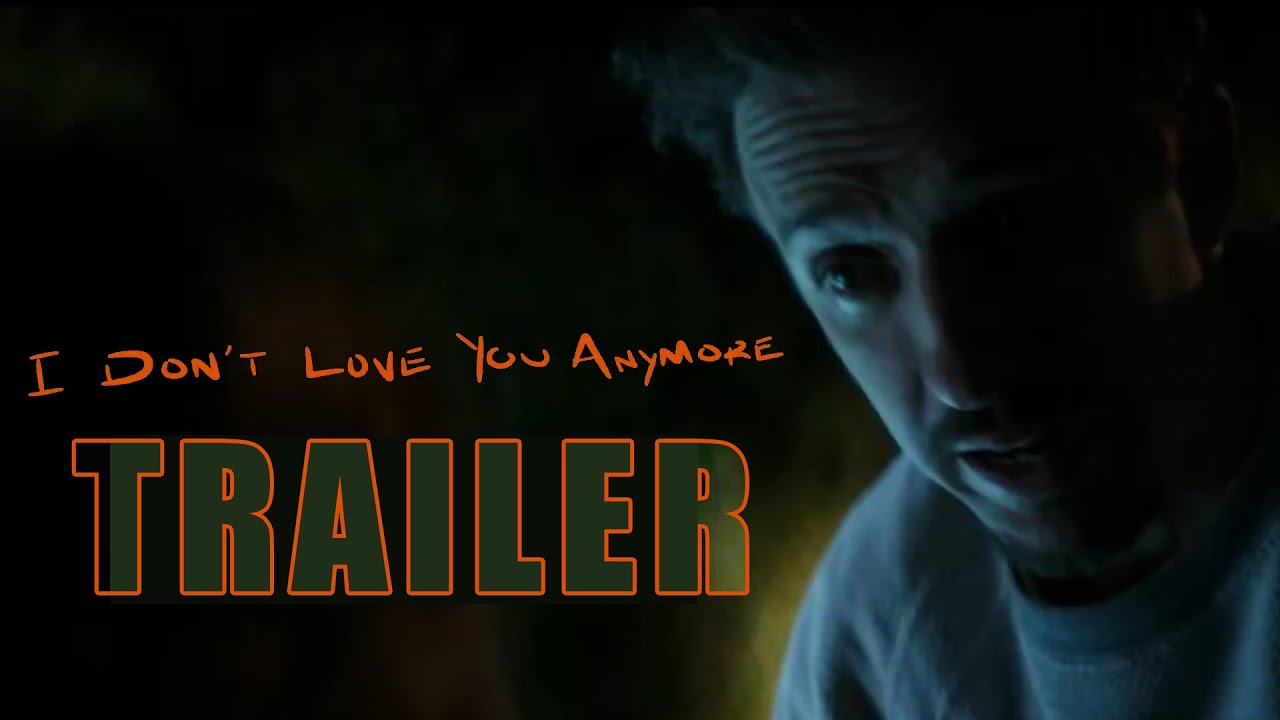


Streaming: I Don't Love You Anymore (2025) by Mitch Marcus: A $26K indie that turns a backyard crime scene into a masterclass in doubt
- dailyentertainment95

- 2 hours ago
- 6 min read
Why It Is Trending: The Story That Won't Stay Still
Audiences are done with crime stories that hand them the truth. I Don't Love You Anymore arrives at exactly the right cultural moment — when trust in institutions, partnerships, and narratives is fracturing everywhere. A homeless man in a backyard pool, a husband and wife with two different stories, a night that keeps replaying differently: that premise alone is enough to ignite conversation. It is the kind of film that does not let viewers off the hook, and right now, that discomfort is exactly what people are seeking.
Elements driving the trend: When No One's Story Holds Up
The Rashomon Effect, Revived Fragmented, perspective-shifting storytelling is surging because audiences are trained on unreliable narrators — and this film weaponizes that literacy.
Suburban Gothic Tension The backyard pool, the quiet neighborhood, the respectable couple — the film uses the aesthetics of safety to stage something deeply unsettling.
Class and Belonging as the Real Crime A homeless man's death inside a private suburban space forces an uncomfortable question about who is allowed to exist where — and that question has urgent cultural weight right now.
A Relationship as the Real Crime Scene The husband-wife dynamic is not a backdrop; it is where the real damage lives, and audiences drawn to psychological intimacy will feel every crack.
Insights: Audiences are increasingly drawn to films that mirror a fractured sense of truth — stories where no single account is trustworthy reflect a broader cultural exhaustion with official narratives.
Industry Insight: Micro-budget films are reclaiming prestige terrain by leaning into structural ambiguity rather than spectacle. At $26K, this film proves that a sharp premise and formal discipline outperform production scale. Consumer Insight: Viewers conditioned by true-crime culture and prestige TV are actively seeking films that demand interpretation rather than deliver resolution. The debate after the credits is now part of the entertainment product itself. Cultural/Brand Insight: The suburban setting is no longer aspirational — it is a pressure cooker, and films that expose that tension resonate with audiences renegotiating what safety, success, and partnership actually mean.
This film trends because it refuses to be solved. Where similar Rashomon-style thrillers operate at scale, I Don't Love You Anymore strips the formula down to its most intimate and unsettling core. The low budget does not read as limitation — it reads as urgency. It is the kind of film that travels by word of mouth because everyone who watches it needs someone else to argue with.
What Movie Trend Is Followed: Intimate Noir at Peak Relevance
The unreliable-narrator thriller has matured from festival curiosity into mainstream expectation. Audiences no longer need a star-driven spectacle to commit to a crime drama — a suffocating premise and a fractured structure are enough. I Don't Love You Anymore lands at the exact moment when micro-budget indie cinema is being revalidated as a serious cultural force. The audience is ready, the appetite is primed, and the film's 73-minute runtime removes every barrier to entry.
Macro trends influencing — economic anxiety and eroding social trust are pushing audiences toward stories that interrogate domestic life and class division rather than escape them.
Implications of Macro for audiences Viewers are processing real-world instability through fiction that reflects it — morally ambiguous crime drama is functioning as cultural therapy.
What industry trend is shaping The prestige-indie pipeline, accelerated by streaming, has normalized high-concept low-budget films as legitimate awards and conversation-driver vehicles.
Audience motivation to watch The promise of a story with no clean answer — where the audience must decide what happened — is the most compelling watch incentive of the current moment.
Other films shaping this trend:
Rashomon (1950) by Akira Kurosawa — the original blueprint for truth told in contradictory fragments, still the genre's most cited reference.
Gone Girl (2014) by David Fincher — weaponized the unreliable marriage narrative and proved mainstream audiences hunger for domestic betrayal at its most destabilizing.
Blue Ruin (2013) by Jeremy Saulnier — demonstrated that micro-budget crime filmmaking can carry the full emotional and moral weight of studio-scale thrillers.
Insights: The unreliable-narrator thriller is no longer a niche structural experiment — it has become the dominant mode for audiences who consume media critically and demand stories that reward active interpretation.
Industry Insight: Streamers and distributors are actively acquiring high-concept micro-budget films because they generate disproportionate cultural conversation relative to cost. I Don't Love You Anymore fits that acquisition logic precisely. Consumer Insight: Audiences are increasingly resistant to spoon-fed resolutions — the social currency of debating an ambiguous ending now rivals the experience of watching the film itself. Cultural/Brand Insight: Films that center domestic spaces as sites of violence and deception are reflecting a wider cultural reckoning with privacy, partnership, and the performance of respectability.
The unreliable-narrator thriller is no longer a festival genre — it is a cultural default. I Don't Love You Anymore does not chase that trend; it distills it to its most precise and pressurized form. The industry's response should be clear: formal ambition at micro-budget scale is not a risk, it is a strategy. Films that make audiences argue are the ones that last.
Final Verdict: The Smallest Film With the Loudest Aftermath
I Don't Love You Anymore does not announce itself — it accumulates. By the time the final fragment lands, the film has quietly dismantled every assumption the audience brought into it. It is a 73-minute pressure chamber that operates with the confidence of something made at ten times its budget. This is not a film that asks for attention; it is a film that takes it.
Meaning — Truth Is a House of Mirrors At its core this is a film about how people construct reality to protect themselves — from guilt, from failure, from each other — and how those constructions collapse the moment an outsider enters the frame.
Relevance to audience — Everyone Knows This Couple The suburban setting, the strained marriage, the carefully maintained facade — audiences do not watch this story from a distance, they recognize it, and that recognition is what makes it genuinely unsettling.
Performance — Carrying Ambiguity Without Blinking Henri Esteve and Hope Lauren hold the film's entire moral tension between them, delivering performances precise enough to make both readings of events feel completely true simultaneously.
Legacy — The $26K Benchmark This film will be cited in conversations about what micro-budget cinema can achieve structurally and thematically — it joins a short list of films that made constraint look like intention.
Success: (Awards, Nominations, Critics Ratings, Box Office) — Small Numbers, Real Weight With 2 wins and 3 nominations, the film's festival footprint is modest but meaningful — recognition that travels further than its budget suggested possible.
Insights: Films that refuse resolution do not fade — they compound, gaining cultural weight every time a new viewer enters the argument they leave behind.
Industry Insight: I Don't Love You Anymore is proof that the entry point for prestige-level indie filmmaking is lower than the industry has historically assumed. The creative and distribution model it represents deserves serious replication. Consumer Insight: Word-of-mouth is this film's primary engine — and that is its greatest asset, because audiences who feel challenged by a film become its most committed advocates. Brand Insight: For platforms seeking titles that drive engagement and critical conversation without blockbuster spend, this film is a blueprint — high-concept, short runtime, maximum interpretive friction.
This film's long-term relevance is not tied to its budget or its awards — it is tied to the conversation it refuses to close. As audiences grow more sophisticated and more resistant to narrative comfort, films like this will increasingly define what serious cinema looks like outside the studio system. The entertainment industry's most important response is structural: build acquisition and distribution pipelines that can identify and elevate this kind of work before it has to fight for visibility. The films that matter most right now are the ones arriving quietly — and this is one of them.
Summary of the Movie: One Night. Three Memories. No Way Out.
Movie themes: Fractured truth and domestic betrayal — the film runs on the gap between what people do and the stories they tell themselves to survive it.
Movie director: Mitch Marcus operates with surgical restraint — every structural choice is designed to implicate the audience as much as the characters.
Top casting: Esteve and Lauren are the entire film — two performances calibrated to make guilt and innocence feel identical, which is exactly the point.
Awards and recognition: 2 wins, 3 nominations — festival-circuit validation for a film made on $26K.
Why to watch: This is the rare thriller where the 73-minute runtime feels like a dare — lean, airless, and impossible to shake once it is over.
Key Success Factors: Where most low-budget crime dramas compensate with genre mechanics, this one strips everything back to structure and performance — and that restraint is precisely what makes it stand out.
Where to watch: https://www.amazon.com/I-Dont-Love-You-Anymore/dp/B0G4JQD7M1/ (US)
Comments