


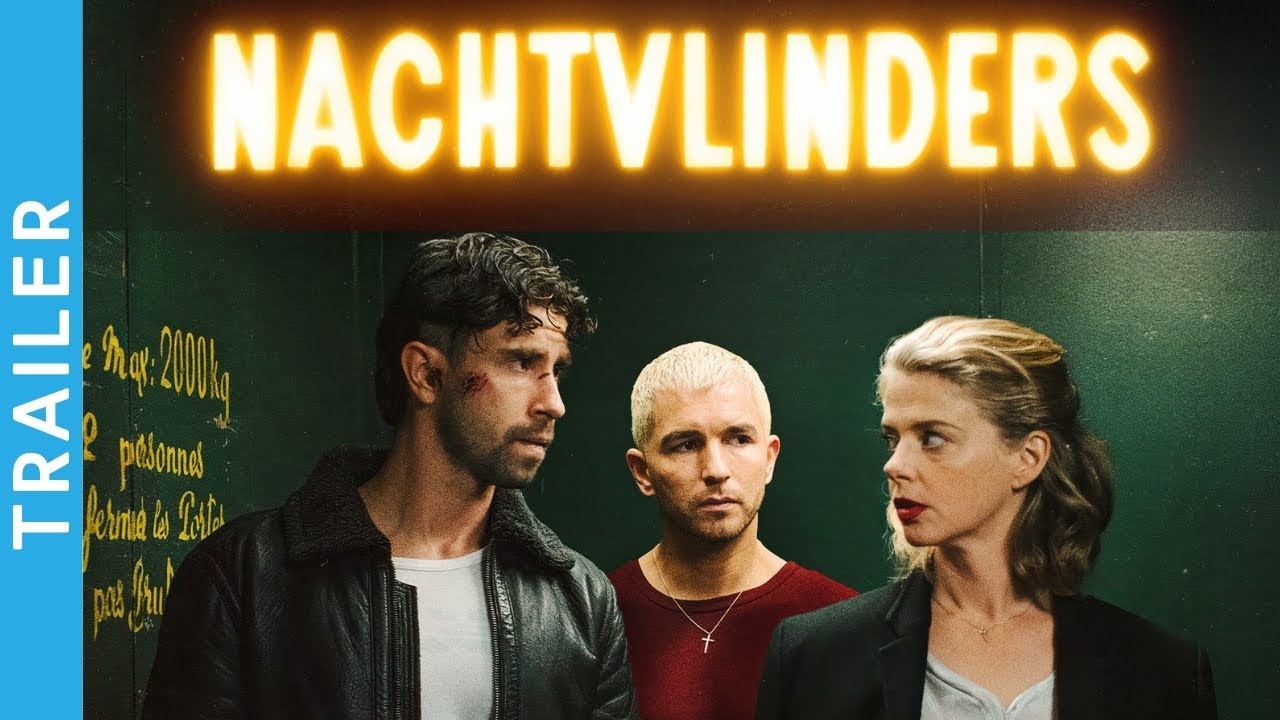


Night Creatures (2025) by Indra Siera: A Flemish noir thriller where one last heist becomes an unexpected love story
- dailyentertainment95

- 2 hours ago
- 9 min read
Summary of the Movie:One final job, one chance encounter—everything changes at Brasserie Papillon
Dylan walks out of prison determined to leave crime behind, but an old debt forces one last break-in at the upscale Brasserie Papillon. There he meets Margot, mysterious and magnetic, and their connection rewrites the plan completely. Adapted from French bestseller "Le Monte Charge" (Bird in a Cage) by Frédéric Dard, the film takes Flemish noir into stylish territory where visual aesthetics meet slow-burn tension and the heist becomes background to something more dangerous.
Fresh out of prison—one last heist to settle the debt—then Margot walks in.
Where to watch: https://www.justwatch.com/be/film/night-creatures (Belgium), https://www.justwatch.com/nl/movie/night-creatures (Netherlands)
Link IMDB: https://www.imdb.com/title/tt38783155/
Link Review: https://variety.com/2025/film/global/night-creatures-picture-tree-trailer-afm-1236561810/
Genre: Crime thriller meets romance—heist mechanics wrapped in relationship drama where the connection between Dylan and Margot matters more than whether the job succeeds
Movie plot: Dylan must break into Brasserie Papillon to settle an old debt even though he's desperate to leave crime behind after prison; during the job he encounters Margot and their instant connection derails all his careful planning as the heist, the debt, and Dylan's shot at a clean slate collide in ways neither expected—flashbacks reveal how they got here while the present tightens around them
Movie themes: The trap of owing people even after you've paid your time, how chance encounters rewrite everything, choosing between the life you're stuck in and the person who makes you want something different, whether connection can survive when it starts in the worst possible circumstances
Movie trend: Heist films where the crime becomes backdrop to relationship drama—less Ocean's Eleven guns-blazing, more intimate tension where two people meeting matters more than the job itself
Social trend: Reflects the reality that leaving crime behind means settling every debt first—you can't just walk away clean, there's always someone waiting to collect
Movie director: Indra Siera directed hit Belgian TV shows (Professor T., Old Belgium) and brings that atmospheric tension-building to features—knows how to make you lean forward waiting for what happens next
Top casting: Aimé Claeys as Dylan brings quiet intensity—you believe he's trying to go straight and failing; Maaike Neuville as Margot is all mystery and magnetism, the kind of presence that stops a heist cold; Matteo Simoni rounds out strong Belgian cast
Awards and recognition: 6.7 IMDb with split reactions—some viewers found it pretentious and slow, others praised the visual style and unexpected storytelling; launching internationally at American Film Market
Release and availability: November 5, 2025 Belgium theatrical release; international distribution being negotiated for other countries
Why to watch movie: If you want a heist film that actually cares about the people pulling the job instead of just the mechanics—this prioritizes connection over explosions
Key Success Factors: Adapted from international bestseller gives it solid story bones; the upscale Brasserie Papillon setting is gorgeous on screen; Dylan and Margot's chemistry makes you forget about the heist and just want to know what happens between them
Insights: Sometimes the person you meet during a crime is more dangerous than the crime itself
Industry Insight: Belgian cinema is producing increasingly polished crime films that look as good as anything Hollywood makes—small budgets but big visual ambition. Consumer Insight: Audiences are split on slow-burn crime romance—if you want action-packed heists this isn't it, but if you want atmospheric tension and actual character development, it delivers. Brand Insight: Literary adaptations give crime films built-in credibility—"based on an international bestseller" signals this isn't just another generic heist movie.
The film uses repeated flashbacks to build the story in pieces—some reviewers found this annoying (feeling like they filmed half a movie and looped it), others found it created mounting tension as past and present converge. Brasserie Papillon becomes almost a character itself, the upscale restaurant where Dylan's criminal past and potential future with Margot collide. Siera keeps the pacing deliberately slow, letting scenes breathe and tension build through what's unsaid rather than through action sequences.
Why It Is Trending: Crime-romance hybrid that chooses intimacy over explosions
Most heist movies focus on the mechanics—the planning, the execution, the getaway. Nachtvlinders uses the heist as a frame for something more personal: what happens when two people connect at exactly the moment everything's about to fall apart. That shift from crime procedural to relationship drama is catching attention.
Concept → consequence: One-last-job setup meets unexpected romance—familiar crime framework filled with intimate character moments that make you care more about Dylan and Margot than whether the heist succeeds
Culture → visibility: Based on French bestseller "Bird in a Cage" that's been published worldwide—gives the film instant recognition beyond just being "a Belgian crime movie"
Distribution → discovery: Launching at American Film Market means international distributors are considering it for theatrical and streaming—could end up on platforms beyond Belgium
Timing → perception: Arrives when audiences are tired of empty heist spectacle—the demand for crime films that actually develop characters rather than just showing off clever robberies
Performance → relatability: Dylan's desperation to go straight but being forced back in resonates—everyone's felt trapped by debts (literal or metaphorical) they can't escape
Insights: The heist is background noise—the real story is two people meeting at the worst possible time
Industry Insight: Crime films that prioritize character over spectacle find niche audiences willing to embrace slower pacing for emotional payoff. Consumer Insight: Viewers respond to "wrong place, wrong time" romance where connection happens despite every reason it shouldn't—the obstacles make it more compelling. Brand Insight: Adapting international bestsellers (especially French noir) gives crime films literary credibility that helps them stand out from generic action thrillers.
Nachtvlinders trends because it's doing something different with familiar pieces. The one-last-job premise is old as crime cinema itself, but making Margot the real complication instead of a double-cross or police sting creates fresh tension. Reviews split cleanly: viewers who wanted fast-paced action found it pretentious and slow, viewers who wanted atmospheric character drama praised exactly those qualities. That polarization suggests it's finding its audience—people specifically seeking crime films that care about intimacy as much as the job.
What Movie Trend Is Followed: Crime-romance hybrids where the relationship matters more than the heist
Nachtvlinders belongs to crime films using heists as backdrop for relationship drama—think less Ocean's Eleven planning montages, more Before Sunrise conversations that happen to occur during a break-in. The trend evolved from classic film noir's doomed romances through contemporary crime films that prioritize character development over action spectacle.
Format lifecycle: Started with classic noir where femme fatales complicated heists, evolved through European crime cinema's character-focused approach, now landing in films where the romance is the story and crime is just the circumstance bringing people together
Aesthetic logic: Slow pacing lets scenes breathe—long takes of Dylan and Margot talking, flashbacks revealing backstory gradually, the Brasserie Papillon setting creating intimate space despite the crime unfolding
Psychological effect: Audiences invest in whether Dylan and Margot's connection survives rather than whether the heist succeeds—emotional stakes replace mechanical tension
Genre inheritance: Pulls from classic film noir doomed romance, French crime cinema's literary approach, contemporary European films that let relationships develop in real time rather than rushing to action
Insights: The best crime films make you forget about the crime
Industry Insight: Crime-romance hybrids appeal to audiences wanting genre thrills with actual emotional investment—combines commercial hook (heist) with character depth (relationship). Consumer Insight: Viewers tired of empty heist spectacle respond to films where you actually care whether characters succeed beyond just pulling off the job. Brand Insight: Literary source material (Dard's "Bird in a Cage") signals this is character-driven crime rather than action-driven—helps position for art-house audiences seeking substance.
Nachtvlinders uses the heist as pressure cooker for Dylan and Margot's connection. Every scene serves double purpose: advancing the crime plot while revealing character. The repeated flashbacks some viewers found annoying actually function to contrast Dylan's criminal past with his present attempt at something different—Margot represents the future he wants but the heist represents the past he can't escape. That tension between past and future, between who Dylan was and who he wants to become, plays out through his relationship with Margot as much as through the actual crime.
Trends 2026: Crime films choosing intimacy over spectacle—character development becomes the hook
Heist films are splitting into two lanes: action spectacle (Fast & Furious style) and intimate character drama where crime provides circumstances but relationships provide story. Audiences increasingly respond to the latter, seeking emotional investment beyond whether the characters escape with the money.
Implications:
Crime films prioritizing character over action find dedicated audiences even with modest budgets—visual style and relationship chemistry matter more than expensive set pieces. Literary adaptations (especially European noir) give crime films built-in story credibility that helps them compete against bigger-budget action films. Slow-paced atmospheric tension differentiates from fast-cut Hollywood style, creating clear alternative for viewers seeking substance over spectacle.
Where it is visible (industry):
International film markets (American Film Market, Cannes Market) seeing increased interest in character-driven European crime films as streaming platforms seek content beyond action spectacle. Distributors recognizing audiences exist for crime films that take time to develop relationships and let scenes breathe. Belgian, French, and other European productions using crime as framework for intimate character studies finding theatrical and streaming deals beyond local markets.
Related movie trends:
Heist-as-backdrop romance - Crime films where the job matters less than the relationship between characters pulling it off, prioritizing chemistry over mechanics
Literary adaptation crime cinema - International bestsellers adapted into films signaling character-driven approach over generic action
Wrong-time romance stories - Relationships developing in worst possible circumstances (during heists, between enemies, across impossible divides) creating tension through timing rather than external obstacles
Slow-burn visual crime films - European approach to genre letting scenes develop in real time rather than cutting quickly between action beats
Related consumer trends:
Spectacle fatigue in crime genre - Audiences tired of empty heist action seeking films where you actually care about characters beyond whether they succeed
Literary pedigree trust - Viewers responding to "based on bestseller" as signal film prioritizes story and character over just genre mechanics
Intimacy over explosion preference - Growing audience specifically seeking crime films that develop relationships and let emotional stakes drive tension
Post-prison reentry relatability - Stories about characters trying to go straight but pulled back in by debts resonating as metaphor for being trapped by past
The Trends: The heist is just the excuse—the real story is always the people
Trend Type | Trend Name | Description | Implications |
Core Movie Trend | Crime-romance priority shift | Heist films where relationship between characters matters more than mechanics of job itself—crime becomes backdrop for intimate character drama | Genre films split between spectacle-focused and character-focused, with growing audience for latter seeking emotional investment |
Core Consumer Trend | Character over spectacle preference | Viewers specifically seeking crime films that develop relationships and prioritize why people care about each other over whether heist succeeds | Audiences reward films taking time for character development even when pacing is slower than action-focused alternatives |
Core Social Trend | Past-debt-trap recognition | Stories about characters unable to walk away clean because debts (literal or metaphorical) keep pulling them back resonate as universal experience | Crime films become metaphor for being trapped by past decisions even when genuinely trying to change |
Core Strategy | Literary adaptation credibility | Adapting international bestsellers signals character-driven approach and story substance over generic action formula | Films compete on literary pedigree and emotional depth rather than budget size or action spectacle |
Core Motivation | Wrong-moment connection tension | Audiences drawn to relationships developing at worst possible time—obstacles created by circumstances rather than external villains | Romance feels more earned when context makes it nearly impossible, creating tension through timing |
Insights: You can forget the heist mechanics—just tell us why we should care about these people
Industry Insight: Character-driven crime films compete successfully against bigger-budget action spectacle when relationship chemistry and visual style are strong—intimacy becomes competitive advantage. Consumer Insight: Split reviews (some find it slow, others find it refreshing) signal successful niche targeting—film appeals to specific audience seeking substance over speed. Brand Insight: "Based on international bestseller" helps position crime films as literary adaptations rather than generic genre entries—credibility tool for reaching art-house audiences.
Nachtvlinders represents shift in crime cinema where the heist provides framework but relationship provides story. Dylan's connection with Margot matters more than whether he successfully breaks into Brasserie Papillon—the film's success depends on whether you care if they end up together, not whether the job goes right. That priority shift from mechanics to emotion creates clear alternative to action-heavy heist films, finding audiences specifically seeking crime movies that take time to develop characters and let relationships breathe.
Final Verdict: When meeting the right person at the wrong time becomes the whole story
Nachtvlinders isn't interested in being the cleverest heist film or having the most twists—it wants to know what happens when two people connect during a crime and that connection becomes more dangerous than the job itself. Dylan and Margot meeting at Brasserie Papillon rewrites everything because suddenly leaving crime behind isn't just about settling the debt, it's about whether he can become someone worthy of what they might have together.
Meaning: You can't escape your past by just deciding to—every debt has to be paid, every obligation settled, and sometimes the person who makes you want to change appears exactly when change is hardest
Relevance: Post-prison reentry stories where going straight is harder than staying criminal resonate—plus the universal experience of meeting someone who makes you want to be different but circumstances make it nearly impossible
Endurance: Based on Dard's bestseller that's been published worldwide for years—story has proven staying power across languages and cultures
Legacy: Tests whether audiences will embrace crime films prioritizing intimacy over spectacle—if successful, opens space for more character-driven heist movies
Insights: The heist is just circumstances—the real story is always about the people
Industry Insight: Crime films can compete on character chemistry and visual atmosphere rather than budget size—slow-burn tension differentiates from Hollywood action spectacle. Consumer Insight: Polarized reviews prove successful niche targeting—film appeals specifically to viewers seeking substance over speed in crime genre. Brand Insight: Literary adaptation from international bestseller positions film as character study rather than generic action—helps reach audiences beyond crime genre fans.
Nachtvlinders won't work for everyone—if you want Ocean's Eleven planning montages and clever twists, this isn't it. But if you want a crime film where you actually care whether the main character gets the girl more than whether he gets away with the money, it delivers. Dylan and Margot's chemistry makes the slow pacing work because you're invested in their connection. The Brasserie Papillon setting is gorgeous. And the repeated flashbacks some found annoying actually build tension as past and present converge. It's a heist movie where the heist barely matters—and that's exactly the point.
Comments