


Mo Papa (2025) by Eeva Mägi: An unscripted Estonian drama where prison spits someone out and the real sentence starts
- dailyentertainment95

- Feb 1
- 9 min read
Summary of the Movie:Trauma doesn't do parole—it just waits outside the gates
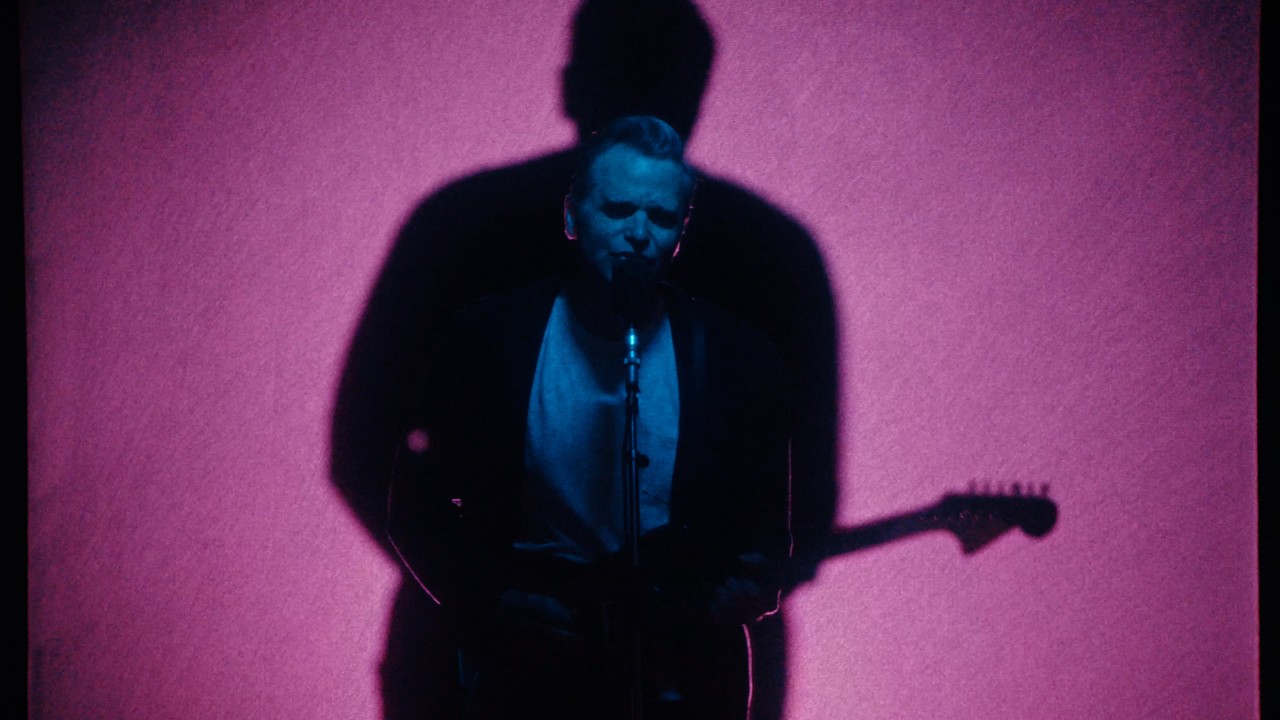
Eugen walks out of prison into a world that moved on without him—and the hardest part isn't starting over, it's realizing the same cycles that put him away are still running. Love, guilt, and self-hate blur together as he tries to rebuild with the only people left, while the weight of blame blocks every door to forgiveness. Sten-Johan Lill's bluish, snowy cinematography wraps the whole thing in a cold that paradoxically feels like comfort—desolate and warm at the same time.
Ten years in prison for killing his brother—now the real punishment begins.
Ten years in prison for killing his brother—now the real punishment begins.
Where to watch: https://pro.festivalscope.com/film/mo-papa (industry professionals)
Link IMDB: https://www.imdb.com/title/tt32058988/
Link Review: https://cineuropa.org/en/newsdetail/485957/
Movie plot: Eugen, 28, walks out after a decade for accidentally killing his younger brother—a tragedy rooted in parental abandonment—and hits the shock of a world that changed completely while he was locked up; his only ties are estranged father Helmar and orphanage friends Stina and Riko, but old habits and self-destruction risk pulling him back into the same spiral, and real change only comes through rebuilding human connections one painful step at a time
Movie themes: Trauma as inheritance, love tangled with guilt and self-hate, forgiveness as something earned not given, how childhood abandonment rewires everything that comes after
Movie trend: Rising wave of unscripted micro-budget dramas where improvisation becomes the method and vulnerability becomes the product
Social trend: Growing appetite for stories about life after the system releases someone—not the crime, not the sentence, the silent aftermath nobody's watching
Movie director: Eeva Mägi (b. 1987) spent her twenties working in psychiatric clinics—now she's building a trilogy: Mo Mamma, Mo Papa, Mo Amor, all unscripted, all shot on pocket change; Mo Mamma already won Special Jury Prize at PÖFF, her short was longlisted for the Oscars, she's won Estonia's Young Filmmaker Award—she's arrived
Top casting: Jarmo Reha as Eugen is the kind of raw you only get with no script to hide behind; Rednar Annus as father Helmar carries quiet devastation; Ester Kuntu and Paul Abiline as Stina and Riko ground everything in fragile loyalty
Awards and recognition: Special Mention nomination at Tallinn Black Nights (PÖFF) Critics' Picks—main competition at Torino Film Festival (selected from 5,500+ films), 6.0 IMDb
Release and availability: December 5, 2025 Estonia theatrical; world sales rights still available, international distribution TBD
Why to watch movie: Shot on almost nothing, more emotionally raw than films costing a hundred times more—cinema that stopped performing and started feeling
Key Success Factors: Scores where polished trauma dramas lose the plot—short runtime delivers the story without diluting it, Reha's performance is the standout element that stays with viewers long after, and Lill's cinematography creates visuals that linger in the mind longer than most films twice the budget
Insights: Trauma doesn't need a budget—it needs someone brave enough to let the camera roll
Industry Insight: €80K and zero screenplay produces more raw impact than films with a thousand times the resources—Mägi reshapes what Baltic cinema can compete on. Consumer Insight: Post-incarceration stories that skip the courtroom and sit in the wreckage—taps into real curiosity about reentry, abandonment cycles, and whether redemption is possible after everything breaks. Brand Insight: Real psychiatric research plus months of actor immersion creates authenticity no marketing budget can fake—trust becomes the product.
Mägi doesn't explain the trauma—she lets it exist in the room and watches. The clinic background shows: she knows how cycles work, how families carry damage across generations. Every moment of Eugen's breakdown is real in the way that matters—unplanned, unpolished, impossible to fake. Estonian cinema at its most alive—quiet, brutal, completely unafraid.
Why It Is Trending: Unscripted and unfunded—Mo Papa proves the cheapest films hit the hardest
The film lands during a moment when audiences are tired of trauma being packaged neatly. Mägi's method—no script, real immersion, a director who actually understands psychiatric cycles—produces something that feels closer to a confession than a movie.
Concept → consequence: Zero screenplay means zero safety net—every emotional moment is earned on camera, making the grief feel genuine in a way over-produced dramas can't touch
Culture → visibility: Debuts at PÖFF (one of Europe's sharpest festivals) and Torino, landing in spaces where unscripted emotional cinema gets taken seriously and talked about
Distribution → discovery: Still seeking international sales—Mo Papa travels through festival word-of-mouth rather than studio push, the kind of slow burn that builds a real audience over time
Timing → perception: Drops as Baltic cinema gains momentum globally—Estonian films are having a moment, and Mägi is the sharpest reason why
Performance → relatability: Reha's months-long immersion means audiences aren't watching an actor—they're watching someone who lived inside this pain long enough for it to become real
Insights: No script, no budget, no safety net—and it's the realest thing on screen
Industry Insight: Baltic cinema earns global attention by doing what Hollywood can't—stripping everything back and letting raw human emotion do the heavy lifting. Consumer Insight: Audiences gravitate toward post-incarceration stories that don't moralize—Mo Papa just sits in the mess and lets people feel it themselves. Brand Insight: Festival-circuit discovery creates deeper audience loyalty than platform drops—viewers who find Mo Papa through word-of-mouth carry it further than any algorithm would.
The film trends because it's the opposite of what cinema usually does with trauma. No explanations, no tidy arcs, no score telling viewers how to feel. Mägi trusts the audience to sit in discomfort and find their own meaning—and enough people are hungry for that honesty that it's already generating serious conversation in the spaces that shape what cinema becomes next.
What Movie Trend Is Followed: Unscripted micro-budget trauma cinema—improvisation as emotional truth
This sits inside a growing wave of filmmakers ditching scripts entirely to chase something rawer. The trend is past the experimental phase—it's becoming a legitimate lane where micro-budget films compete on feeling rather than polish, and directors with real-world psychological knowledge create work that scripted dramas can't replicate.
Format lifecycle: Unscripted cinema evolved from art-house curiosity (Cassavetes, Mumford) through indie credibility (Leigh, the Dardenne brothers) into micro-budget emotional powerhouses—Mo Papa is the latest proof that no screenplay can be a feature, not a limitation
Aesthetic logic: Estonian winter landscapes do the visual heavy lifting—cold, sparse, unforgiving—matching the emotional tone without needing anything manufactured; the camera stays close, patient, and lets silences breathe
Psychological effect: Audiences feel like they're intruding on something real—the lack of script removes the safety of fiction, making every breakdown and quiet moment feel like it could have actually happened
Genre inheritance: Pulls from Cassavetes' raw emotional method, Ken Loach's working-class realism, the Dardenne brothers' moral weight, and Baltic cinema's tradition of quiet devastation—Mo Papa inherits all of it and adds psychiatric authenticity
Insights: The best trauma films aren't written—they're lived
Industry Insight: Directors with real clinical or social work backgrounds produce unscripted work that scripted trauma dramas can't compete with—lived knowledge replaces dialogue. Consumer Insight: Audiences increasingly recognize the difference between performed grief and actual grief on screen—unscripted cinema wins that test every time. Brand Insight: Micro-budget films built on emotional authenticity create outsized cultural conversation—€80K buys more credibility than €80M when the feeling is real.
Mo Papa proves unscripted isn't a compromise—it's the sharpest tool available for this kind of story. Mägi's psychiatric background means she's not guessing at how trauma cycles work, she's filming from inside her own understanding of it. The method demands everything from the cast and gives audiences something no polished production could ever deliver.
Trends 2026: Micro-budget unscripted cinema goes from festival darling to cultural force
Raw, unscripted filmmaking is moving from niche credibility into wider conversation. Audiences are increasingly rewarding directors who strip everything back—no script, no budget, no manufactured emotion—and the films that survive on pure feeling are the ones people actually remember.
Implications:
Authenticity stops being a selling point and becomes a prerequisite. Films like Mo Papa show that audiences can tell the difference between real emotional weight and something written to imitate it. Directors with genuine psychological or social backgrounds are becoming the most compelling voices in independent cinema—not because they make better-looking films, but because they understand the territory they're filming.
Where it is visible (industry):
Baltic and Nordic cinema leads this shift—smaller budgets force creativity and emotional honesty that bigger industries struggle to replicate. Festival programmers at PÖFF, Torino, and similar spaces are actively building lineups around unscripted micro-budget work. World sales agents are watching these films closer, recognizing that emotional authenticity travels globally even when language doesn't.
Related movie trends:
Clinician-turned-director films - Directors with psychiatric, social work, or counseling backgrounds bringing real understanding of trauma cycles into unscripted storytelling
Trilogy-as-method filmmaking - Directors building connected series across years, same casts, same raw approach—treating filmmaking as ongoing emotional research rather than single projects
Post-incarceration reentry dramas - Stories skipping the crime and sentence entirely, focusing on the silent, unglamorous aftermath nobody films
Baltic cinema momentum - Estonian, Latvian, and Lithuanian filmmakers gaining global festival traction through micro-budget emotional honesty
Related consumer trends:
Authenticity over production value - Audiences actively choosing rough, raw, unscripted films over polished productions when the emotional truth feels real
Slow-burn festival discovery - Viewers finding films through word-of-mouth and festival buzz rather than platform algorithms—loyalty runs deeper
Trauma without morals - Growing appetite for films that sit in painful territory without explaining, resolving, or moralizing
Micro-budget as credibility signal - Audiences reading low budgets as proof of artistic integrity rather than limitation
The Trends: Raw emotion beats polish—and audiences are finally paying attention
Trend Type | Trend Name | Description | Implications |
Core Movie Trend | Unscripted micro-budget trauma cinema | No screenplay, minimal budget, directors with real psychological knowledge filming emotional truth live | Authenticity becomes the main competitive advantage—scripted dramas can't replicate what unscripted immersion produces |
Core Consumer Trend | Authenticity over production value | Audiences choosing raw, unpolished films when the emotional feeling is genuine | Low budgets stop being a warning sign and start being a credibility marker |
Core Social Trend | Post-incarceration reentry visibility | Cultural appetite for stories about life after prison—the unglamorous, unglamoured aftermath | Cinema catches up to a reality millions live but few films dare to sit inside |
Core Strategy | Clinical knowledge as creative weapon | Directors drawing from psychiatric or social work experience to create emotionally accurate unscripted work | Real understanding of trauma replaces written dialogue—knowledge becomes the script |
Core Motivation | Grief without packaging | Audiences wanting to feel difficult emotions without being told how—no score, no resolution, no moral | Cinema evolves from explaining pain to simply letting audiences experience it |
Insights: The cheapest films are becoming the most trusted—and that's not changing anytime soon
Industry Insight: Baltic micro-budget cinema is proving that emotional authenticity travels globally—€80K films compete with €80M ones when the feeling hits harder. Consumer Insight: Post-incarceration stories that refuse to moralize are finding real audiences—people want to sit in the mess, not be taught a lesson about it. Brand Insight: Directors with clinical backgrounds create work no marketing team can manufacture—real knowledge of trauma cycles becomes the ultimate authenticity stamp.
Mo Papa lands in the middle of a shift where raw, unscripted cinema stops being a niche choice and becomes the standard viewers trust most. Mägi's trilogy proves this isn't a one-off experiment—it's a sustained creative method, and it's only getting sharper.
Final Verdict: Estonian cinema's sharpest voice—and it didn't need a script to prove it
Mo Papa is what happens when a filmmaker stops trying to make cinema about trauma and just lets trauma exist on camera. Mägi's psychiatric background, Reha's total immersion, and €80K of budget produce something that most films with a fraction of this honesty can't touch.
Meaning: Trauma cycles don't break on their own—they need someone willing to sit inside them long enough to understand the pattern, and Mo Papa does exactly that without flinching
Relevance: Post-incarceration reentry is one of the least filmed, most lived realities in the world—Mo Papa gives it the raw, unglamorous attention it actually deserves
Endurance: The unscripted method and trilogy format mean this film gets better understood over time—Mo Amor will complete the picture, and the full trilogy will be the real statement
Legacy: Proves micro-budget unscripted filmmaking isn't an indie curiosity—it's a legitimate competitive lane, and Mägi is building the template for what it looks like at its best
Insights: No script, no safety net, no faking it—this is Estonian cinema's sharpest moment
Industry Insight: Mägi's trilogy model shows that sustained creative method beats one-off projects—same cast, same rawness, same refusal to script the hard parts, across three films. Consumer Insight: Audiences who find Mo Papa through festival buzz carry it further and louder than any platform push would—word-of-mouth is the only distribution this film needs. Brand Insight: €80K and a director who actually understands psychiatric trauma creates more credibility than any budget ever could—authenticity is the only brand that lasts.
Mo Papa doesn't wrap up neatly because it doesn't need to. Mägi trusts the audience to sit with the mess—the cycles, the guilt, the fractured relationships—and find their own way through it. Reha's performance is the kind that only exists when there's no script to fall back on. Baltic cinema has a new benchmark, and it cost almost nothing to make.

Comments