

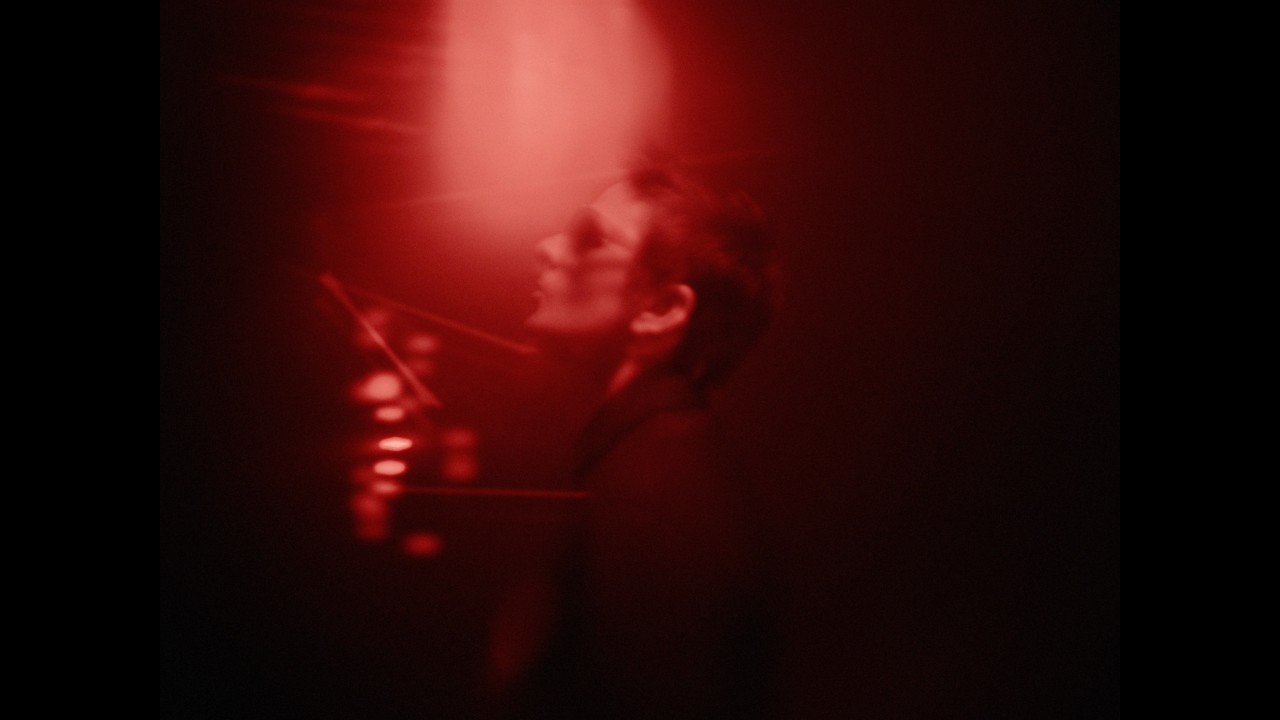


Belle (2024) by Benoît Jacquot: A Dead Girl in a Small Town Where Everyone Has Something to Hide
- dailyentertainment95

- 4 days ago
- 8 min read
Why It Is Trending: Simenon's Slow Poison, Administered by Two César-Calibre Stars
Belle arrives as Jacquot's 28th feature — a French-Belgian crime drama adapted from Georges Simenon's 1952 novel La mort de Belle, in which a provincial schoolteacher becomes the prime suspect when the young woman lodging in his home is found dead. It marks the first time Charlotte Gainsbourg and Guillaume Canet have co-starred in a feature film — a pairing that was the project's commercial engine and primary critical framing. The film premiered in Italy in March 2025 and circulated through international festivals including Fort Lauderdale. Its traction is driven by casting and literary source rather than festival awards or critical consensus.
Elements Driving the Trend: Four Reasons This Provincial Death Travels
Belle trends on the strength of its literary pedigree and its casting — two of French cinema's most recognised performers in a Simenon adaptation directed by one of French cinema's most established names.
The Simenon source — Literary Crime That Has Never Gone Out of Fashion: Simenon's exploration of guilt versus innocence and the world surrounding it has driven decades of film adaptations — the name on the source material is itself a quality signal in European arthouse markets and a reliable draw for audiences who associate his novels with psychological rigour and provincial menace.
Gainsbourg and Canet — First-Time Screen Pairing as Event: Gainsbourg (Cannes Best Actress 2009, five César nominations) and Canet (two César nominations) had never appeared opposite each other before — a casting first that generated pre-release attention proportionate to their combined prestige.
Jacquot's provincial dread register — The Small Town as a Trap: Jacquot's director statement positions the film in the Fritz Lang / Hitchcock tradition of guilt-versus-innocence thrillers where the social mechanics of a small community become as threatening as any individual crime. The provincial setting — where everyone knows everyone and ostracism is immediate — is the film's real horror.
The slow-burn structure — A Thriller That Trusts Atmosphere Over Plot: Belle is not a whodunit designed to surprise — it is a character study in which suspicion and social pressure erode a man's standing regardless of guilt. That register has an established arthouse audience that distinguishes it from commercial thriller audiences who find the pacing frustrating.
Virality: Minimal mainstream social presence — Belle circulates in cinephile and Francophile circuits, driven by the casting announcement and Simenon's brand. The IMDb score (5.4) reflects the gap between arthouse expectation and genre delivery among general audiences.
Critics Reception: Divided. Letterboxd supporters praise the performances and slow-burn development; detractors find the pacing inert and the resolution unsatisfying. Fort Lauderdale Film Festival programming notes praised Canet's detachment and Gainsbourg's precision. Critical consensus has not formed around the film — it has 7 critic reviews on IMDb and limited aggregator coverage, suggesting modest critical reach outside French-language markets.
Awards and Recognitions: No awards. Italian theatrical release March 13, 2025; Fort Lauderdale Film Festival. Worldwide gross $480,563. France tv distribution handling international sales. No festival competition slots at major festivals found.
Belle trends because the Gainsbourg-Canet pairing and the Simenon adaptation are category guarantees in French and Francophile arthouse markets — reliable draws that don't require critical consensus to find their audience. The industry should note that Simenon adaptations consistently perform in these markets regardless of individual film quality, which is both the brand's strength and its limitation.
What Movie Trend Is Followed: The French Provincial Guilt Thriller — When the Town Is the Verdict
The French provincial crime drama has a long and commercially reliable tradition — from Simenon's own Maigret adaptations to Chabrol's bourgeois crime films — in which a small community's social mechanics become the primary dramatic engine. Belle occupies this tradition directly: the dead girl is almost incidental; the real subject is what happens to a man when suspicion settles on him in a place where reputation is everything and nothing is private. The trend is mature, well-audience, and structurally conservative.
What is influencing the trend: Simenon's catalogue remains one of European film's most consistently mined literary sources — the novels' combination of psychological precision and provincial atmosphere translates directly to the kind of deliberate, character-driven cinema that French production infrastructure reliably supports. Jacquot's festival history (Venice, Berlin, Cannes across four decades) provides institutional access regardless of individual critical response. France tv distribution's sales platform gives the film immediate international reach in markets where the Gainsbourg-Canet pairing is a known quantity.
Macro trends influencing: The European arthouse market's sustained appetite for literary adaptations — particularly crime and psychological drama — gives Belle a reliable theatrical lane that commercially-oriented French films don't occupy. The Simenon brand specifically travels in Italy and Belgium, which explains the Italian theatrical premiere and Franco-Belgian co-production structure. Charlotte Gainsbourg's post-Passengers of the Night visibility in arthouse circuits gave the film added momentum in programming decisions.
Consumer trends influencing: Slow-burn psychological crime drama is one of European streaming's most reliable categories — Belle's post-theatrical life on French public television (the production model suggests France TV involvement) is likely more commercially significant than its theatrical run. Audiences who follow Gainsbourg and Canet individually as performers represent a loyal constituency that doesn't require critical validation to attend.
Audience of the film: French and Francophone audiences 40+ who follow Simenon adaptations as a category. Gainsbourg loyalists who track her work across registers. Arthouse crime drama viewers who respond to provincial atmosphere and psychological restraint over plot mechanics.
Audience motivation to watch: The Gainsbourg-Canet first pairing is the primary hook — a cinephile event that functions as its own marketing. Simenon's name signals quality and tone. Jacquot's established reputation provides institutional credibility.
Similar movies — what they are saying about the trend:
The Hairdresser's Husband (1990) by Patrice Leconte The French model for psychological drama built around desire, guilt, and a central male character whose inner life the film refuses to fully explain — Belle shares this structural reticence, with similarly divided critical response between admirers of the restraint and frustration with its opacity.
Betty (1992) by Claude Chabrol Chabrol's Simenon adaptation — one of several he made — demonstrates the French crime tradition's preference for social observation over mystery mechanics, with Gainsbourg herself appearing in Chabrol-adjacent work. The Simenon-Chabrol pipeline is the direct lineage Belle inherits.
The Passengers of the Night (2022) by Mikhaël Hers Gainsbourg's immediately prior arthouse success — a film that demonstrated her ability to carry a slow, character-driven French drama to critical and audience acclaim — and the one that positioned her as the right lead for Belle's register.
The French provincial guilt thriller is a category that rarely surprises but consistently delivers — it has a known audience, a known tone, and a known commercial ceiling. Belle hits that ceiling and does not attempt to break through it, which is both its artistic identity and its commercial limitation.
Final Verdict: The Atmosphere Holds; the Resolution Doesn't
Belle works best as atmosphere — the suffocation of small-town suspicion, the slow erosion of a man's social standing, the quiet devastation of a wife watching her husband become a stranger to everyone around them. Where it struggles is in the place Simenon thrillers are most demanding: the mechanical precision of the narrative payoff. The film's deliberate pacing, which admirers read as psychological depth, is experienced by a significant portion of its audience as evasion. Gainsbourg and Canet justify every moment they are on screen; the film around them does not always justify them.
Audience Relevance — For Viewers Who Like Their Crime Dramas Slow and Cold The film is explicitly not for audiences who want plot mechanics and resolution — it is for viewers who find the experience of watching suspicion work on a community more interesting than discovering who committed the crime. That audience exists and is underserved; Belle finds them.
What Is the Message — Guilt Is What the Town Decides Simenon's central argument — that guilt and innocence are social constructs enforced by community rather than legal verdicts — is the film's animating tension. Pierre is guilty of something, even if not of murder; the town's judgment precedes and shapes the investigation rather than following it.
Relevance to Audience — The Provincial Town as a Universal Trap The film's Brittany-adjacent setting is a container for a universal social dynamic — the small community where reputation is immediate and irrecoverable, where being the wrong person in the wrong room at the wrong moment is sufficient to destroy a life. The geography is French; the social mechanics are everywhere.
Social Relevance — The Man Under Suspicion as a Study in Institutional Failure Pierre's experience — humiliating police questioning, colleague ostracism, community hostility — is the film's social anatomy. The investigation is less interested in finding the truth than in having someone to blame, which is Simenon's most durable and most contemporary observation.
Performance — Gainsbourg Carries the Film's Emotional Intelligence Canet's deliberate detachment divides audiences — some read it as psychological precision, others as under-performance. Gainsbourg's Cléa is the film's moral centre: a woman maintaining her belief in her husband against mounting social pressure, whose certainty is more interesting than the mystery it surrounds.
Legacy — A Reliable Jacquot Entry, Not a Career-Defining One Belle will be remembered as a professional, atmospheric Simenon adaptation that delivered its genre promise without transcending it — a 28th feature by a director whose best work (Farewell, My Queen, À Tout de Suite) operates in a more formally inventive register than this.
Success — Modest Commercial Performance, Reliable Niche Reach $480,563 worldwide gross. IMDb 5.4 from a small but divided audience. 7 critic reviews — limited critical penetration outside French markets. Fort Lauderdale Film Festival programming. The film's real performance metric is French television rights and Francophone theatrical, both of which its production model targets.
The small town in Belle is the real villain — and Jacquot is more interested in it than in the crime it surrounds. Industry Insight: Belle validates the French literary adaptation model — Simenon's brand, a prestigious cast, and an established director combine to guarantee a modest but reliable commercial return in Francophone markets regardless of critical response. The model is sustainable precisely because it is not dependent on festival awards or mainstream reach. Audience Insight: The consistent gap between Gainsbourg loyalists (who find the film rewarding) and general crime audiences (who find it frustrating) reflects a mismatch between the film's marketing positioning — crime thriller — and its actual register — slow psychological character study. Better positioning for the latter audience would serve the film's actual strengths. Social Insight: Simenon's guilt-versus-innocence argument — that social verdict precedes legal finding — resonates particularly sharply in a media environment where public suspicion operates faster and more permanently than any court. The film's provincial 1950s setting does not diminish that contemporary relevance. Cultural Insight: Belle belongs to a specifically French tradition of literary crime adaptation that prioritizes psychological atmosphere over narrative mechanics — a tradition Chabrol defined and Jacquot continues, with diminishing formal ambition but consistent craft. The tradition is culturally valuable and commercially viable; it should be funded as a category rather than evaluated film by film.
Gainsbourg and Canet were always going to be enough for the audience this film was made for — and they are. The question Jacquot didn't fully answer is whether that audience was enough for the film he wanted to make.
Summary of the Movie: Belle — The Death That the Town Already Decided
Movie themes: Provincial guilt, social verdict as social violence, and the slow destruction of a man's life by the community he lives in — a Simenon adaptation that is more interested in atmosphere and moral ambiguity than in mystery resolution.
Movie director: Benoît Jacquot's 28th feature — a director with Venice, Berlin, and Cannes competition history (Farewell, My Queen, 2012; À Tout de Suite, 2004) whose career-long interest in desire, guilt, and female psychology finds a new register in this provincial crime drama.
Top casting: Charlotte Gainsbourg as Cléa, Guillaume Canet as Pierre — their first on-screen pairing, bringing combined César and Cannes pedigree to a film that depends entirely on the credibility of their domestic intimacy under pressure.
Awards and recognition: No awards. Italian premiere March 2025; Fort Lauderdale Film Festival. Worldwide gross $480,563. France tv distribution international sales.
Why to watch: A slow-burn French crime drama that is more interested in how suspicion works on a community than in who committed the crime — recommended for viewers who find Gainsbourg and Canet worth watching regardless of the story around them, and who respond to Simenon's cold provincial atmosphere.
Key success factors: Unlike commercial crime thrillers that race toward revelation, Belle uses the Simenon template of deliberate restraint — the criminal mechanics are incidental to the social and psychological portrait, which either reads as depth or frustration depending entirely on the viewer's patience.
Where to watch: French theatrical and Francophone markets; Fort Lauderdale Film Festival circuit; France tv distribution international. Streaming distribution TBD.
https://www.justwatch.com/br/filme/o-caso-belle-steiner (Brasil), https://www.justwatch.com/es/pelicula/belle-2025 (Spain), https://www.justwatch.com/it/film/il-caso-belle-steiner (Italy)
Comments